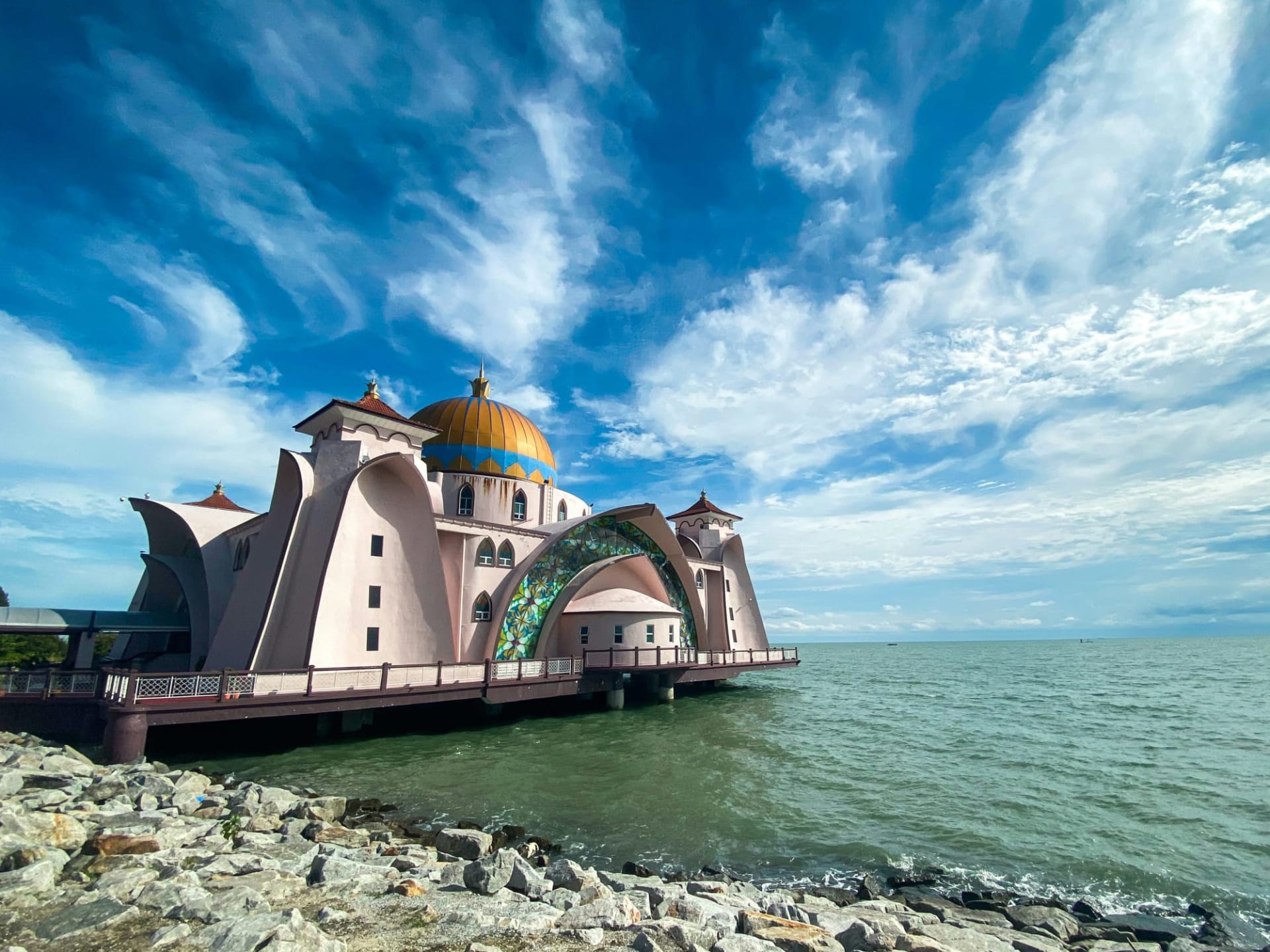
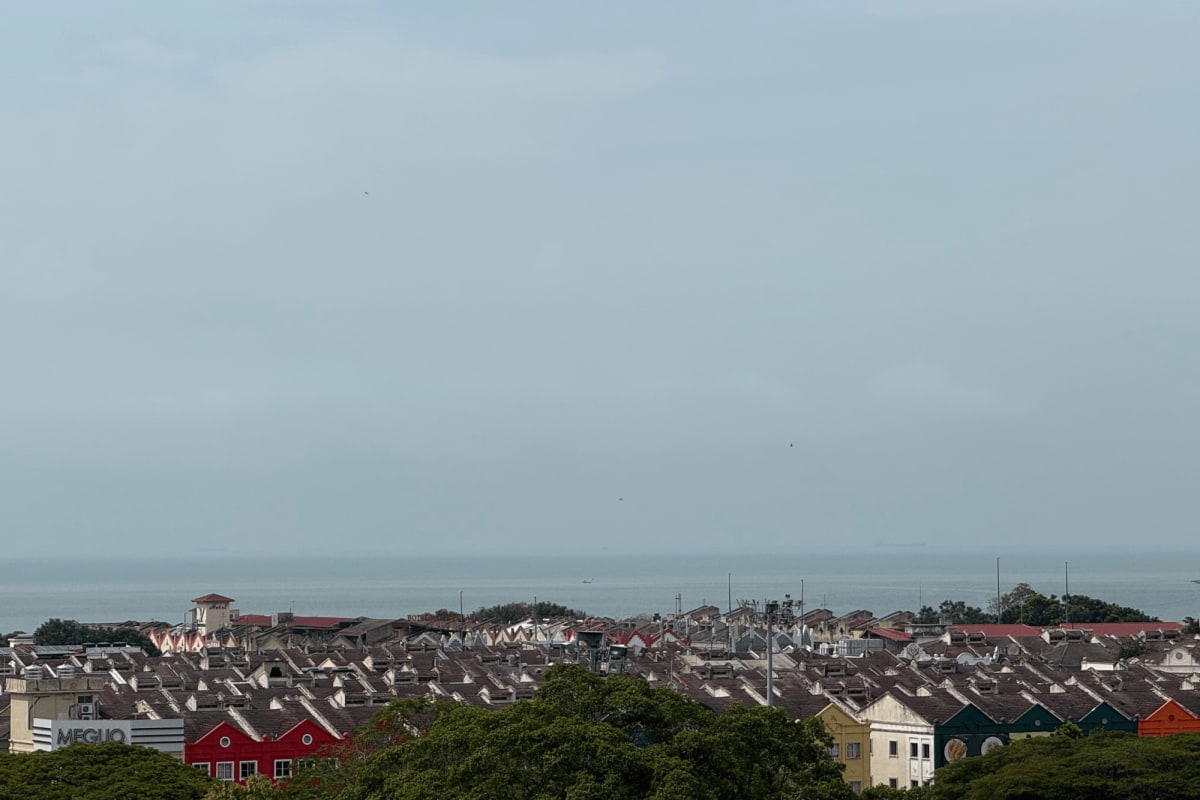
My bus trundles into the outskirts of Melaka on a lazy Christmas morning, and the legendary Malacca Strait rolls into view. Its distant shores are undisturbed, save for a lone cruise ship and a mosque’s orange-gold dome peeking out at land’s end. Centuries ago, Indian, Chinese and Arab merchants would have sailed these waters, their ships laden with spices, porcelain and silk.
The strait remains significant today, accounting for roughly a quarter of global maritime trade. But farther inland, it is Melaka’s UNESCO-designated Old Town that intrigues visitors. From the salmon-red buildings that dot the town’s main square to pre-war shophouses and centuries-old shrines, these icons reflect more than 500 years of Malay, Chinese, Indian and European influences.
Day 1: Exploring Jonker’s Buzzing Tourist Trail
Jonker Walk, Melaka’s busy thoroughfare, is an assault on the senses – but in the best possible way. As I walk its narrow stretch, the pungent-sweet funk of durian permeates the air. Overheated tourists crowd around open-air stalls, slurping ice-cold cendol with one hand and fanning themselves with the other.
Shops selling souvenir magnets and beaded kasut manik shoes call to me like a siren’s lure. But I walk into Joymom’s instead, a local store known for its crumbly, hand-rolled pineapple cookies.
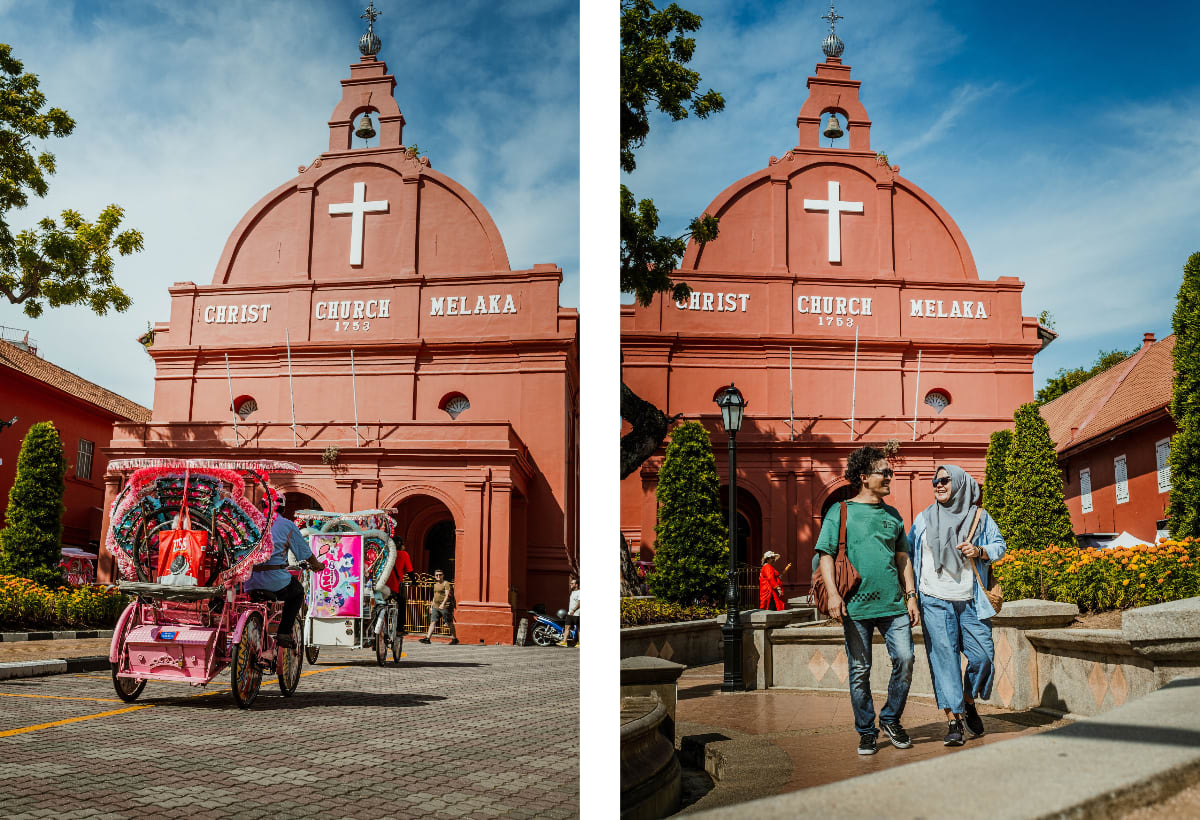
It’s evident that parts of Melaka’s Old Town have been retrofitted to pander to the sensibilities of the modern, stimulation-seeking traveller. As if on cue, a Doraemon-festooned trishaw belting out shrill pop music drives by, further affirming my view. That said, it would be presumptuous to write off Melaka as a town full of tourists and traps. Once I look past the commercialised bits, snatches of the town’s rich past begin to emerge from its mundane sights.
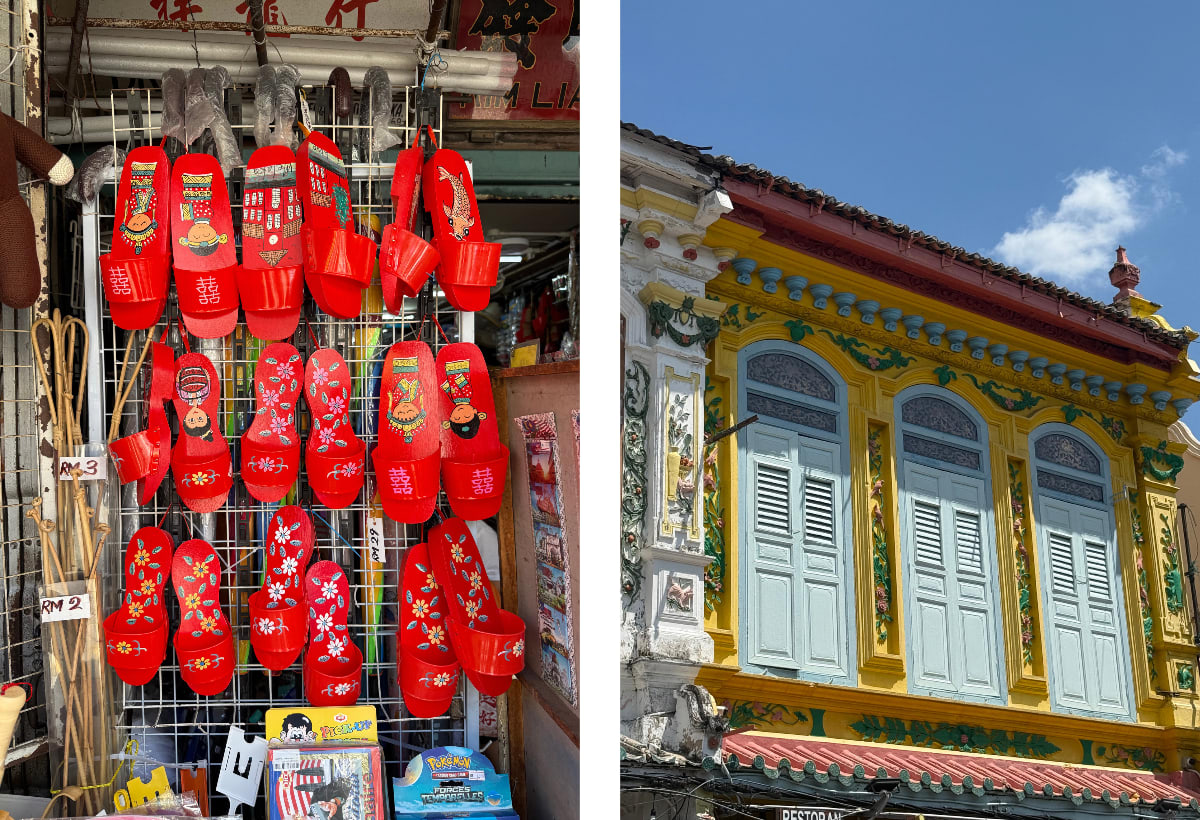
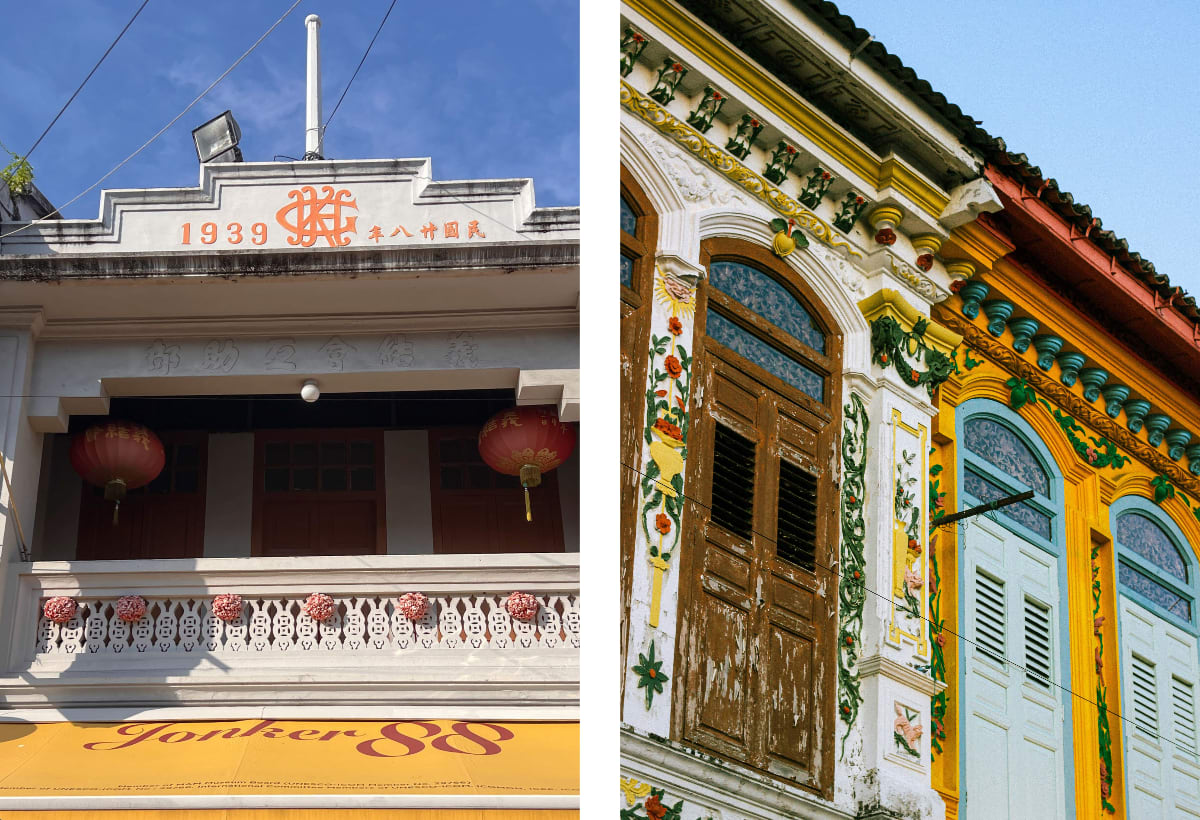
Like the bright melange of preserved shophouses that sit above converted cafés, their louvred shutters holding centuries-old secrets. Or the roadside kueh-maker who sells the beloved chewy dessert sweetened with gula melaka. Then there is the dusty curio shop that has seen better days, selling a range of Malay knick-knacks and scarlet cha kiak, or decorative wooden clogs. Each of these sights represents another time, yet somehow seems to have found a place in the forward-looking town Melaka has become.
I let my instincts guide me, which brings me to the Royal Press Museum. It is one of the world’s oldest surviving letterpress printing houses, established by the Ee family in 1938. Housed in an old merchant house, the museum features antique linocasting machines and wooden and metal letter blocks from the press’s early days.
What’s remarkable is that the town’s commitment to preserving its heritage isn’t limited to its monuments and museums. You can see it in its hotels, too. A fine example is The Majestic Malacca, which carries its storied legacy with considerable flair. The history of this riverside hotel dates back to 1929, when its historic core was built as a private residence by Chinese tycoon Leong Long Man. Today, the meticulously restored 1920s Straits Settlement mansion retains much of its old-world character, with original porcelain tiles, teakwood fittings and other details that whisper of a bygone era of mercantile ambition.
Yet the hotel feels far from frozen in time. Its polished rooms and thoughtful modern comforts sit comfortably alongside the preserved architecture, offering a glimpse into Melaka’s past without giving up the pleasures of the present. And from this century-old mansion, many of the town’s treasures are within easy reach – the vibrant chaos of Jonker Street, the gentle rhythm of a Melaka River cruise and the captivating dioramas of the Baba & Nyonya Heritage Museum.
A Dutch Treat and an Evening on the River
As I continued, my walk had left me famished, so I popped into the Famosa restaurant on Jonker to sample its famous chicken rice balls. One satisfying lunch later, I set off to explore the stately grounds of Dutch Square.
The square is notably home to the red-hued Stadthuys and Christ Church, both built during the Dutch reign. The Stadthuys, once the administrative centre of the Dutch government, now houses the History & Ethnography Museum.
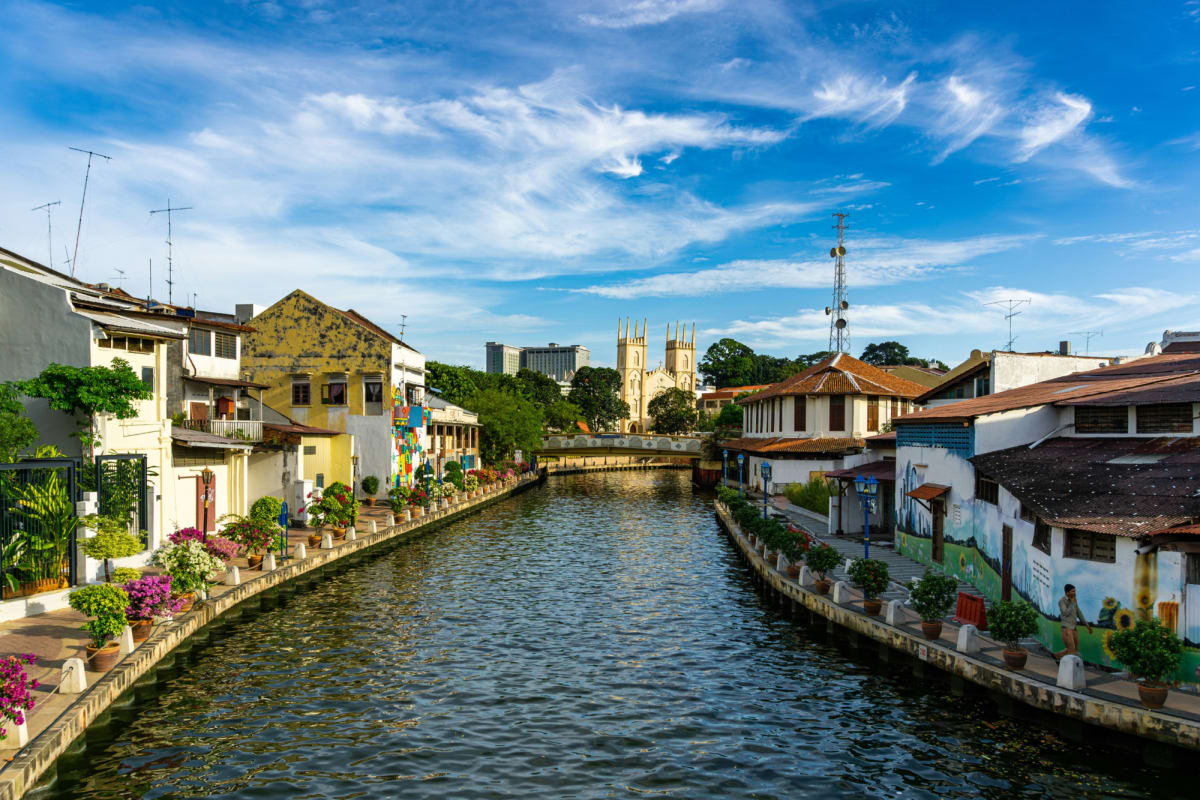
As the fading light casts long shadows across the square’s brick-red buildings, I make my way towards the river. A snaking queue has already formed for the evening cruise. By the time I get my hands on a ticket, dusk has settled around the city’s edges. Within minutes, the Melaka River is bathed in a constellation of twinkling lights.
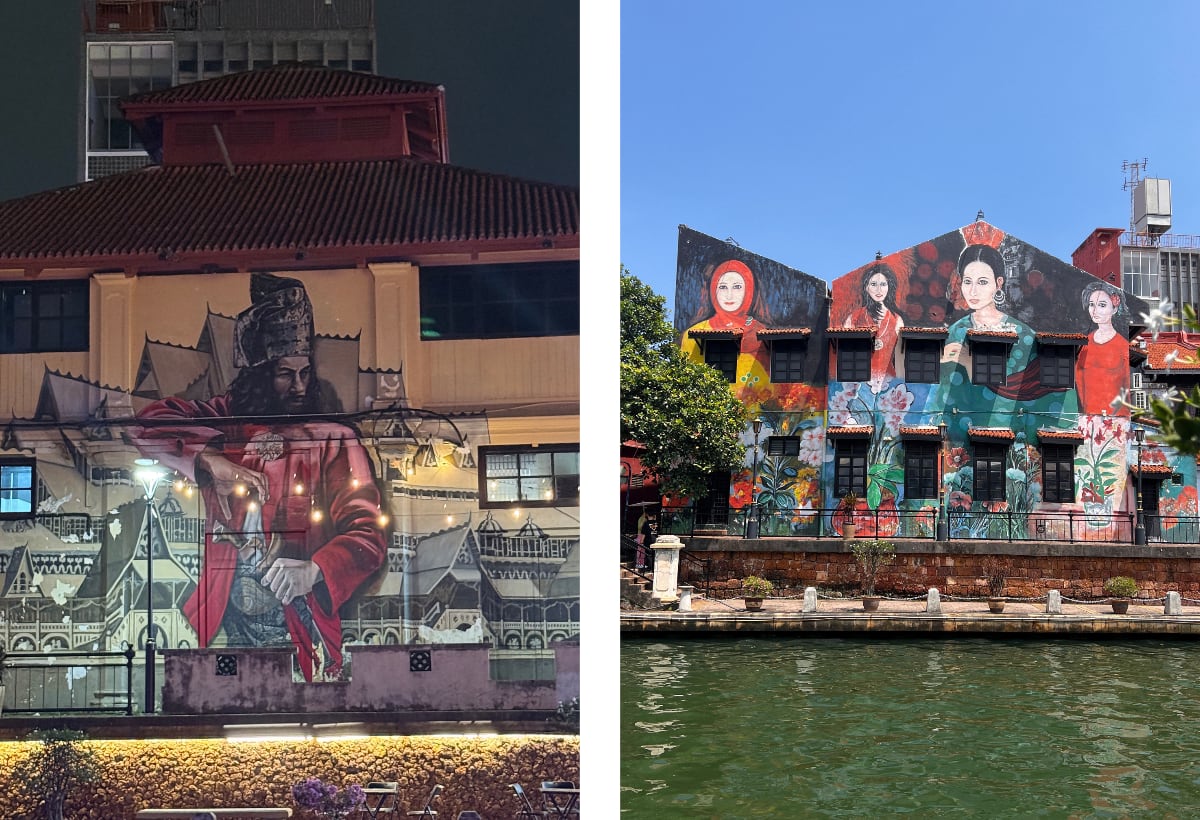
Our cruise boat glides past an array of sights, from murals depicting Malay warriors to the timber-hewn village homes of Kampung Morten. The whole experience is, admittedly, overly touristy, but it is also a fun and quick way to take in some of the town’s most prominent sights. From the river, Melaka’s jumble of old and new seems to come together rather neatly.
After the cruise, I ignored the touts calling out from the bars along the riverbank and headed to Lorong Jambatan, a less conspicuous strip lined with local pubs. I end my night at Tipsy Bridge Bar, a laid-back alfresco dive where cocktails and bar food come with a side of live music.
Day 2: A Tryst With the “Crazy Rich Asians” of Yesteryear
My second day in Melaka starts early with a walking tour via GuruWalk. Our guide ushers us away from the boisterous corners of Jonker Street and into the quieter lanes of Heeren Street, known today as Jalan Tun Tan Cheng Lock.
Also known as Millionaire’s Row, this stretch is lined with grand homes once belonging to wealthy Peranakan merchants from the Straits Chinese community, a culture shaped by generations of intermarriage between Chinese settlers and local Malay communities. Among these elegant residences, a jumble of Dutch-era shophouses also makes its presence known, some with curiously narrow entrances. Our guide points out one in particular, believed to be Melaka’s narrowest house – a mere six feet wide!
We learn that these narrow frontages were partly a response to Dutch-era taxation, when properties were apparently taxed according to the width of their front entrances. The cramped facades, however, were somewhat of an illusion. Behind them lay surprisingly long houses, with winding corridors and full-sized courtyards tucked out of sight.
Further along, we trudge past beautifully ornate homes topped with rust-red terracotta tiles and colourful roof trimmings. These intricate decorations, we’re told, are the work of a Chinese artisan technique known as ceramic cut-and-paste, or jian nian. Colourful shards of ceramic are carefully pieced together to create elaborate mosaics – a reminder that beauty can sometimes emerge from what has been broken. The motifs adorning the rooflines, often depicting animals and birds, are more than decorative flourishes; each carries a deeper spiritual meaning rooted in Chinese mythology.
Later, we stumble upon a privately owned Straits Chinese-era mansion. The house isn’t officially part of the tour, but in a stroke of serendipity, its owners happen to be visiting that day. At our guide’s request, they kindly allowed us a glimpse inside.
Despite visible signs of neglect, the house’s timeless beauty still lingers. We marvel at its winding Dutch staircase, fading motifs that once gave the rooms their meaning, and a sun-warmed courtyard that must have once been the heart of the home. Now, it lies partly reclaimed by wild shrubs, nature slowly creeping into a space shaped by generations of human lives.
It would be remiss not to mention one of the most intriguing stops on our tour: Wah Aik, a third-generation shoemaker. This no-frills shop is a historic fixture on Millionaire’s Row, best known for handcrafting the tiny “lotus feet” shoes once worn by Chinese women who had undergone foot binding. Looking at the delicate shoes today, it is difficult to reconcile their diminutive size with the painful history they represent — yet here they remain, another small, tangible fragment of Melaka’s layered past.
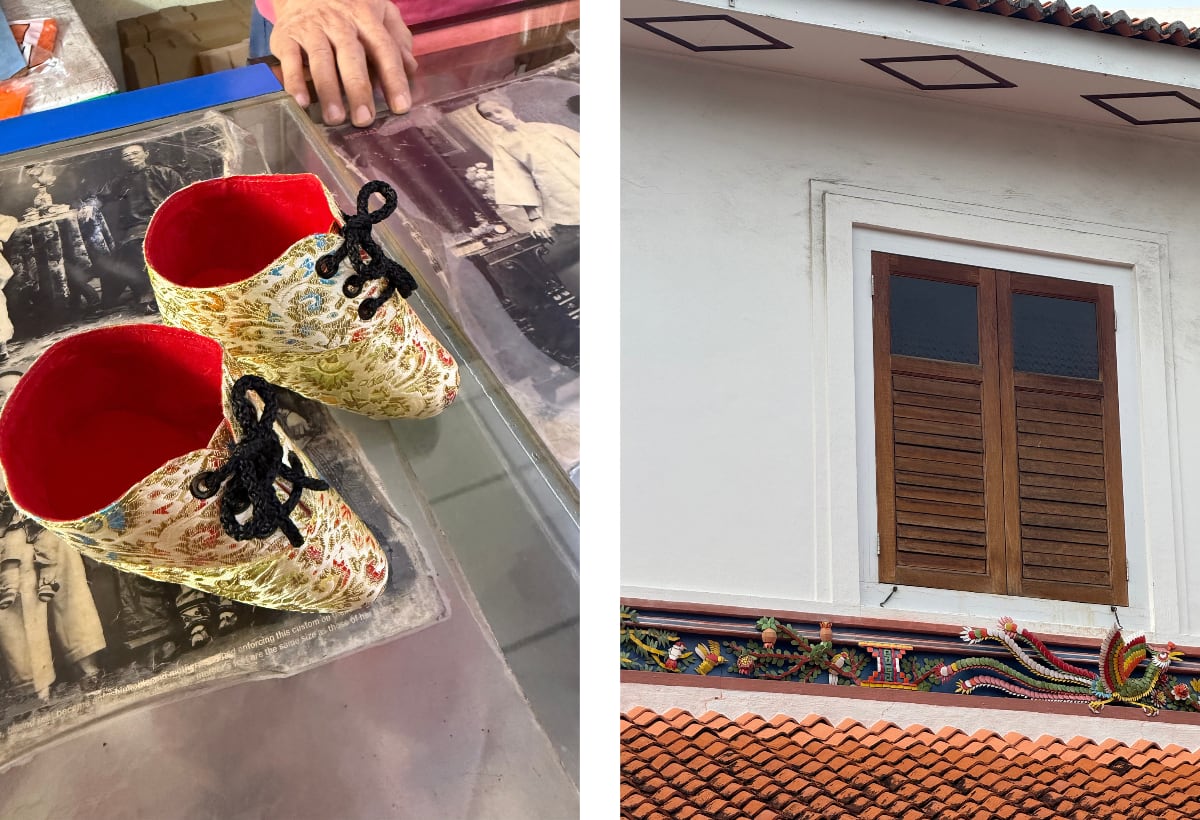
Inside the shop, we’re shown an old photo of the bound feet, toes disturbingly askew. We then see the shoes – no bigger than a child’s. They feature stunning brocade work and craftsmanship that belies the unsettling purpose they were meant for. And although the practice of lotus feet has long been discontinued, Wah Aik’s shoemaking legacy continues to attract tourists who buy these shoes as souvenirs.
Stepping Off The Beaten Path
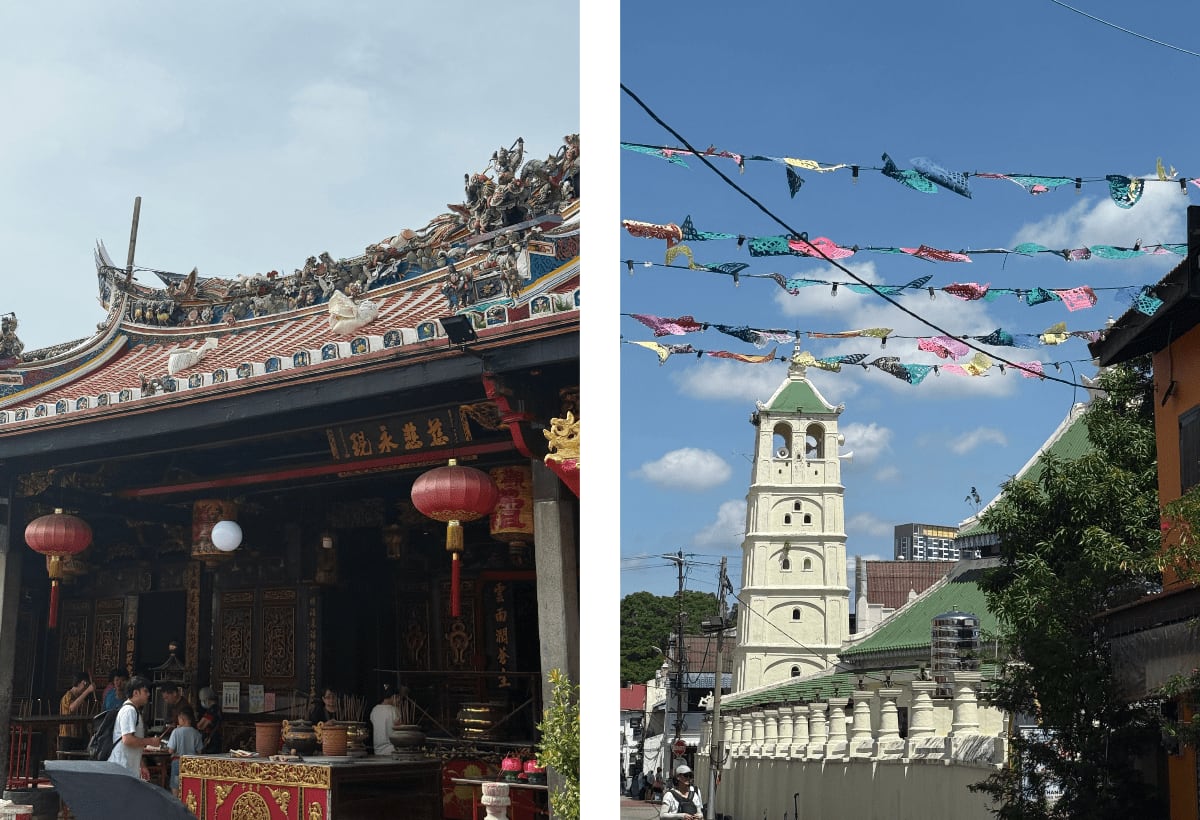
The lack of visible tourist activity on Jalan Tokong, better known as Harmony Street, is a welcome change from Jonker Street’s perennial chaos. Without the crowds, there is more room to pause and appreciate the remarkable trifecta of places of worship that gives this little stretch its name. A Chinese temple, a Hindu temple and a mosque – each several centuries old – stand just metres apart, their histories unfolding alongside one another in remarkable proximity.
The Cheng Hoon Teng Temple, the oldest of the three, is instantly recognisable by its sweeping roofs and vermilion lanterns. It is also the oldest functioning Chinese temple in Malaysia. A few steps away stands the Kampung Kling Mosque, an unusual structure that does away with the telltale Islamic dome. Instead, its pagoda-like minaret and Sumatran-inspired roof reflect a fascinating blend of European, Malay and Indian architectural influences.
Further along, the Sri Poyyatha Vinayagar Moorthi Temple comes into view, its colourful yet relatively understated gopuram marking one of the country’s oldest surviving Hindu temples. Standing here, it is difficult not to marvel at how three distinct faiths have shared this narrow street for generations.
Where there is faith, there is also vice. Not far along Blacksmith Street, our guide leads us to Layang Layang Guest House, a rather unassuming building with a more colourful past. About a century ago, it operated as an opium den, drawing working-class residents – likely coolies and blacksmiths – from the surrounding streets. It feels worlds away from the wealth and grandeur of Millionaire’s Row, another reminder of how many different lives have unfolded within Melaka’s compact historic core.
Our walk ends with a short tour of the Porta de Santiago, the surviving gateway of the A Famosa fortress. After the Dutch laid siege to Melaka in 1641, this gatehouse was all that remained of the once-mighty Portuguese fortification. From the top, I spot the Strait of Malacca once again, its blue expanse stretching beyond the rooftops. It feels like a fitting full-circle moment, bringing me back to the same waters that first greeted me on my arrival.
Inside a Century-Old Peranakan Home
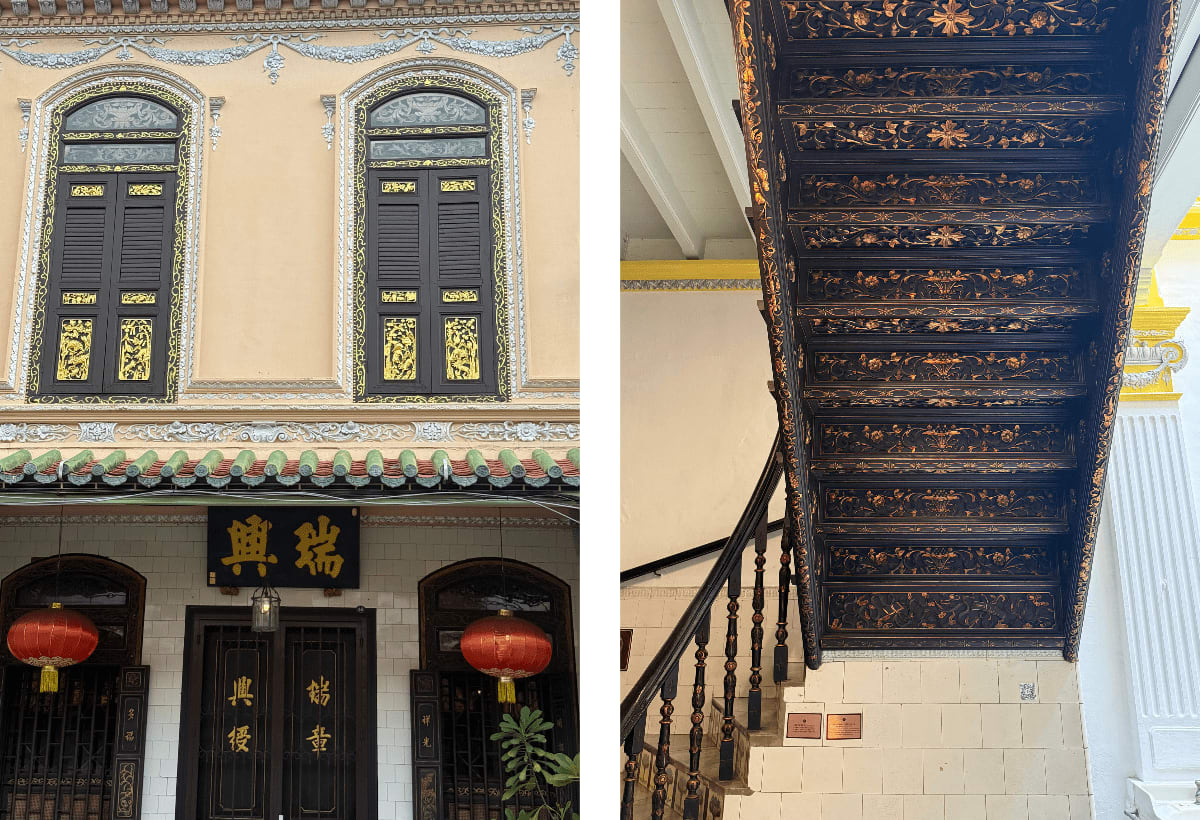
After the tour, I found myself drawn to the gilded Baba Nyonya Heritage Museum on Millionaire’s Row. Housed in a sprawling Peranakan mansion, the museum was once home to four generations of the Chan family. Here, Melaka’s history feels less like something I am looking at and more like something I am stepping into.
Room after room reveals a world of carefully preserved opulence: lavish beds, ornate furniture, gilded staircases and vintage wardrobes still filled with family heirlooms. Intricate tiles, carved woodwork and embroidered textiles speak of a community that blended Chinese traditions with local Malay influences, creating a distinctive culture of its own. The house is grand, certainly, but what fascinates me more are the small details – the objects that hint at how generations of a family once lived, celebrated, entertained, and passed down their traditions within these walls.
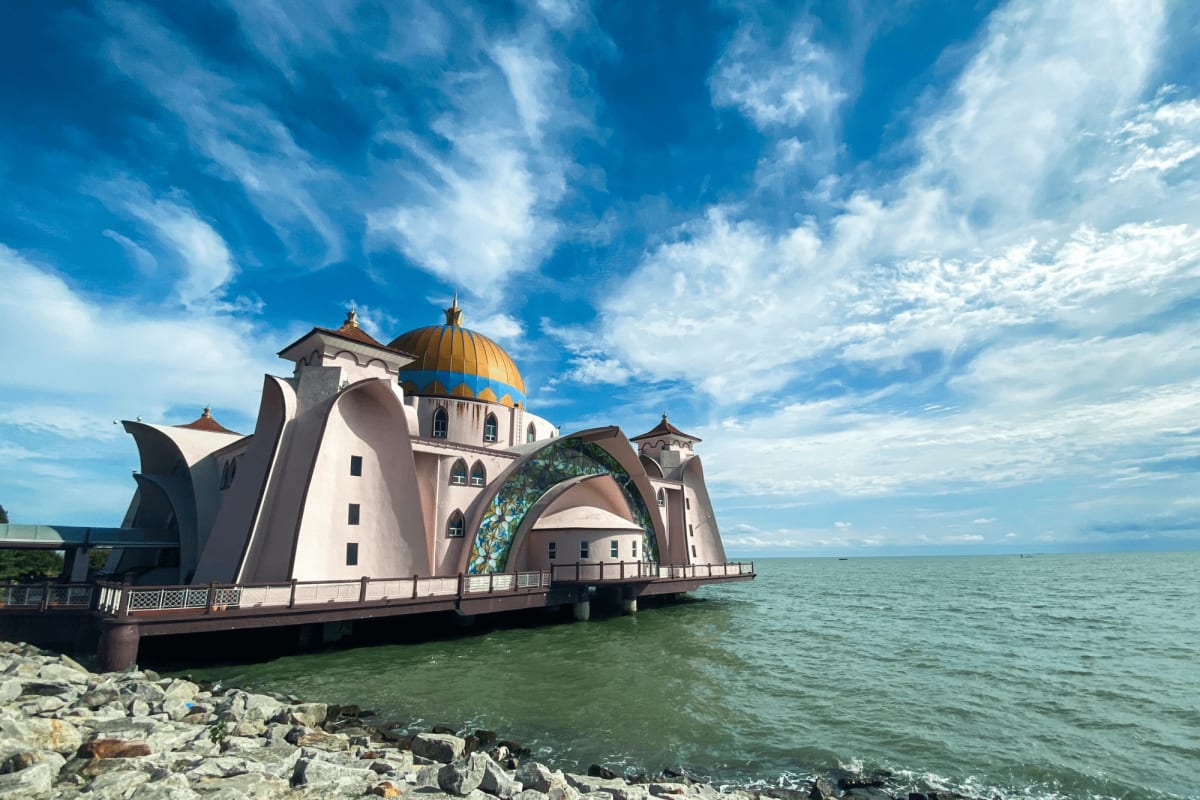
I ended my day at the Melaka Straits Mosque, seemingly floating on an artificial island in the Malacca Strait. As the evening light settles over the water, the mosque appears almost dreamlike, its reflection rippling beneath it. Once again, I find myself looking out towards the strait – the same body of water that has shaped Melaka’s fortunes for centuries.
In just two days, I witnessed two very different sides of Melaka. There was the Melaka of Jonker Street, souvenir shops, colourful trishaws and river cruises – the version that is easy to photograph and even easier to consume. Then there was the quieter Melaka, revealed in narrow lanes, fading mansions, family-run workshops and places of worship that have stood side by side for generations. It is a city where history doesn’t always announce itself. Sometimes, it is hidden behind a narrow doorway, tucked inside an old shophouse or preserved in the hands of a third-generation craftsman.
Before arriving, I had perhaps reduced Melaka to a familiar holiday equation: shopping, colourful architecture, good food and a generous sprinkling of heritage. But walking its backstreets changed that perception. I began to see that the city’s history is not confined to its UNESCO designation or its best-known monuments. It survives in fragments – in the chipped tiles of an old mansion, the elaborate roofline of a Peranakan home, the tiny shoes in a shoemaker’s shop, and the centuries-old rituals that continue inside its temples and mosques.
That, perhaps, is what makes Melaka so compelling. Its heritage is not a perfectly preserved relic, neatly packaged for visitors. It is layered, imperfect and sometimes even contradictory. The tourist trail exists alongside forgotten corners; grandeur sits beside decay; and centuries-old traditions continue to find space within a rapidly changing town. Melaka, I realise, doesn’t really ask to be admired from a distance. It rewards curiosity. Look beyond the polished facades, take a turn down an unfamiliar lane, listen to the stories behind an old doorway – and the city begins to reveal itself, one layer at a time.