The train from Poznań to Wrocław takes about an hour and seventeen minutes. I had planned to catch the 8:21 am train, arriving at 9:38 am, giving me just enough time to walk to the Old Town and meet Amit, who runs Whistling Hound and hosts private walking and cycling tours, at 10 am.
At 9:51 am, just as we pulled into Wrocław, Amit messaged me: “Hey, I'm here by the statue of the guy with a pen.” He was waiting beside the statue of Polish playwright Aleksander Fredro, outside the Old Town Hall.
Excited as I was, we began our walk with a little introduction to Wrocław, and I soon realised that this was a city whose past was never too far from the present.
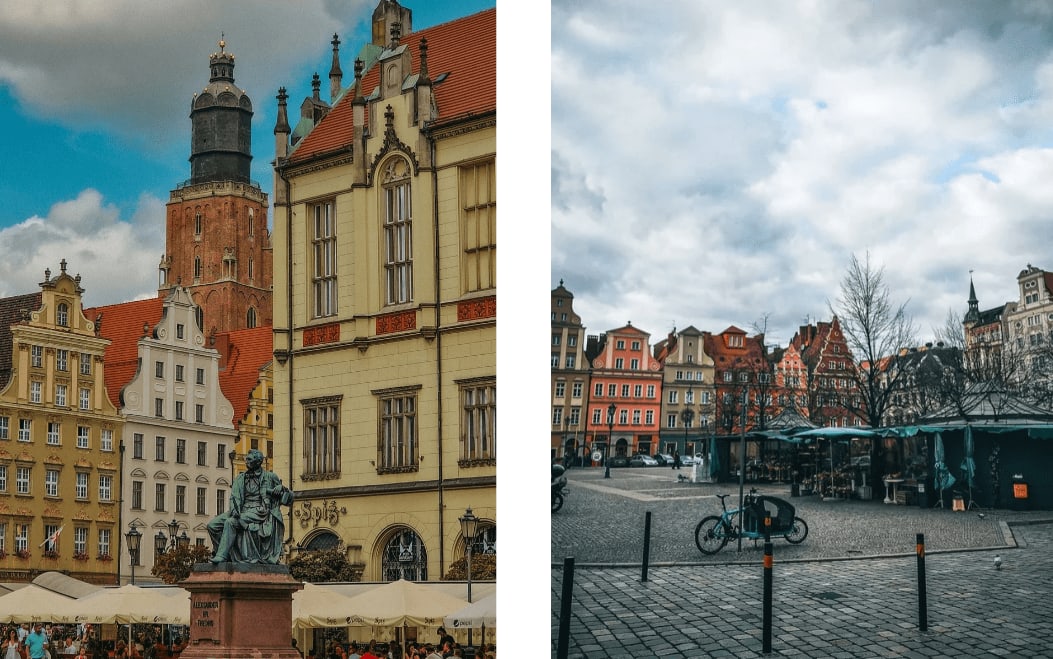
Wrocław has changed hands several times over the centuries. Before becoming part of Poland after the Second World War, it was known as Breslau and was under German rule. Earlier chapters of its history include periods under the Bohemian Crown and the Habsburg Monarchy. These shifting political boundaries have left a fascinating imprint on the city, reflected in its architecture, cultural identity, and the stories of the people who call it home.
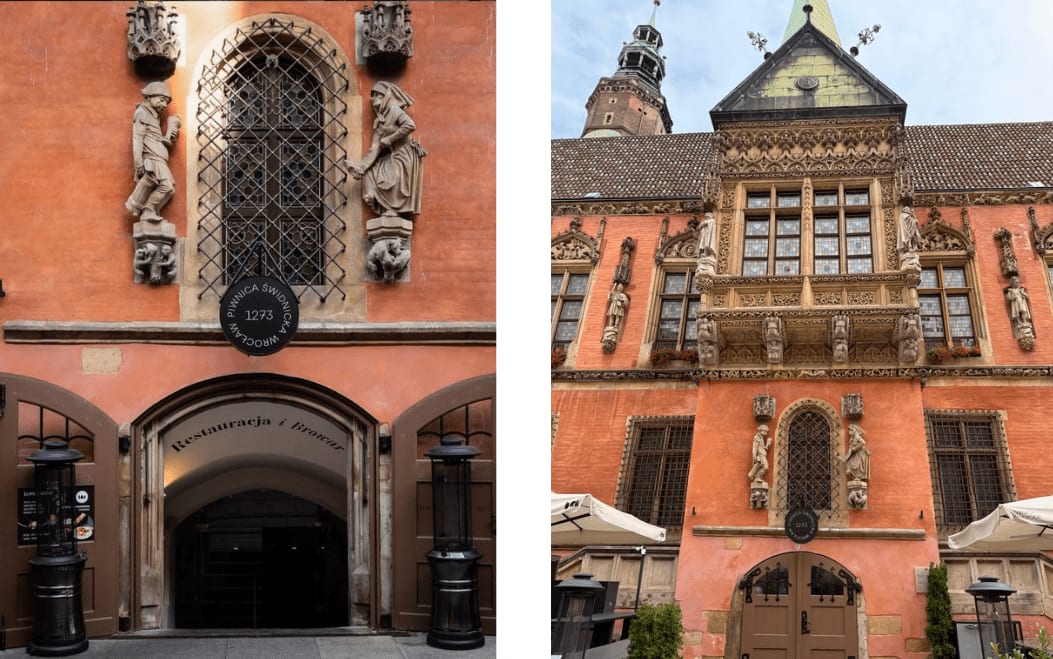
Our first stop was Piwnica Świdnicka, tucked beneath the Old Town Hall in the Market Square. Dating back to 1273, this historic cellar is widely regarded as one of Europe's oldest restaurants, with its vaulted brick ceilings, atmospheric interiors, and centuries-old charm offering a glimpse into Wrocław's medieval past.
“If you have the time, come back for a beer later,” Amit suggested.
I found myself thinking about all the generations who must have gathered in this very cellar, sharing a drink and a meal long before Wrocław became the city I was getting to know that morning. There is something rather wonderful about places that have witnessed so much of history.
But it was the Market Square, or Rynek, that held my attention for longer. With its colourful townhouses, cafés, restaurants, and constant movement of people, it is the kind of public space where you naturally want to linger. Standing amid all that bustle, it was difficult to imagine that much of this historic centre had once been reduced to rubble.
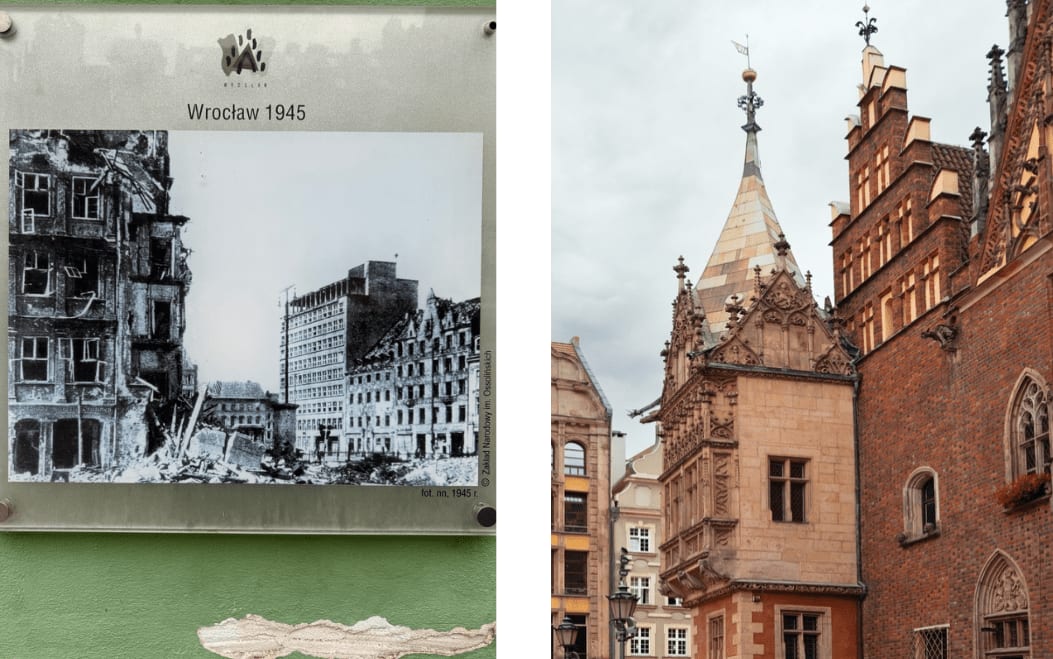
During the Second World War, Breslau was declared a fortress city by Nazi Germany. The Siege of Breslau, which lasted nearly three months in 1945, left large parts of the city devastated. As Amit explained the scale of the destruction, we stopped to look at a photograph documenting the damage to the Market Square.
I looked up at the beautifully restored façades around me and tried to picture the same streets filled with debris and destruction. The contrast was striking.
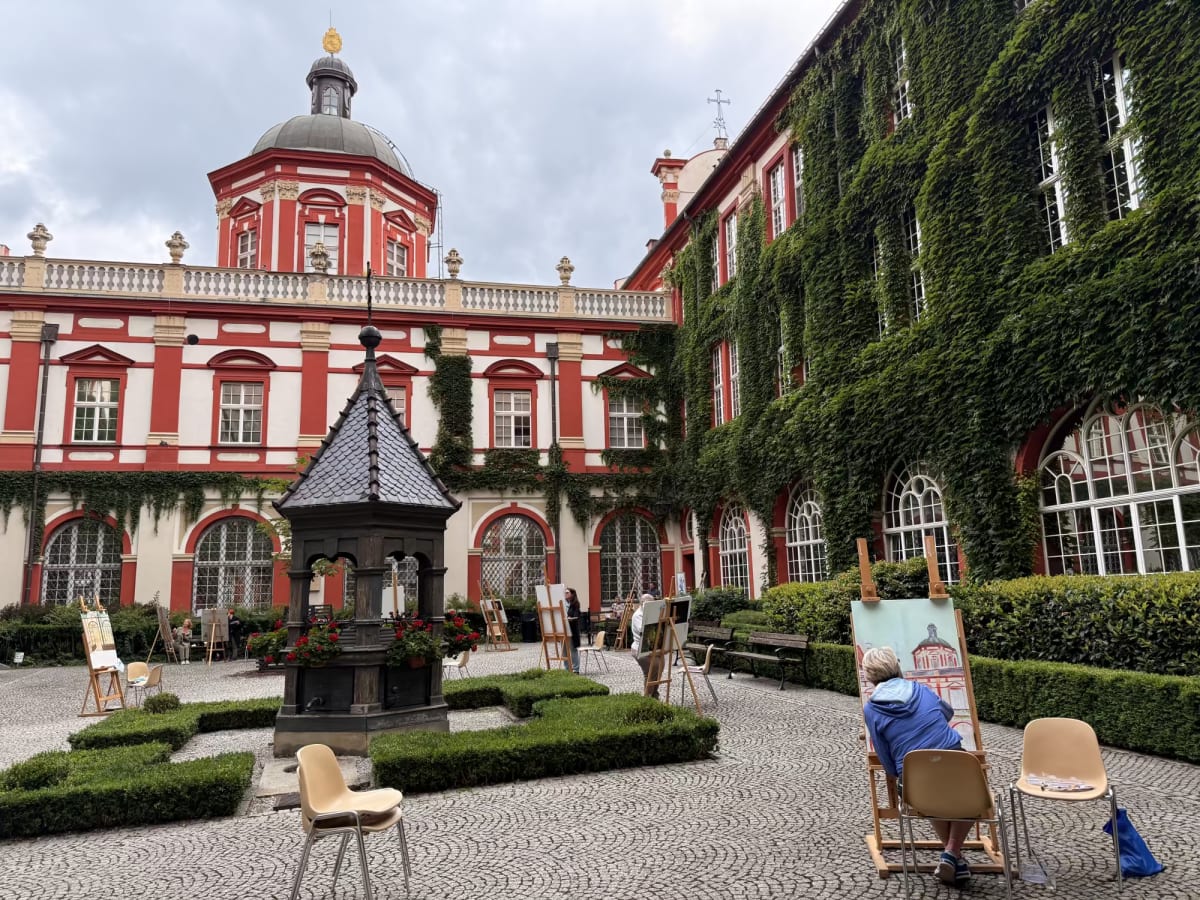
The end of the war brought another profound change. Breslau became part of Poland; its German population was displaced, and Polish families, many arriving from territories that had become part of the Soviet Union, made this city their new home. They rebuilt its streets and restored its historic landmarks, carrying forward a complicated past while creating a new Polish identity for the city. It was a reminder that places, much like people, are shaped by the histories they inherit and the lives they rebuild.
Meeting Wrocław's Little Residents
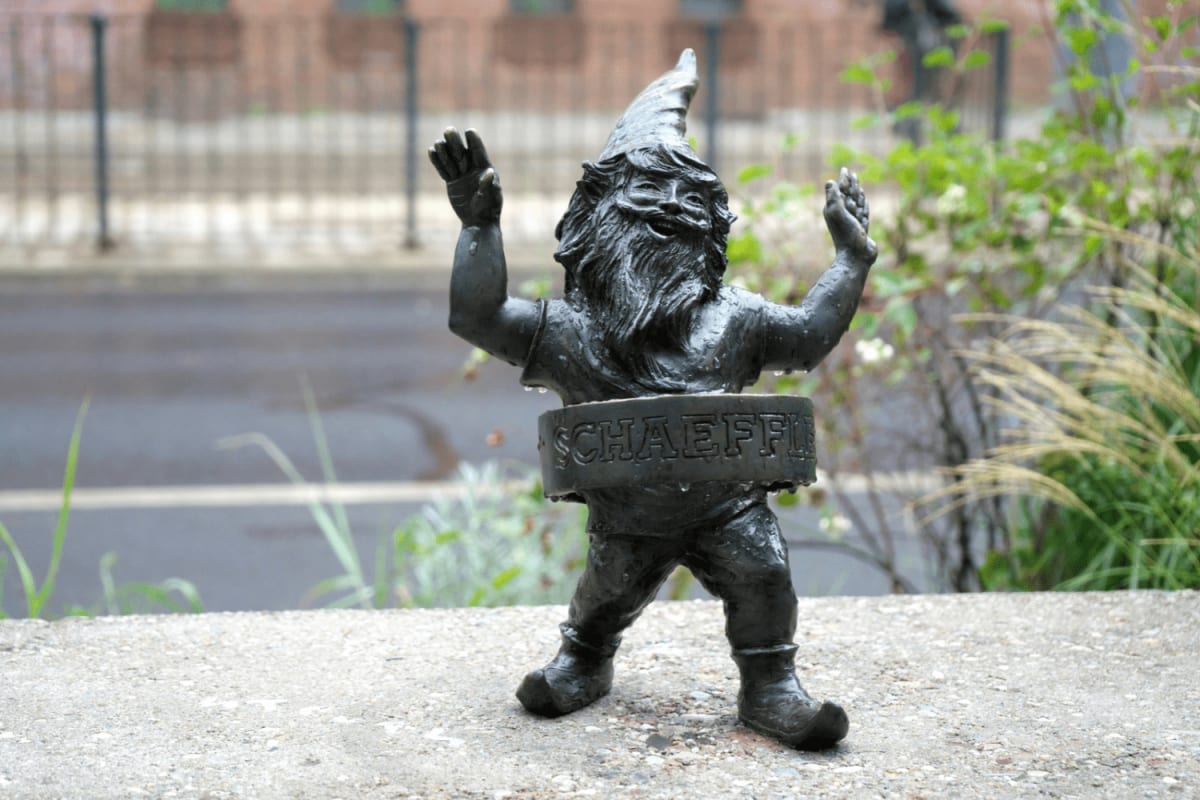
“You know Wrocław is also called the city of dwarfs, don't you?” Amit asked, pointing towards the ground. “This is one of my favourites.”
I looked down and spotted a tiny bronze figure sitting beside a dog, both holding little beer mugs. It was an unexpectedly delightful sight. Until then, I had been busy admiring the city's historic architecture; now, I found myself looking at the pavement, wondering what else I might have missed.
The dwarfs, however, are not simply whimsical additions to the cityscape. Their origins lie in the Orange Alternative, an anti-communist movement that emerged in Poland during the 1980s. Its activists used humour and absurdist art as a form of peaceful protest against the communist authorities. When government workers painted over anti-government slogans, the movement responded by painting little orange dwarfs over the blank walls of the buildings. It was an ingenious way of challenging authority without losing its sense of humour.
While most of the original Orange Alternative artwork has disappeared, one of its surviving dwarf paintings can still be found at St. Smoluchowskiego 22.
In 2001, the city paid tribute to this legacy by installing the first permanent bronze sculpture of Papa Krasnal on Świdnicka Street, a place where members of the movement once gathered. A few years later, in 2005, local sculptor Tomasz Moczek took the idea further, creating a collection of little bronze dwarfs, each with its own character and connection to Wrocław's history or everyday life. What began as a playful expression of dissent has since grown into a much-loved part of the city's identity, with hundreds of these tiny residents now scattered across its streets and squares.
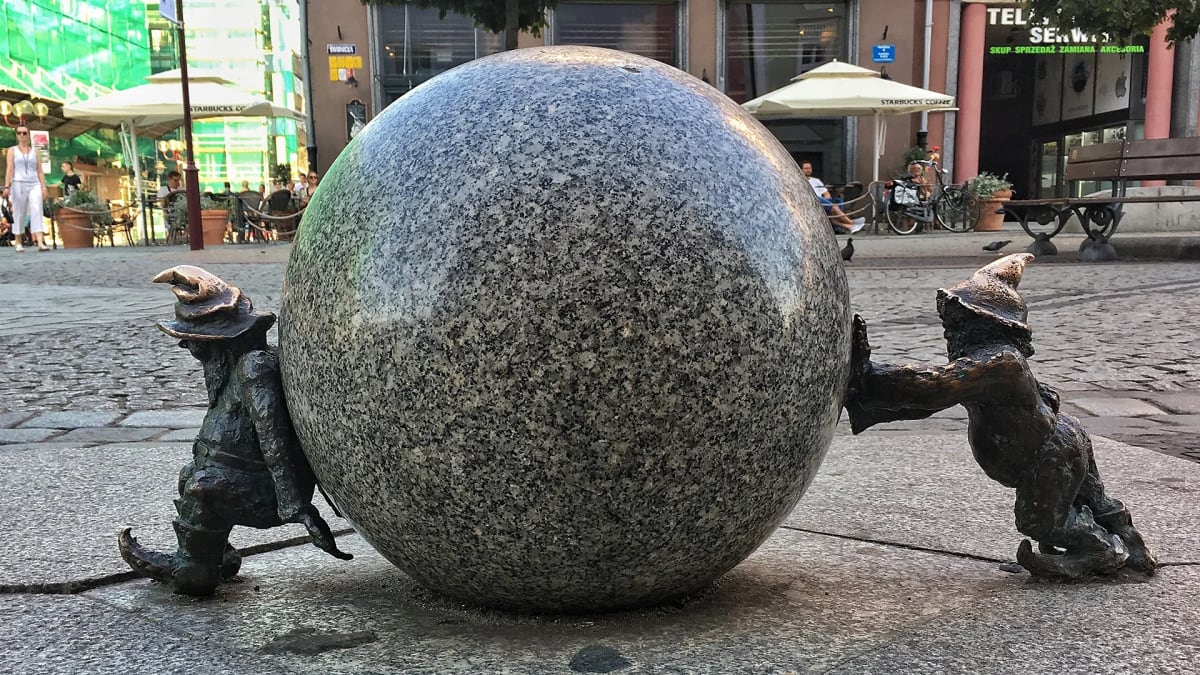
There is Syzyfki, the pair of dwarfs pushing a giant granite ball along Świdnicka Street, a playful nod to the Greek myth of Sisyphus. On Butchers' Lane, the Butcher Dwarf pays homage to the area's traditional meat trade. Elsewhere, you might find Pracz Odrzański, a dwarf washing clothes by the Oder, or Życzliwek, the Kind Dwarf, who has become something of a local favourite!
“When I first came here to study in 2018, there were around 400 dwarfs. Now there are more than 850,” Amit told me.
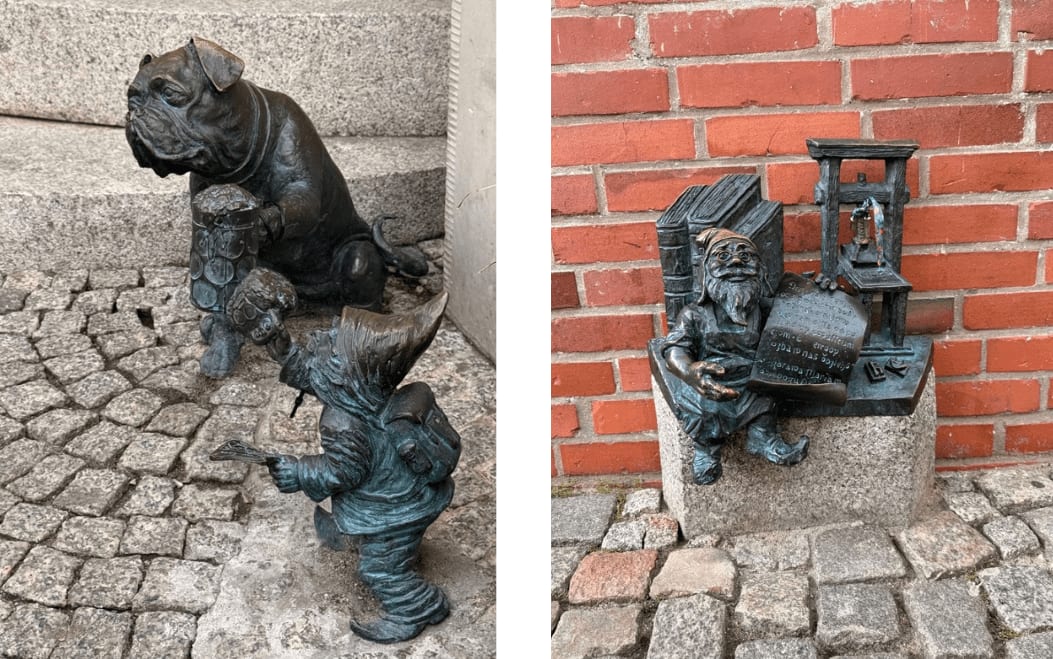
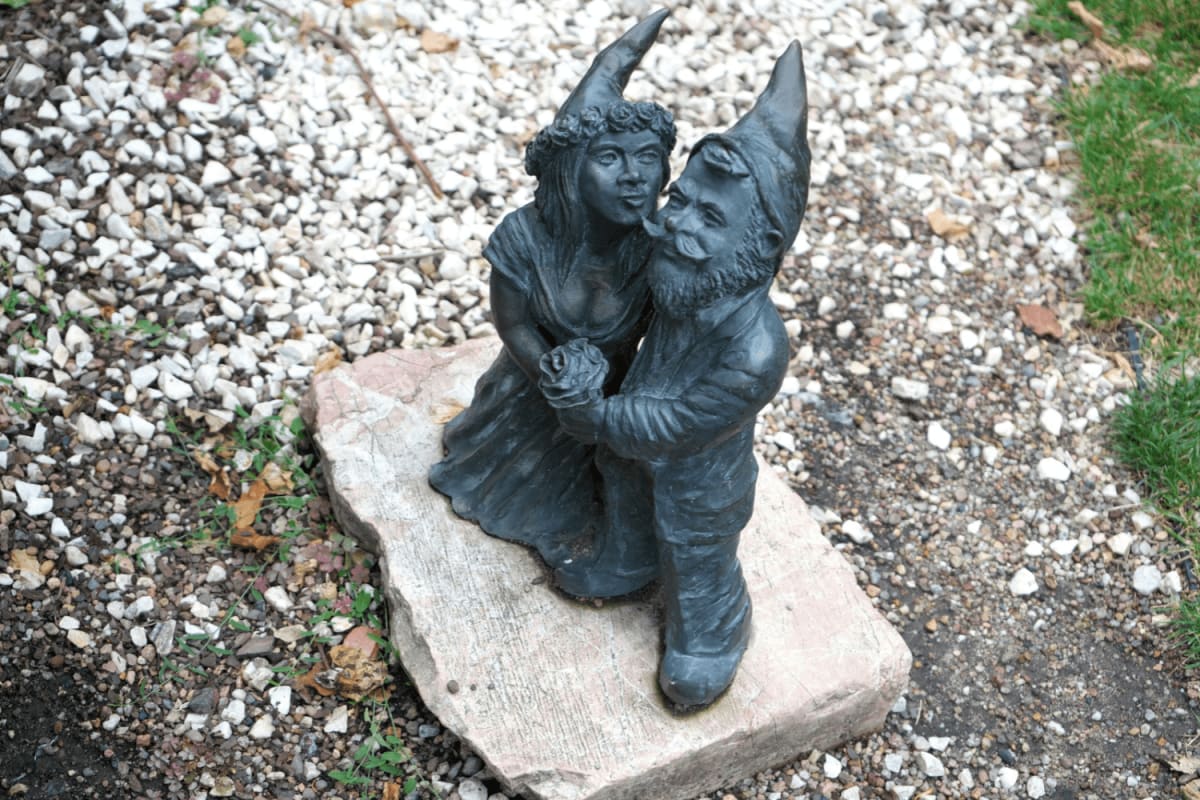
As I kept searching for another dwarf around the corner, I couldn't help smiling. What had begun as a political statement had grown into a city-wide treasure hunt, giving visitors another reason to explore its streets. Every few minutes, I found myself scanning the pavements and shopfronts, wondering where the next little resident might be hiding, and often, Amit would help me spot them.
A Walk Through Ostrów Tumski
I have always felt that a city reveals a different side of itself when explored with someone who knows it beyond its familiar landmarks. It is in the anecdotes, the lesser-known histories, the personal recollections, and the seemingly ordinary details that you begin to understand what makes a place truly special. A local guide brings these stories together, offering a perspective that goes far beyond what any guidebook can tell you.
Amit had been living in Wrocław for nearly nine years, and walking around with him meant that our conversations often went beyond the usual sightseeing narrative. He brought the city to life through anecdotes and little observations that I would probably not have discovered on my own.
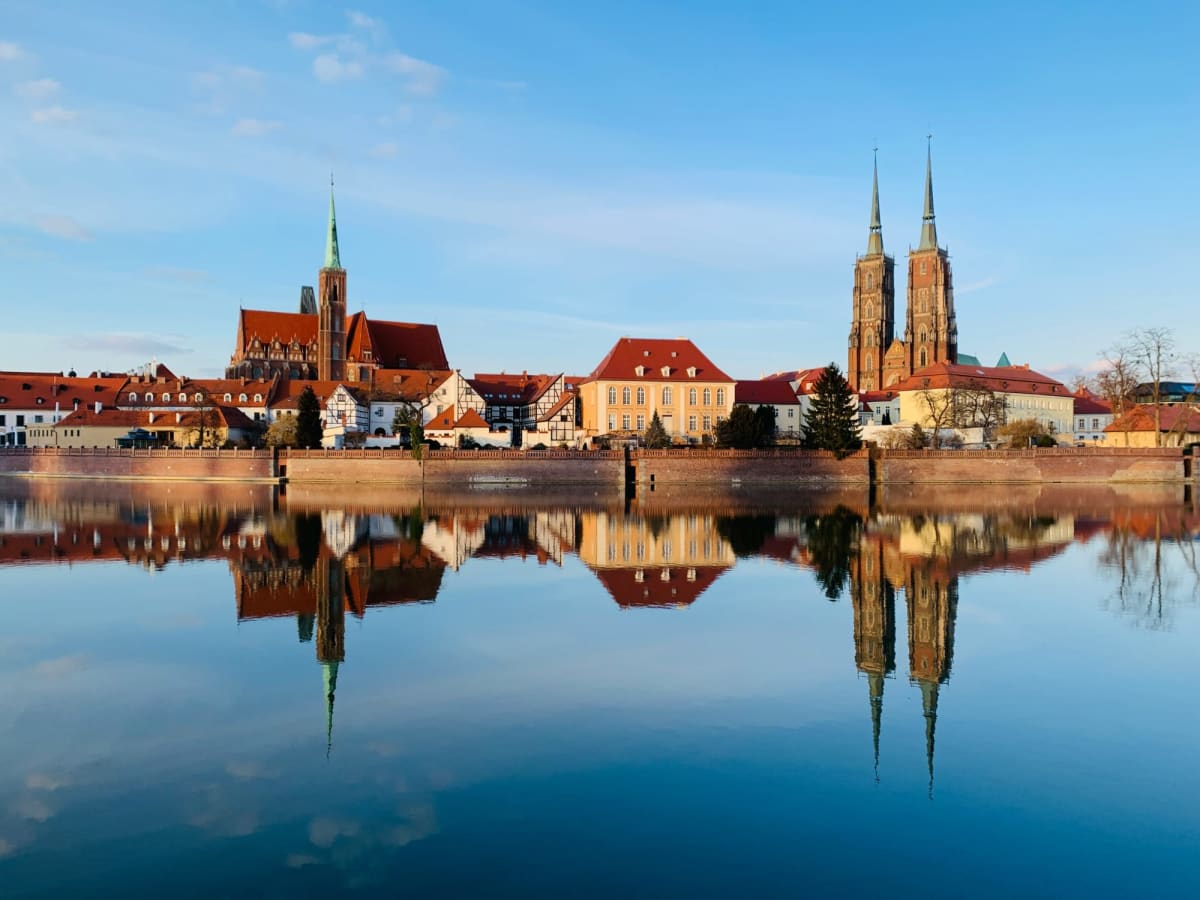
From the lively Old Town, we made our way towards Ostrów Tumski, the oldest part of Wrocław. Also known as Cathedral Island, this historic neighbourhood has a very different atmosphere. The busy streets give way to cobbled lanes, old churches, leafy corners, and bridges that open up lovely views of the river.
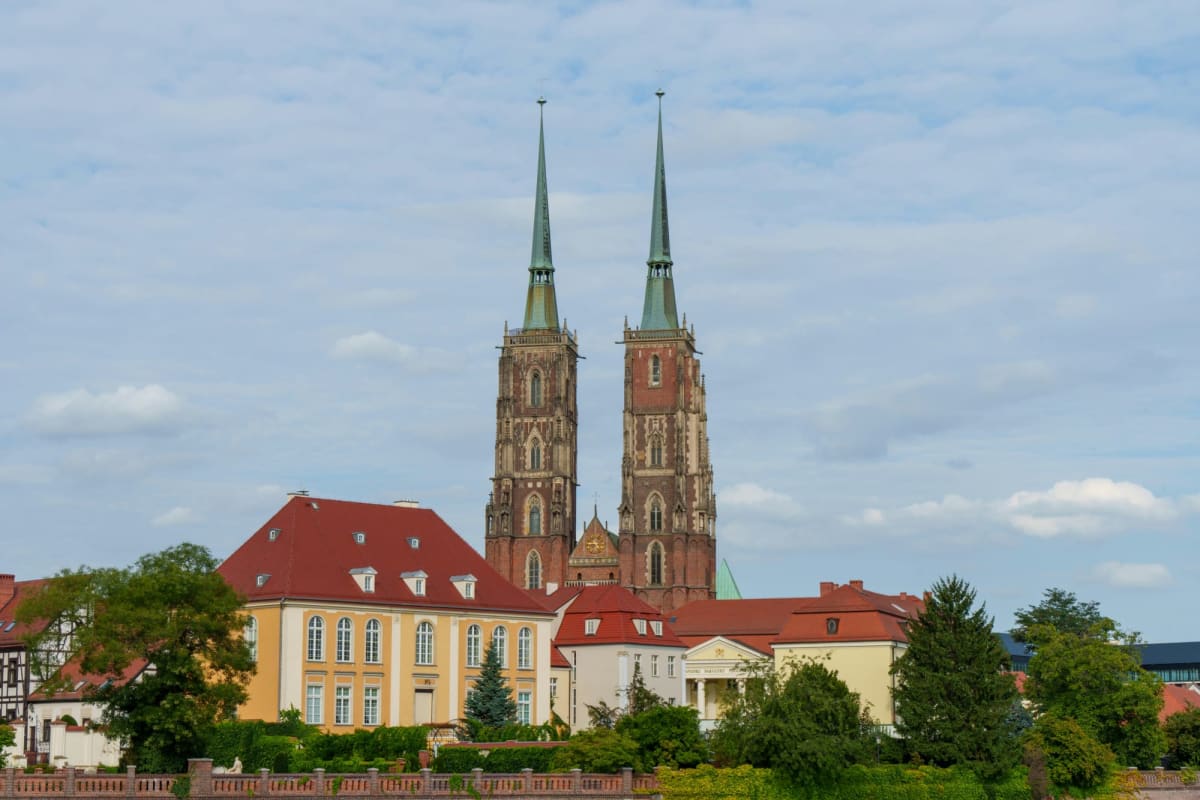
The most prominent landmark here is the Cathedral of St. John the Baptist, an impressive Gothic structure that dominates the island's skyline. As we walked around it, Amit pointed out an artillery shell embedded in the cathedral's exterior, a remnant of the 1945 Siege of Breslau. It was a small detail, but one that brought the city's wartime history into sharp focus. Sometimes, the most powerful reminders of the past are not found in museums but remain embedded in the places we walk through.
Amit also told me about a tradition I hadn't come across while planning my visit. Every evening, a lamplighter walks through Ostrów Tumski, lighting its historic gas lamps by hand.
“If you stay here until it gets dark, you'll see people following him around, mostly taking photographs and videos,” he said. I had no plans to stay until evening that day, but the thought of watching someone light the lamps one by one made me wish I had more time in Wrocław. It was one of those little discoveries that definitely adds another reason to return to a place.
A Taste of Old Wrocław at Hala Targowa
“We'll finish the walk at Hala Targowa. It's one of the city's historic markets, and you can grab some lunch there,” Amit suggested as we made our way back from Cathedral Island.
I checked my phone. It was already 1:49 pm. The morning had slipped away rather quickly, and I could hardly believe how much we had covered in a few hours.
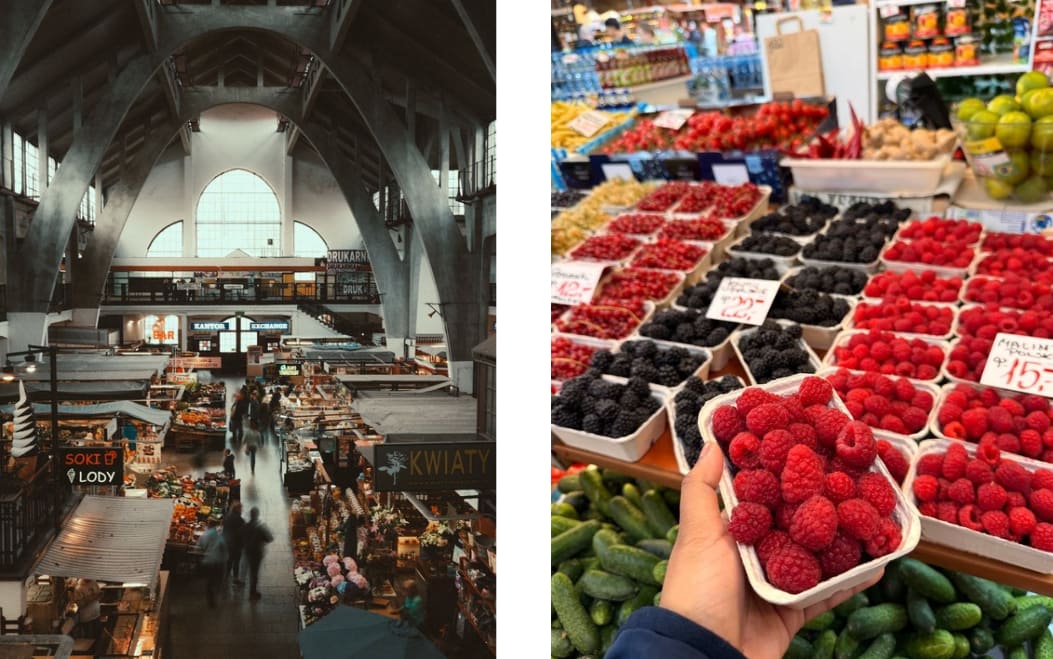
We stepped into Hala Targowa, a historic market hall that remains an important part of everyday life in Wrocław. Before exploring its stalls, I needed to exchange some Euros for Polish złoty, so we stopped at a kantor, a currency exchange counter. Amit then showed me a section of the market where traces of Poland's communist past could still be seen.
Plates and cutlery were secured to the tables with chains, an unusual sight that immediately caught my attention. Amit explained that food shortages had once been a part of everyday life, and this arrangement was a reminder of a rather difficult period in the country's history.
He also introduced me to the tradition of Bar Mleczny, or Polish milk bars. These inexpensive eateries became particularly popular during the communist era, serving simple, home-style meals at affordable prices. They were an important part of everyday food culture, especially when access to food and other essentials was limited. While many have disappeared or evolved over time, the milk bar remains a familiar institution in Poland.
The one inside the market was still busy with locals, which, to me, is often a good sign when looking for an authentic food experience. I liked that Hala Targowa was not simply a place for visitors to browse but continued to serve the neighbourhood around it.
By then, it was time for Amit to leave. In the span of a few hours, he had brought a city I knew little about to life, introducing me to its many layers of history, the stories of its people, and the small, often overlooked details that give Wrocław its distinct character.
It was nearly 3 pm when I picked up a box of fresh raspberries from one of the market stalls and stepped outside, making my way towards the University of Wrocław. The afternoon was still bright, the streets were full of people, and the city seemed to have plenty more to show me.
I had one last mission before heading back to the station: find a few more dwarfs.
With a box of raspberries in one hand and my phone in the other, I continued wandering through Wrocław. Every now and then, a tiny bronze figure would catch my eye, prompting me to stop, take a photograph, and wonder about the story behind it.
TH Recommends:
Experience the Wrocław Dwarf Hunting Tour with Amit (Whistling Hound) to know the city closely and meet the gnomes hiding at every nook and corner!