2026 is changing the wheels of wellness.
Wellness is no longer a synonym for escape. The curated cleanse, the forced digital detox, the guru's rigid path - these are relics of a passé philosophy. For Millennials and Gen Z, wellness has shed its passive, prescriptive skin. It has become a verb.
This is not about running from. This is about moving towards.
The core tenet of the new wellness travel era is intentional movement. It means travelling without the intermediary of a tour guide’s script, rejecting the rigid itinerary that treats experience as a checklist, and fiercely ignoring anyone who claims to know what your personal transformation should look like.
The goal isn’t to mute the world, but to re-tune ourselves within it.
Between Landing and Belonging
Bali’s contrasting scenes can bewitch its visitors – every corner displays a different picture. One moment, you’re amidst the electric pulse of neon-lit beach clubs; next, you’re following a wooden boardwalk through silent, emerald rice terraces, or tracing your fingers over the cool, intricate stone of a centuries-old temple.
I arrived seeking solitude and self-reflection, drawn by this very paradox. I landed on a sultry afternoon, welcomed by a short, warm shower, and made a deliberate choice: to use the cultural hub of Ubud not just as a base, but as a portal.
Pilgrimage Through Bali's Hidden Realms
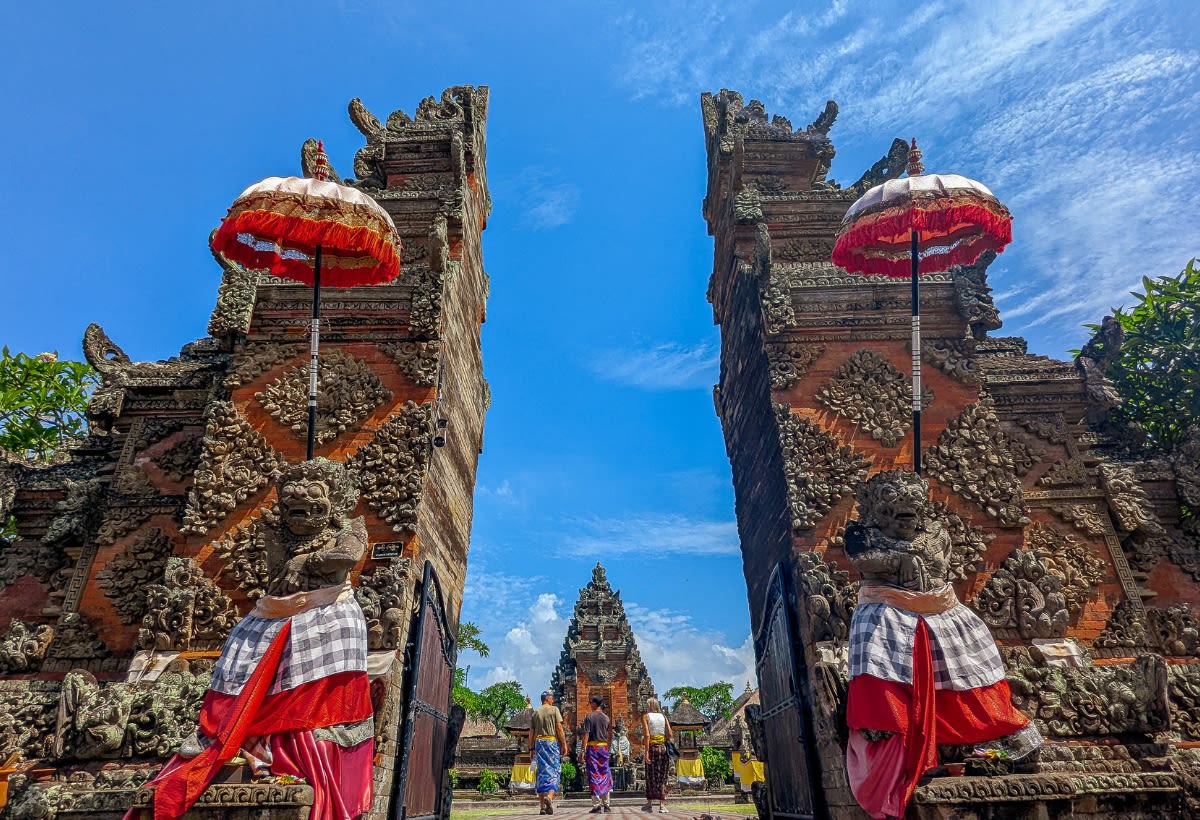
Deep down, my relationship with spirituality contrasts with the usual setting – more cosmic than ritualistic. But temples have always drawn me because of their ethereal energy. At Pura Puseh Batuan, the air smelled of frangipani. A classic Balinese temple deeply rooted in the Tri Mandala spatial concept and rich with symbolic ornamentation. Located in the artist village of Batuan, this is one of the oldest temples on the island, dating back to the 11th century. Flanked by Dwarapala statues represented by fearsome demons holding fort, I stepped through the two-way gateway without doors, elaborately decorated with floral and foliate motifs. Music from the gamelon, wafting incense smoke and small palm baskets of offerings at every corner, presented a serene scene.
The Epicurean Delight
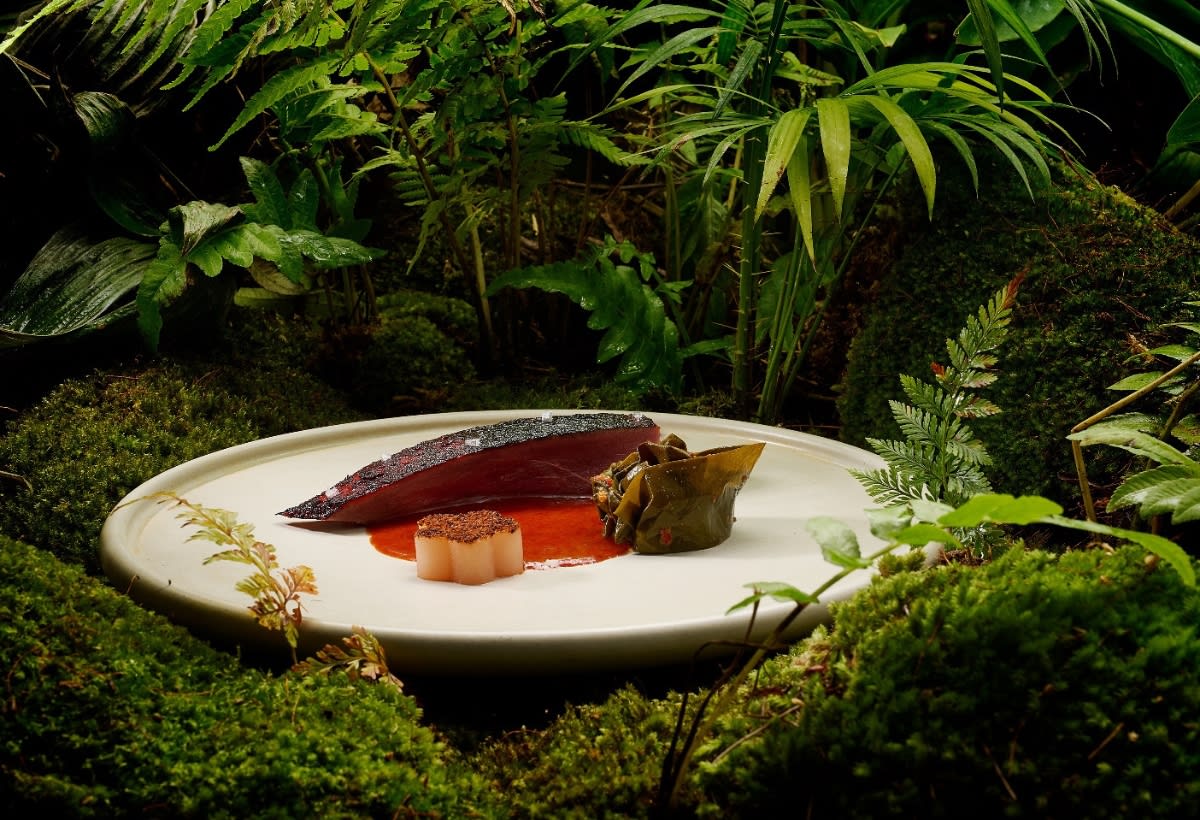
In Ubud, the slow food movement is taken seriously. Locavore NXT, the visionary venture of chefs Eelke Plasmeijer and Ray Adriansyah, transcends the notion of a mere restaurant.
Be it the journey of the Aged Duck. Marinated in ‘angkak’ - red rice cultured with Monascus purpureus (an edible fungi grown on rice which creates the red yeast rice ), then dry-aged for up to seven days. On the plate, it meets a personal touch: an annatto sauce from Chef Alfonso’s childhood in Mexico, paired with rosella-pickled daikon and genjer leaf kimchi.
Or the culinary genius of elevating the acidity of the otherwise sweet matao (an Indonesian local fruit) to complement the tender raw Central Java lamb and finished with petai miso, calamansi kosho, and gochujang emulsion. Each dish at Locavore NXT is more than a plate of food; through innovative plating, it becomes a narrative that underscores the vital role of ingredient sourcing in the journey toward sustainability.
Reattuning The Spiritual Balance
If there is one place to unwind on a sabbatical to restore the body, mind, and soul, it is Bali. In Nusa Dua, a short stroll from Mulia Beach, REVĪVŌ stands as a wellness sanctuary designed for deep reset and long-term transformation. REVĪVŌ addresses one of modern life’s most urgent challenges, achieving a sustainable work–life balance. The goal is to unwind with purpose, ensuring guests return home with rituals and routines that endure. A team of expert instructors leads group and one-on-one sessions in meditation, yoga, and Pilates, as well as high-intensity movement practices such as TRX, Muay Thai boxing, floating, and aerial yoga.
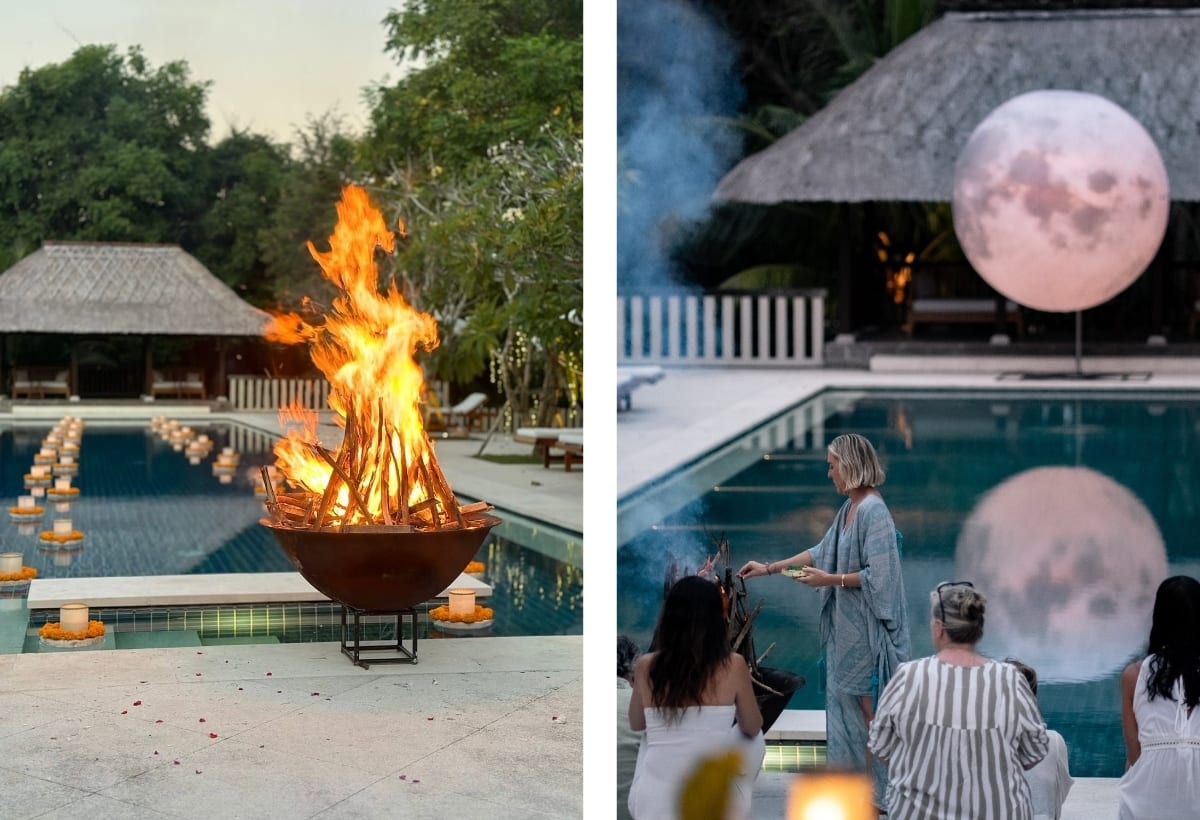
Holistic therapies include breathwork, reiki, chakra clearing, and movement-led healing, in which breath and movement work in tandem to activate our energy. Full-moon sound healing sessions are particularly powerful, guiding guests in navigating heightened lunar energy through sacred smoke, cacao blessings, mantra meditation, and fire cleansing. Sofia Buntarti, a key member of the wellness team at REVĪVŌ Wellness Resort, shares that after many healing sessions, guests often become emotional and begin to cry - a response she describes as a sign that the heart has opened wide, self-awareness has surfaced, and the individual is finding their way back to their inner peace.
Evenings are designed to remove sleep barriers through bath-time ceremonies, guided breathing devices, mandala colouring, journaling, and aromatherapy, quietly closing the day. What sets REVĪVŌ apart from Bali’s spa-saturated landscape is its clear focus on Mind Training - placing mental clarity and emotional balance at the centre of overall wellbeing.
The Flowing Strokes of Molten Resilience
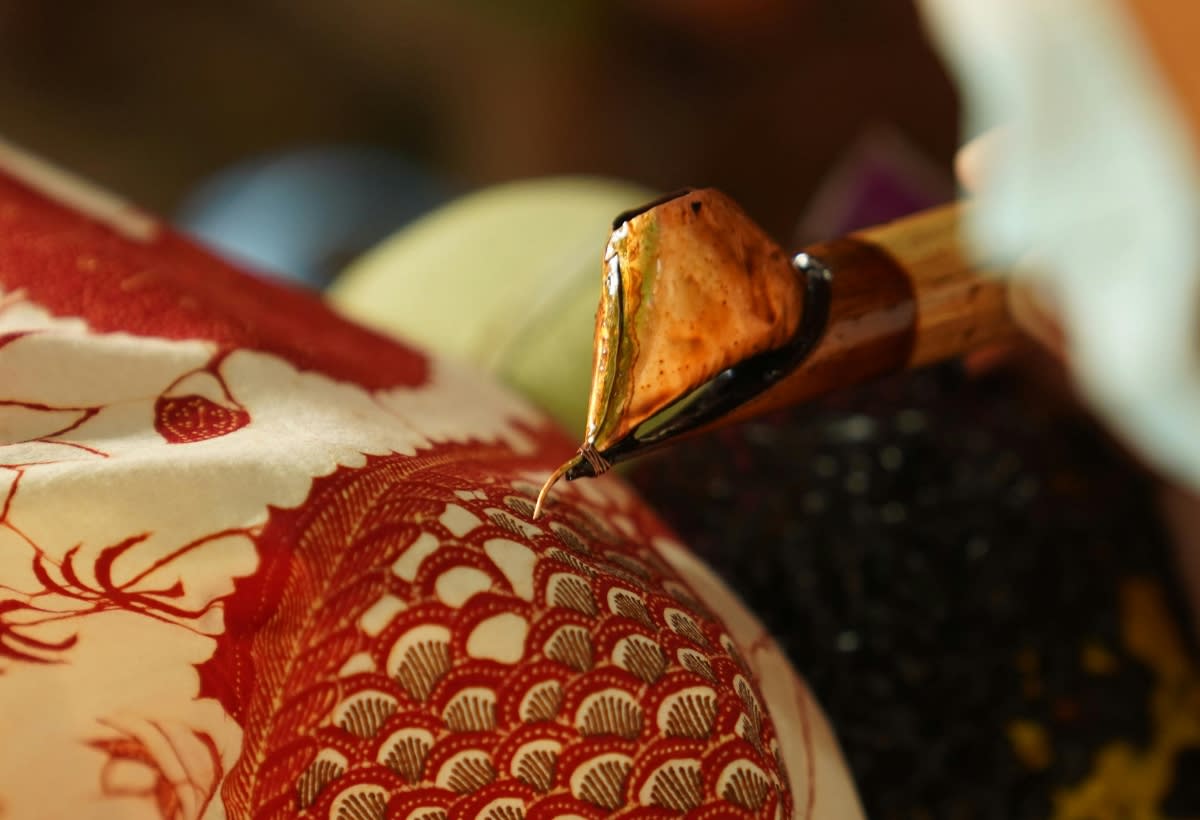
The ride to the Batik class traversed through sun-drenched rice fields. The air at the artist’s home was thick with the vegetal scent of molten beeswax. An artist’s home-turned-workshop where every corner embodied a temple of craftsmanship. A pencil outline over the cotton cloth stretched with pins on a square wooden frame – the instructions were simple. Then came the first stroke, always a prayer. I tilted the canting over the wajan, dipping its copper belly into the shimmering, molten wax. The heat radiated up the handle. I brought the spout to the cloth. A line of liquid wax bloomed on the cloth, cooling into a honey-colored trail. My first lines were hesitant, blotchy. The wax flowed too fast or clogged the spout. Eventually, I trained to pour it seamlessly. In a world of digital immediacy, batik taught the sacred discipline of slow creation.
A Guided Tour That Unwrapped Bali’s Soul
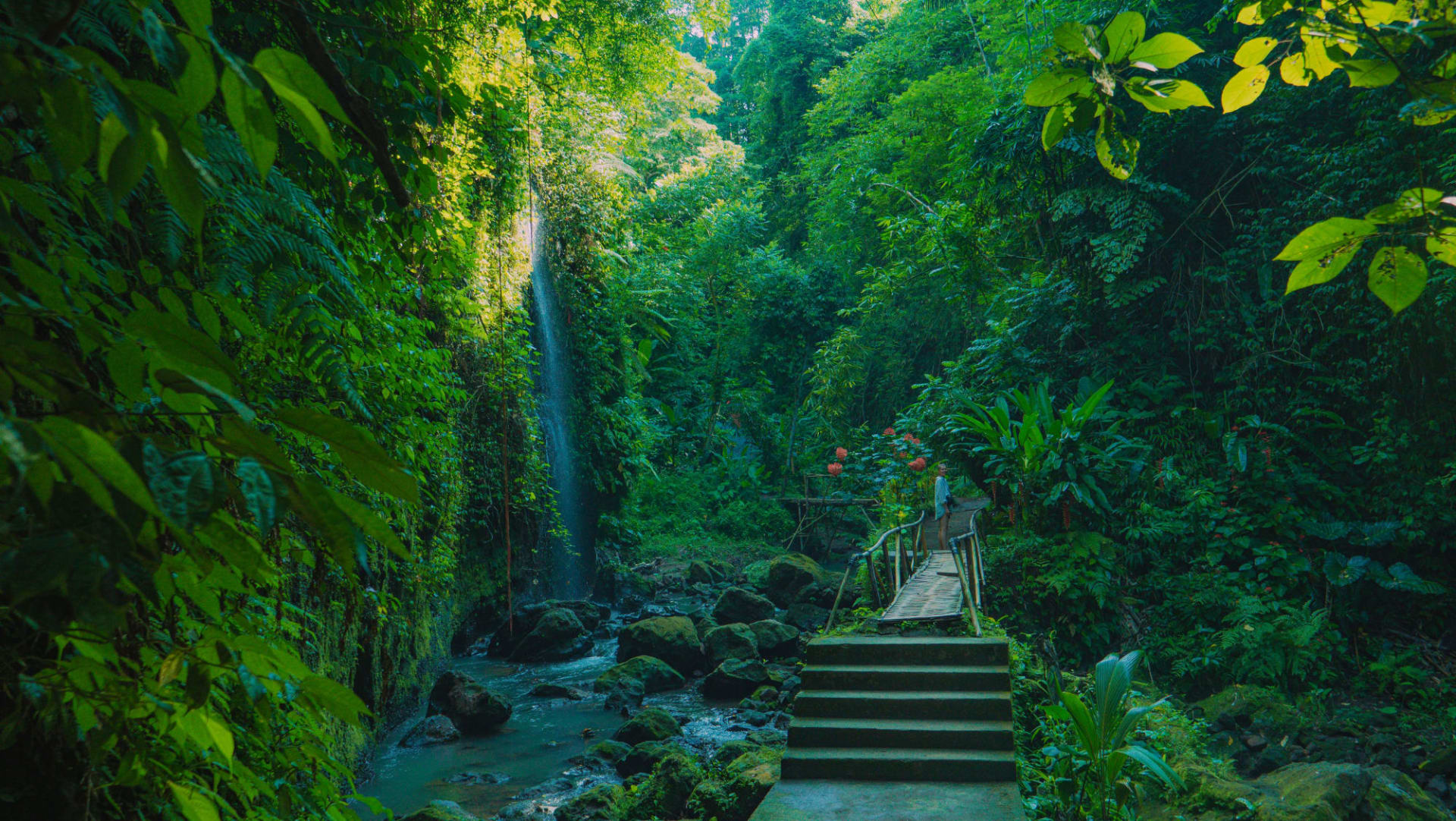
An hour-and-a-half drive, then a half-hour descent: the air cooled, the world's roar replaced by rushing water and the drip of springs. Wading through shallow streams as the walls narrowed to an arm's width, slick with moss, I came upon a single, powerful waterfall that plummeted from a crevice high above. A narrow slit in the jungle canopy far overhead lets in a shaft of pure, golden light that pierces the gloom. It didn’t just illuminate the falling water; it transfigured it.
Emerging from that primal world, Tirta Gangga felt like stepping into a composed haiku. A vast pool, a mirrored mosaic of lily pads and gliding koi. To cross, I navigated stepping stones - intricately carved lotus thrones that float on the water. Each step required focus, making the simple act of walking a mindful ritual.
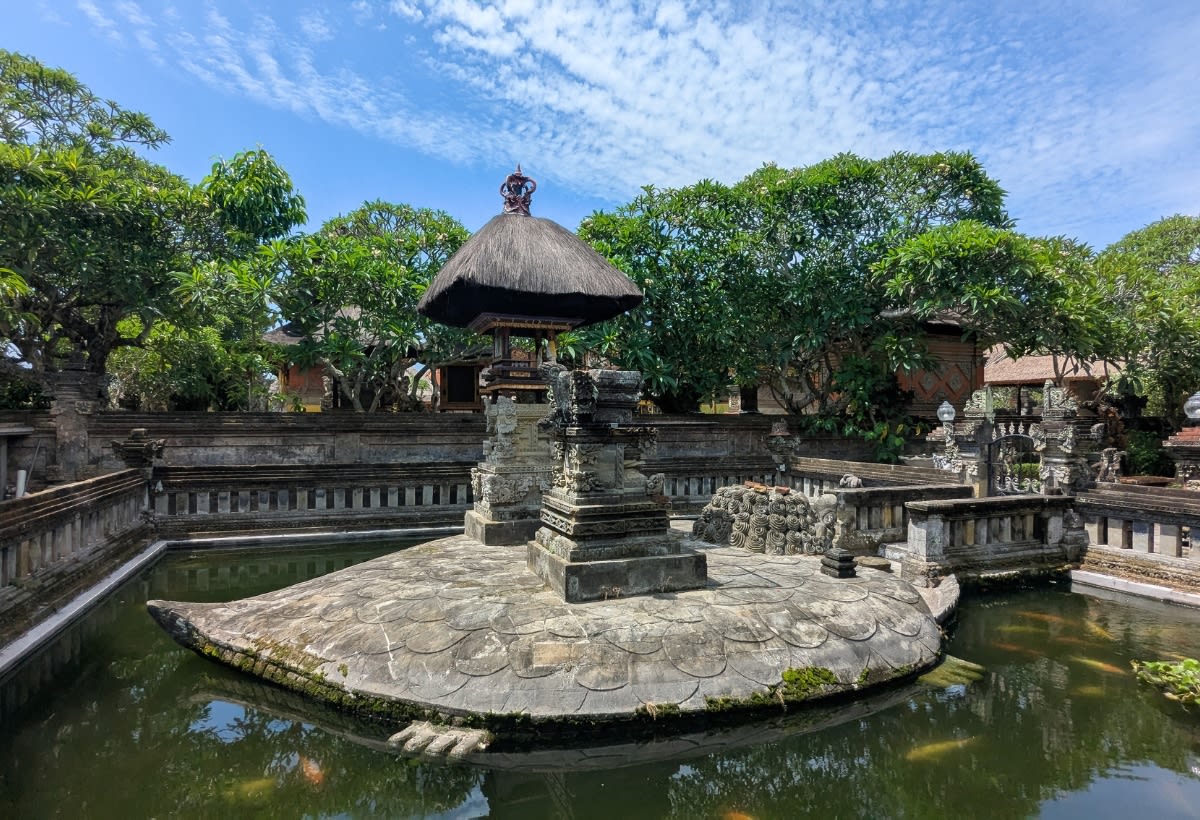
My journey through the narrative of water ended at the coast, at Taman Ujung, the "Water Palace." If Tirta Gangga is a delicate poem, Taman Ujung is an epic novel left half-finished. Built by the same king in the early 20th century, it was designed as a sprawling summer palace blending Balinese, European, and Chinese styles - now a place of haunting melancholy. A volcanic eruption and an earthquake left it in majestic ruins. You walk elegant causeways over mirror-like pools, but they lead to pavilions with staircases that ascend to nowhere - the skeleton of a grand vision, open to the sky.
Soaking in the Serenity at Taman Beji Griya
The itinerary’s true climax arrived not from a plan, but from a search. The pursuit of a beautiful waterfall – Taman Beji Griya unexpectedly became the most personal and transformative segment of my journey.
Upon arrival, I was assigned a guide who asked me to change into the customary maroon or green sarong - I chose maroon. I was then handed a large ritualistic tray of Upakara (benefit) consisting of several smaller basket flowers, crackers, biscuits, along with a bundle of incense, prepared for each attendee ahead of the ceremony.
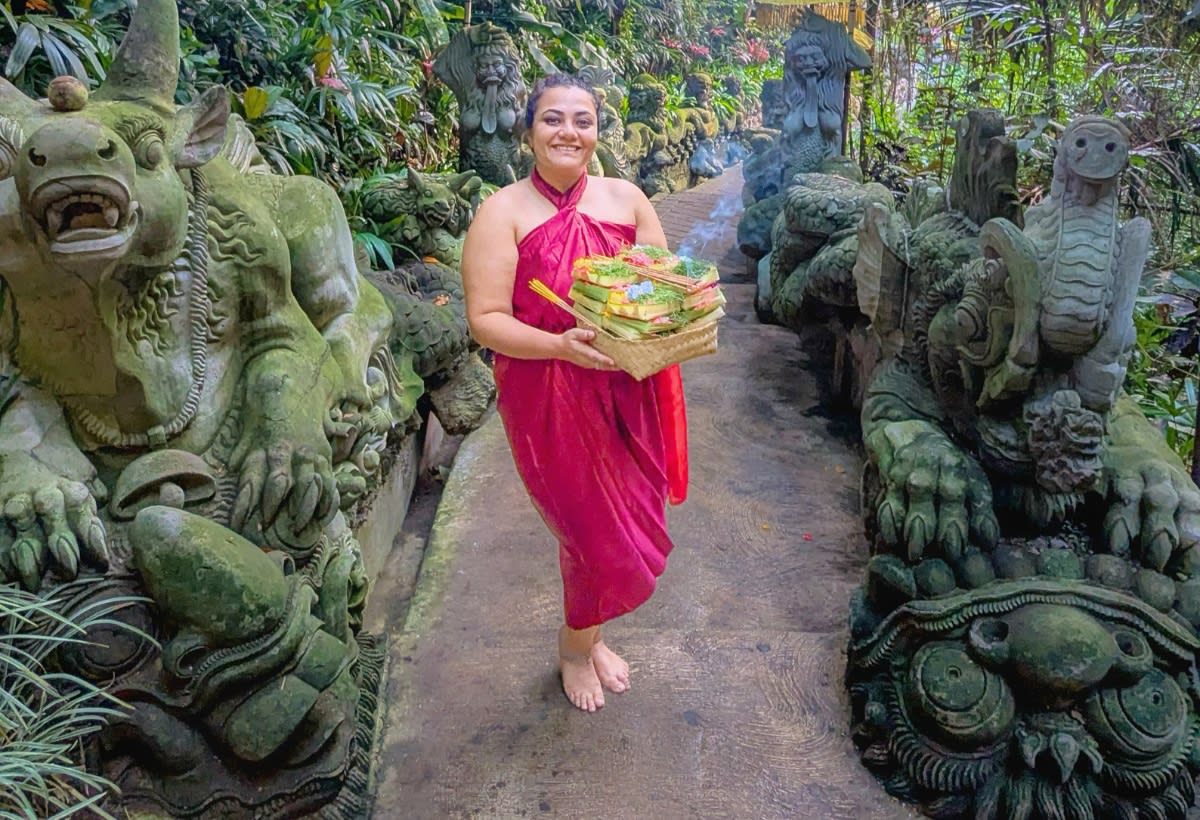
The sanctuary itself is home to nine holy streams and two waterfalls, and is dedicated to the goddesses Gangga, Parvati, and Saraswati, as well as Shiva, Surya, and the forest deities Tu Aji Mangku and Ratu Niang Manku.
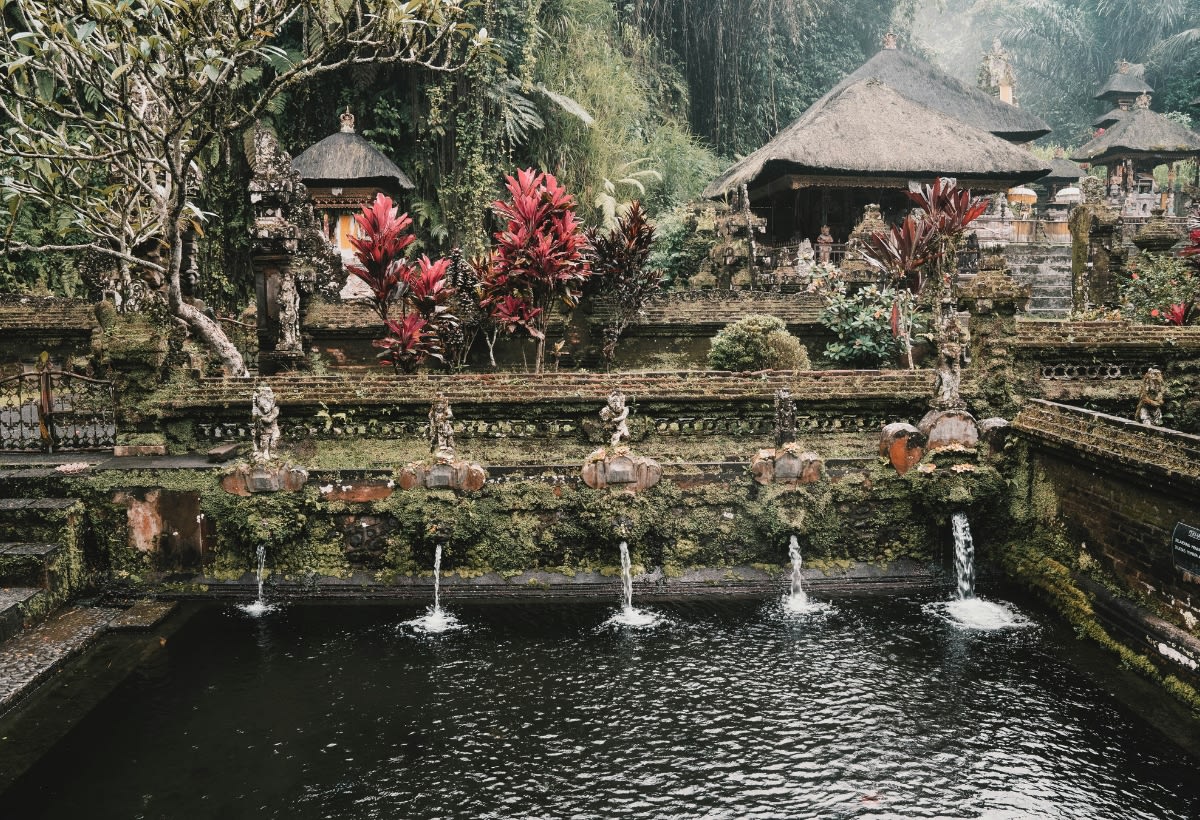
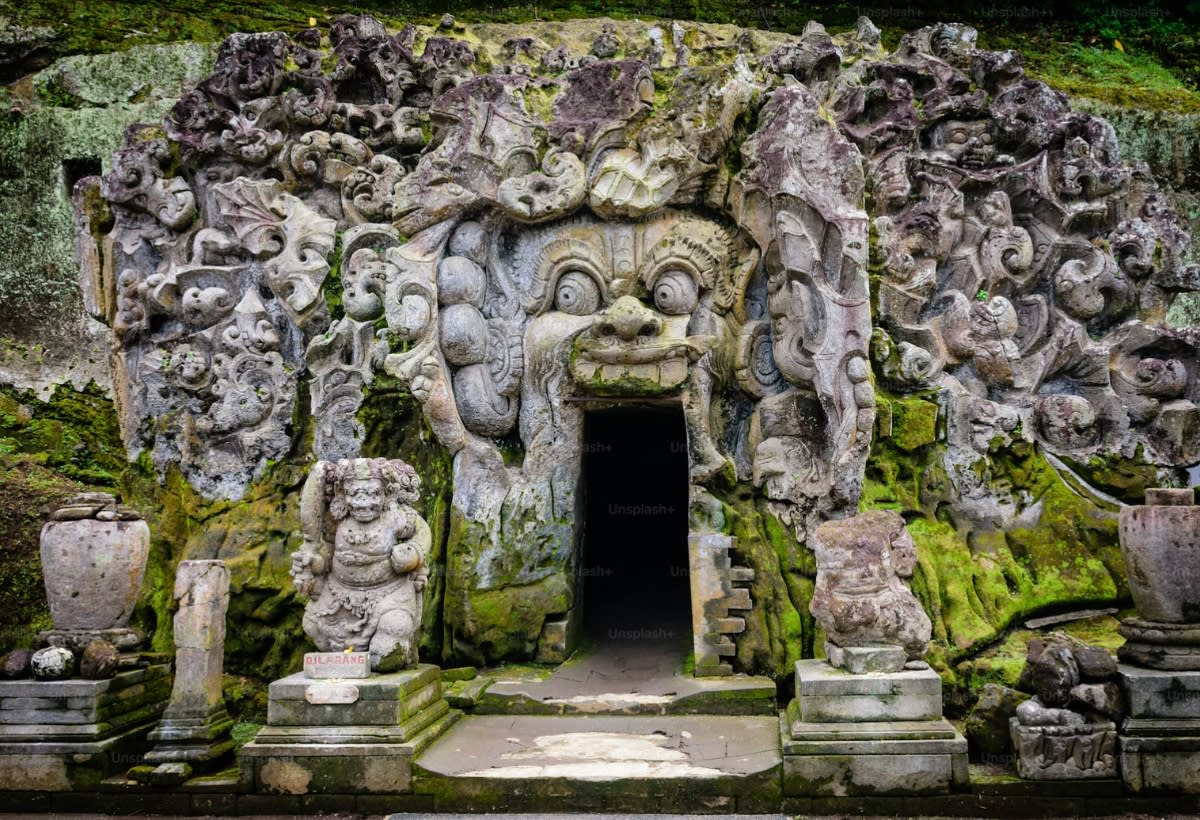
The ceremony began by paying respect to the guardian of the cave at its entrance, followed by the deities upon a central altar. A few mossy steps below was a cave, rather an energy portal into a different world. Offering a basket to its guardian, we entered the pitch-dark cave. Moving gingerly through knee-deep water, I reached a small opening where sparse light filtered from above, just enough to trace the contours of rock formations shaped like faces. After offering baskets and incense, my guide asked me to bow beneath a flowing stream. Cupping my hands, I lifted the water to my face, washing it three times, sipping it in seven measured sips, then splashing it across the back of my neck. All the while, the sacred chant of Om Shanti echoed softly through the darkness, creating a spiritual helm.
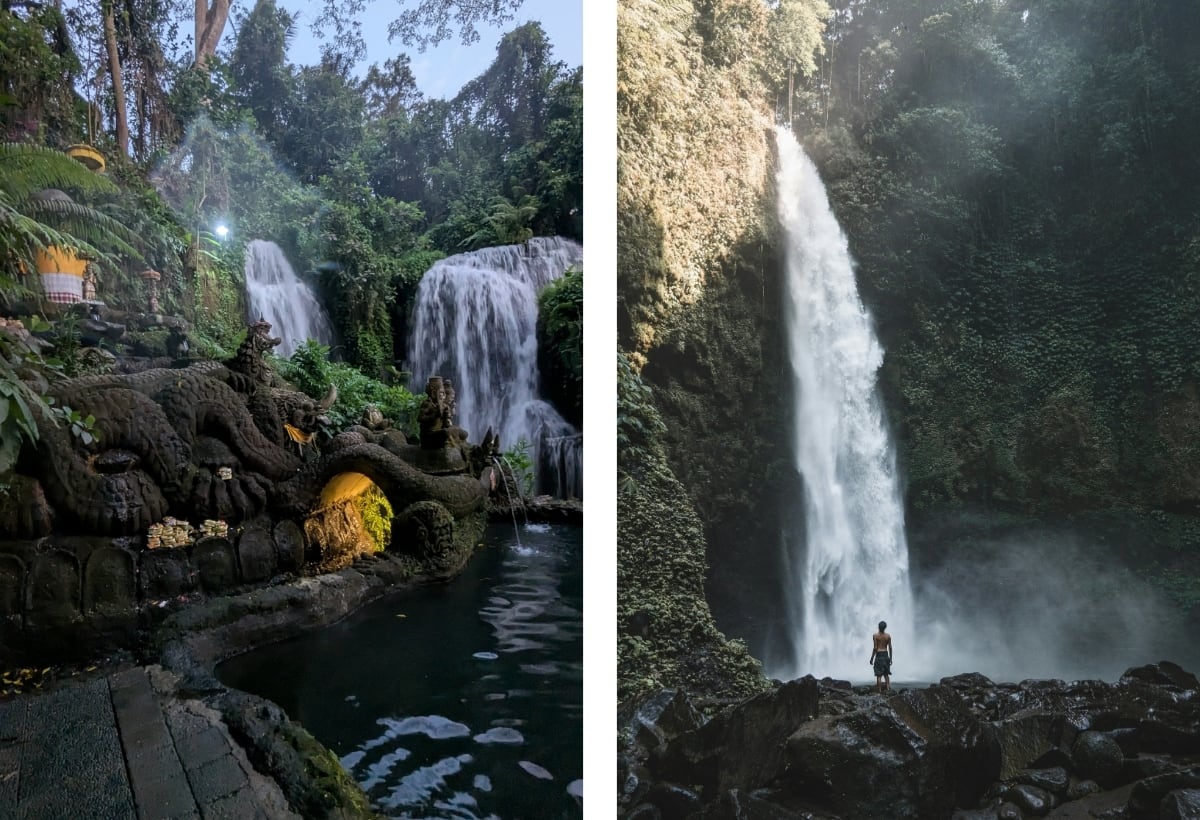
Once I soaked in the sacred ambience, we moved to the thundering waterfall where you have to scream off internal griefs, frustration, anger or resentment. Initially, I held back, but the guide asked me to let go. I felt lighter. Then, through the belly of the sentinel Naga, I emerged into the Lotus Pool, where I was asked to stand under the stream and repeat the ritual already performed in the cave.
The ceremony concluded with a high priest blessing me with coconut water that I was asked to drink and anointing me with a white paste on my forehead before placing a dollop of rice on it that marked the completion of cleansing.
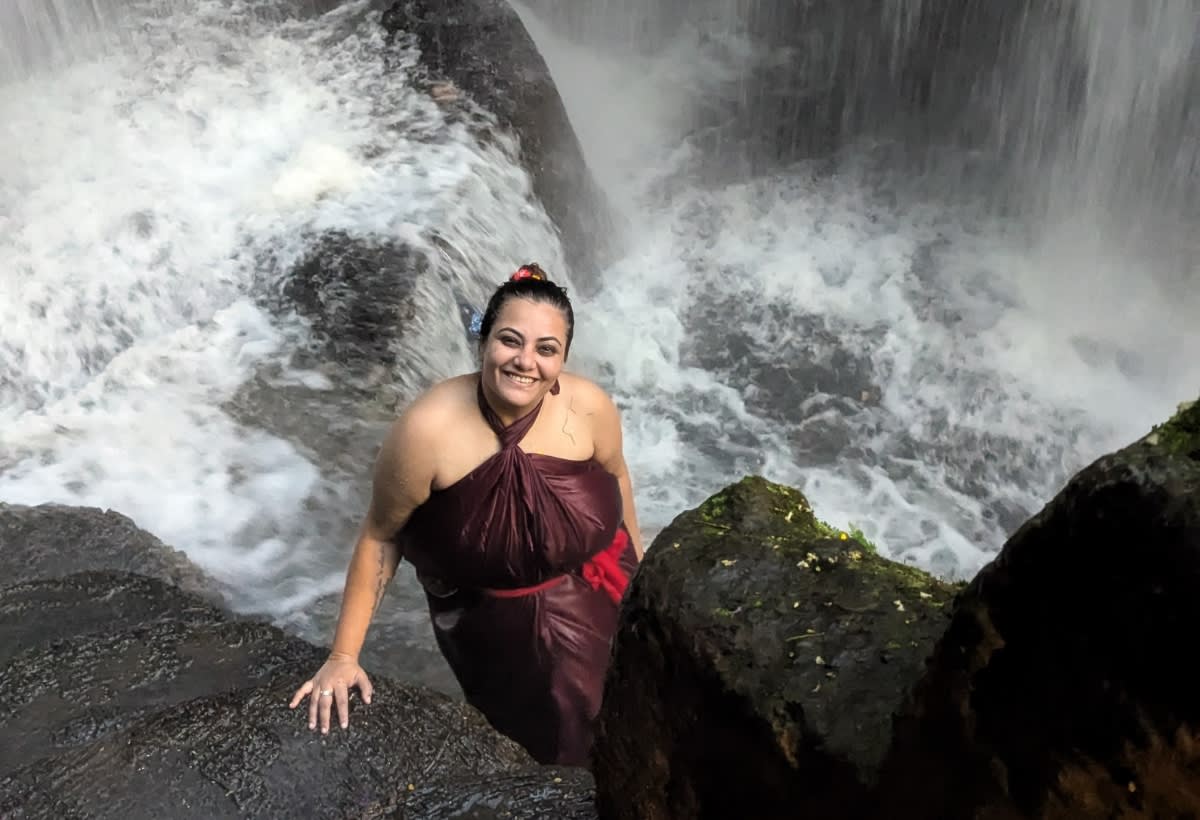
I hadn’t heard of the Balinese Melukat ritual before - a sacred experience that not only cleanses the physical body but heals the body internally, of negative thoughts, stress and anxiety. Donning a ritual sash, following the guidance of a priest, and sitting beneath the thunderous cascade, I wasn’t a spectator, but a participant in an ancient rite.
Water has been my therapist for as long as I can remember, and this raw, resonant experience has tied the entire journey together. It taught my restless mind to flow, to release, and to reflect more than absorb. The hum was gone, replaced by a quiet so profound it felt like a presence itself. It whispered that Bali’s deepest soul is rarely found on the well-trodden path, but in the unseen spaces where nature, unwavering faith, and a willing heart intersect.