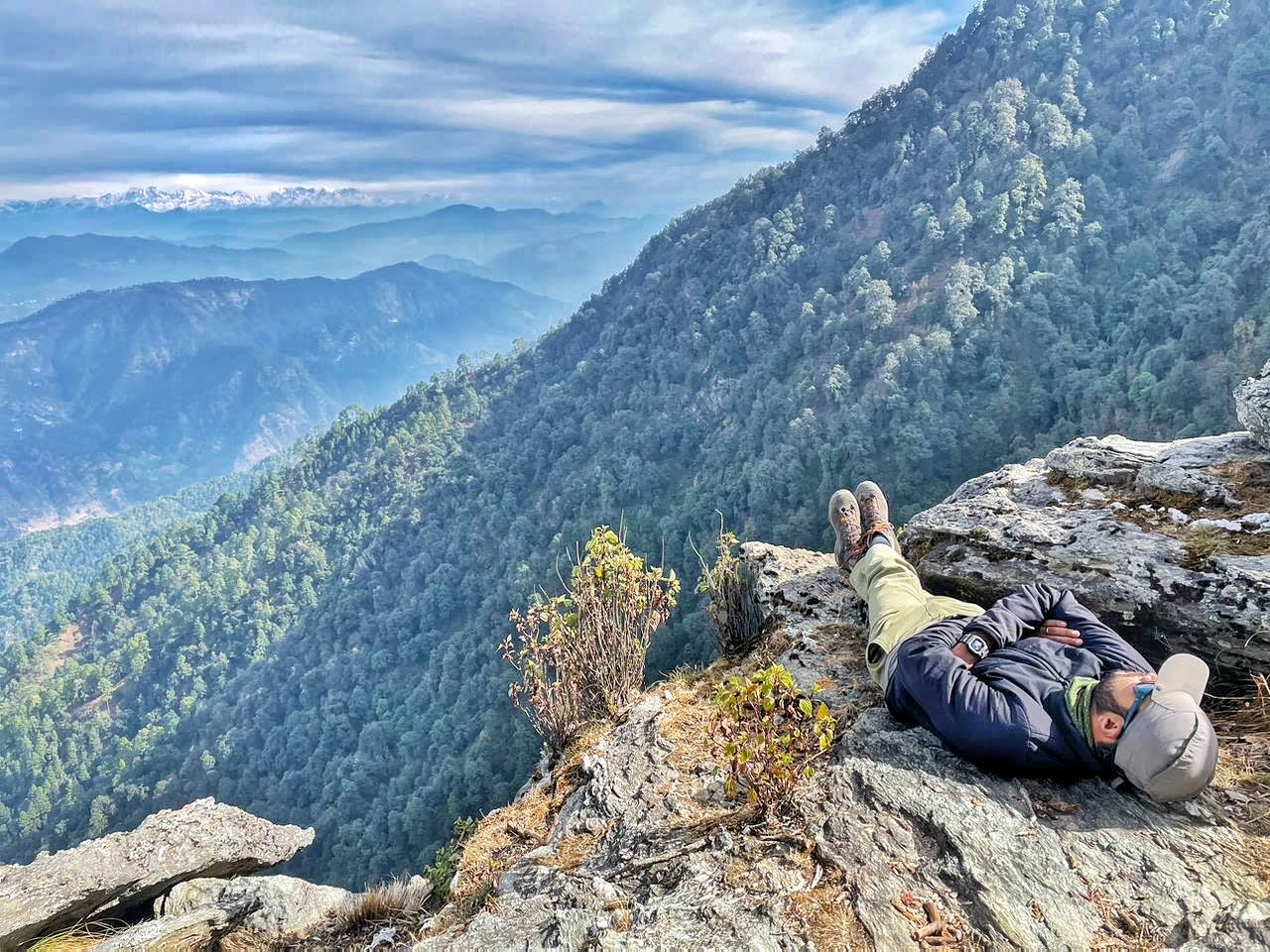
“If I can climb this, I’ll sign up for the Binsar trek,” I told my mom, looking up at the Ralamandal top, on the outskirts of Indore. For context, this is a one-hour uphill walk on a paved path, frequented by all and sundry! I’ve been climbing this since childhood, before it was cemented, but in the last couple of years, fitness has taken a backseat in my life. Old aunties walking barefoot overtook a huffing-and-puffing me. I did make it to the top, and video called my mother, who was waiting to hear from me - “I did it!”
Less than a month later, I was all set for my walking tour of Binsar Wildlife Sanctuary, in the heart of the Kumaon hills, Uttarakhand. This was also my first-ever multi-day trek in the Himalayas.
From the City to the Great Outdoors
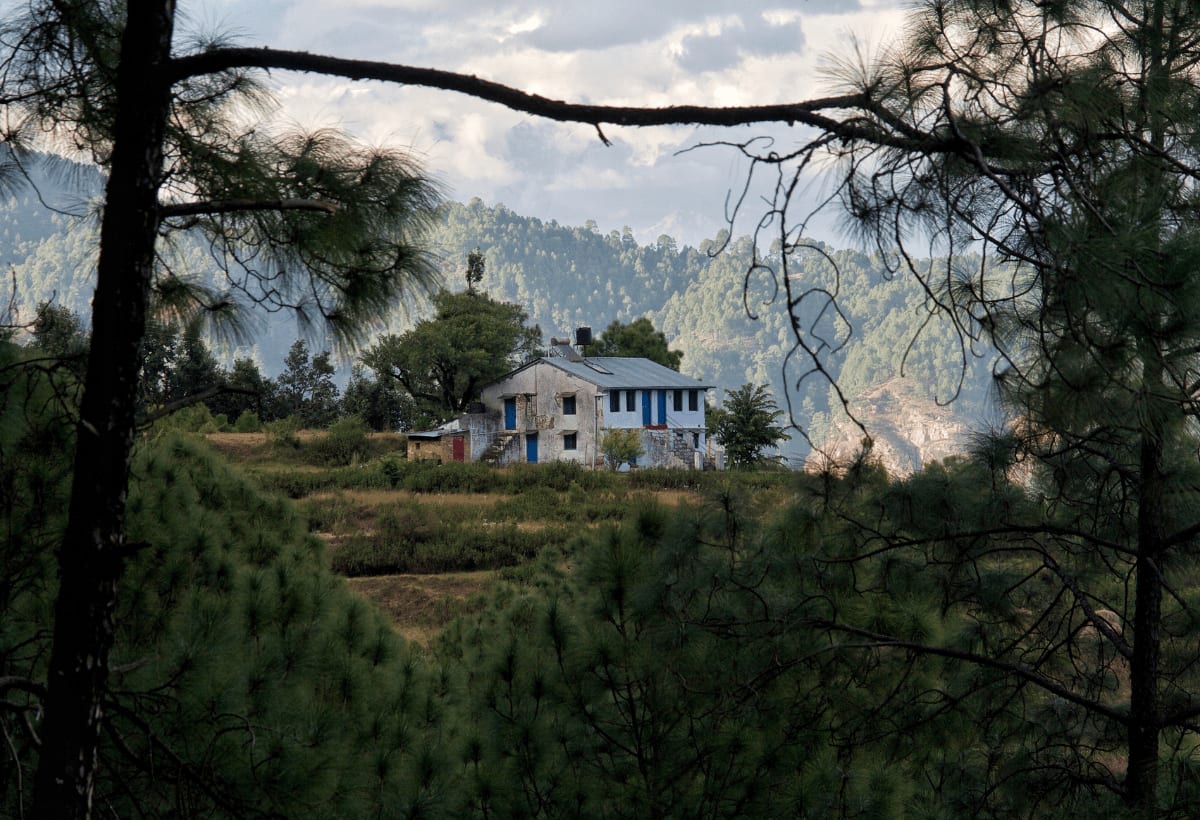
I've been pegged as a “city girl” all my life, though somewhere along the way, I developed a growing appetite for the outdoors. What hasn't changed is my need for a little comfort along the way. Camping in the wild? No, thank you. That's what drew me to this walking tour, a literal journey from one village to another through a protected Himalayan sanctuary. It promised the adventure of being far from the usual tourist trail, without making me give up the comfort of soft beds, clean bathrooms and, yes, hot water! All I needed was to get myself fit enough, because honestly, if you’re stuck up on a mountain with leg cramps, there ain’t anyone coming to get you down. The month from Ralamandal to Binsar was punctuated with climbing 20-floors, walking for two hours, and a lot of back exercises each day.
As with all folks on their sabbatical, the idea of the unknown was exceedingly inviting. I signed up for this Himalayan trek alone, not knowing who else would be a part of my group. The group size is a maximum of six people with two guides, I had read. Lucky for me, it was the sweetest 60-year-old couple, Lata and Pravin, who were great company – swapping life stories and snacks with the ease of long-time friends.
Here Come the Rhododendrons
In my packing anxiety, I ensured clothes for all weather. You can never really tell with the Himalayas, after all. The one thing I prayed for: no rain. It was daunting to think of navigating the treacherous paths when they were muddy. Naturally, it rained heavily the night before the trek, with the forecast predicting more on the horizon. That’s my luck, offering me a dose of adventure!
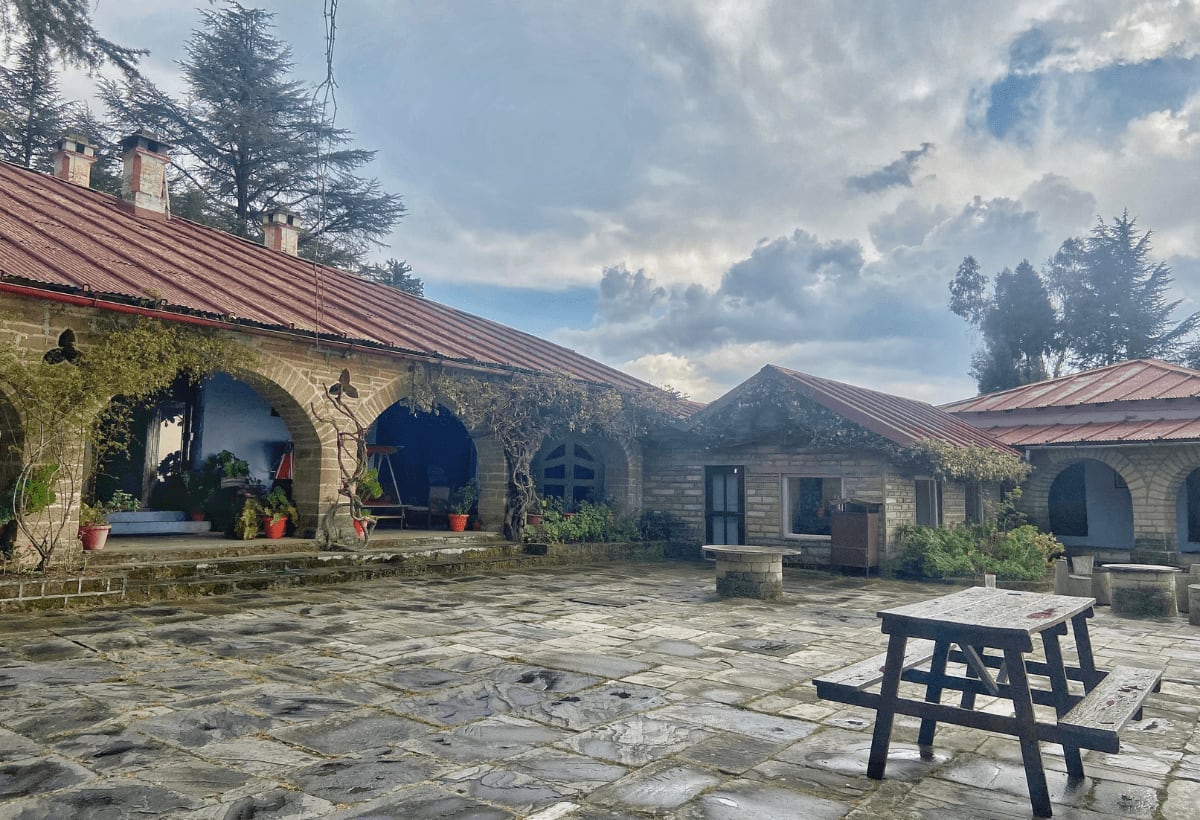
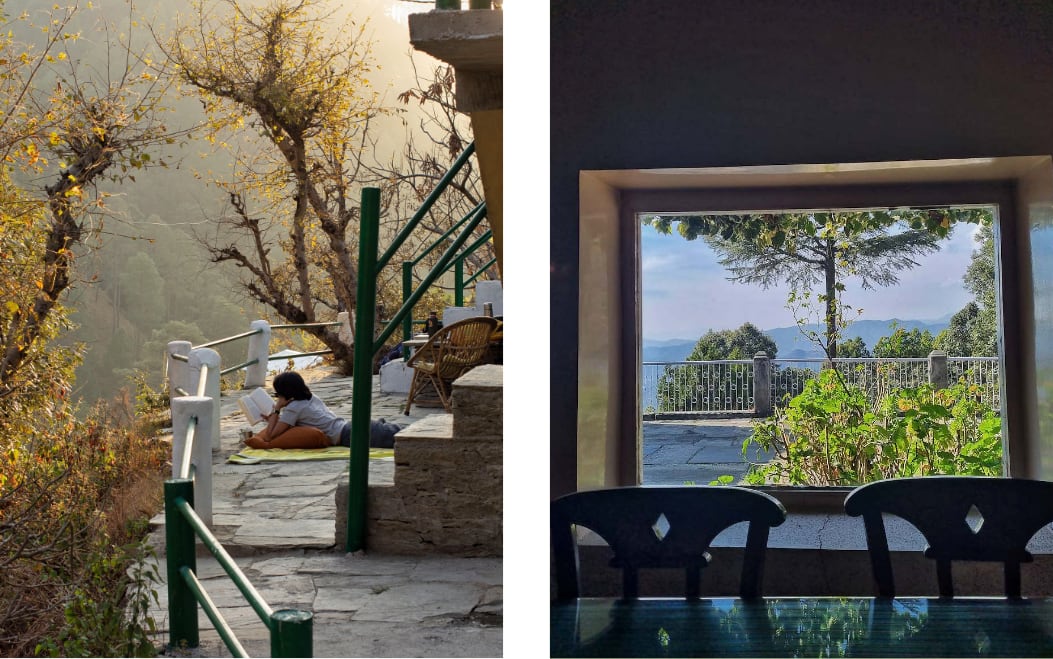
The next morning, as the car snaked up the winding roads to Khali Estate (a hotel that was once a colonial estate having changed many hands, including the Nehru family, and the starting point of the trek), my squeals echoed in the valleys – the roads were dotted with rhododendron trees, painting the landscape red. I was not expecting to see the blooms in mid-April, but climate change ensured the pattern change. The driver assured me that I’d see a lot more inside Binsar. It is, after all, an oak, pine, and rhododendron forest.
At Khali, we met with our guides Hemu ji and Bipin ji, both locals from Binsar. All the people we were going to meet from here on would all be locals, they told us. One of the aspects that makes this trek unique is the source of livelihood it offers to the dwindling population of this region. The guesthouses in each village, too, were maintained by the local village committees, and the food we ate would be cooked with fresh produce (farm-to-table, anyone?). Bipin ji gave us a handy notebook that had checklists of birds, trees, and animals that we could tick after a sighting, as well as a most enticing photo of the Greater Himalayan range that could be seen from parts of the trek. Of course, with the rain, chances were slim.
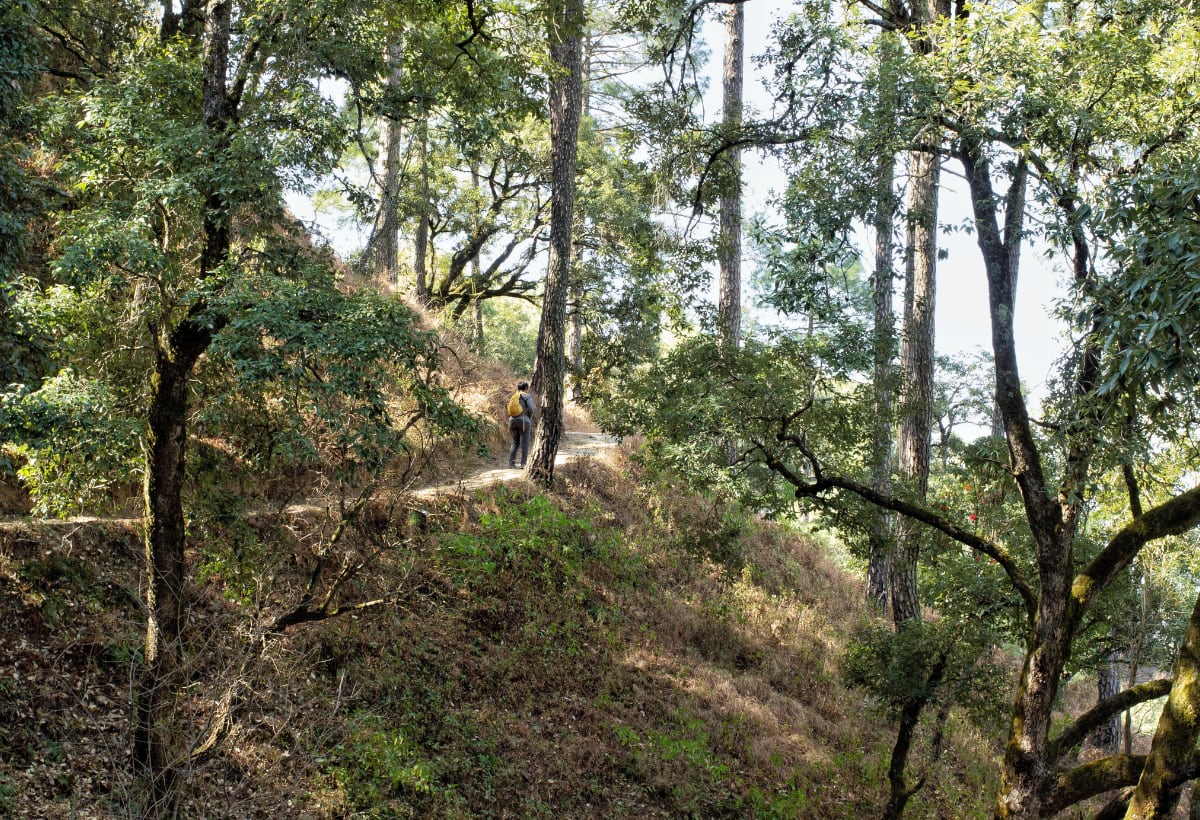
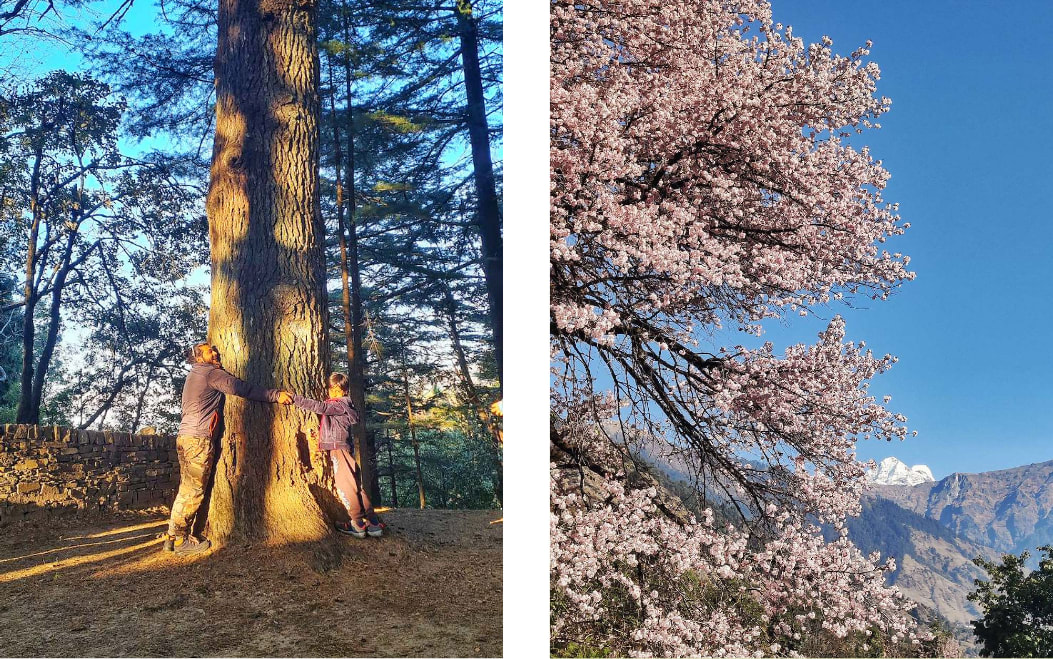
Our route was to be circular, starting and ending at Khali Estate. Each day we walked to a new village, on paths frequented only by the residents inside. A thoughtfully curated itinerary ensured that the trek got more strenuous with each passing day, acclimatising us to the mountain air and a more active lifestyle. From nimbu pani with salt to buransh (rhododendron) sherbet, after each day’s walk, our electrolytes were duly replenished by our hosts. As we also moved from more populated villages to ones where only one or two families resided, the paths got narrower still. Oftentimes, it would be blocked by a fallen tree or require clambering over rocks.
The Treasure Trove That Was Binsar
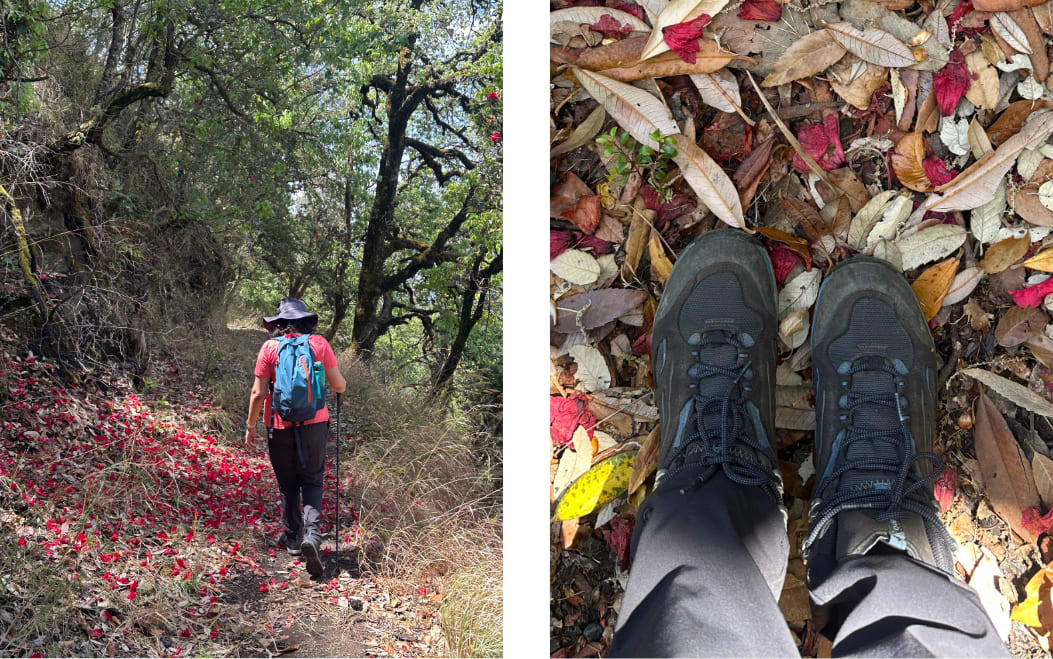
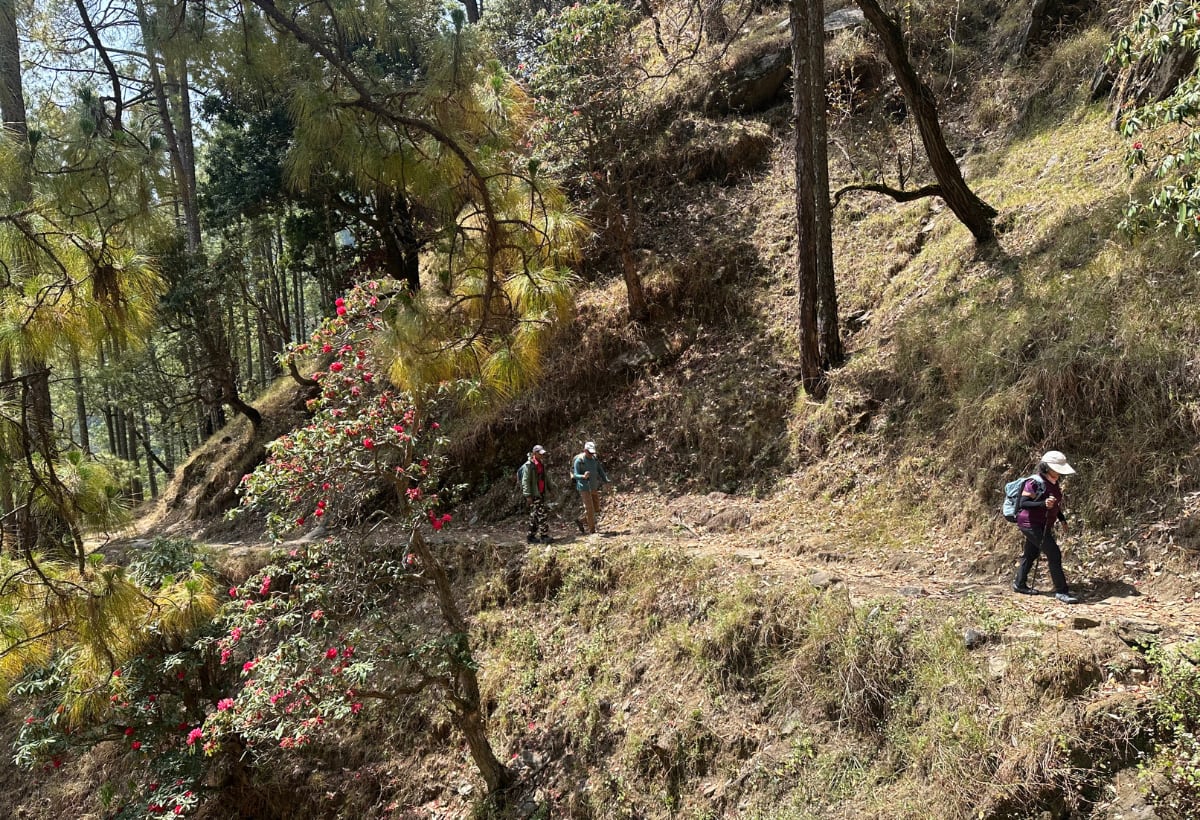
There were abundant rhododendron trees; it was like walking on a red carpet in parts. The air was perfumed with the scent of pine; I took deep lungfuls of air (sometimes to savour, and sometimes just because I’d be out of breath!), knowing that scents that were sold in bottles were available here so freely. I craned my neck every time I heard a birdcall and was delighted to find that both Bipin ji and Hemu ji were endlessly patient. They identified every birdcall, spotting 30 species with their binoculars, with the jewel tones of the verditer flycatcher and scarlet minivet dancing across the lens, and the Himalayan griffon and crested serpent eagle sweeping the skies.
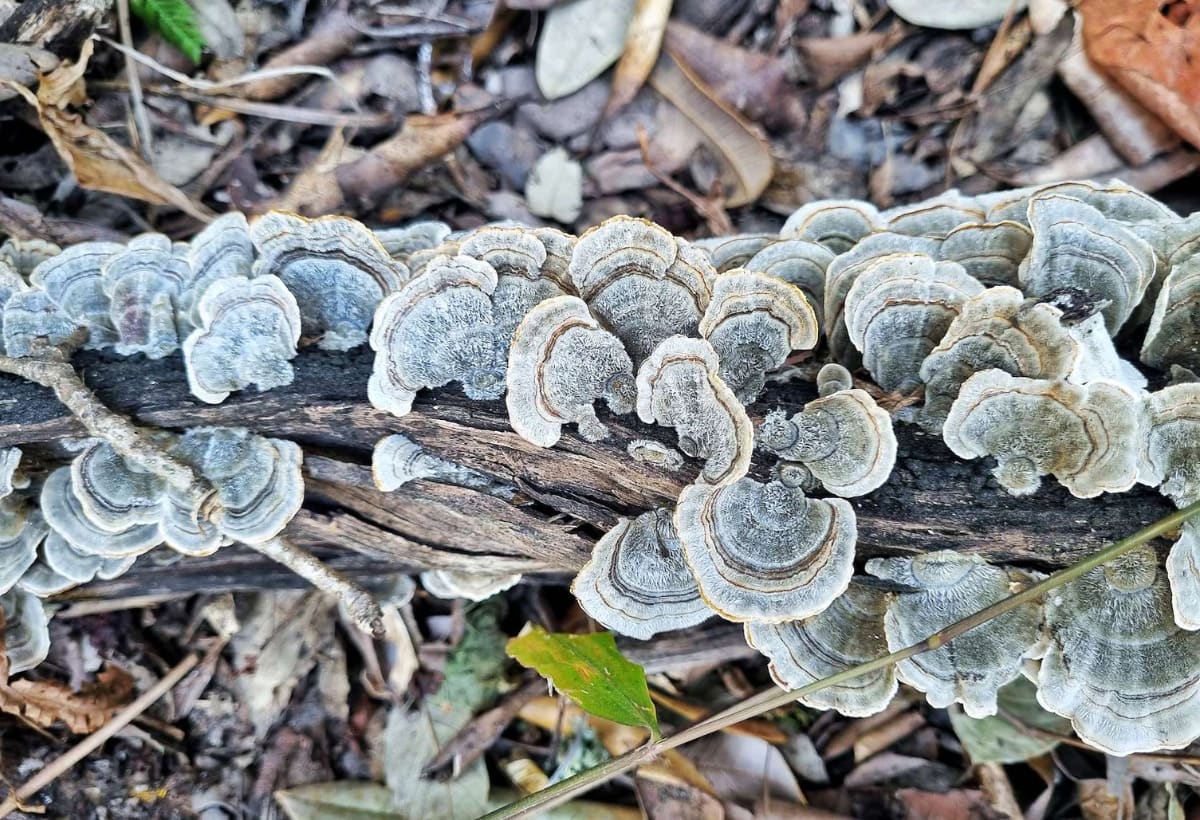
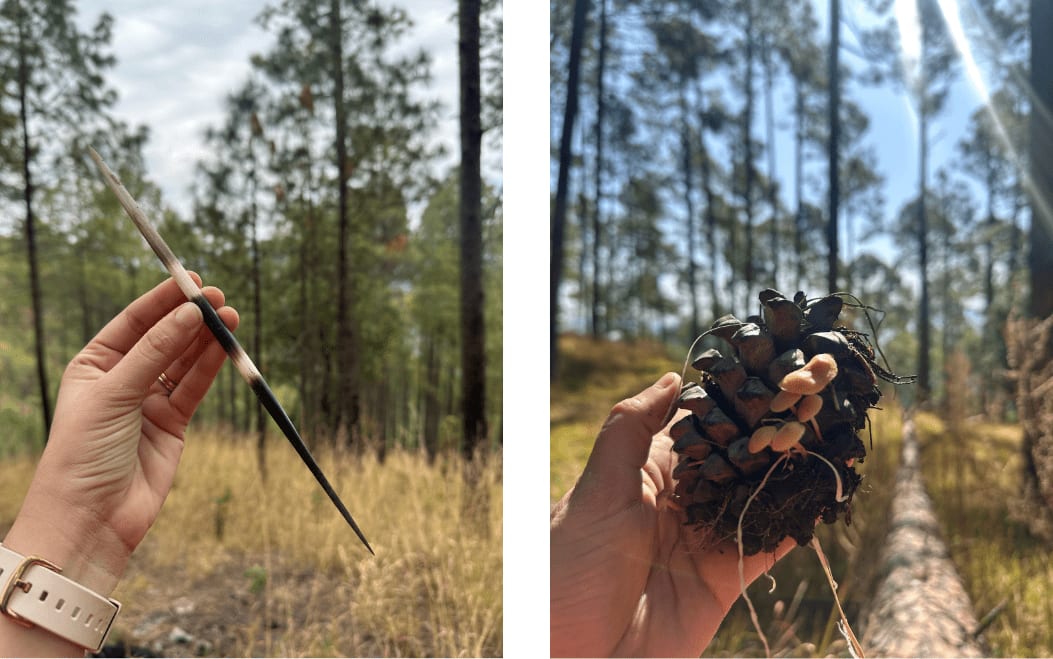
Every time I looked down, I found a new treasure – pine cones, bracket mushrooms, a porcupine quill – each admired and kept back. Despite screaming calves, I ran across every meadow we crossed, just like how I imagined Heidi would, filling my gallery with photos of grinning daisies. The fear of the unknown seemed like a thing of the past, and with every step and every day, I pushed myself past my comfort zone.
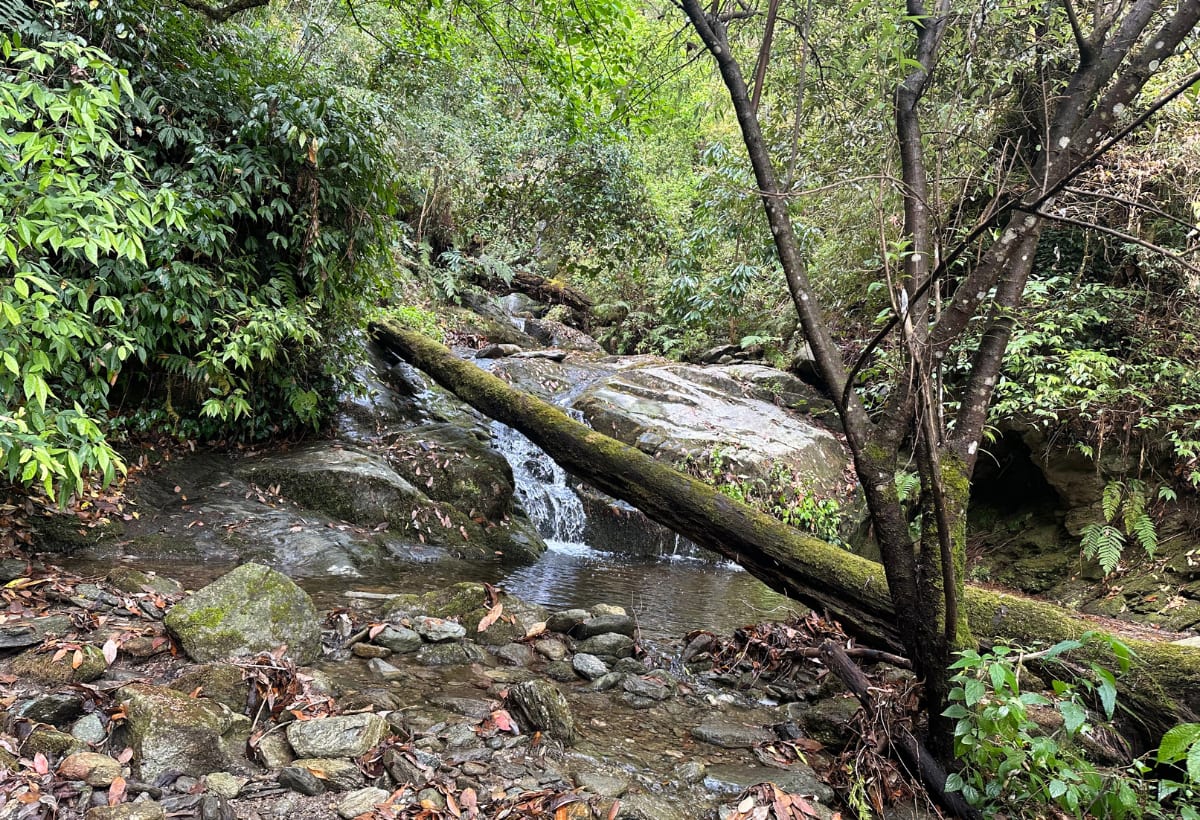
On the third day, we reached Satri village, where only one couple stayed. It was a longer trek – over five hours – through muddy trails and treacherous downhill paths. The constant rain had given birth to many streams along the way. As Bipin ji held his hand out to help me cross the nth one, he laughed, “It’s just like a dance!” About an hour after we arrived, the downpour began. First, rain, and then hail came pelting down. No electricity, we huddled around a wood fire for warmth, drinking cups of warm lauki soup.
The next morning, we woke up to catch the sunrise. The sky had cleared up, and from behind an ocean of clouds rose the mighty Himalayas. I stood there awestruck, wishing desperately I could paint. I’m not one for sunrises, but I’d wake up at 5 am every day if that meant waking to this magnificent sight.
The Wonder of the Himalayas
By the last day, we were pros. Bipin ji gave us the option of choosing a ‘shortcut’ path back to Khali. It was shot down immediately. We ambled about, not wanting the trek to end. Lata and Pravin were carrying a chatai, which was spread open at the drop of a hat by the riverside or under pine trees for impromptu picnics.
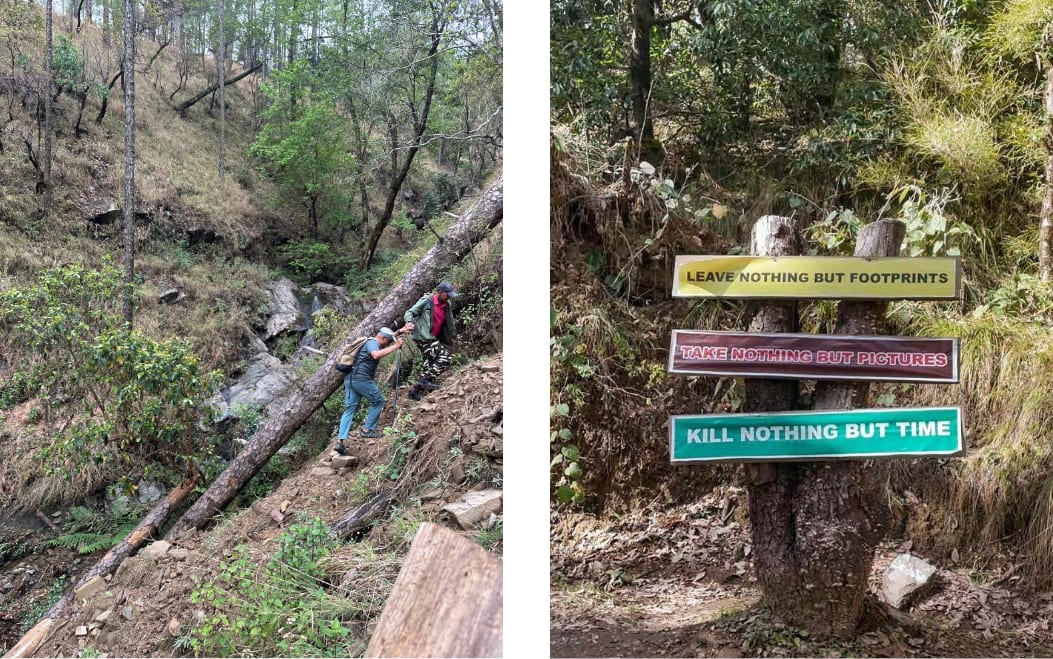
Looking up at the vast expanse of the sky, broken by tall, tall pine trees, I recalled how only two days back this moment felt like an impossibility. On the toughest day of the trek, we traversed 10 kilometres over six hours, from Satri to Risal village. Right after a glorious sunrise, we were trudging uphill for over a kilometre. To say that my training regimen seemed like a joke then would be an understatement. With excruciating leg cramps, I could only focus on putting one foot after the other. After all, when you’re trekking in the Himalayas with no network, the only one who can rescue you is you.
At some point, the path became easier. I looked around to realise that from where I was standing, I could see both the Himalayas and rhododendron trees in bloom – my two main attractions for this trek – in all their spectacular glory. Everything they say about the insignificance of humans in the presence of such might is true, after all, I smiled. While snapping a photo, I saw that on a serendipitous stroke of luck, there was just enough network for a phone call. “I did it, mamma!”
Barring the monsoon, Knowhere Travel Co. takes groups of six all year round for a walking tour of Binsar Wildlife Sanctuary. A sustainable travel company, they follow the ‘Leave No Trace’ philosophy. For rhododendron sightings, March and April are the months to go.