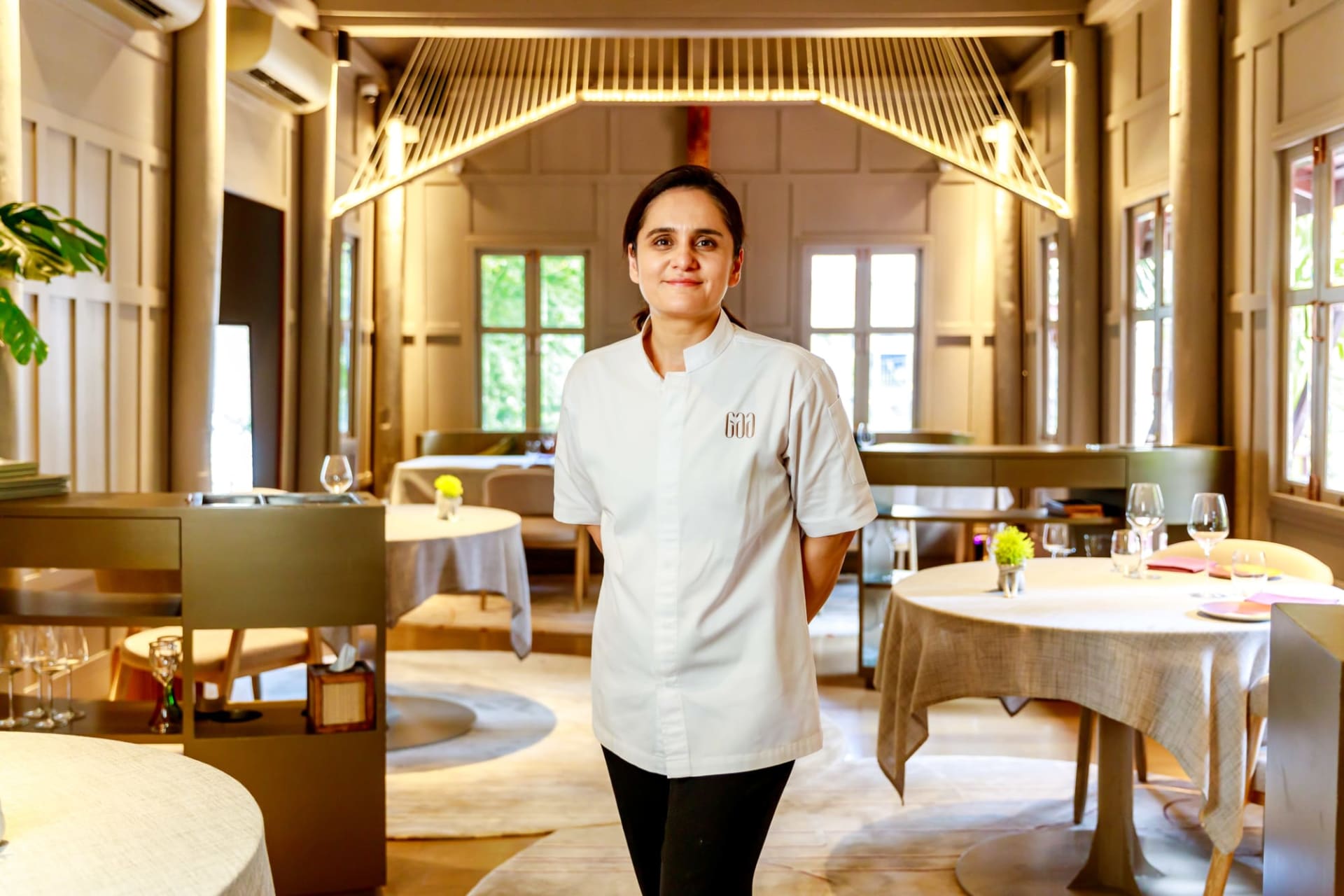
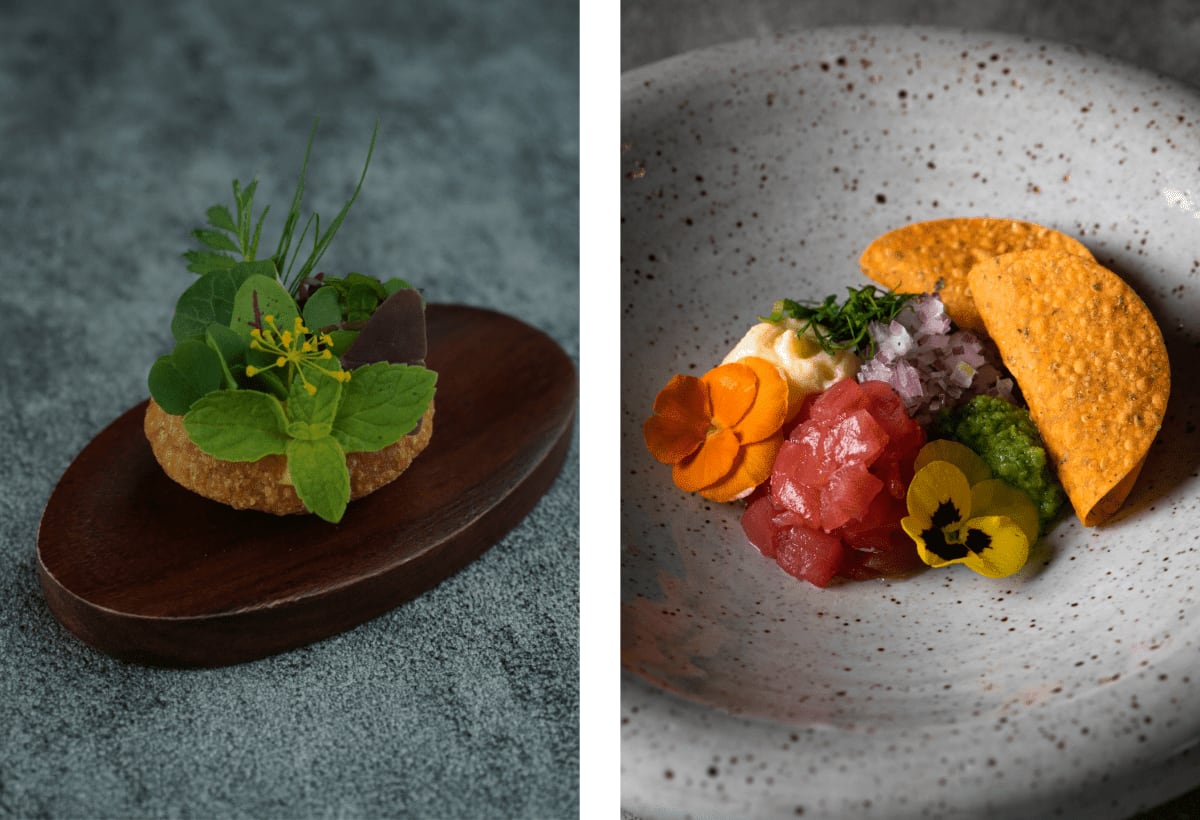
The first act was a ‘chaat’ course, a perfect introduction to India. It was ‘Tuna Bhel’. In a deep bowl came raw tuna, specks of pickled onions, roasted bell peppers, a dollop of corn emulsion, thetcha (Maharashtrian green chili chutney) and a som sa sauce with the bright, citrusy tang, which could be coined as Thai yuzu. Alongside comes a plate of khakra, which takes the shape of a miniature taco. The instructions were simple: mix, scoop inside the khakra shells, and eat. This wasn’t merely an ordinary dinner one goes to every day. I was at Gaa, Chef Garima Arora’s two-time Michelin-starred restaurant in Bangkok, widely regarded as one of the city’s most compelling expressions of modern Indian cuisine.
And I was about to experience a seven-act culinary performance titled ‘India in Many Bites’!
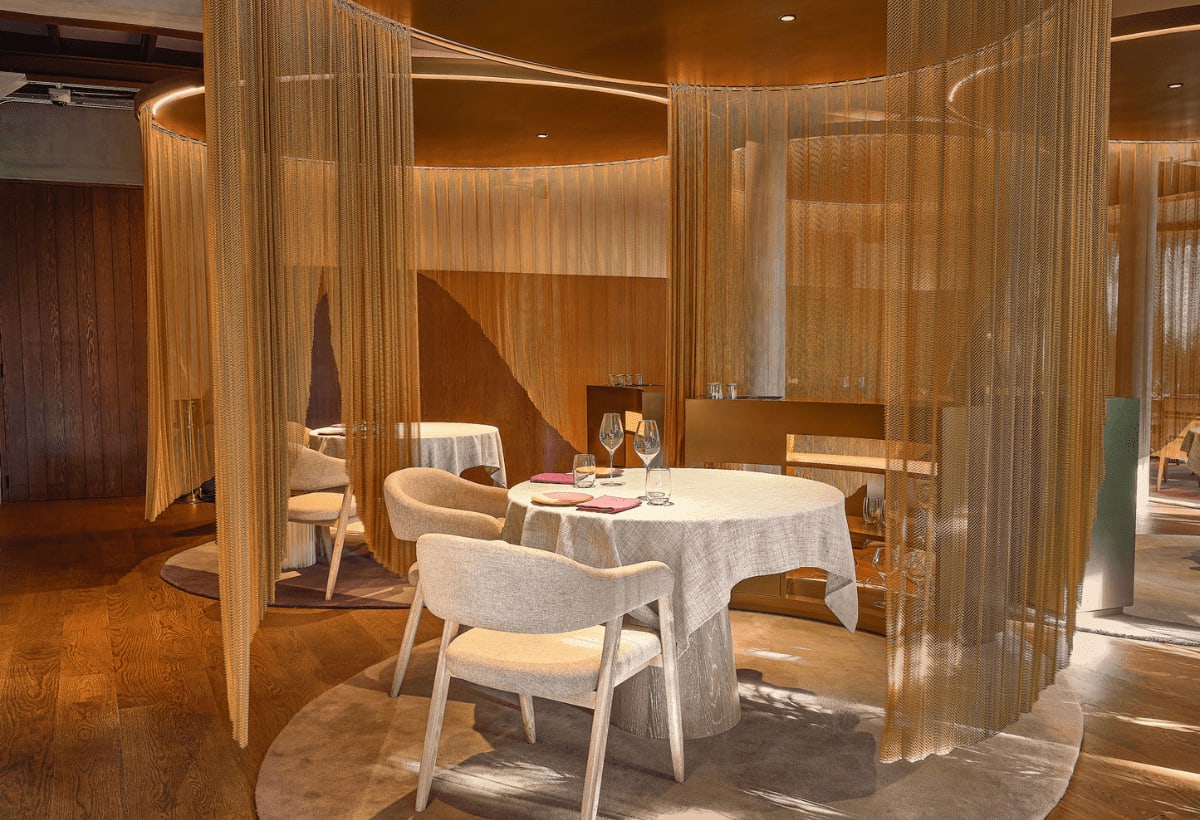
Think Broadway doing an ode to India, only the stage is a fine dining room, set under a drape of a taupe-hued cocoon, housed in a beautiful setting of an exquisitely renovated baan ruen, (a traditional Thai house). Servers arrive in handcrafted claymen ceramic bowls. Each course unfolds as its own act, drawing from the familiar vocabulary of Indian food while, at times, introducing Thai ingredients, techniques, textures and flavours to alter something we thought we knew. The ‘Puchka’ arrives on a clayhead server, crowned with leafy greens. At first glance, it resembles a bite-sized, crunchy salad, almost too pretty to disturb! But one bite unleashes a riot of flavours: chilled mango bites, thetcha, and corn butter, all colliding inside the crispy puffed puri shell.
Those who have experienced Mumbai’s Bangg will know that Chef Garima Arora has a soft spot for this beloved snack. She has previously turned the ‘puchka’ into an amuse-bouche, filling its delicate shell with a Thai tom kha liquid. Here, too, she plays with the memory of the familiar, giving it an entirely new accent.
For the next three hours, Chef Arora’s tasting menu felt like a journey aboard a luxury train travelling between India and Thailand. Each course was another stop, another landscape, another memory reimagined on the plate. On the Gaa trail, our minds travelled as much as our palates did, packed with curiosity that burned brighter with every dish, leaving us wondering what could possibly arrive next!
Chaat And Chakna To Begin With
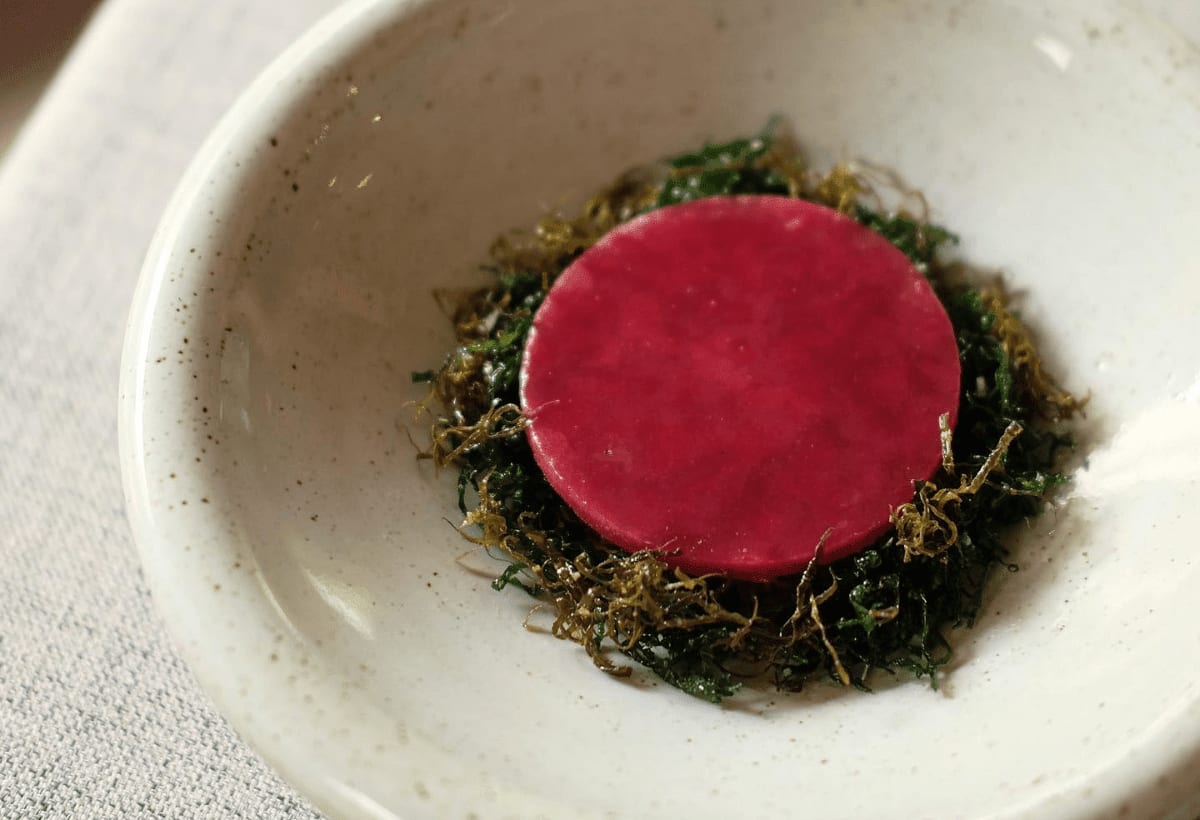
The first chaat was ‘Aloo’. A delicate nest of potato formed the base, scattered with drops of tamarind candy and crowned with a thick layer of potato foam. It was a study in contrasts, creamy against crunchy, humble potato transformed into something unfamiliar and highly flavourful. The chaat course was an unlikely marriage of salad and chaat! But when they served ‘Anar’, fresh-juiced and frozen into a disc of refreshing sorbet, set on a bed of Thai lemon basil and sev made of chamung leaves, a Thai sour leafy green, and flavoured with hung yogurt, it was something entirely unexpected. In its entirety, ‘Anar’ was new to my chaat vocabulary, a curious cross between a sorbet and a salad. Part of the experience of eating chaat was discovering the ingredients as you went along.
The second chapter unfolded with ‘Chakna’, and with every course, sommelier Dimple schooled me in the art of pairing wine with the unexpected. “Chakna comes in a double dose of flavours,” she explained, which is why she chose Jeaunaux Robin Brut Rosé, a sparkling wine that brings structure while amplifying the layers of flavour on the plate.
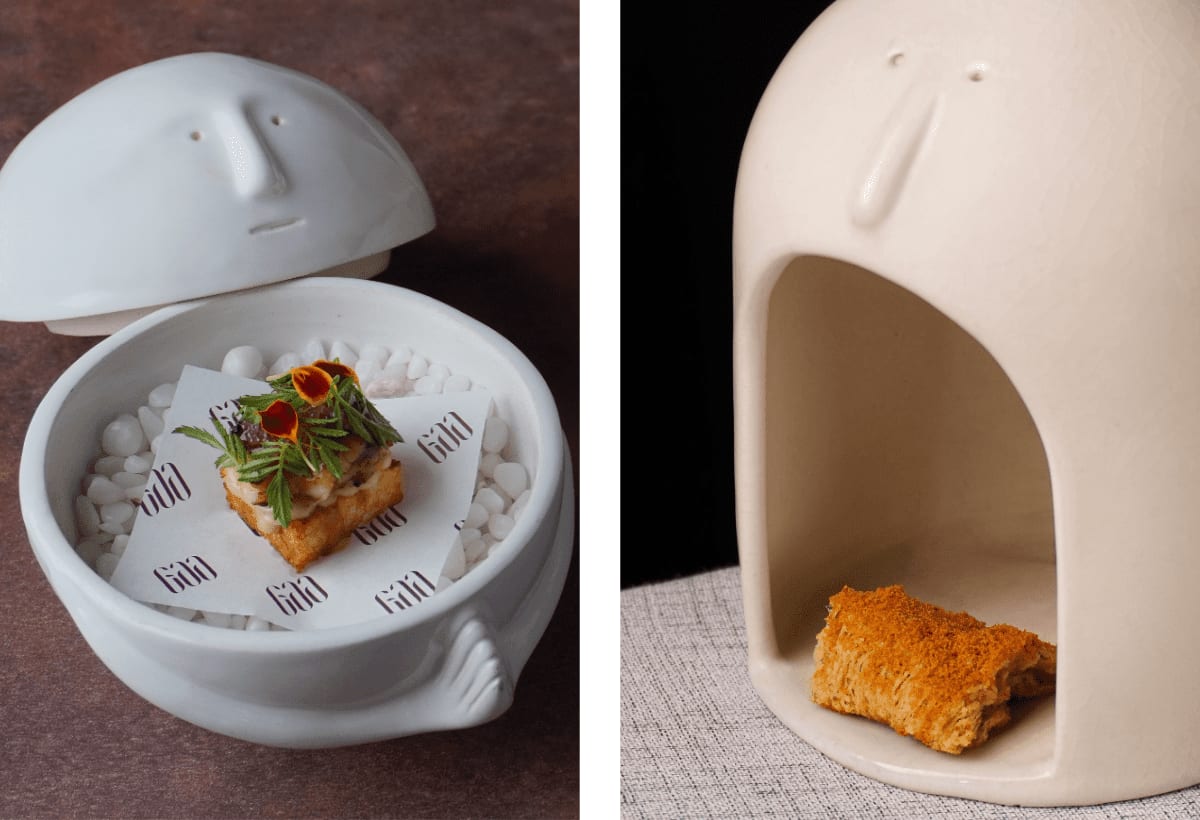
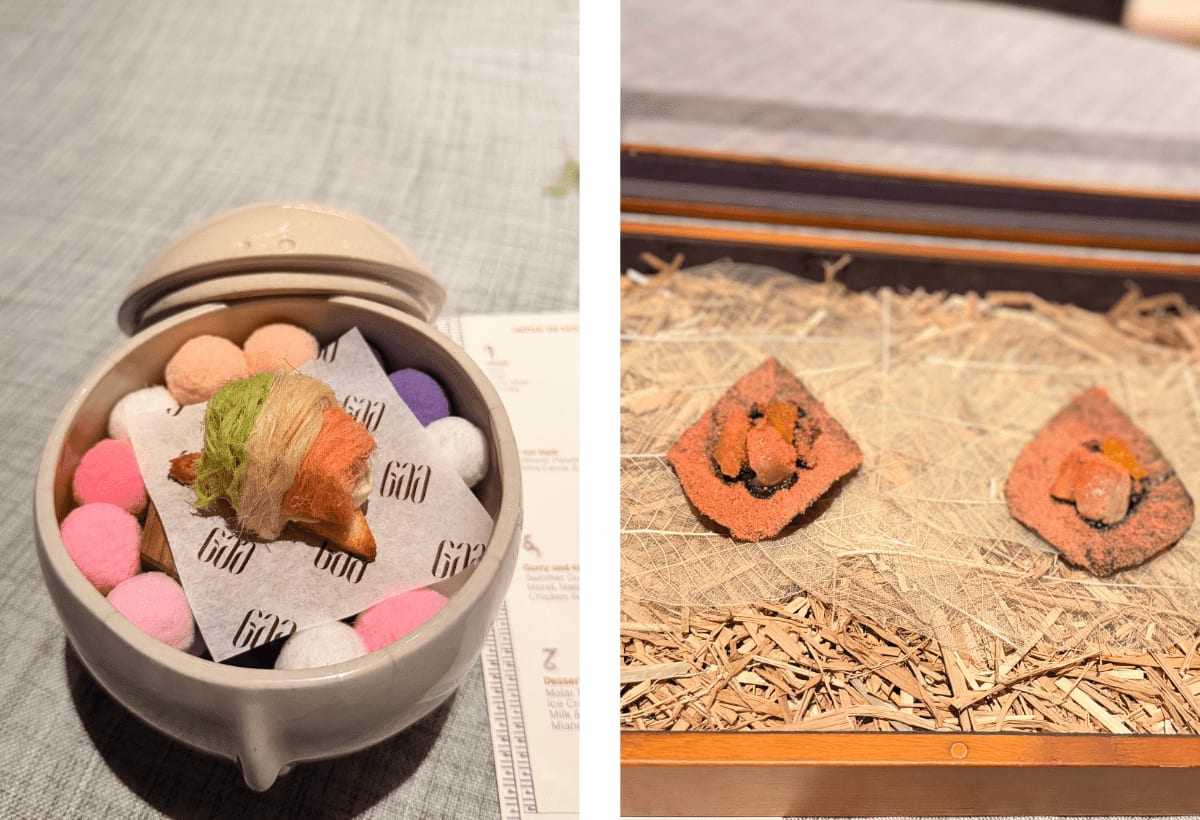
Then came ‘Fish Floss and Rasam’, a delicate mesh of fried fish dusted generously with rasam powder. Catfish is pounded into a pâté, then hand-curled into a fine mesh before being fried. It was a snack I knew I wouldn’t forget anytime soon. The fried fish was almost weightless, light as paper, yet carried flavours that leaned towards the warmth and spice of rasam.
Next, the ‘Crayfish’, the star ingredient, came on crunchy sourdough bread like bruschetta. The fish was grilled and flavoured with vanilla that flew in from Pondicherry, then topped with marigold flowers.
The last snack, ‘Lamb Tartar’, felt a tad bit familiar.
Cauliflower Paratha With Caviar And Atta Ki Khichdi As Mains
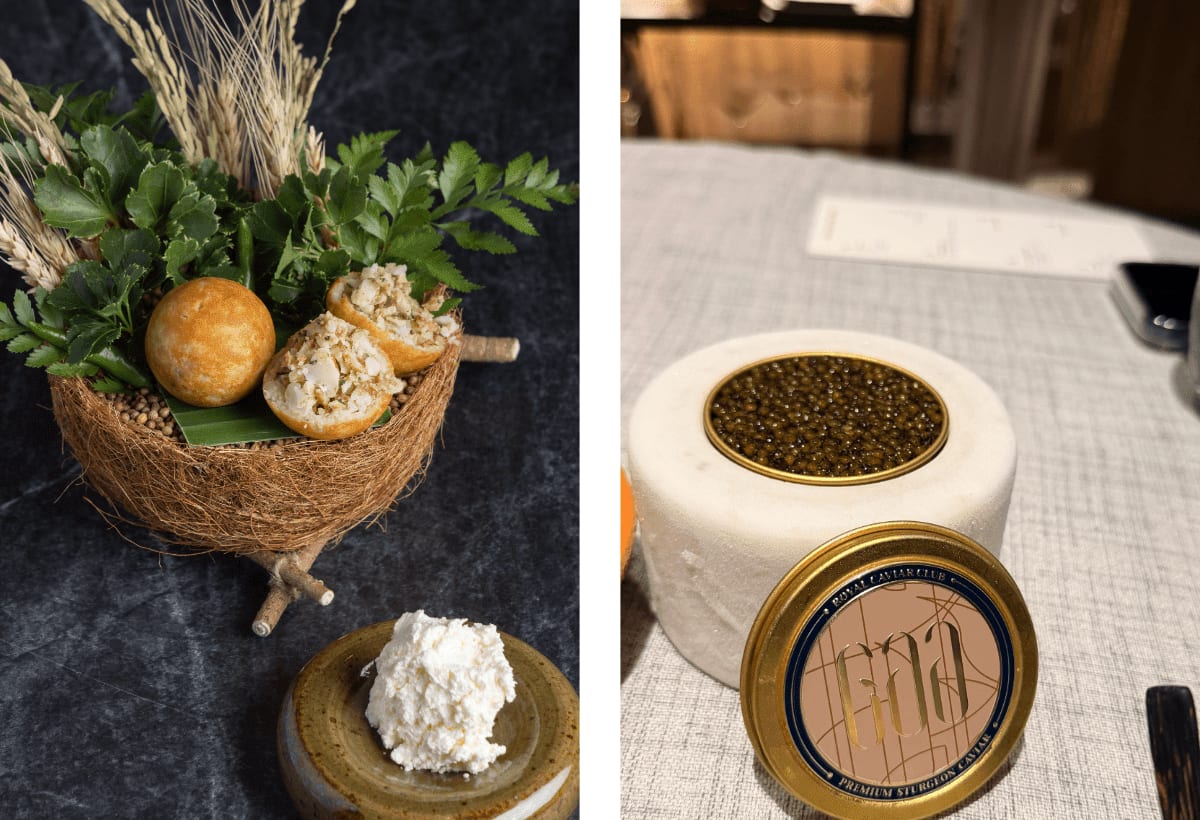
Dimple arrived with what looked like a treasure box. Inside was a glimpse into Chef Arora’s childhood kitchen: photographs of white butter being churned, rotis being made, and grandmothers, along with her first kitchen memories, a prelude to the next chapter.
What arrived at the table looked, at first glance, like tsukune, those Japanese meatballs. But when tasted, it was wonderfully Indian: cauliflower paratha balls, packed with a deeply flavoured stuffing. We were meant to do two halves and slather each piece with a trio of butters, white, brown, and curry brown. Which one was the best? Honestly, impossible to say. Then came a generous crown of Oscietra caviar. Inside the mouth, it was a party. The earthy cauliflower, the richness of the butters, and the smooth, nutty pop of caviar came together in a way that felt both utterly familiar and completely unexpected.
The wine pairing was Heinrich, a natural wine from an Austrian family estate, a 2016 vintage. “It has a yeasty character since it sits on a dead yeast in a wooden barrel, and that's how it ferments on the skin and complements the bread,” our sommelier explained. I found high notes of honey and garden herbs, and it was delicious.
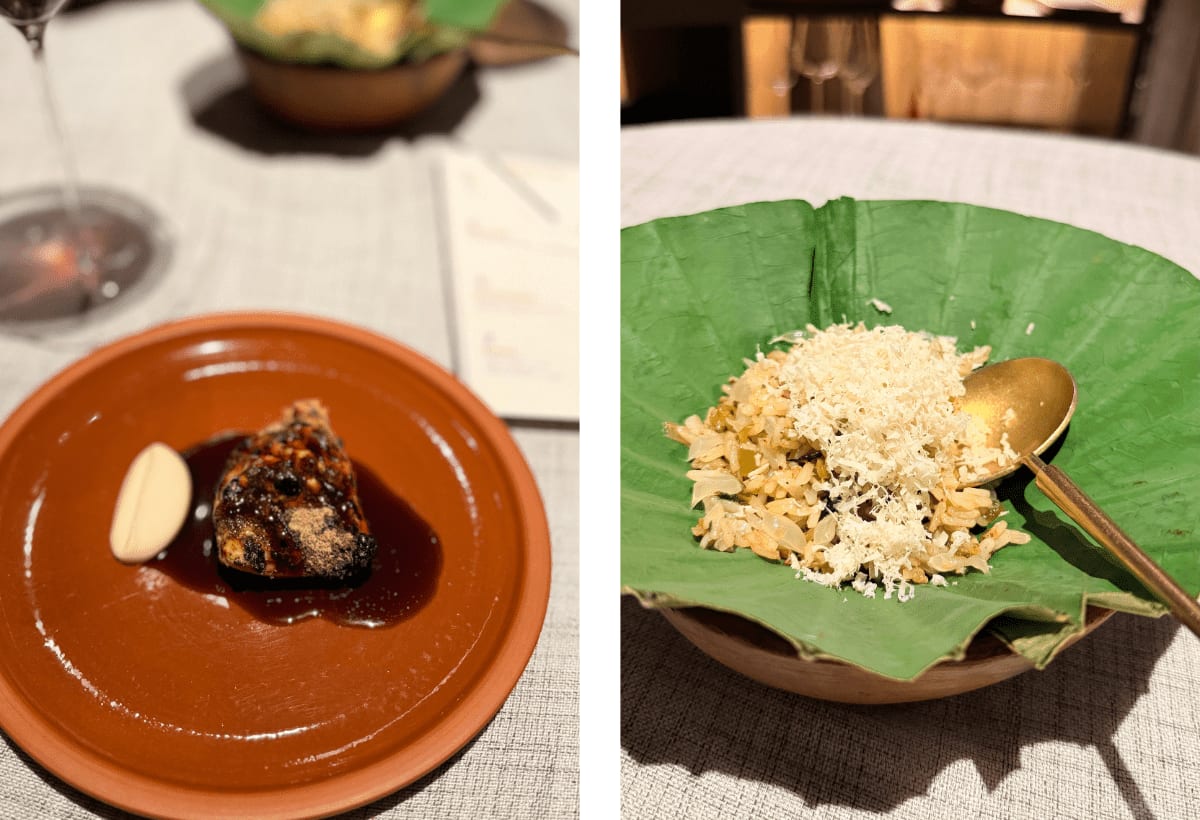
‘Atta ki Khichdi’ was drawn from a plate of atta dumplings, or pithe, the beloved hand-shaped morsels from Bihar, traditionally eaten at a time when rice was scarce. Arranged in small bites, there were little surprises of pickles and curd tucked among the pithe, all served alongside a comforting moong dal shorba. It was an alchemy of sourness, spice, and texture, and one that immediately reminded me of home.
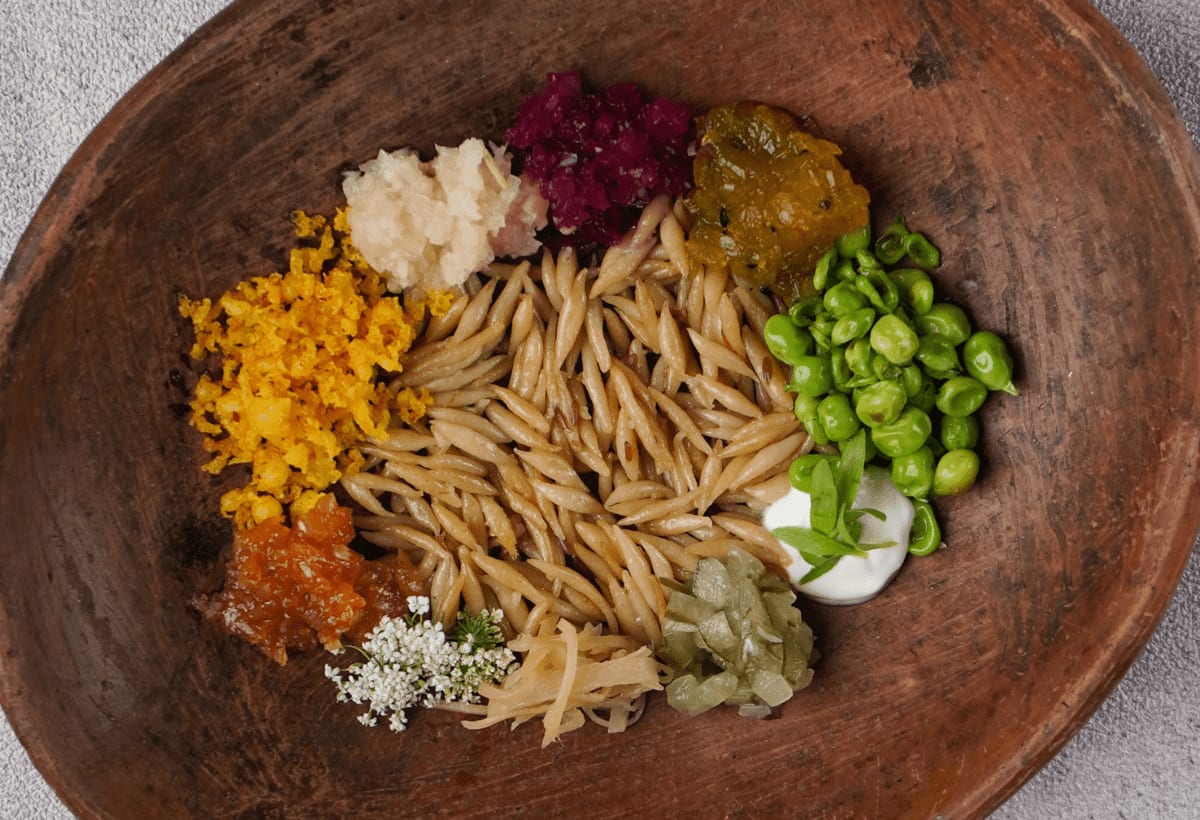
In the Bengali community, we too have our own version of pithe, those little pasta-like dumplings made from rice flour. At home, we cook them in milk to make ‘Choshi’, a delicate sweet traditionally prepared around Sankranti, the festival that marks the winter harvest. Sweetened with nolen gur—jaggery made from the sap of the date palm. This interpretation of ‘atta ki khichdi’ ripped open a childhood memory in Bangkok.
I had to ask Chef Arora, how does a Thai gourmand, or in that matter, other non-Indians, experience this interpretation? “When a non-Indian guest dines at Gaa, they don’t carry the baggage of memory or authenticity, and that is actually a fantastic canvas to work on. For an Indian, a dish might evoke nostalgia or twist a familiar comfort food on its head. But for a Thai or Western gourmand, the experience becomes purely about flavor, technique, and discovery,” she says.
Curry And Kebabs
By the fifth chapter, I thought we had arrived in familiar territory. Curries and kebabs, surely, this was our forte. I could almost predict what would come next: perhaps a beloved Indian curry with a Thai twist.
Instead, Chef Arora made a 360-degree turn on the very definition of curry.
The ultra-refreshing ‘Summer Curry’ arrived as a cold curry. A shell-shaped bowl held a mound of green-apple shaved ice, slowly melting into a creamy green curry scented with banana-leaf oil. Beneath the ice lay a blue swimmer crab, finished with crisp okra. It was Chef Arora’s summer rendition of eating seafood wrapped in banana leaves. Traditionally steamed, here the same idea was turned on its head, transformed into a cold curry. This was paired with light sake from Saga Prefecture in Japan.
Chef Arora adds, “When a Thai diner tastes our food, they often connect with the shared culinary DNA between India and Thailand: the reliance on fresh herbs, heat, sourness, and umami. They realize that Indian flavour isn't just a heavy gravy; it’s an entire language that can play seamlessly with local, seasonal ingredients.” After tasting the cold curry, I could say she was spot on.
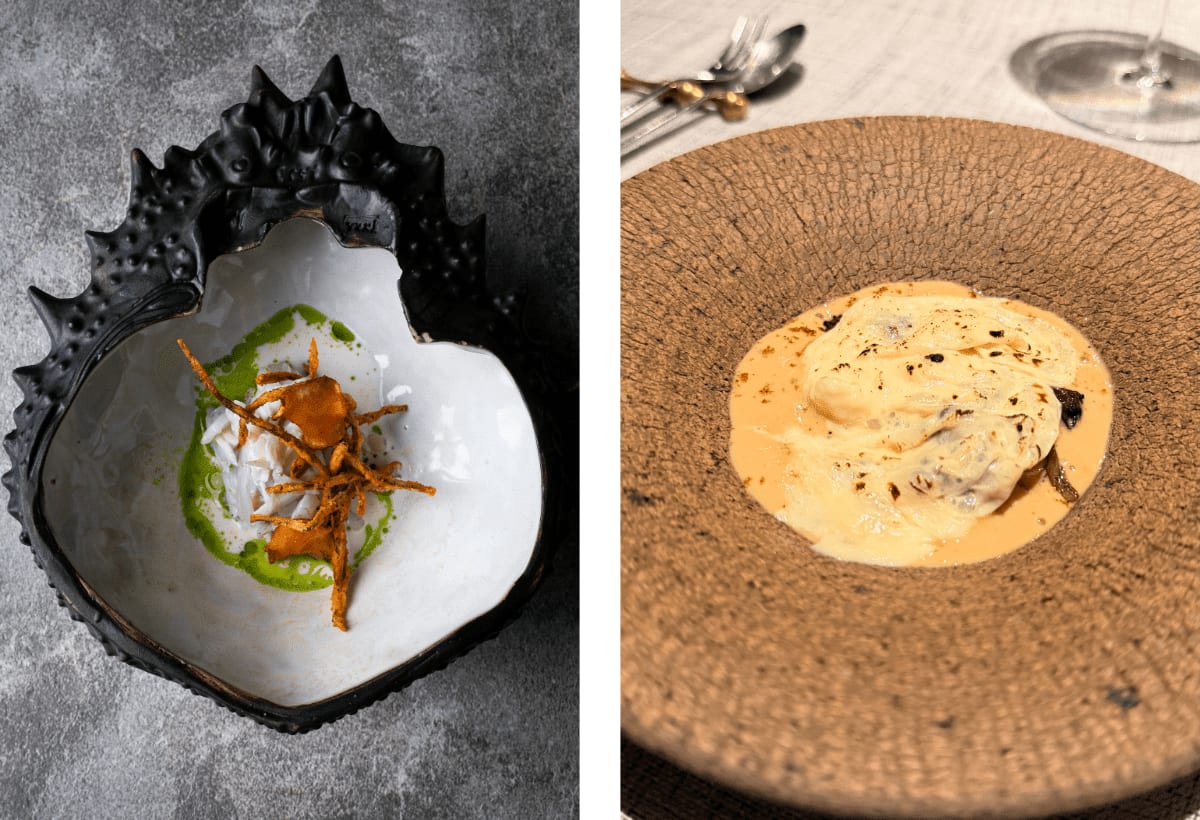
Next came the ‘Morel Malai’, where prized Kashmiri guchchi mushrooms arrived veiled in a brown cheese sauce, the artisanal brown cheese comes from Eleftheria in Mumbai. The first bite delivered an unexpected hit of flavour; the morels had been smoked over hay, adding an earthy note that cut through the sweetness of the malai.
The final course of the chapter was the chicken kebab, but this was no ordinary kebab, as you might imagine.
Here is the pictorial story of the ‘Chicken Kebab’!
Tandoori Story
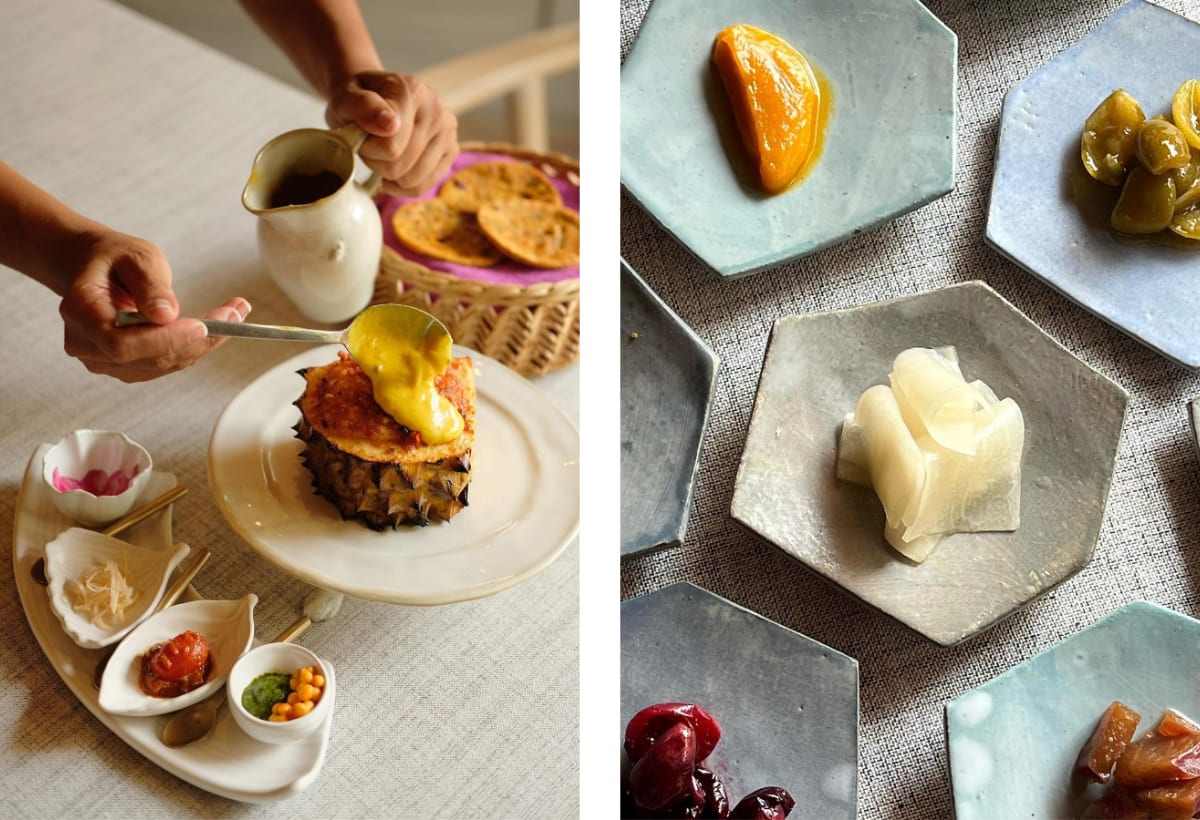
If you thought it was meat that would make it to the table, it's not. A block of semi-ripe durian came from the tandoor, served with kadhi, spicy chutneys, refreshing achars and tandoori rotis. The flavours were complex, and honestly, I didn't miss my meat or fish. I couldn't help but ask the Chef how she arrived at the idea of making durian the hero of the dish?
“The Tandoori Story was born out of a desire to challenge what people expect from both a tandoor and plant-based fine dining. Normally, when people think of the tandoor, they think of heavy meat dishes or basic paneer. I wanted to show that the intense, dry heat and smoke of the clay oven could transform a plant-based ingredient into something rich, complex, and unashamedly luxurious,” she says. Arora goes behind the food science to explain. She adds, “When you put durian into a blazing hot tandoor, magic happens. The intense heat caramelizes the outer sugars, cutting through that pungent aroma and unlocking a deeply savory, smoky, and buttery element that closely mirrors the mouthfeel of slow-cooked meat. It bridges the gap between traditional Indian technique and the native terroir of Thailand, proving that even the most divisive ingredient can shine when treated with respect and fire.”
The sixth chapter shifted our perspective on Indian flavours and reminded us just how wonderfully global they can become when placed in the hands of an artist. Gaa showed global diners that Indian cooking techniques like fermentation, dynamic spice layering, cooking with raw flame, and acid management are all sophisticated, delicate, and deeply expressive. And a fruit like durian, which people either like or hate, can rise up to be a hero of a dish with such aids.
All's Well That Ends With Desserts
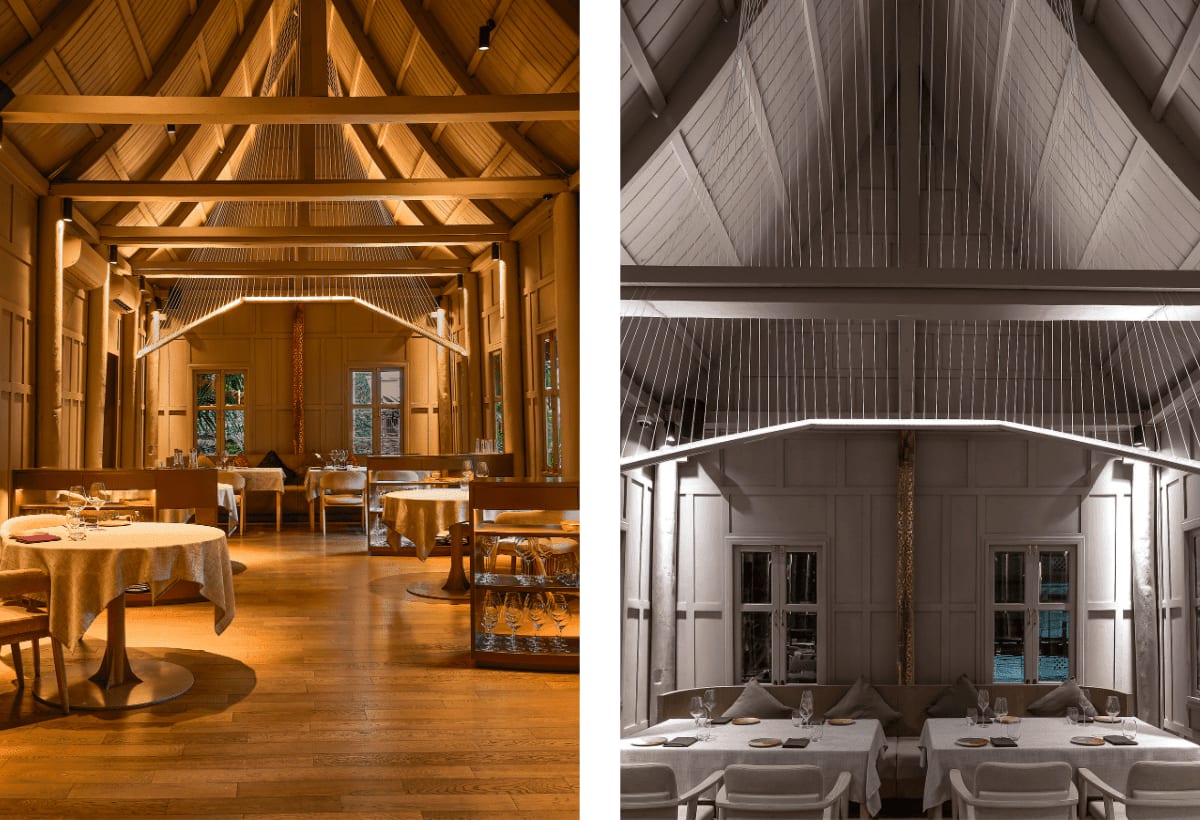
By the last chapter, I decided to take a break for a design tour of the space. I spiralled up to the first-floor lounge to take in the design language of a 60-year-old traditional Thai house, reimagined with exposed teak beams and a striking gabled roof. Bordered to the right by wooden shutters which open to a roof garden. Conceptualised by @architectkidd, the space draws your eyes upwards to its double-height ceiling, elevated by a delicate white-string installation, a contemporary interpretation of Sai Sin, the sacred white threads traditionally strung along the rafters of a Thai house.
The way one feels geared up after a good, long walk, we felt the same—ready for the final chapter: ‘Dessert’. Strands of son papdi, tinted in edible shades of green, cream, and pink, were crowned over a blob of malai and layered on toasted bread. One word: classic nostalgia, with a twist. Alongside it, I sipped Dario Coos 2021, a dessert wine made from an indigenous grape variety. It had an elegant finish, balanced acidity, and just the right restraint. “You get wildflowers, acacia and honey; since it’s young, it’s not that sweet,” the sommelier explained. I couldn’t agree more. For me, it was the best dessert wine, a graceful final note to an equally memorable meal.
A mini cooking set appeared at our dining table, where the sommelier prepared the ‘Ice Cream Tadka’ right in front of us, melting ghee and tempering it with cumin and ginger powder. “That’s the only little cooking I do here,” she said with a smile.
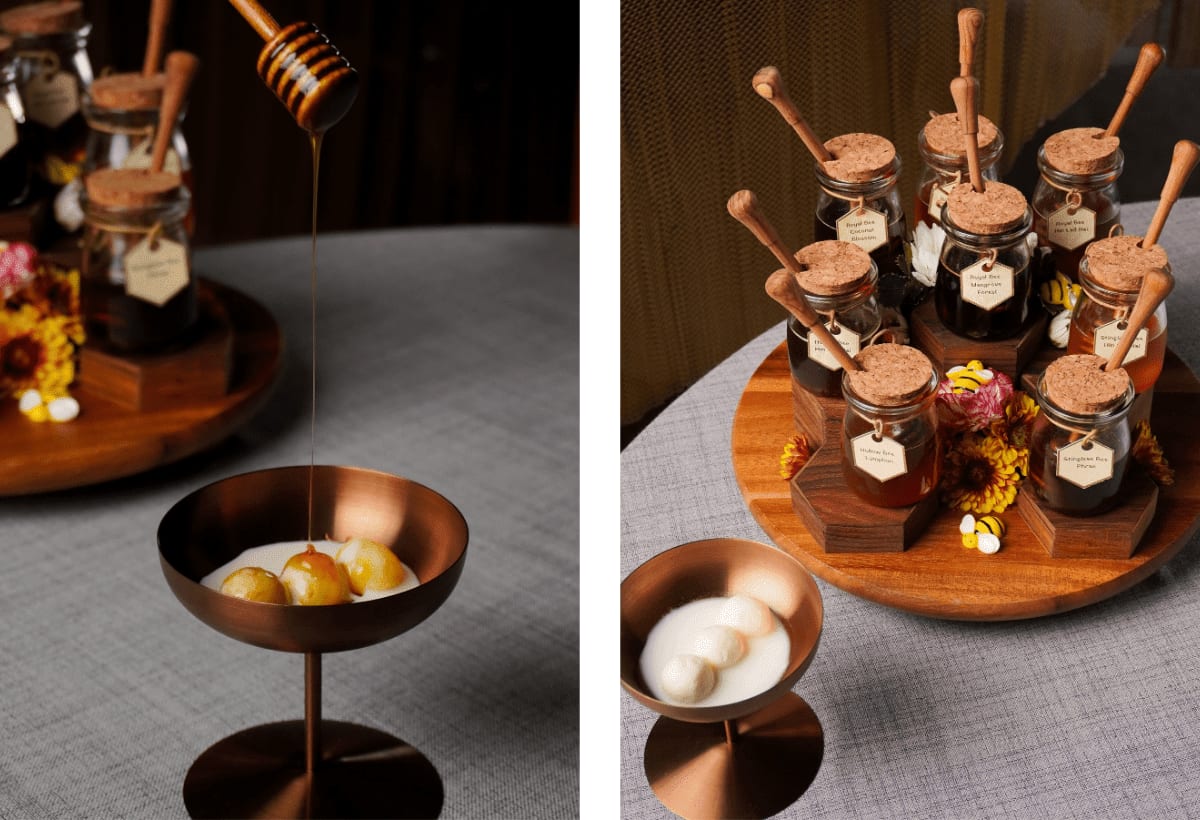
The dollop of ice cream was then kissed with warm tadka, creating an unexpected meeting of savoury and sweet. The idea draws from Kerala’s Onam Sandhya, an alchemy of payasam and dal, whipped as ice cream, flavoured with a fragrant tempering of ghee, cumin and ginger, and finished with a crisp banana chip. Not for once could anyone think this was a dessert. But it was woven with a festive Kerala memory. By now, we had found our familiar and unfamiliar favourites. ‘Milk and Honey’ was firmly in the familiar camp: a smooth, creamy, sweetened milk doused with rasmalai, given a Thai twist with a selection of foraged wild honeys. A tasting board of eight varieties was placed before us, pampering us with such a variety of flavour profiles for the final drizzle.
I chose the Royal Bee Honey from Chiang Rai, which carried delicate herbal and cacao notes. The rasmalai became a canvas for these wild flavours.
With ‘Miang Kham x Paan’, Chef Arora highlights the tradition of ending a meal with paan, a post-meal mouth freshener, through the playful format of a Thai snack, miang kham. A betel leaf came unfolded with little bursts of toppings like lychee, pineapple, orange and roselle jams, alongside a scoop of decadent chocolate ganache, dusted with delicate frozen strawberry shavings.
In 2019, Chef Garima Arora was named Asia’s Best Female Chef, while Gaa entered the ranks of Asia’s 50 Best Restaurants that same year. In the last two years, the restaurant has gone on to secure its second Michelin star, making Arora the first and only Indian female chef to achieve the distinction.
But I didn’t step in to sing an eulogy to her achievements. I wanted to know something else: how well can a cuisine born out of one’s culture travel across global palates?
“We are constantly revisiting our foundation, looking at ancient Indian preservation methods, forgotten regional grain varieties, and micro-seasonal Thai produce. The goal isn't just to innovate for the sake of novelty; it’s to refine our voice so that every single bite at Gaa tells a clear, intentional story”, I was told.
And perhaps that was the real triumph of Gaa. It didn’t simply tell the story of Indian food in Thailand; It showed the versatility of the modern Indian food that arrived on the global stage, standing ramrod tall.
Getting There:
Address: 46/1 Sukhumvit 53, Klong Tan Nuea, Wattana, 10110
Cost: Gaa’s Tasting Menu with Champagne pairing will cost - THB 6,200++ per person.
A vegetarian menu is available. We can also accommodate vegan and gluten-free options upon request with prior notice.
Timings: Open every day for dinner from 5:30pm onwards, and on weekends they serve lunch and afternoon tea from 12pm onwards.
Booking: Reservations are recommended; Link here to go for reservations.