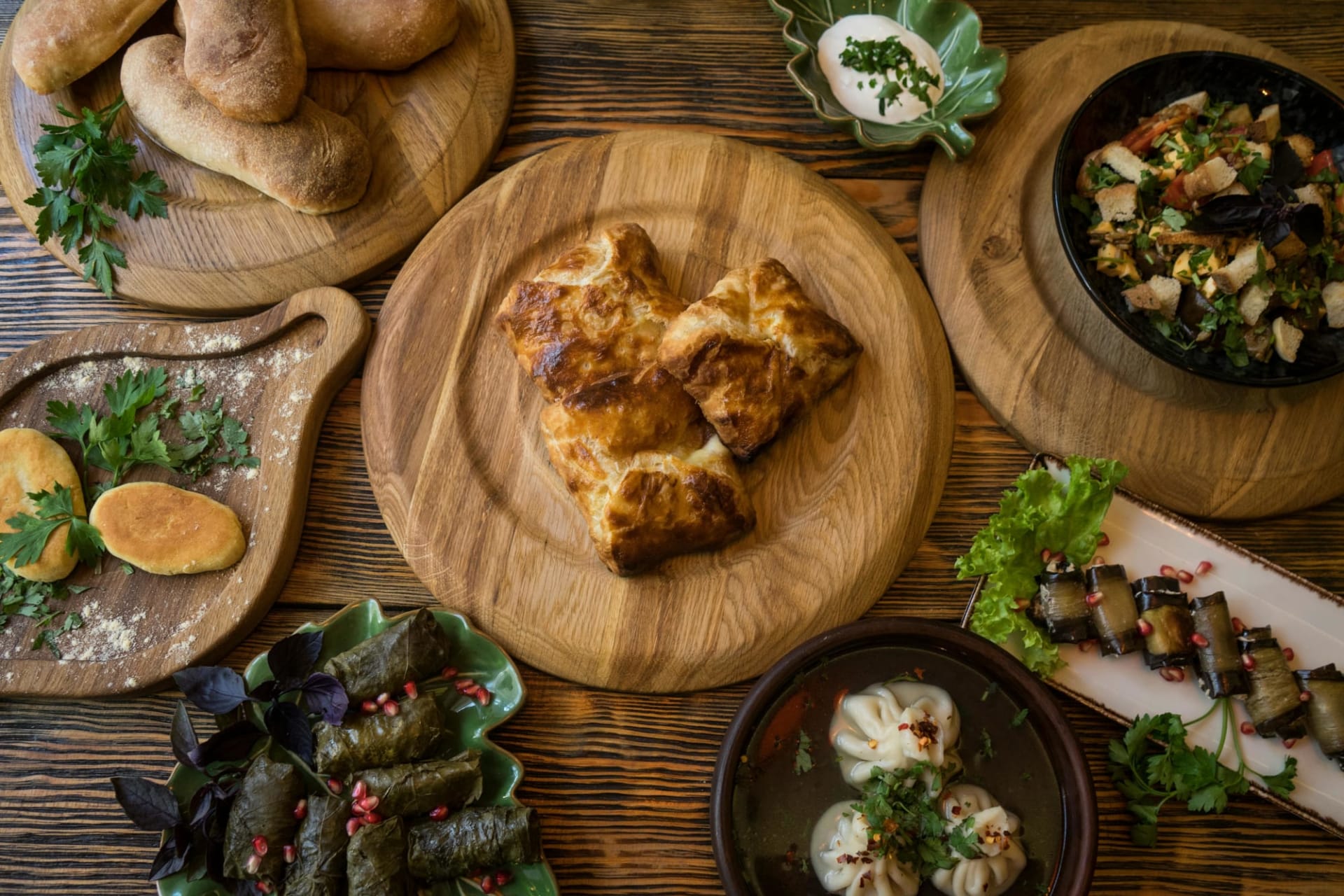
Steeped in history, Georgia’s landscapes are largely mountainous, with a coastline overlooking the Black Sea. Often mistaken for the U.S. state of the same name, the country is frequently described as an underrated travel destination, and I couldn’t agree more. Bordering Russia, Azerbaijan, Turkey, and Armenia, it occupies a unique position at the crossroads of Europe and Asia.
When I visited Georgia in October 2024, just a few days before a defining vote in its history, I joked that it was the best of both worlds: European landscapes with an Asian personality. The road rage coexisting with adherence to traffic rules, the hot-and-cold hospitality, and the cuisine, which had more Asian references but a European service style, made the adventure memorable.
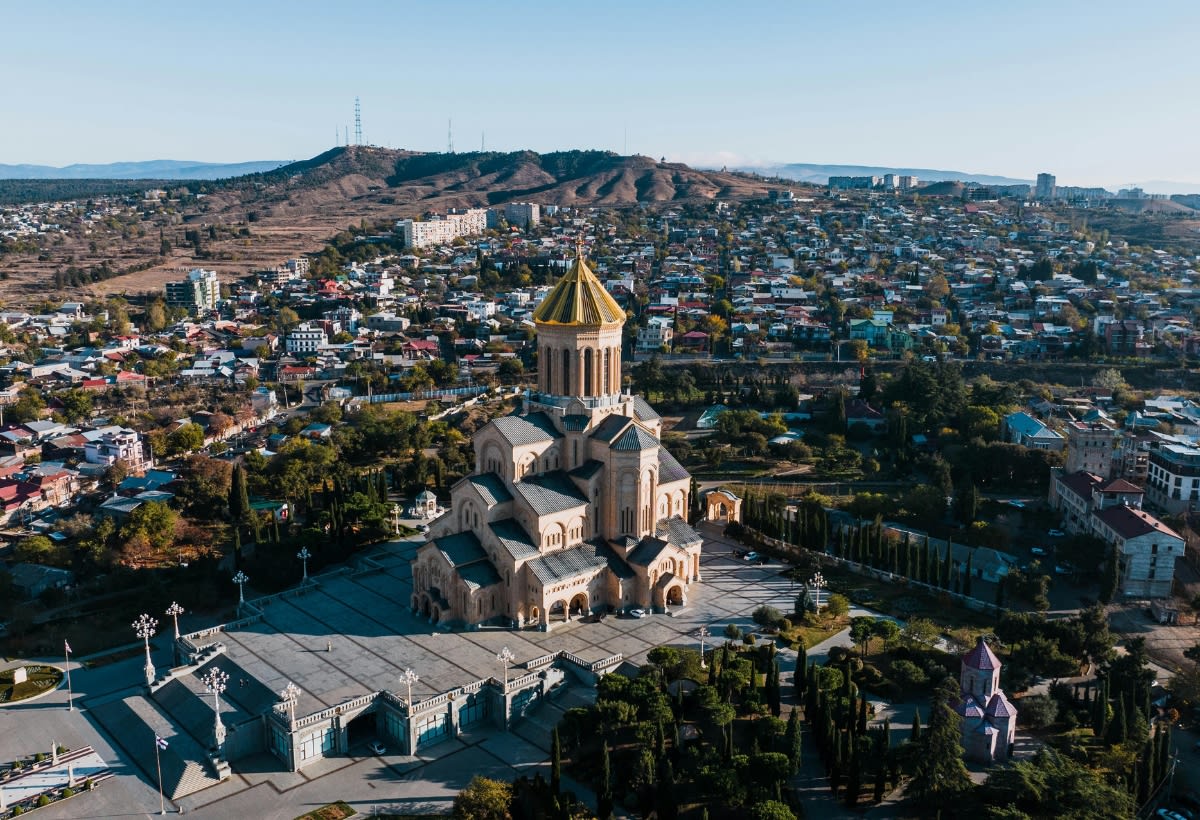
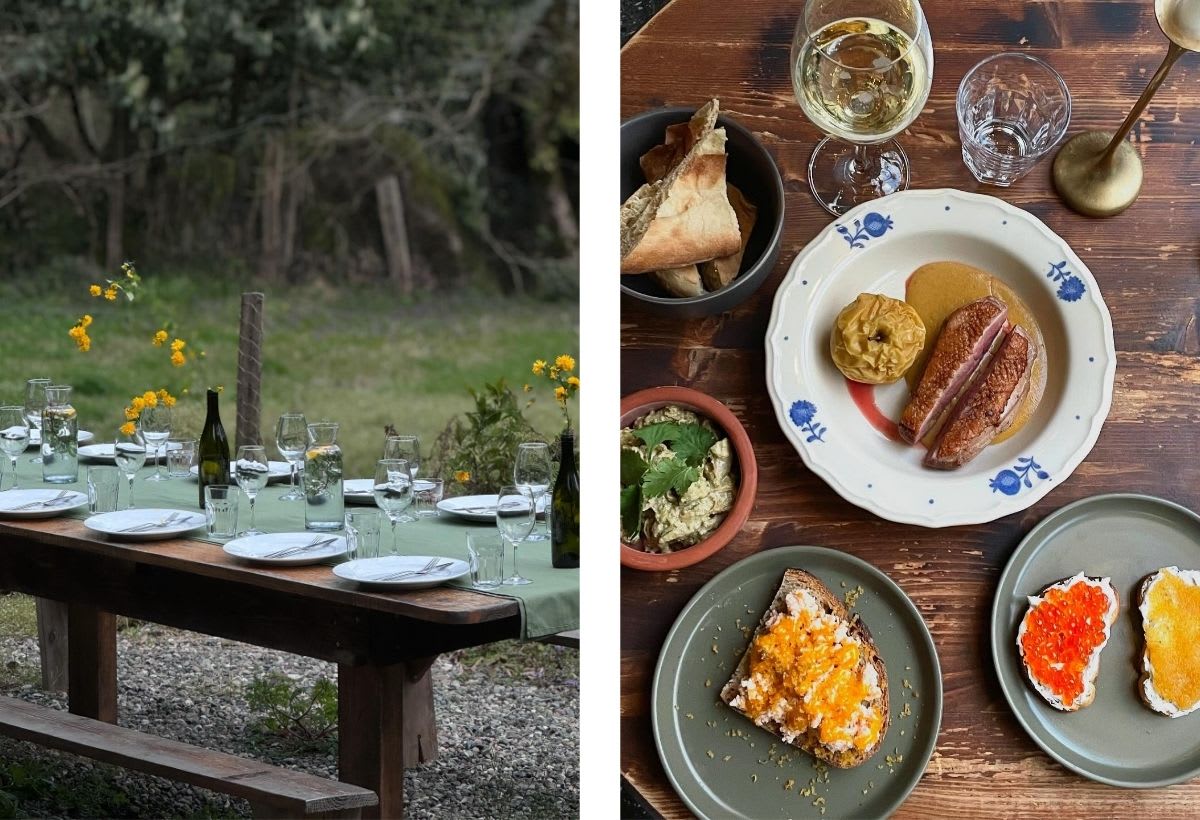
In all the planning we did, one of the must-have experiences that came up was attending a ‘supra’. The word supra literally refers to a tablecloth in Georgian, but it commonly denotes a traditional feast centered around shared food, wine, and toasting. Several tour companies offer visitors the chance to be part of one. While I was eager to experience it, I have a complicated relationship with tourism packages and gimmicks. Many of the accounts I read about people joining supra tables, though enlightening, felt staged, as if designed for a guest to “truly enjoy” themselves while experiencing “authentic Georgian meal culture.”
What is a ‘Supra’, really?
A feast-like gathering, a supra is often hosted during celebrations like weddings, birthdays, or even funerals. So, it can feel unnatural or superficial to partake in a curated version. Post-lockdown, many of us have begun to crave connection; the rise of supper clubs is one strong indicator of this desire. There is an aesthetic and a sense of drama built around a shared meal, one that is often unlike the kind we experience at our own family gatherings.
Our guide was a young Georgian woman, politically vocal and refreshingly candid. Our group was small and eclectic: sisters from Ireland, and us, an Indian couple. The night before, we had been at a club plastered with posters encouraging people to walk to the election booths after a rave and vote. Curious, I asked her about it.
To rewind a little, we had arrived during the Georgian parliamentary elections, which are conducted through a proportional representation system, when citizens were deciding whether to vote for the Georgian Dream (seeking a fourth term) or to elect one of the other parties to form a majority government.
She spoke about her generation as a bridge between grandparents who had lived under the USSR and parents who had witnessed an unstable independence while seeking a reformed but economically viable new country. A day after we arrived, Liberty Square was filled with people draped in flags, heading to vote in an election many believed could change the country’s course. For a small nation navigating its place between Europe and Asia, these moments carried immense weight. Pride, she explained, was not just cultural; it was political, historical, and deeply personal.
She also added, with a hint of playful defiance, that Georgia considers itself one of the oldest wine-producing regions in the world; a claim that might spark debate in parts of Europe, though, fortunately, no one in our group challenged it.
As part of our tour, we walked through both the old and new parts of Tbilisi and ended at a wine cellar. The owners showed us how wine is traditionally fermented in large clay vessels called qvevri, sealed and buried underground, where it matures over several months. The wine sits with grape skins, seeds, and stalks until spring, while the leftover residue is later distilled into chacha, a strong, fruity spirit, almost like Georgian brandy or grappa, meant to cut through Georgian winters.
We tasted several wines, and with every new pour, the entire table paused to cheer together while our guide and the wine cellar owner took turns leading the conversation. It was a small glimpse into what a tamada, or toastmaster, does at a supra.
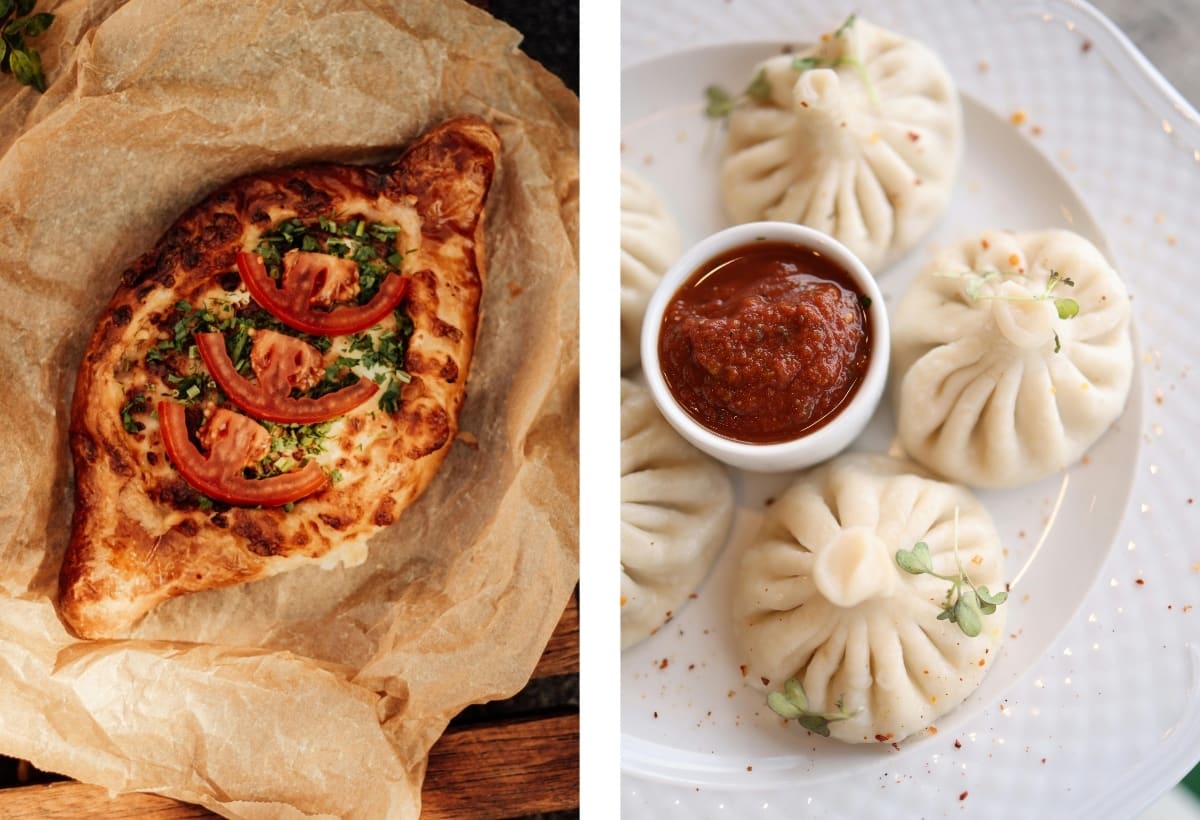
At a traditional supra, the tamada usually sits opposite the guest of honour at a long banquet-style table, surrounded by family, friends, and whoever else has gathered for the evening. The meal arrives almost all at once: breads baked in-house, bubbling meat stews served in sizzling cast-iron pots, grilled kebabs, salads of tomato, cucumber, and walnut dressed with garlic and vinegar, and plates of cheese paired with wine and honey. Khachapuri, the soft, chewy bread filled with cheese and sometimes topped with an egg, is pulled apart and shared, while khinkhali, oversized dumplings stuffed with meat or vegetables, are passed around continuously between toasts.
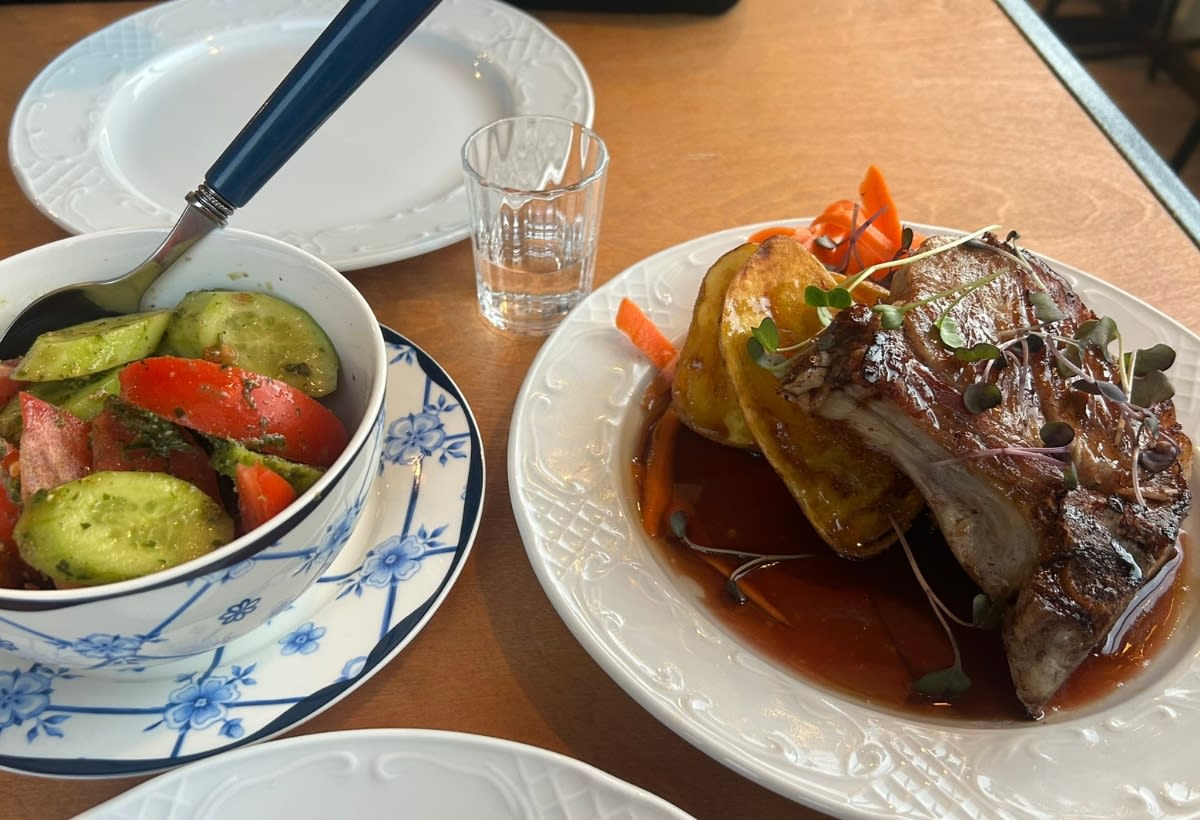
One of our favourite meals was at a family-style restaurant in Old Tbilisi, where we kept returning for Ojakhuri, a rustic stew of meat, potatoes, and Georgian spices. Every time we went, the dining room was filled almost entirely with Georgian families, and as we travelled through smaller towns, we realised even the same dish changed subtly from region to region.
The key to a good supper, though, is not just the food but the host. Beyond serving generously, the tamada keeps the conversation alive, making sure everyone at the table participates. Shared meals in Georgia are less about dining and more about trust, with the slow process of turning strangers into companions over wine, stories, and repeated toasts. Sometimes, music is also played, and if the mood is right, everyone eventually ends up dancing into the night.
Gathering around, more than just tasting the food
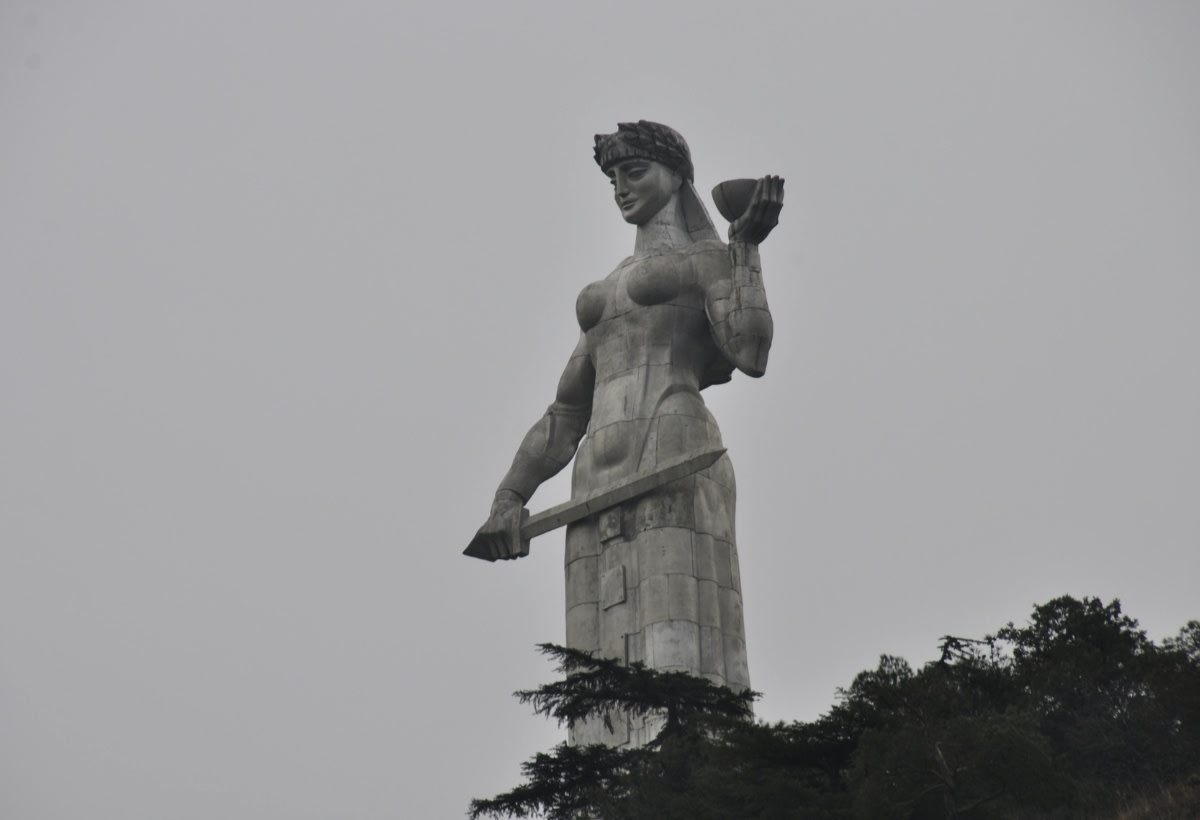
Georgia has a long history shaped by warfare and resistance. In fact, a 20-meter aluminium statue called ‘The Mother of Georgia’ stands tall atop Sololaki Hill in Tbilisi, a relic that alludes to this history. In one hand, she holds a sword; in the other, a bowl of wine, symbolising the country’s ideals of hospitality and resistance. With the sword, she defends the land against enemies; with the wine goblet, she extends hospitality to friends.
Our guide described Georgian temperament with a strong sense of national pride. For a small country, every opportunity to express that pride matters. The meal table becomes an extension of identity. Rooted in the fundamental need to protect family and share comfort and warmth, the supra remains a deeply private affair. In fact, the Georgian word for cheers, Gaumarjos, means ‘to victory’ or ‘may you be victorious,’ reflecting a culture shaped by centuries of invasion and survival.
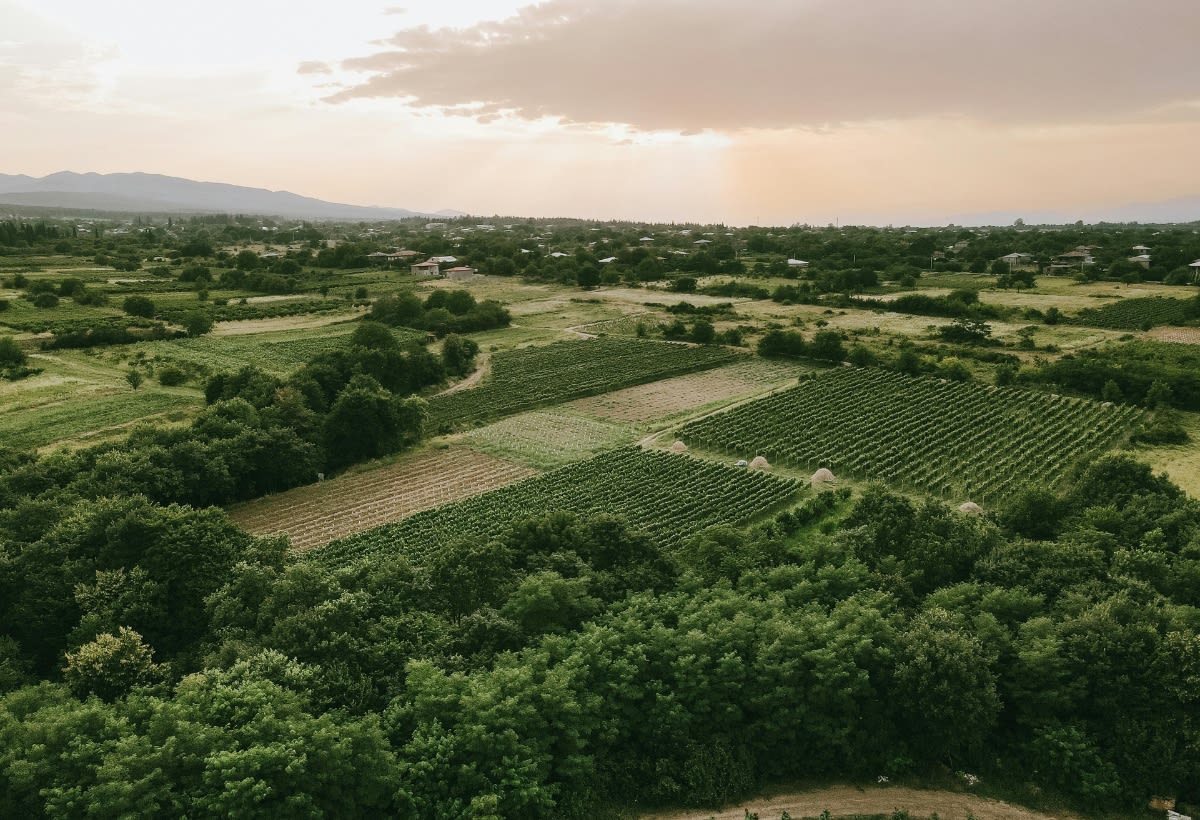
The most well-known wine-producing regions are Kakheti, Kartli, and Imereti, all within a few hours’ drive from the capital. Meanwhile, coastal regions like Adjara and the disputed territory of Abkhazia also produce distinct varieties, and can be reached from Tbilisi by long-distance rail or road journeys. Each region differs in landscape, climate, and grape types, many of which are not widely known outside the country.
Amid our four-city itinerary, we weren’t able to attend a supra, as the harvest season had just ended. That didn’t stop us from tasting local wine at every opportunity. When we reached the Dariali Monastery near the Russia–Georgia border, we were pleasantly surprised to learn that they brewed their own chacha, wine, and even whisky. One of the wines we tried was a dry, earthy red wine called Saperavi, made from the Saperavi grape variety, and among the most memorable of the trip. Rich and complex, it reflected the depth of Georgian winemaking traditions, and we ended up taking several bottles home.
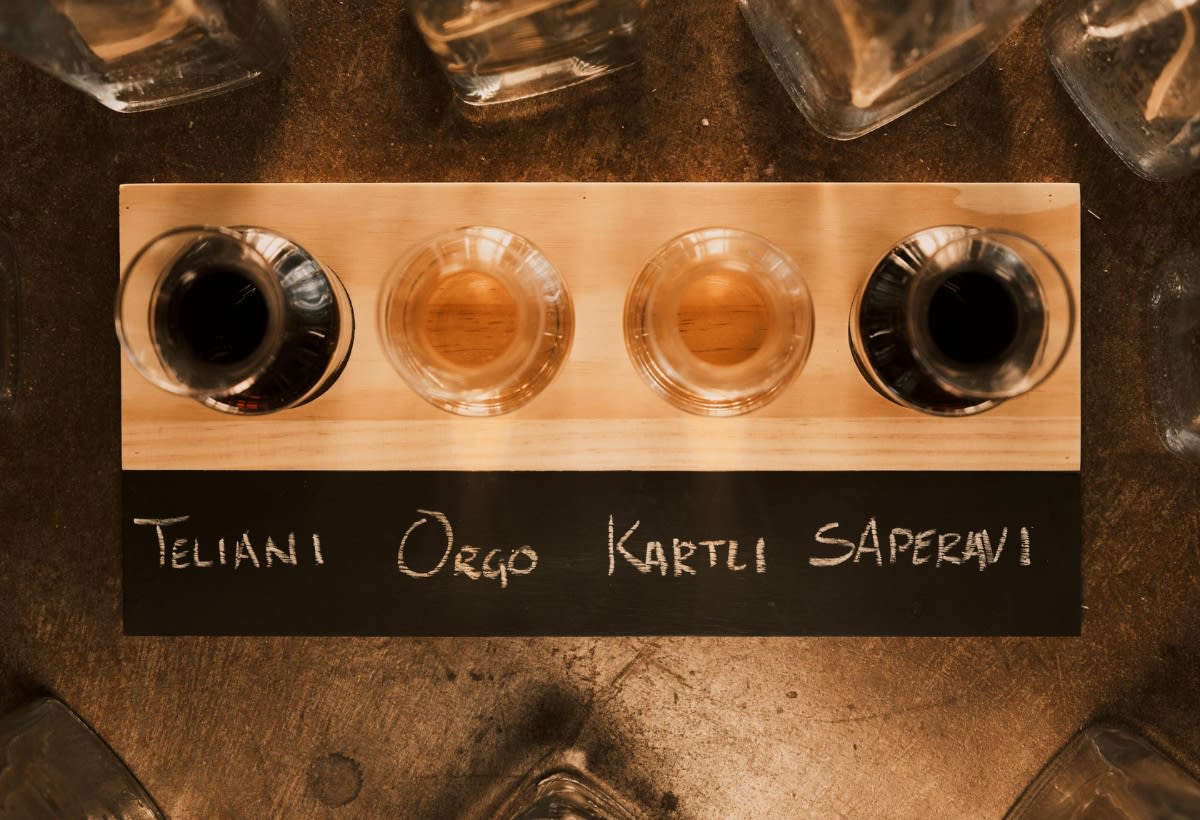
Typically found in eastern Georgia, wines made from Saperavi are considered a classic Georgian wine and are produced from one of the country’s most widely grown grape varieties. The monastery, home to both monks and nuns, took great pride in maintaining a small distillery and gift shop. For someone from a culture where religion and alcohol rarely intersect, this was an unexpected and delightful contrast.
One of the monks gave us a tour of their distillery, showing us the wine cellar and some of the wines still fermenting. We communicated through a mix of sign language and Google Translate, as outside major tourist areas, English was less commonly spoken. We sampled an array of liquors while admiring their craftsmanship and woodwork.
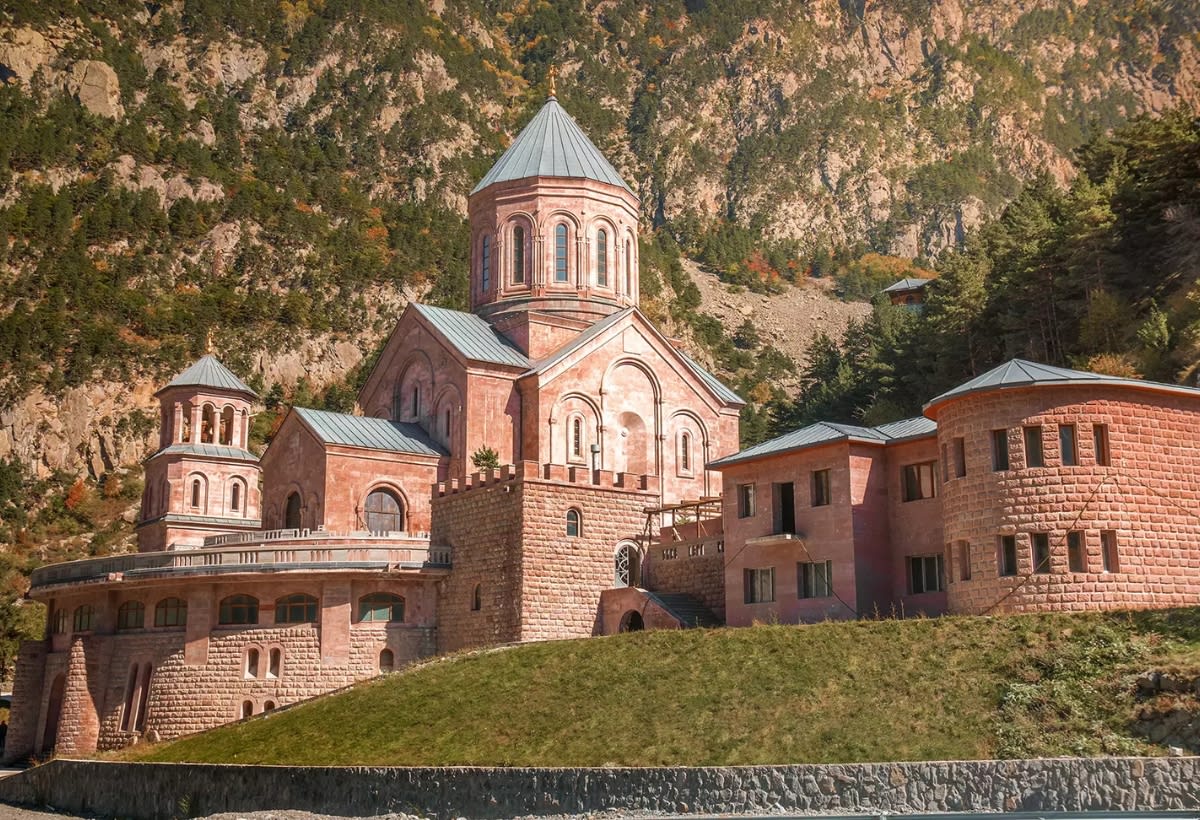
It’s worth noting that in ancient Georgia, monasteries often served as places of refuge and community centers. Given the country’s rugged landscape and history of conflict, these religious spaces functioned as sanctuaries. It made sense, then, that this monastery was so self-sufficient.
A feast, a ritual, or a way of life?
Our final stop before flying back was a small wine bar called DADI in Tbilisi. Softly lit, with intimate seating and a cat curled up by the door, it felt like the perfect ending to our trip. We resisted the urge to chase “hidden gems” from social media, choosing instead to embrace the uncertainty of travel. I later learned that this establishment is run by a couple from Russia who moved to Georgia to share their love for wine, focusing largely on small-batch natural wines from family-owned producers. They also have a robust wine program of trips, immersive experiences, and tastings. The server, generous with both time and knowledge, showed us the correct way to open a bottle using a corkscrew and spoke about pairing wine not just with food, but with mood. Not everyone travels beyond the capital. Here, you didn’t have to.
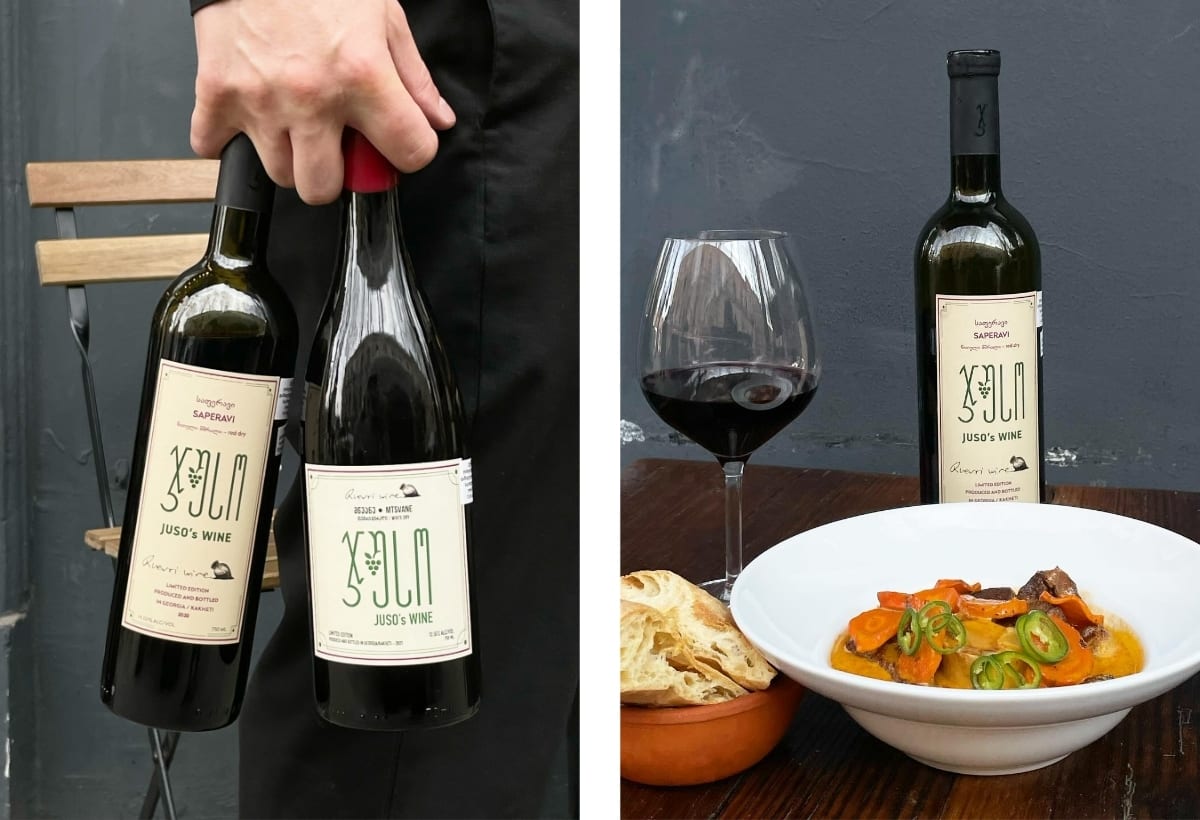
We had been the fortunate few who sampled a few varieties across the region. This bar sourced wines from across the country, some of which we had begun to recognise by then, like Kindzmarauli, a semi-sweet red made from Saperavi grapes that we tasted at the end of our walking tour, not to be mistaken for the full-bodied one we had at the monastery, and the Tsitska, a crisp, acidic white we had with dinner in Kutaisi. Together, they offered a condensed glimpse into Georgia’s regional wine diversity within a single space. In the end, without ever sitting at a formal supra, we had experienced its spirit. We found it in shared toasts with strangers, in long conversations, in the generosity of hosts, and in the quiet rituals around wine.
In searching for something authentic, we hadn’t found it in a curated experience. We had built it ourselves.