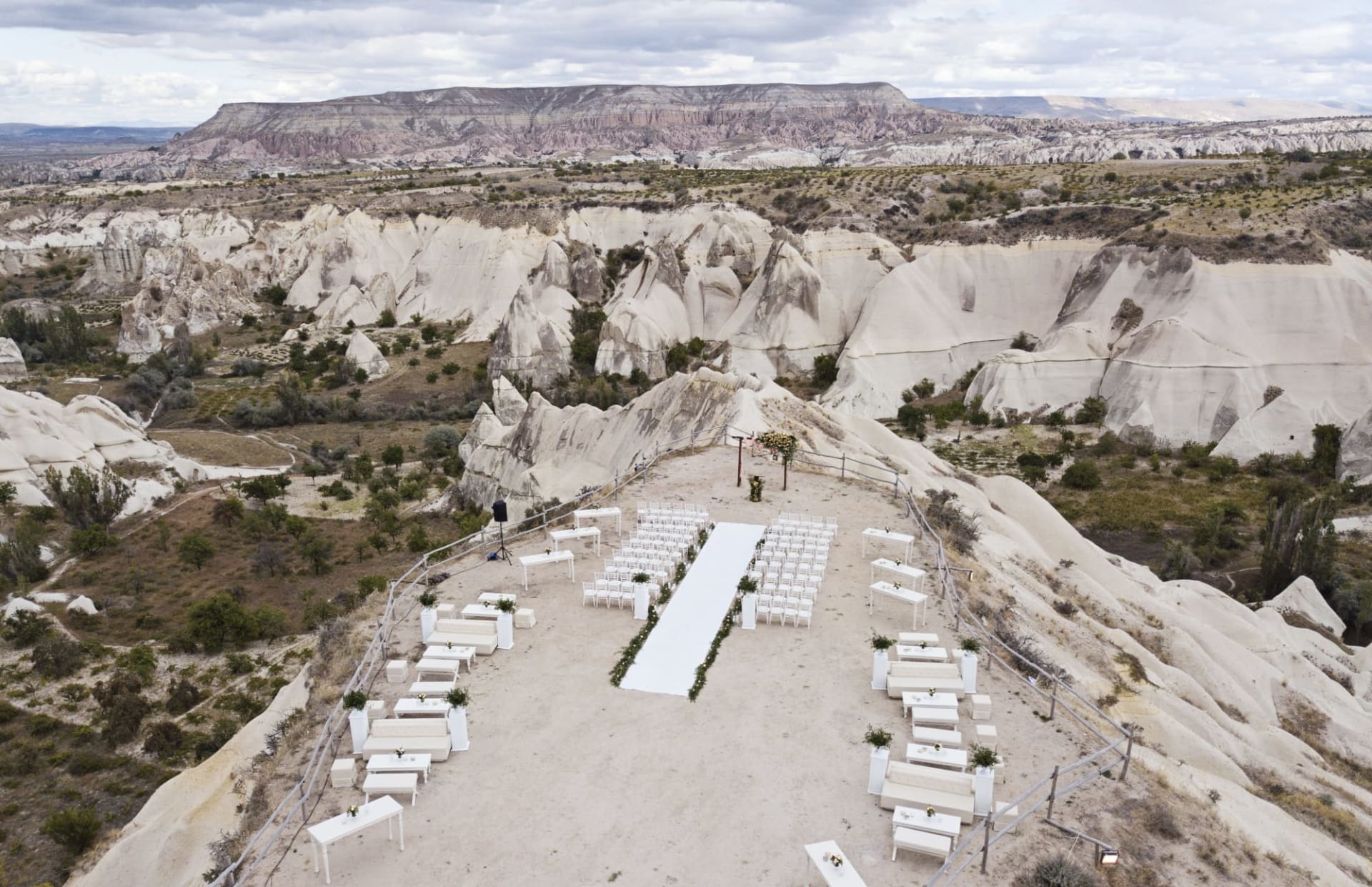
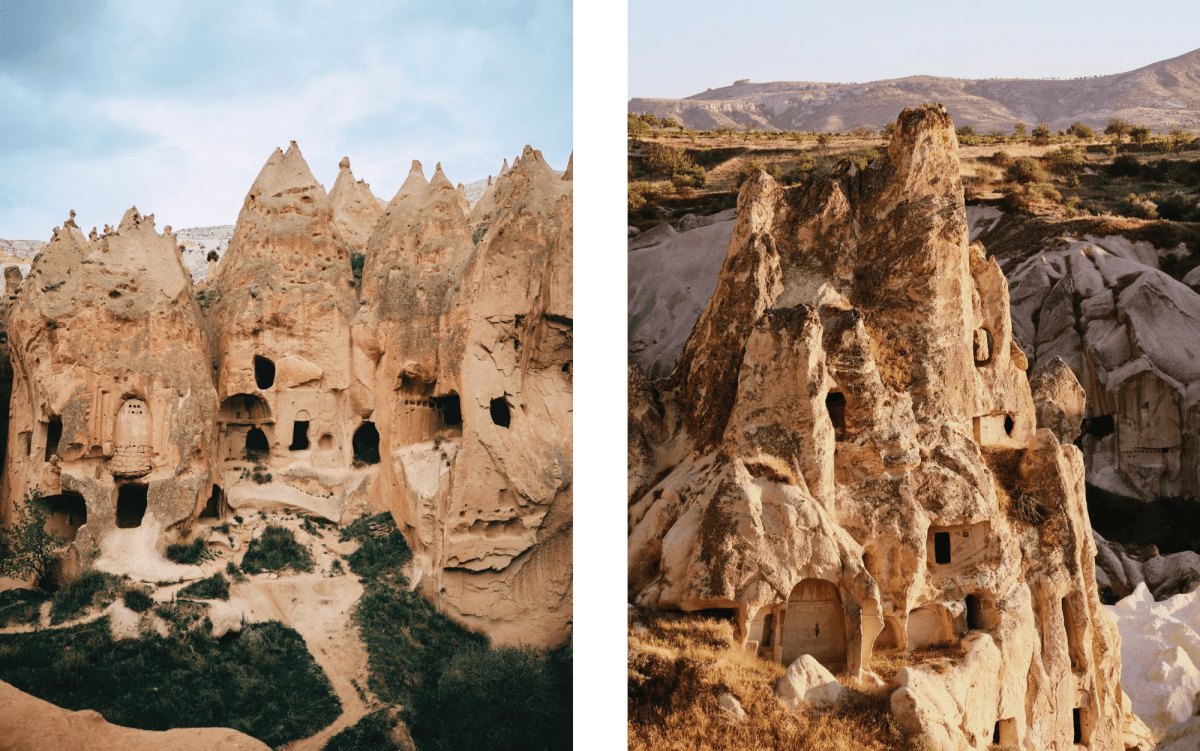
I began the trek along paths that meander between staggeringly tall rocky outcrops, popularly known as the fairy chimneys. As we crossed the rifts and folds of this surreal terrain, we passed towering pillars that doubled as rock-cut homes, while others rose into sharp ridges where dovecotes were carved centuries ago. Now and then, a pigeon would peer out from one of the holes, quietly bringing the region’s layered history to life.
“According to Turkish mythology, pigeons were considered sacred souls, and so they are in Cappadocia. They were bred for manure, meat, and as messengers long before our postal systems existed,” Alex, our trek guide, explained.
Exploring Cappadocia On Foot
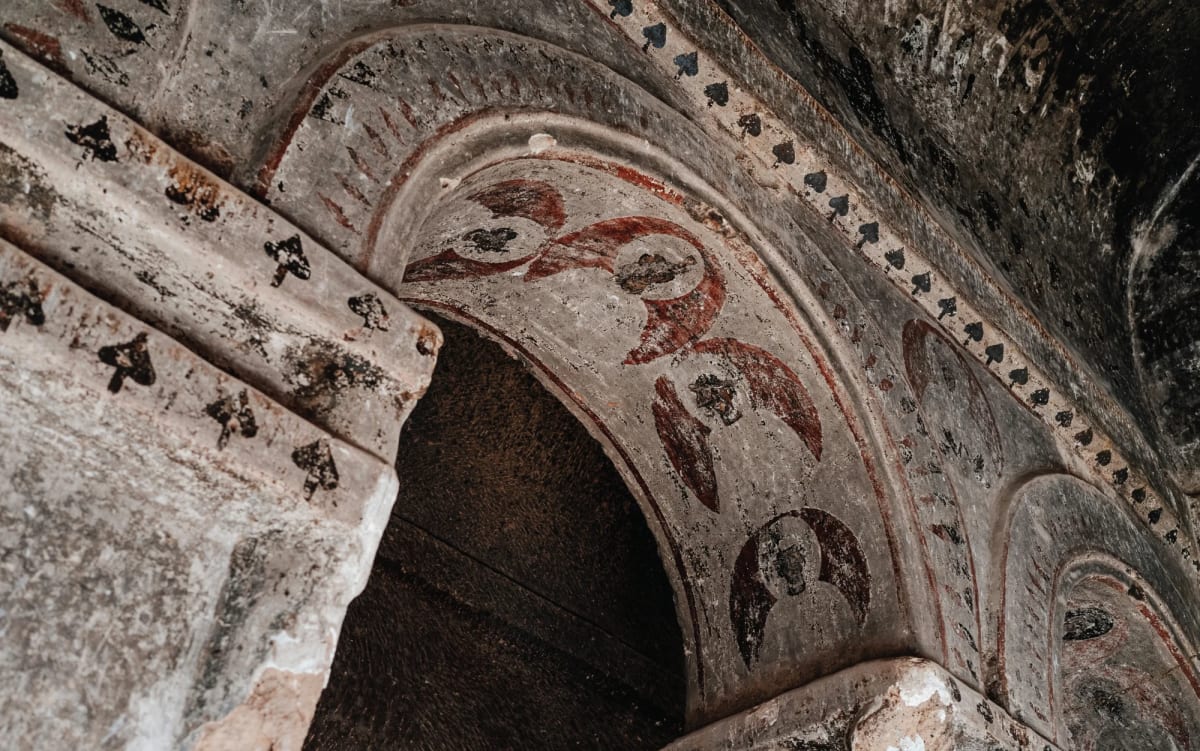
We soon reached the entrance to a narrow tunnel. Pausing there, Alex offered a gentle warning. “Anyone who is claustrophobic might want to stay out, but it is worth coming.” Inside, thin shafts of light filtered through small openings in the rock. What emerged was a Byzantine church, its walls adorned with frescoes from a period when Christian monks settled here.
We walked into the Rose Valley, where pinkish-red earth unfurled beneath sharp, ridge-like formations streaked with blush tones, resembling oversized swirls of soft-serve. As we pushed forward, the landscape seemed to stretch endlessly. Millions of years ago, volcanic eruptions blanketed Central Anatolia in ash, which hardened into a soft, porous rock known as tuff and was later capped by a tougher layer of basalt. Over millennia, wind and floods carved away the tuff, while the basalt eroded more slowly, forming protective, mushroom-shaped crowns.
Known geologically as hoodoos, these formations align with the fairy chimneys that define Cappadocia’s design scheme and give the region its otherworldly character. As the final rays of the sun settled into the valley, the rugged sweep of Rose Valley felt almost extraterrestrial, a sunset I will not soon forget.
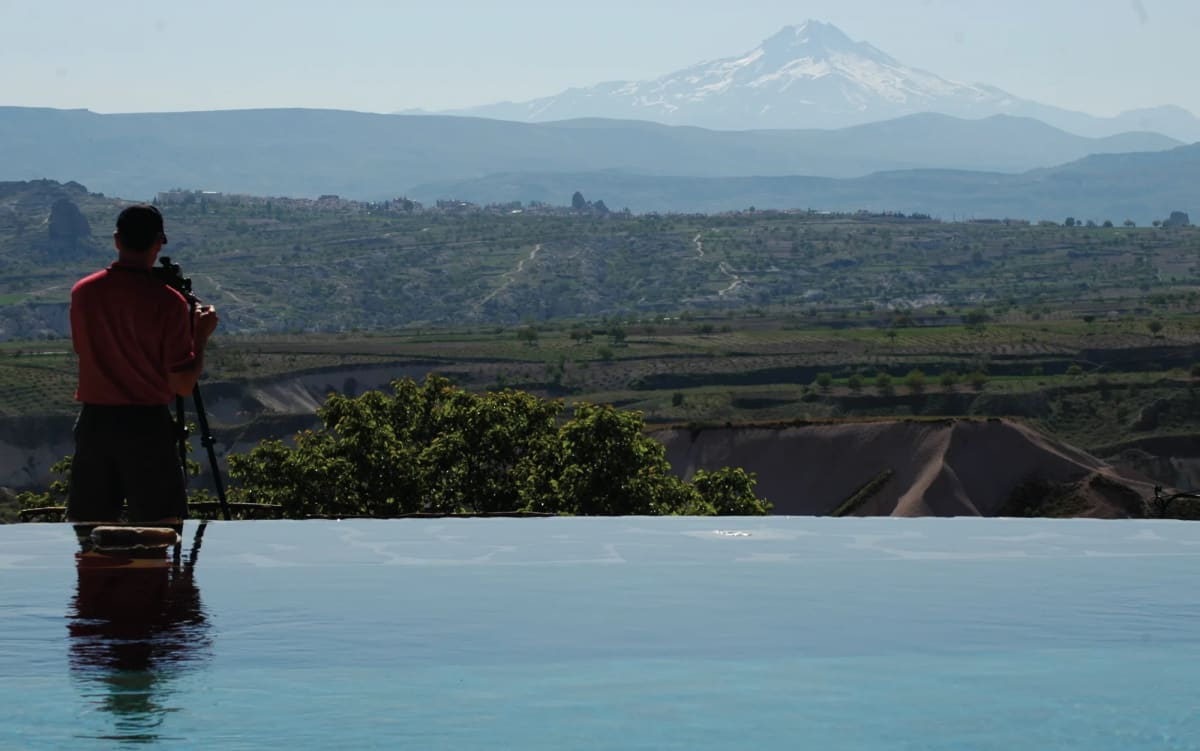
Though the terrain appears barren from a distance, it is surprisingly fertile. Along the way, I spotted patches of vineyards and learned that the land is sustained by underground water. Enriched by the region’s volcanic soil, Cappadocia’s unique geology gives the grapes their distinct flavour and makes the region’s wines stand out.
Rare Wines and Forgotten Anatolian Flavours
The tasting commenced with Emir, an indigenous grape shaped by Cappadocia’s volcanic soils, followed by the Kocabag Rosé, a salmon-hued wine that was aromatic, fruit-forward, and lingering on the palate. The sommelier-led experience at Cavo unfolds in a restored historic cave, now an elegant wine cellar at the Museum Hotel, showcasing a carefully curated selection from Anatolia’s finest producers.
The evening continued at Lil’a, offering a deeper insight into Cappadocia’s land-driven cuisine. Led by Chef Saygın Sesli, the restaurant follows an ingredient-forward philosophy, sourcing much of its produce from the hotel’s 400-acre ecological garden. Even the lavender-infused butter reflects the landscape, perfumed with flowers grown on the estate itself.
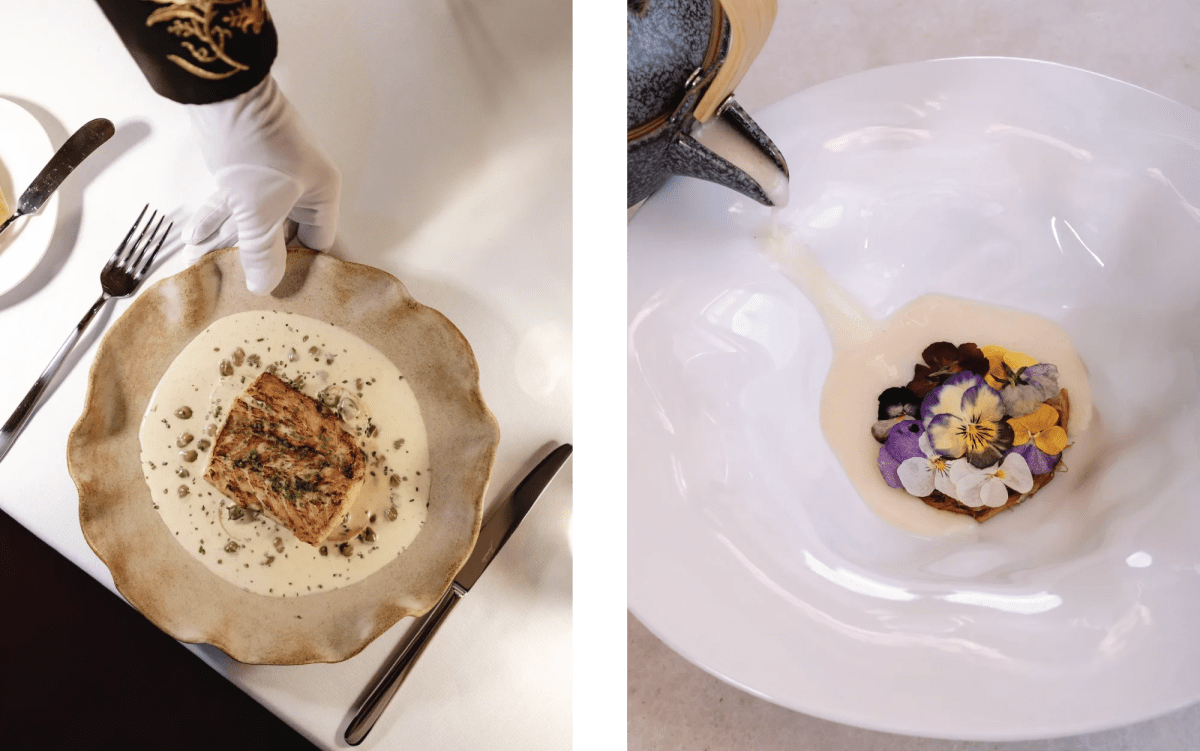
The meal opened with a modern interpretation of an ancient Anatolian wedding soup, enriched with the deep, smoky flavours of tandoori lamb. This was followed by Aegean sea bass, slow-cooked over a gentle fire in a stone oven, finished with an Emir wine sauce and paired with capers, garden potatoes, red onion, and wild valley thyme. A highlight was the manti, a traditional hand-cut Anatolian pasta served with yoghurt and topped with a slow-cooked chickpea stew from the clay oven, offering warmth and depth in every bite.
Desserts were equally memorable. While the fig, almond, and dark chocolate soufflé pleased the chocoholic in me, it was the stone-oven-baked local Mazi pear, stuffed with Konya blue cheese and served alongside baked Mihaliç cheese, that truly felt celebratory.
Guests were charmed by the cave-like interiors of Lil’a, enlivened by bold carpets, rich fabrics, and carefully placed objets d’art. Pottery from Avanos adorned the walls, inspiring us to skip the hot-air balloon ride the next morning in favour of a centuries-old pottery tour.
Into the Heart of Cappadocia’s Pottery Art
Located just 12 kilometres from Göreme, Avanos is an easy detour, with the journey taking around 45 minutes. Its streets are lined with small cafés and ceramic workshops, while glimpses of the Kızılırmak River, also known as the Red River, appear just across the road. A visit to the Alaaddin Ceramic Family Art Gallery feels like stepping into a living ceramics museum.
Inside the potter’s room, the wheel spins underfoot as the master potter explains, “For generations, we have crafted our vases, pots, and pitchers from Avanos red clay, a mineral-rich sediment drawn from the river and mixed with volcanic soil from nearby mountains.” The addition of quartz dust sourced from surrounding peaks enhances the durability of each piece, highlighting how Avanos pottery is shaped by both geology and tradition.
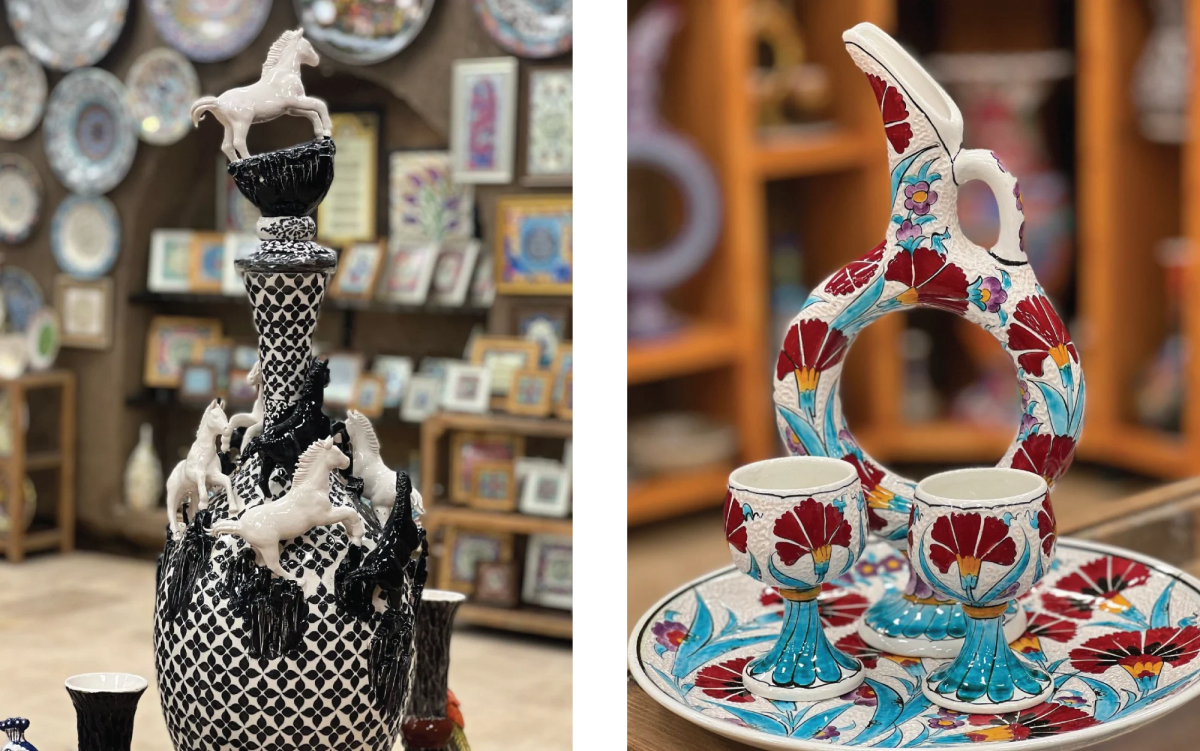
Hand-painted plates in vibrant hues line the walls like curated exhibits. Among the most complex works is the Turkish decanter, created through a ritual dating back to the Hittite civilisation. Revered as a vessel for the gods’ drink, its circular form symbolises Ra, the Hittite Sun God. Each element is modelled separately, assembled, and finished with intricate hand-painting.
Photography is not permitted in the master collections, which feature limited-edition works. One striking piece was a monochrome, hand-painted plate of Lord Ganesha, a powerful reminder of the artists’ range. Prices range from 2,000 to 10,000 dollars, reflecting both artistic mastery and cultural value.
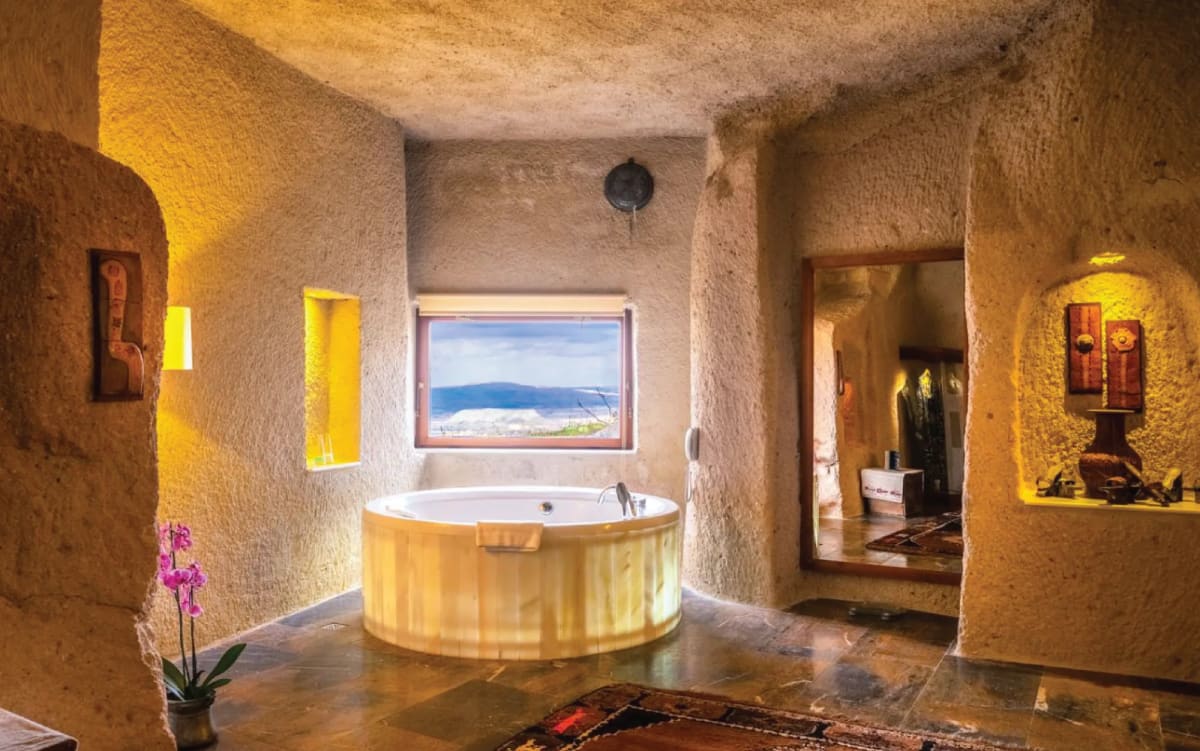
Accessed through a private tunnel carved into the rock, the cave suite opens onto sweeping views of Cappadocia, visible even from the bathroom. The experience deepens with the knowledge that the space once housed a carpet-weaving loom and that excavation revealed fragments of a chapel.
Some places linger long after you leave, and Cappadocia is one of them. A geological wonder, it has inspired architects to transform ancient cave ruins into refined cave suites, while chefs reinterpret Turkish cuisine by reviving nearly forgotten Anatolian flavours. The region’s wines speak of volcanic, mineral-rich soils, and its pottery continues to honour the land.
Whether you are seeking an indulgent escape or a place to reconnect with the world at a slower pace, the new Cappadocia offers both. Hiking through the valleys of Göreme National Park, you are surrounded by iconic fairy chimneys, striated in shades of pink that glow softly at sunset, an experience that makes it easy to accept skipping the hot-air balloons altogether.