As the aircraft weaves through the Himalayas on its descent into Paro, a heart-in-the-mouth moment takes over. Here, the clouds drift past as the aircraft dips low enough for you to spot Bhutanese homes almost at eye level, perched at the far edge of the wings, before landing on a sliver of runway tucked between the mountains, one that only a select few pilots in the world are qualified to navigate. Thrilling fact, indeed!
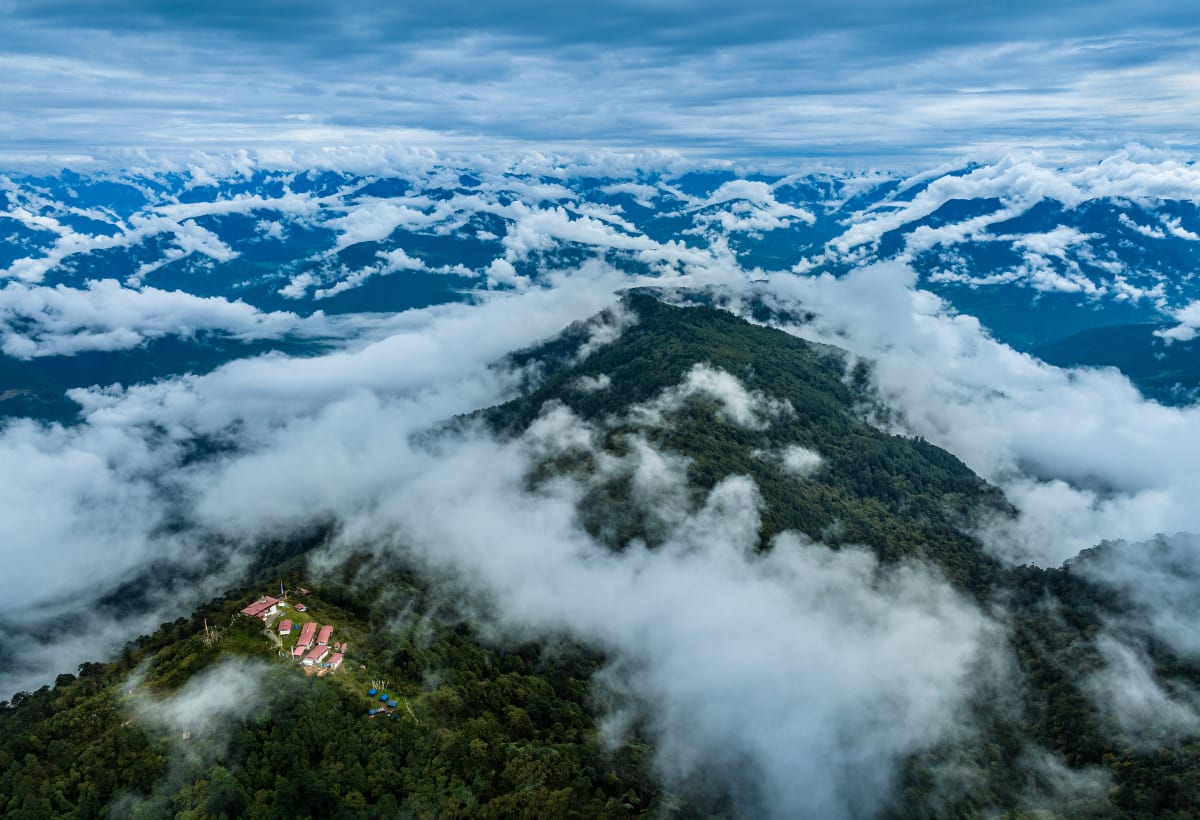
A brief walk to the terminal allows you to breathe air so fresh you have never tasted before, with mountains galore. Make it a sunny afternoon; the views alone warrant a sense of deep relief!
We had arrived to discover Bhutan. Tashi Delek!
Paro, being the sole airport in western Bhutan, you may choose to start or end your visit here. We chose Thimphu, the capital city, only an hour’s drive away, to start with. Like it does in the mountains, rain poured by the time we cleared immigration and stepped out. Past a garden blooming with lilies and hydrangeas, two men stood waiting to welcome us at Yarkay Thimphu, holding traditional silk scarves that had been blessed by the resident monk.
It was a good beginning. Alas, it did not last.
By the time we'd had our first cup of suja (butter tea) at the hotel, our stomachs had staged a full-blown rebellion. The next two days, meant for temple visits and slow explorations, were replaced by pharmacy runs and bowls of curd rice lovingly sent up by Chef Pankaj at Yarkay Thimphu, an IHCL SeleQtions property whose warm, attentive staff made us feel unexpectedly at home.
We still went out to the Motithang Takin Preserve, a wooded pocket on the city’s edge as a forested backdrop. Their national animal, the Takin, earns its intrigue with legend credits Drukpa Kunley, the "Divine Madman", who supposedly conjured it from a cow and a goat's bones after villagers begged him for a miracle. Golden-haired with horns, the ones we met seemed unbothered by their origins, grazing amid alpine forests.
The Realness of Bhutan
There's a version of Bhutan the world knows — a country you visit to lose yourself or to be healed; international hospitality acting as a soft-focus filter between the traveller and a kingdom they're never quite allowed to touch. I believed some version of that too, until I travelled to places only a few go to, but with good reason.
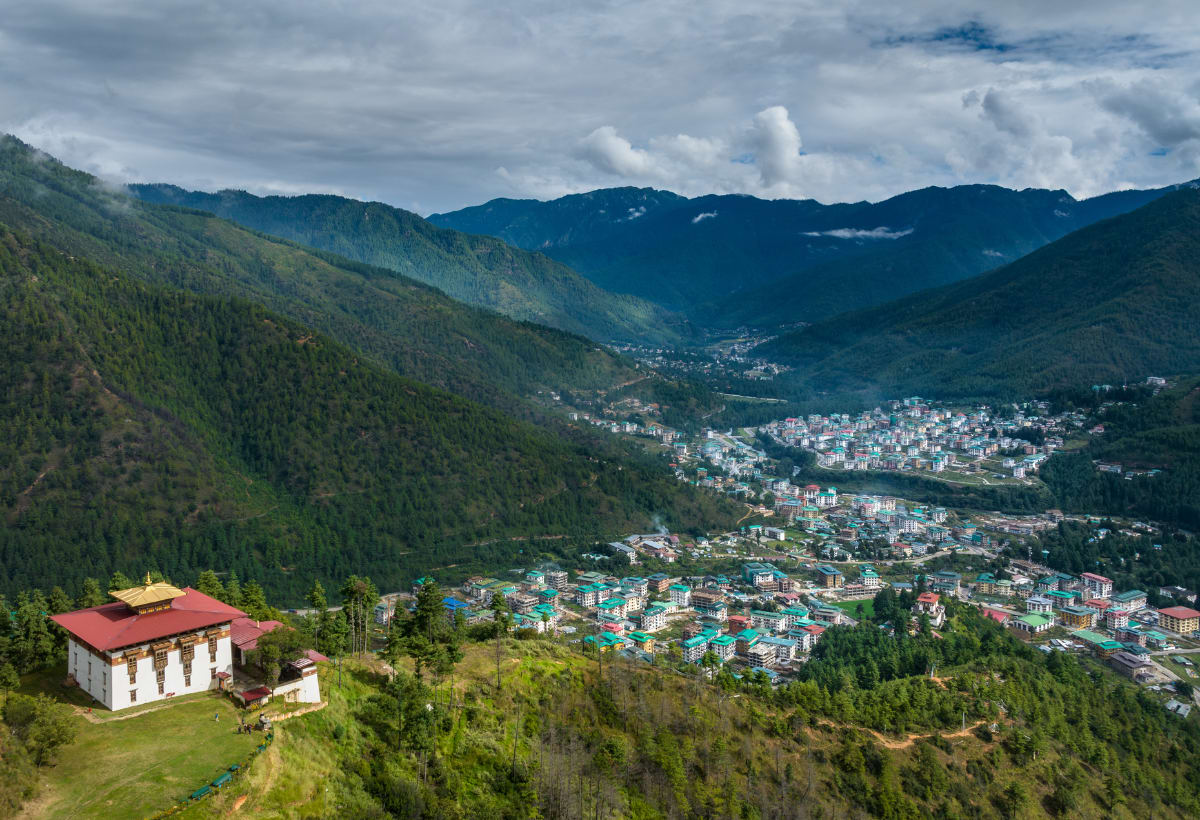
By the time we drove past the Thimpu Chhu to climb the winding roads to Dochu La Pass, my gut (literally) woke up from a slumber and responded in agreement with the weather. Past the imposing sanctum of the Simtokha Dzong (Bhutan’s oldest monastery), our guide Sonam R. gave us a healthy dose of the tourism history of his nation, opening its doors in 1974 and the slow, deliberate decades since.
The road to Dochu La turned into what seemed like a glorious green haven as we entered the realm of the Royal Botanical Park in Lamperi, 30 kms out of the capital. Spanning 125 acres of core garden area inside a 47-square-mile biological corridor, varying in altitude, the foliage, from moss-draped oak, magnolia and birch to mixed conifer, fir and temperate forest and 46 rhododendron species that bloom from mid-March into early August, spoke a common language to Bhutan's constitutional promise to keep sixty per cent of the country under forest, always.
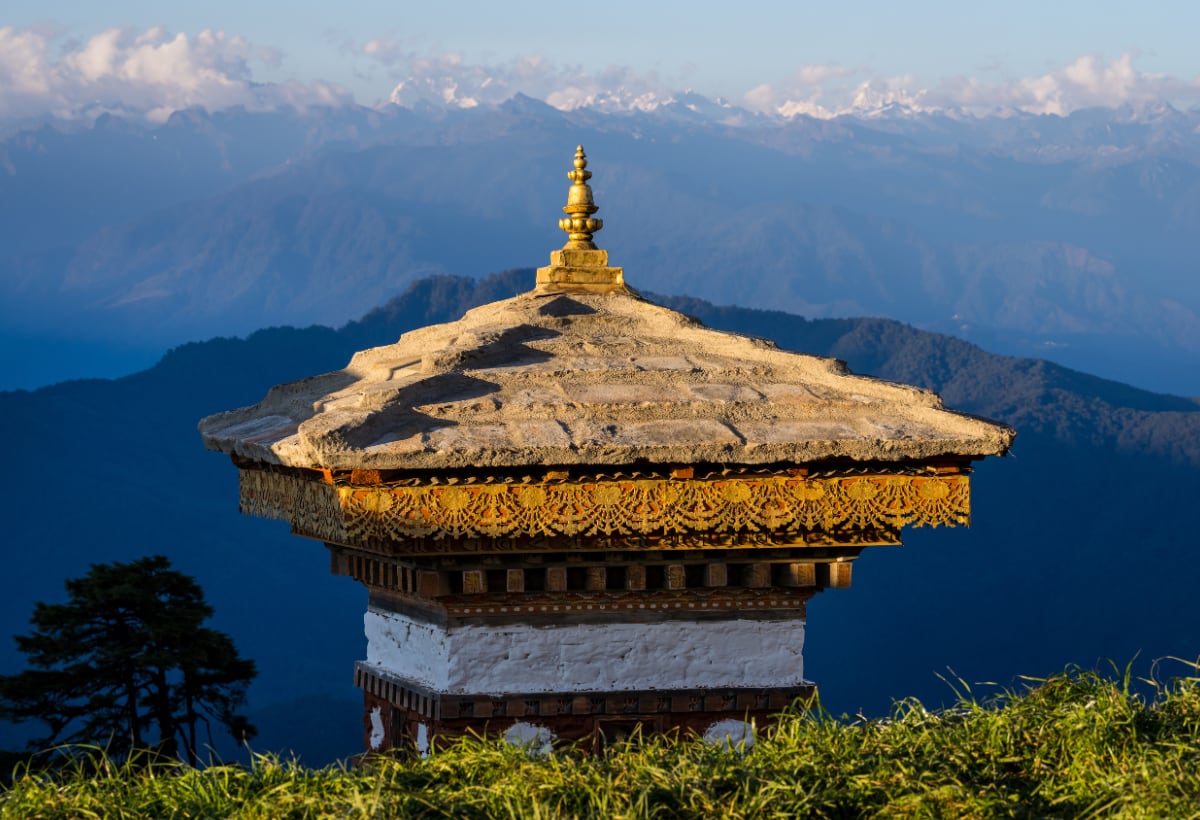
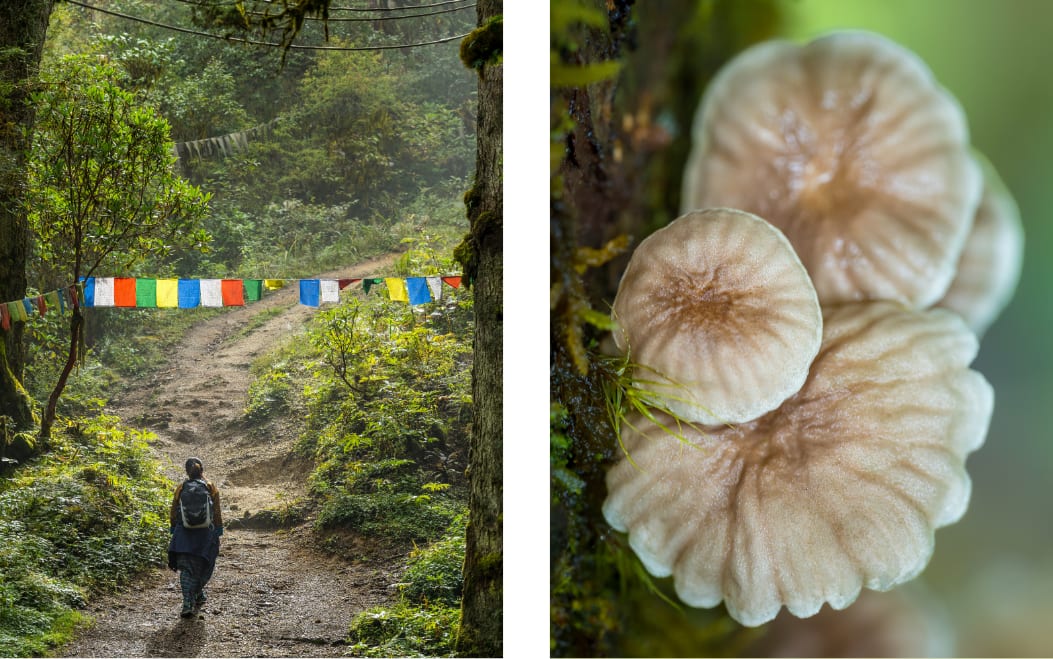
At 3100 metres, my partner Joydeep had shaken off three days of illness entirely; nature does that faster than any medicine cabinet. We paid our respects at the 108 chortens built for the soldiers lost in 2003 (during the war between Bhutan and Bodoland), and while I sat with a ginger-lemon-honey tea watching the clouds drape themselves over the stupas, he wandered off chasing birdsong. A local family was having a little picnic up in the meadows, a ‘zachum’, singing songs and eating home-cooked food. He came down huffing to show me photos of a Pika — the roundest mountain rabbit (that looks like a rodent) I have ever seen, clinging to a rock.
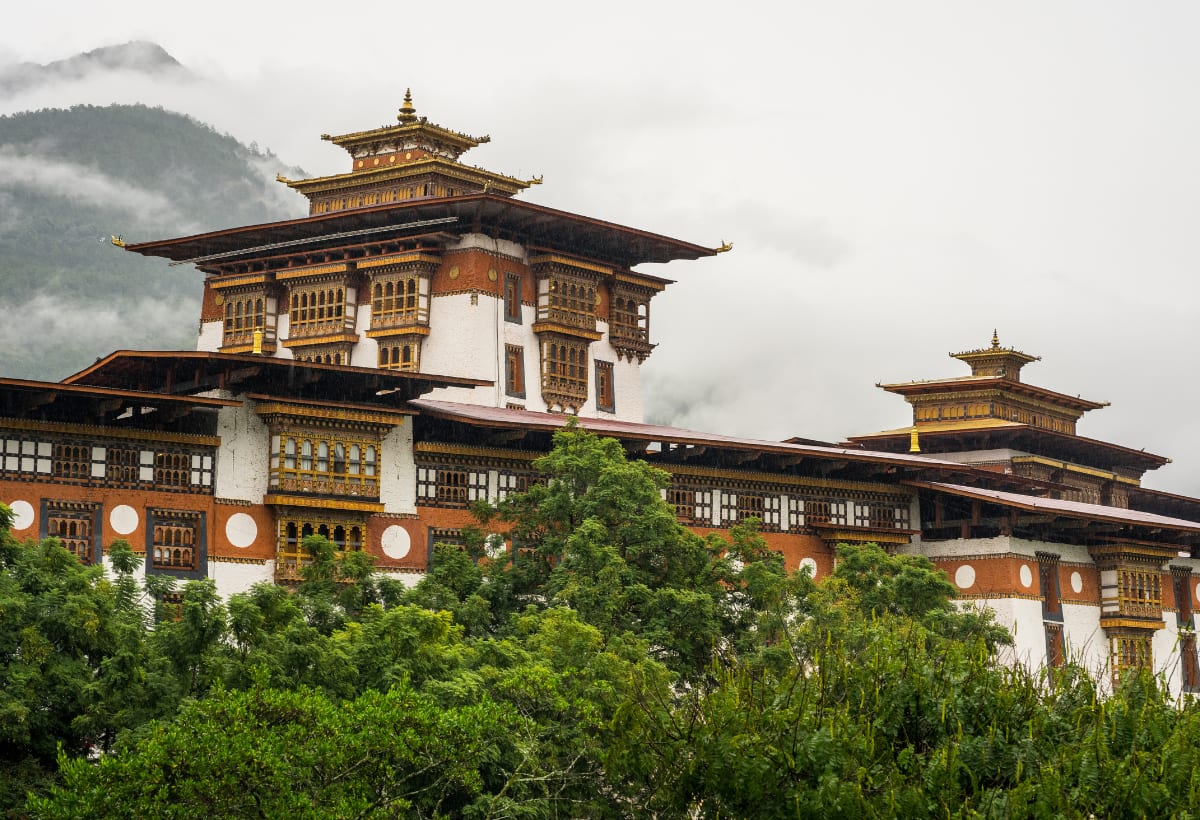
Healing starts with embracing nature, and we were already immersed. We came down through a few landslide-slowed stretches into the thick, warm air of Punakha. Sonam's stories kept coming — of mermaids and hidden treasures said to live in the carved niches of Punakha Dzong, which sits with authority at the meeting point of the Pho Chhu and Mo Chhu, the two rivers that become the Puna Sang Chhu before crossing into India. The rapids invite adventure seekers to what seems like a very scenic rafting experience.
A Valley of Peace
By the time andBeyond Punakha had us, the healing started taking shape.
Researchers studying the ‘Blue Mind’ theory suggest that the sight and sound of water can calm the nervous system in ways few spa treatments can. Waking up to mountains draped in clouds, as though they had spent the night wrapping themselves in a shawl, felt like proof of that.
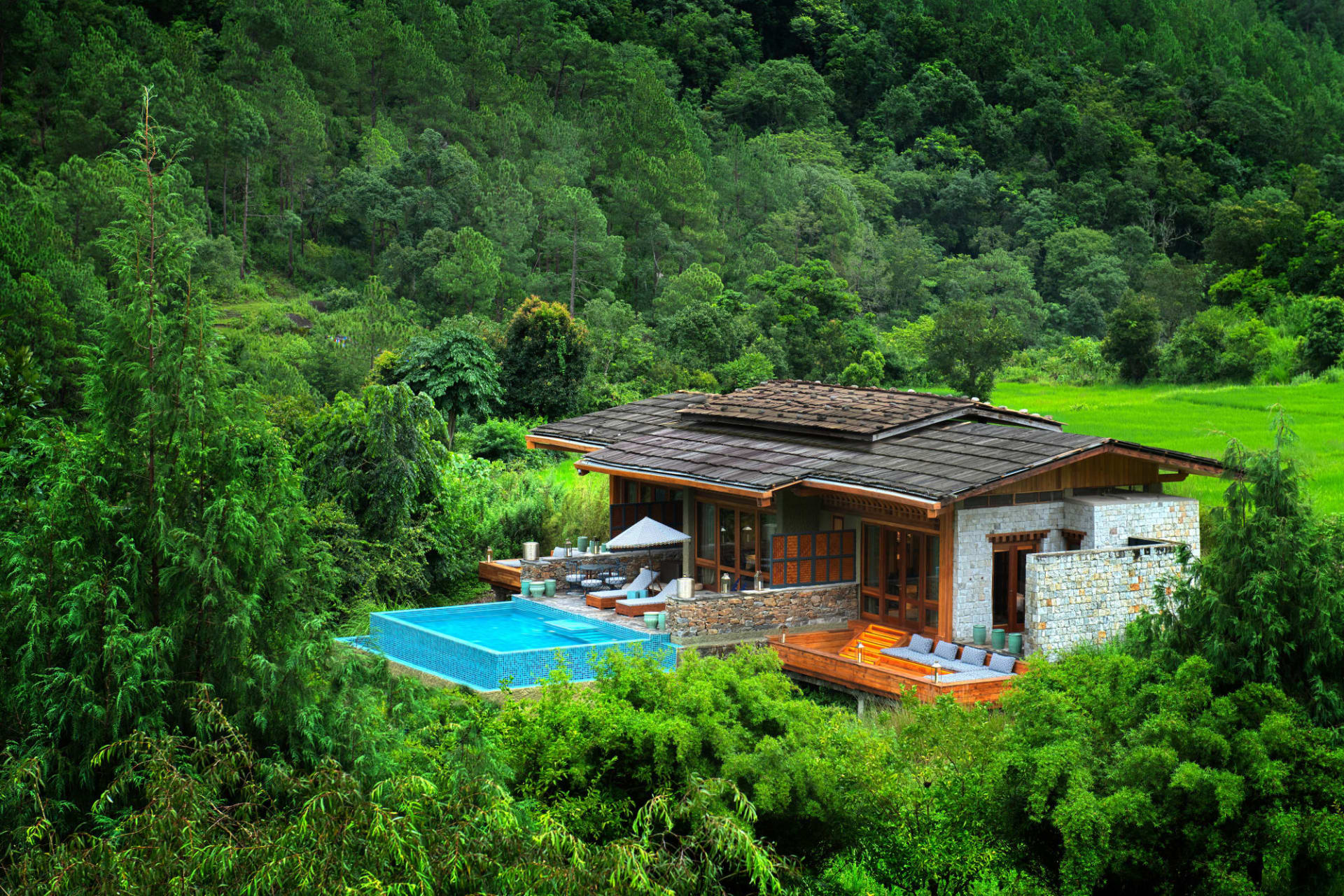
Globally renowned for its sustainable luxury lodges and safari experiences, &Beyond's first property in Asia offers a different kind of luxury, one rooted in nature and a light environmental footprint. Its six tented suites, complete with thoughtful touches such as chilli cheese chocolates and homemade cider, are suspended from a traditional pinewood structure designed to blend seamlessly with the landscape. Floor-to-ceiling glass doors blur the line between indoors and outdoors, opening onto private patios that overlook a heated pool framed by the mountains beyond.
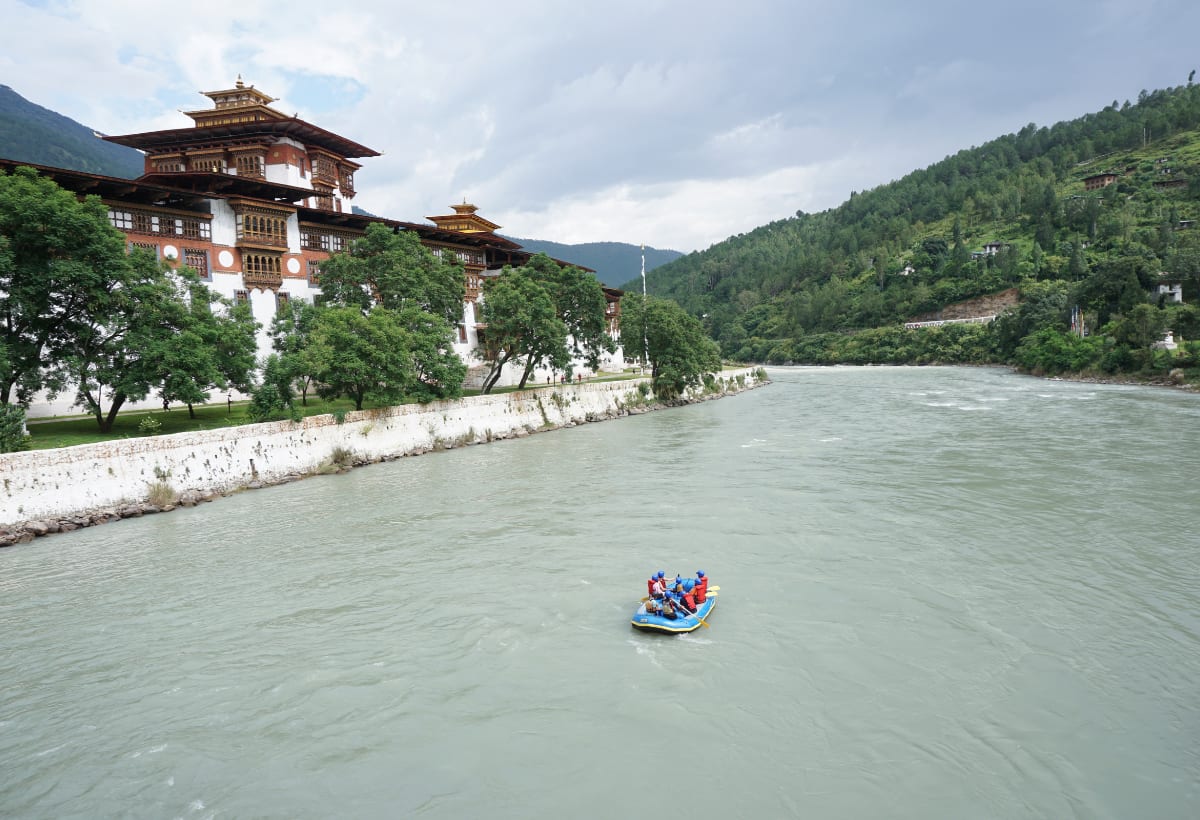
The lodge opens the door to a range of memorable experiences, including hikes and rafting. One early morning, we drifted along the Pho Chu, keeping an eye out for the tall, grey silhouette of one of the world's rarest herons along its wooded banks. This stretch of river is among the last remaining strongholds of the critically endangered white-bellied heron, whose global population now numbers fewer than 60 individuals. Even gliding past their protected habitat, designated by the Royal Society for the Protection of Nature, felt slightly intrusive. I wasn't too disappointed that we didn't spot one. There are so few of them left, and perhaps some creatures are best admired from a respectful distance.
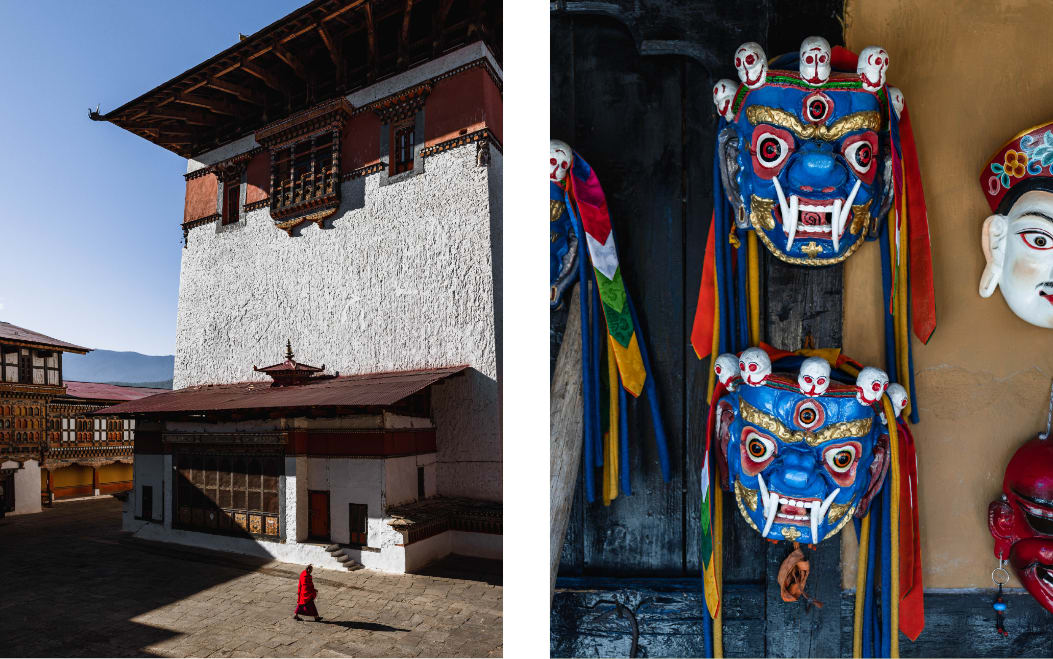
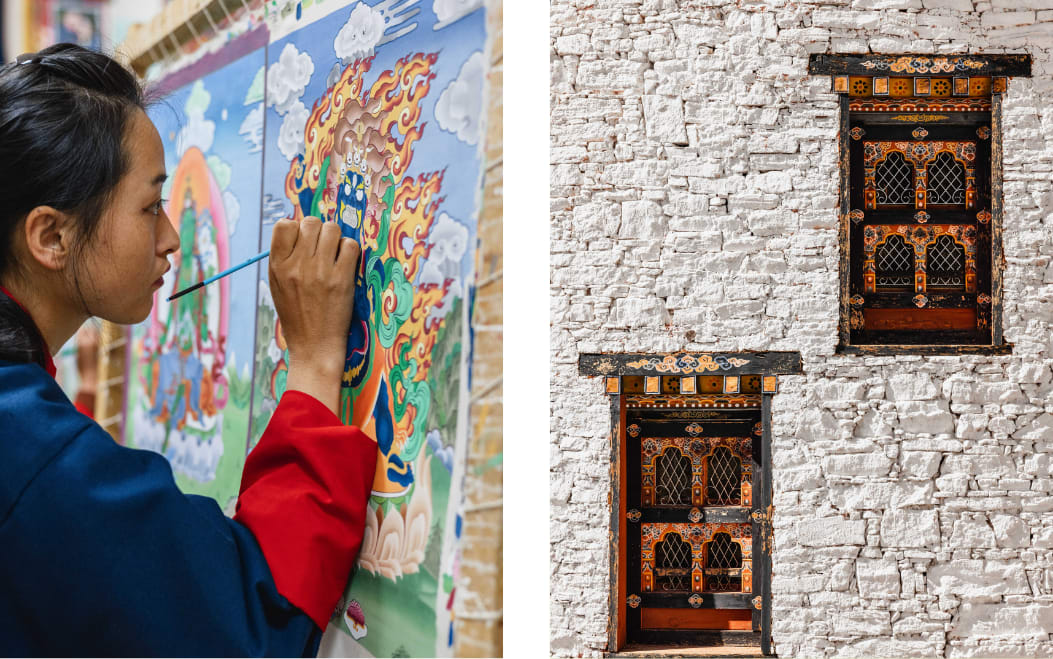
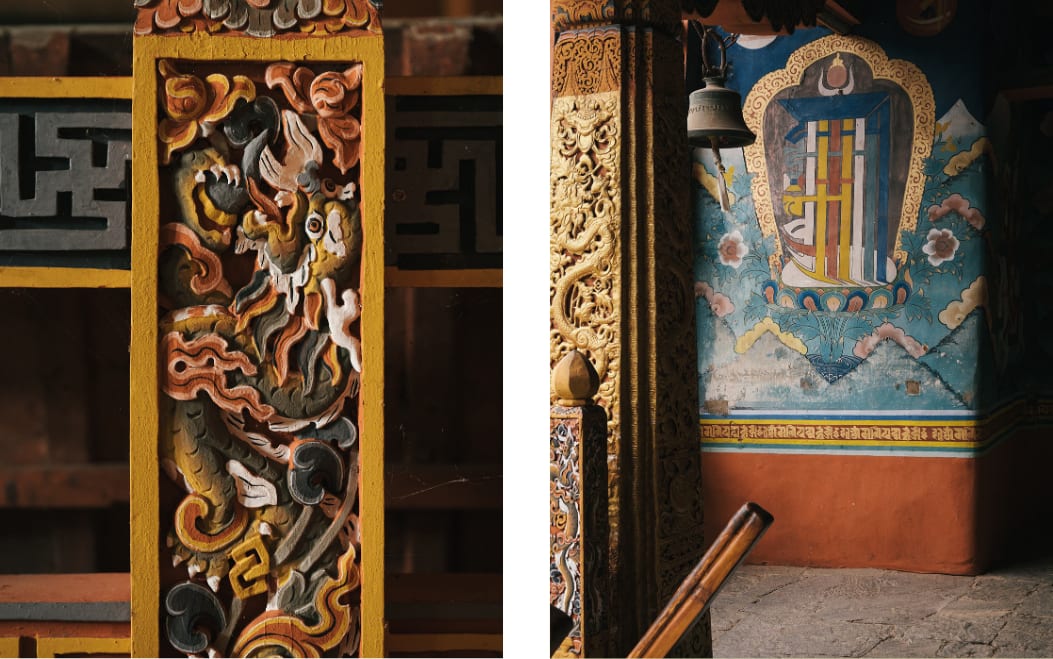
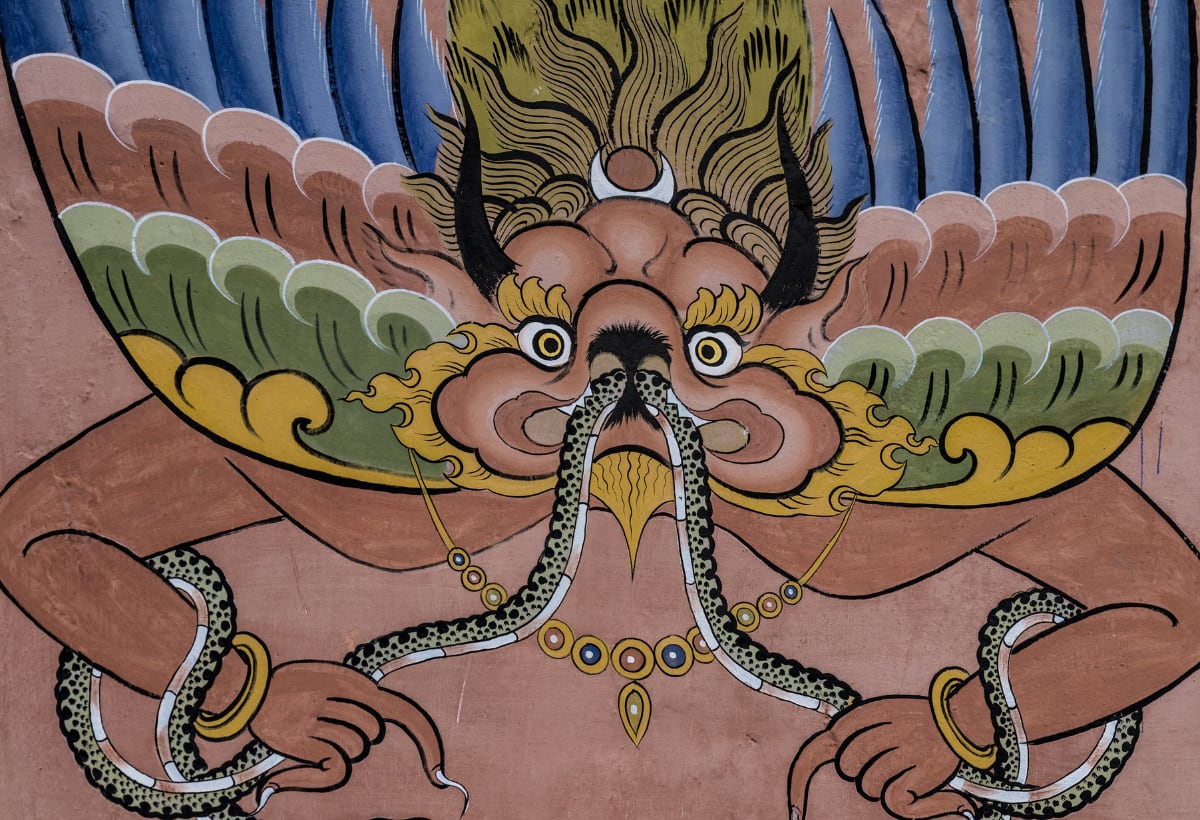
Sonam led us next to the Sangchhen Dorji Lhuendrup Nunnery, where we sat cross-legged before the altar as a monk's voice settled into its low, steady rhythm, lighting a butter lamp and letting thirty minutes of prayer do the quiet work. The calm washing over felt surreal, the scale of the spiritual paintings and idols towering over your person. But it isn’t the ‘forget all pain’ sort of calm. For me, monasteries stand as a resolute mark of a divinity that's ancient and yet remains embedded in modern life, and I felt a balance within myself that I hadn't felt for a long time.
When it ended, another young nun walked us through a private circuit of the shrine, and I felt more blessed for her company, her kindness, and resolution - the same kind you will feel among the hundreds of nuns of all ages, who live and study a monastic life here.
Punakha Dzong holds some of the most valuable relics in the country. In a chamber closed to ordinary visitors and pilgrims alike rest the embalmed remains of Zhabdrung Ngawang Namgyal, founder of the Bhutanese state, who died in 1651, and of Pema Lingpa, a revered 15th-century Nyingma tertön (treasure revealer).
On our way back, Joydeep landed the same spot twice in a row in a roadside archery and dart competition that ended with a high-pitched song and dance with the local boys.
We spent long, unhurried hours wandering across the property's sprawling grounds, with no agenda beyond spotting a Paris Peacock (which is actually a butterfly) flashing its iridescent wings in the sunlight, listening for the soft chatter of a Schmitter's Babbler in the undergrowth, or hoping a Pika might stay still long enough for a photograph.
Restructuring Luxury
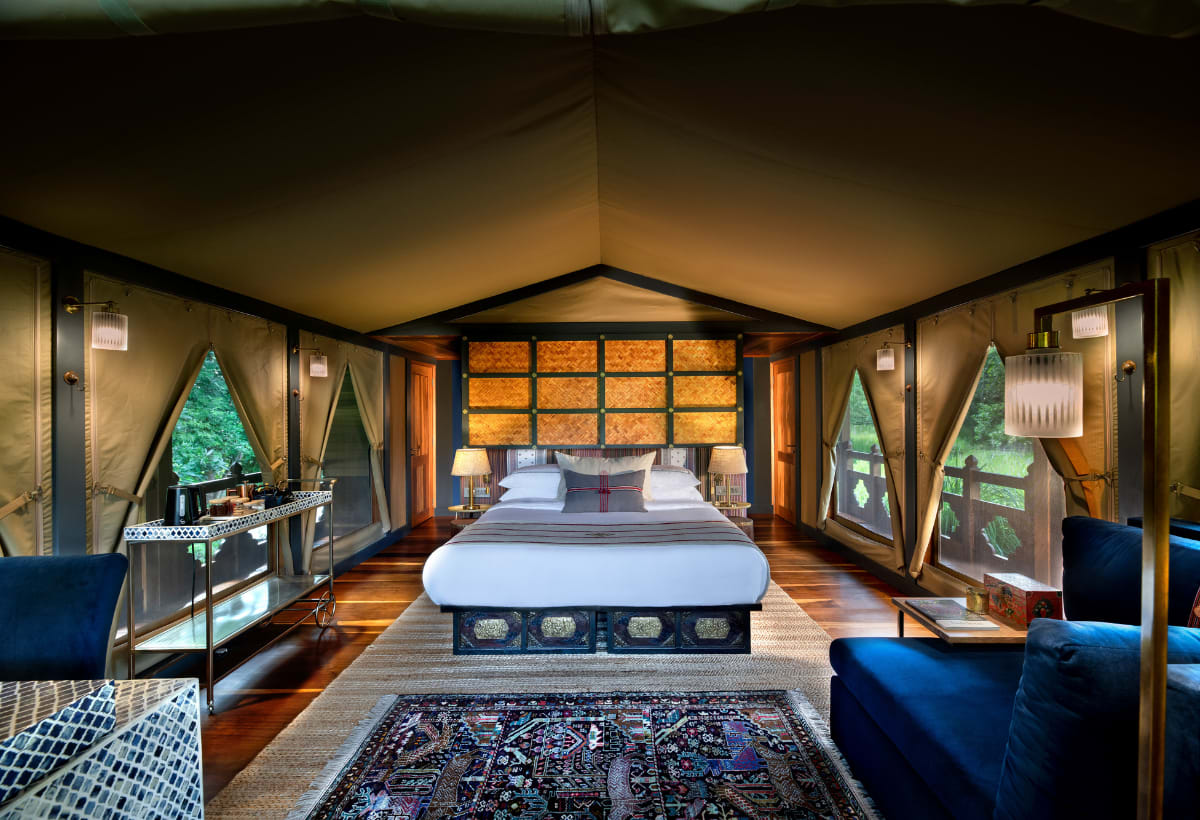
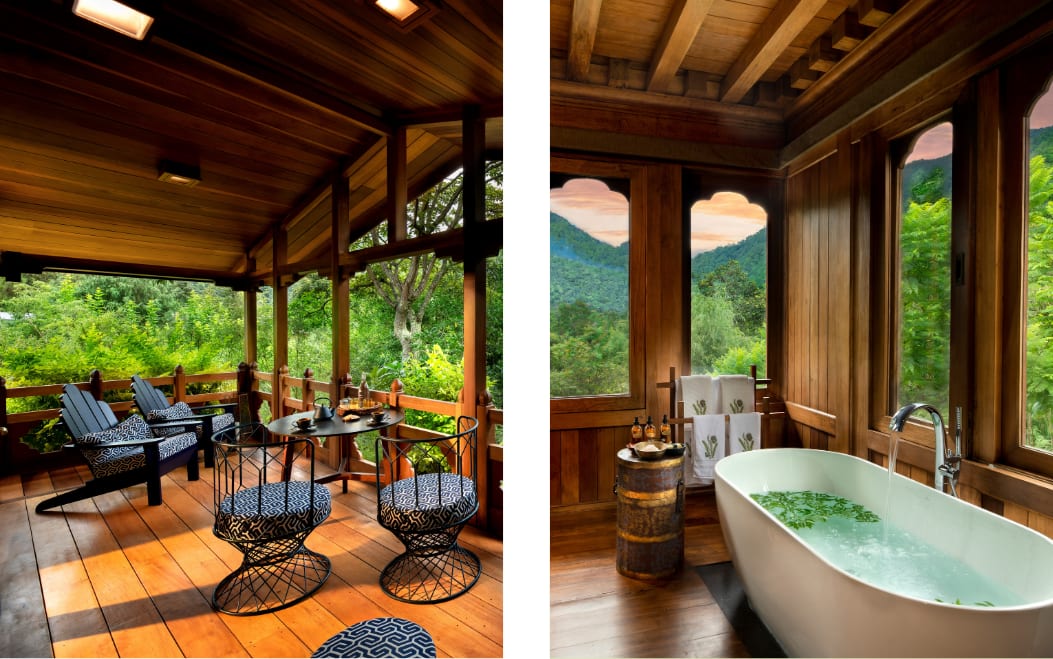
The lodge lends almost 35 acres of its land to the local villagers for paddy cultivation, with no taxes or contributions required. Under its strong community pillar-driven philosophy, the brand supports local primary schools and health centres with support with supplies. The carbon footprint of the lodge itself is the subject of studies for visiting student interns from global universities.
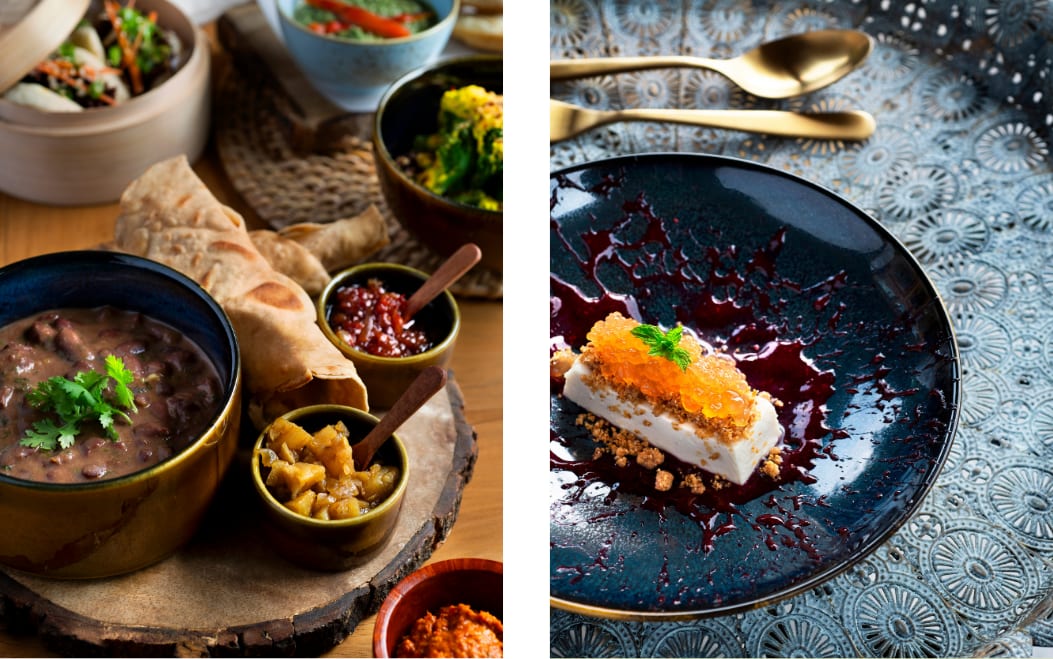
On the plate, this language turns hyperlocal. Bhutanese red rice sits next to a Sri Lankan hopper, a Korean bibimbap arrives threaded with the heat of Nepali chilli, an Indian thali, and even cocktails made with produce grown within the lodge. At night, within the confines of locally crafted linen, luxury comes as a free fall to sleep, to the sound of the water roaring past the lodge.
There was also a traditional hot stone bath, where flat black river stones are heated and immersed in water. The Bhutanese believe the minerals released by the stones have healing properties, and as the warmth seeped into tired muscles, it was easy to understand why this centuries-old ritual remains so cherished.
Under all of it, remained the sense that all this comfort adds back to the land. A sensitivity and reverence for their royal leaders, and the inherent application of Sowa Rigpa (Bhutan’s ancient healing concept derived from Traditional Tibetan medicine, like India’s Ayurveda) in its approach to life — across food, wellness, and living practices that have a healing effect on mind and body.
I found Bhutan to be quite non-performative, rather a kingdom in confident transition, honing luxury on its own terms, opening its deepest spaces to travellers who arrive prepared to receive them. And boy was I glad to experience life of a different kind, one that can only be lived when you visit the “Land of the Thundering Dragon”, the Druk Yul.