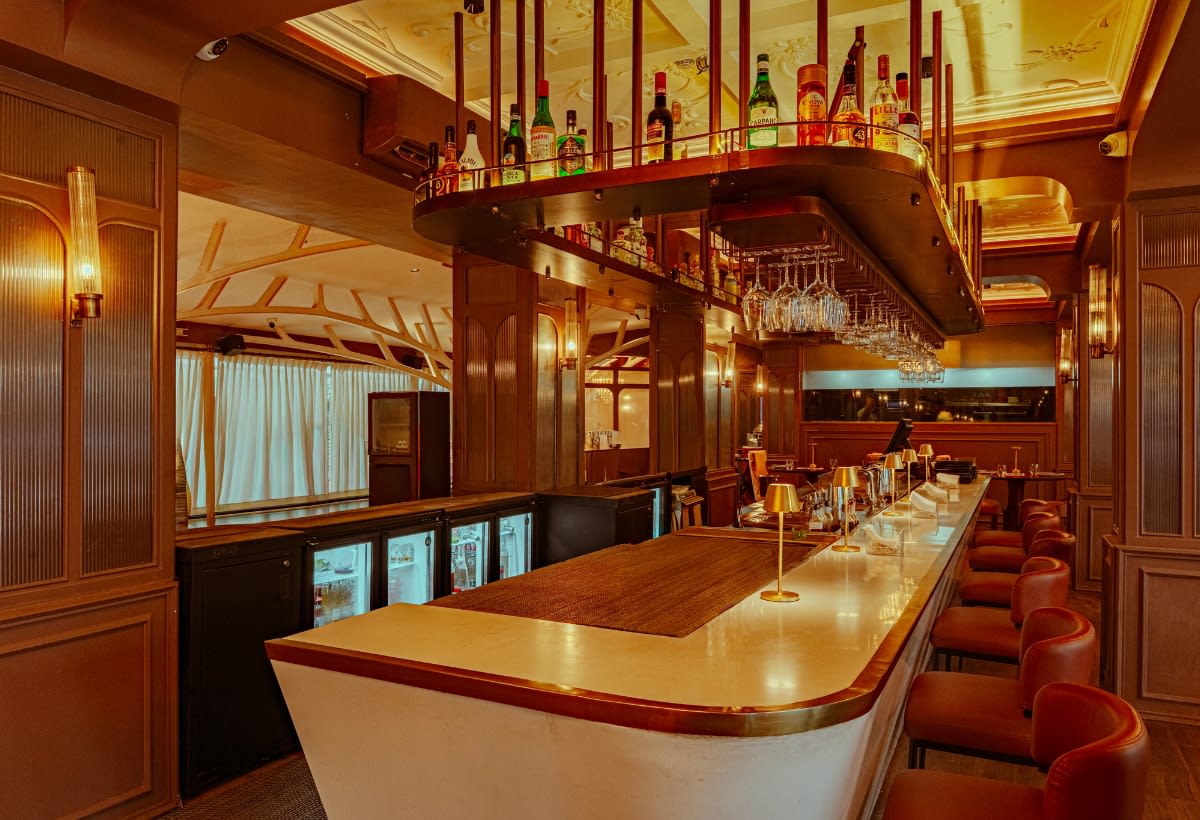
I arrived at Soraia, the Gauri Khan-designed oasis tucked inside the lush expanse of the Mahalaxmi Race Course in Mumbai, on a languid weekday afternoon. A fountain greets us at the entrance, while inside, sunlight seems to have secured the best seat in the house, spilling generously across the room. I was there to meet Fay Barretto with embarrassingly little homework done. What I didn't know was that I was about to spend the next few hours discovering a talent unfold like a tasting menu.
The new-age cocktail crowd will know Barretto as the mind behind the bar programmes at Scarlett House, Gigi and Felia of Mumbai. But as we settled into conversation, it became clear that cocktails are merely one chapter in a much larger story. "My whole heart went into curating Soraia's menu, working with rare, seasonal ingredients foraged and handpicked by indigenous communities," Barretto revealed.
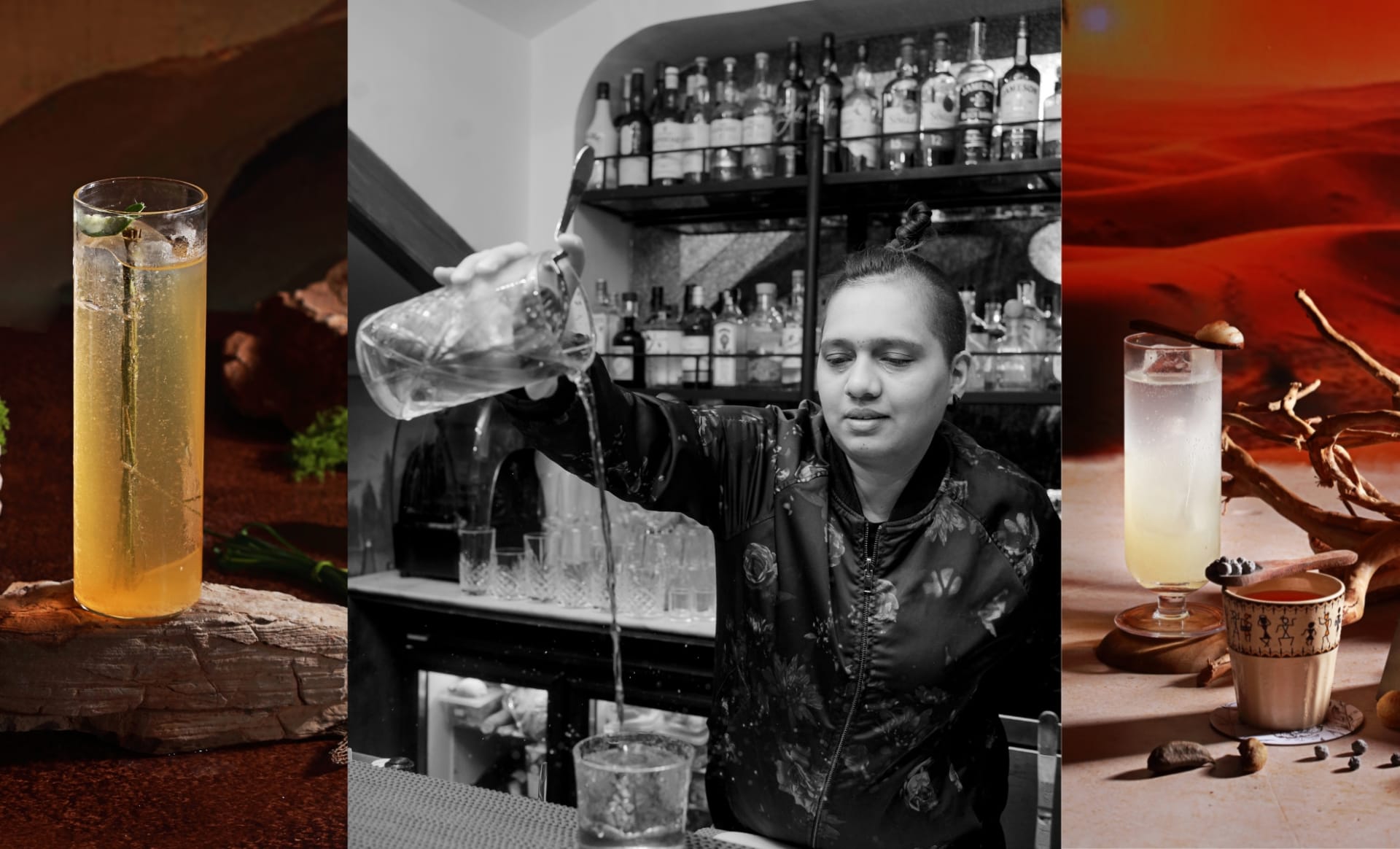
Moments later, what arrived at the table was a landscape, distilled with a garnish and ice theatre. Each sip carried echoes of forests, wild herbs, and forgotten seasons, transporting me to the very place from which its ingredients had been gathered. The signature cocktail menu, titled ‘Terrain Tipples’, is Barretto’s ambitious bar chef programme for Soraia.
A Chef Behind The Bar
In recent years, chefs and restaurateurs have begun treating beverage programmes with the same seriousness as their kitchens. Cocktails are no longer an afterthought but an extension of the culinary narrative. Bar teams work alongside chefs, borrowing techniques, ingredients, and philosophies from the kitchen to create drinks that are as layered and thoughtful as the food itself. A Goan curry, for instance, can find its way into a glass through ‘fat washing’, clarified broths, and carefully calibrated spice infusions, capturing the essence of the dish without recreating it literally.
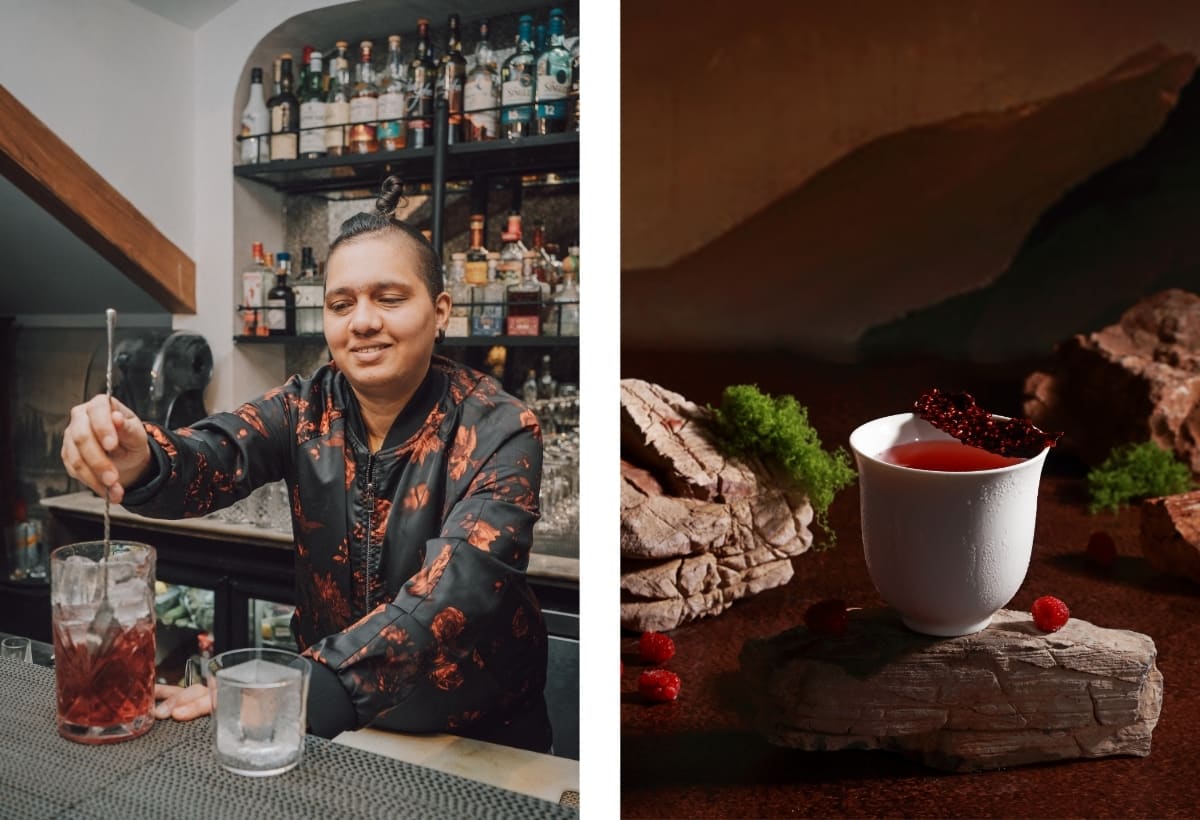
But what Fay Barretto has built at Soraia goes several steps further. The cocktails have the prowess to bottle landscapes.
Take ‘Whispers of Pine’. The drink begins with gucchi mushrooms, hand-foraged from Himalayan forests, and pickled apricots before undergoing a brown butter fat-wash on tequila. Pahadi raita's recipe is then used for milk clarification, transforming what sounds like a rugged mountain broth into a crystal-clear cocktail with an almost silky texture.
The question here isn't, what if we could drink a dish? It's, what if we could savour a mountain in a glass?
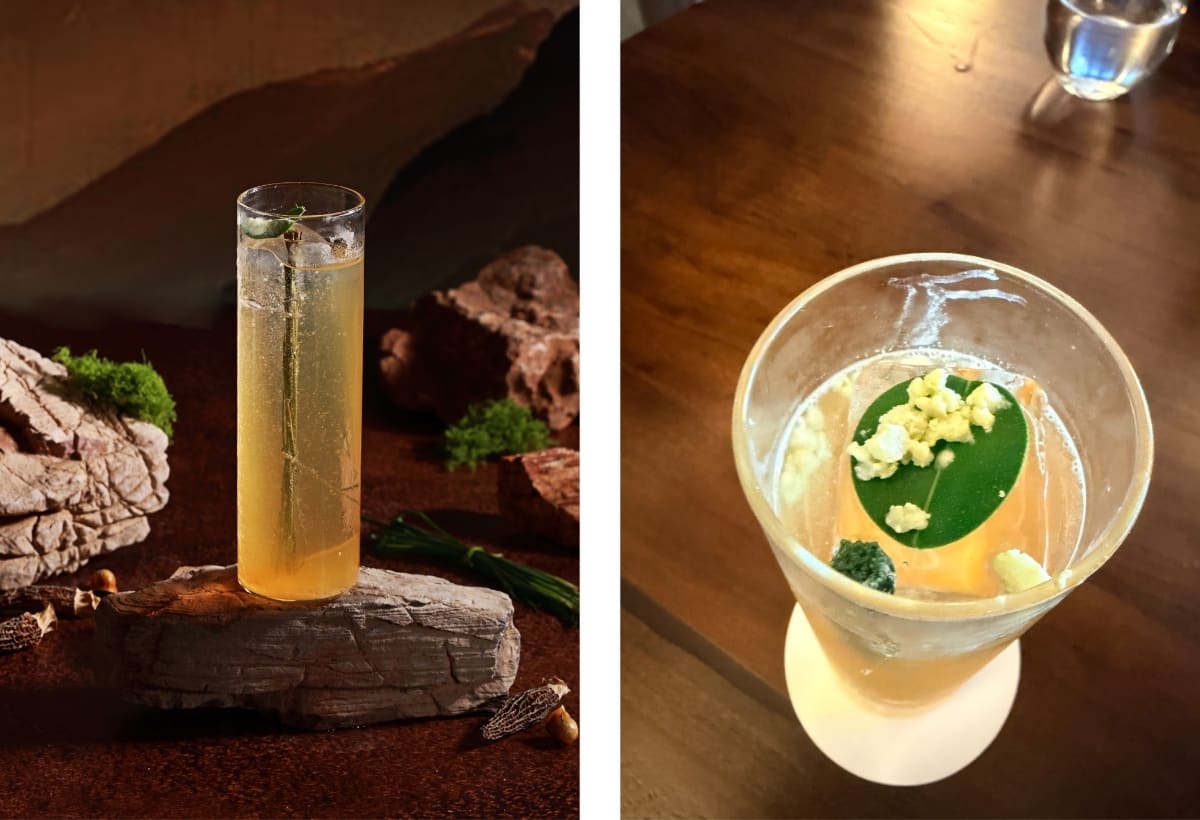
The illusion doesn't stop with the liquid. Barretto’s ice programme is equally considered, designed to release flavour gradually as the drink evolves. In ‘Whispers of Pine’, a delicate pine stem is frozen within the ice, slowly perfuming the glass as it melts. By the final sip, the mountain quietly arrives, tasting like hints of vetiver, topped with frozen crumbles of pahari raita as a bite alongside the sip.
Intrigued, I asked how pine stems found their way into a cocktail. "They come from Ekanaya Farms in Himachal," Barretto explained. "At nearly 7,000 feet above sea level, morel mushrooms grow wild there, and before colonial times, these hills were covered almost entirely in pine forests." The ingredients, I soon realised, carried a story of place. The honey is sourced through a collective of eight Himachali women; the Kashmiri mountain garlic and quince come from a single family farm in Kashmir that continues to cultivate the rare garlic, while the dried apricots travel from orchards in Ladakh, Barretto informs.
Somewhere between the pine-scented ice and a cocktail that tasted like an altitude gain, I kept asking, "What's in it? I mean, what is the spirit inside?" and started wondering: who thinks about a cocktail like this?
I asked Barretto the inevitable question: how did the journey begin?
It all started with ‘Mr Bartender & The Crew’, a collective dedicated to creating opportunities for women and members of the queer community in an industry that has long been dominated by men. What began as a simple idea, to equip marginalised communities with practical bar skills, has evolved into a platform for empowerment, confidence-building, and financial independence. Whether as a profession or a side hustle during difficult times, the initiative offers more than technical training. Baretto is quick to acknowledge that projects like Soraia's ambitious beverage programme require more than creativity; they require trust, and credits Dhaval Udeshi, the co-founder of Soraia, Sweeney, and Scarlett House, for backing bold ideas.
After all, not every restaurateur readily signs off on cocktails that attempt to taste like a mountain. Fortunately, Udeshi did, and Soraia's menu is all the more interesting for it.
Introducing the North East in A Glass
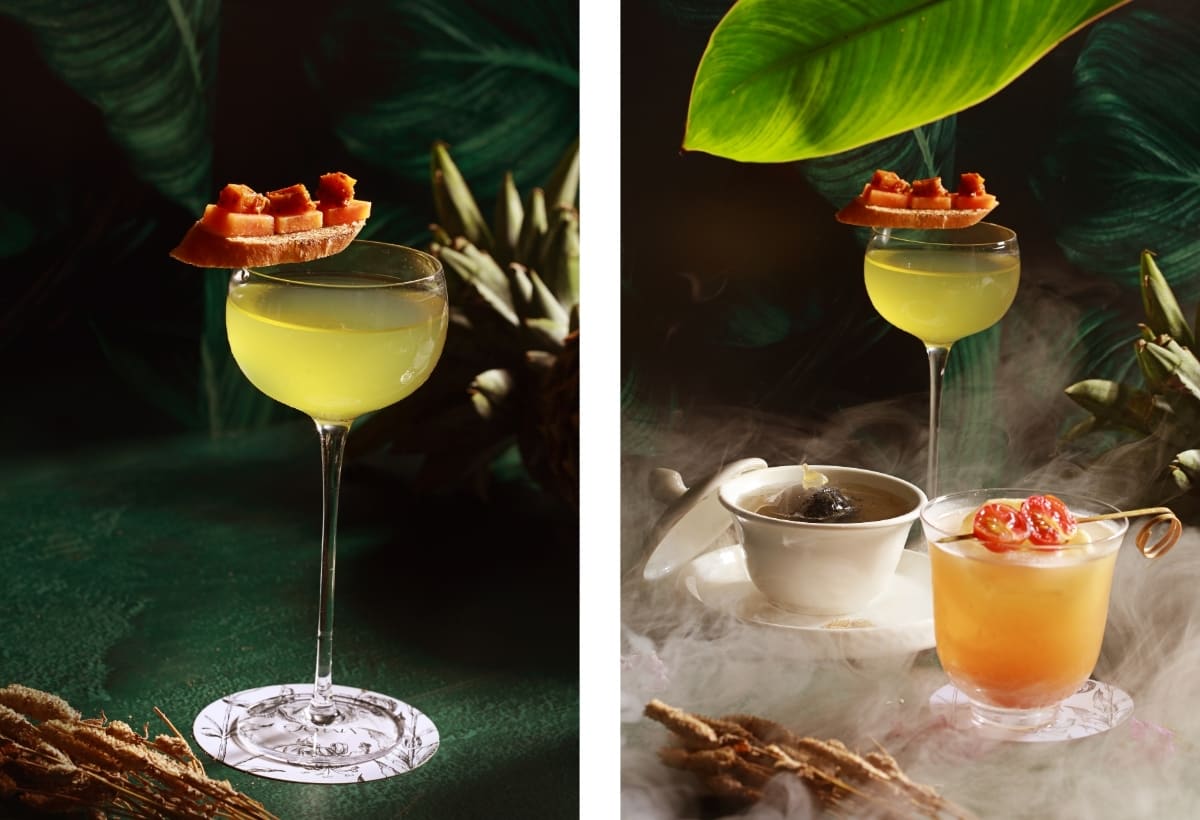
‘Perilla Dream’ arrived looking deceptively calm in a Japanese cup. Think of herbal tea in its best behaviour. The star, perilla—a foraged herb from the forests and valleys of the Northeast—resembles stinging nettle but brings a sharper personality to the party: herbaceous, slightly metallic, and impossible to ignore.
Behind the scenes, the saccharum was made of sugar, perilla seeds, pineapple, and herbs. After churning, it is kept to rest in an airtight container under the sun. The result is a natural oil seeping out, which is mixed with the spirit and clarified. The first sip is subtle, almost meditative. Then the cocktail decides it's done being polite.
A king chilli broth ice cube, infused with black rice and frozen into an ice ball, is added to the cup, turning the drink blush pink while gently rewriting its flavour profile. But what truly blew me away was the making of the King Chilli ice. "It's not just frozen water," Barretto laughed. The ice begins as a broth, slow-cooked for 48 hours with black rice, gongura (roselle) leaves, minchinga leaves, garlic, wild chives, and an assortment of Northeastern herbs. Only then is the deeply flavoured liquid frozen into crystal-clear black ice that slowly releases its character into the drink.
Just when you think you've figured it out, a wild coriander oil capsule bursts into the mix, releasing an aromatic flourish that feels more like a plot twist.
What began as a refined herbal sipper evolved into a walk through a Northeast forest I had never encountered before.
Descending from the Hills to the Valley and Plateaus
By this point, I had stopped asking what spirit we were having. Fay Barretto's cocktails are so deftly balanced that the alcohol never feels overpowering—a comfort for someone who usually steers clear of darker pours.
The ‘Millet Storm’ arrived in a black stone glass, looking more like an ancient ritual. The star ingredient is millet, one of India's oldest grains, paired with tamarind for a sharp, earthy acidity. A millet wort—sweet, unfermented liquid extracted during the mashing of malted millet—undergoes fermentation before being layered with spice tinctures and clarified into a remarkably polished liquid.
If ‘Perilla Dream’ was a walk through a Northeast forest, ‘Millet Storm’ was India's rugged heartland distilled into a glass.
Then came the theatre: dark rum is gently heated over volcanic rocks and poured tableside, crowned with a cloud-like meringue, as a bite-sized snack. The aroma rises before the glass reaches your lips. From the plateaus, I drifted into the plains through the cocktail tasting. Then came the inevitable question: "What do you like to drink?" I confessed that, on days when I am not flirting with sobriety, I tend to gravitate towards tequila and agave-forward cocktails.
With the confidence of someone who knew exactly what to serve, Barretto slid across ‘Twilight Khet’, a tribute to India's sun-soaked plains and fertile farmlands.
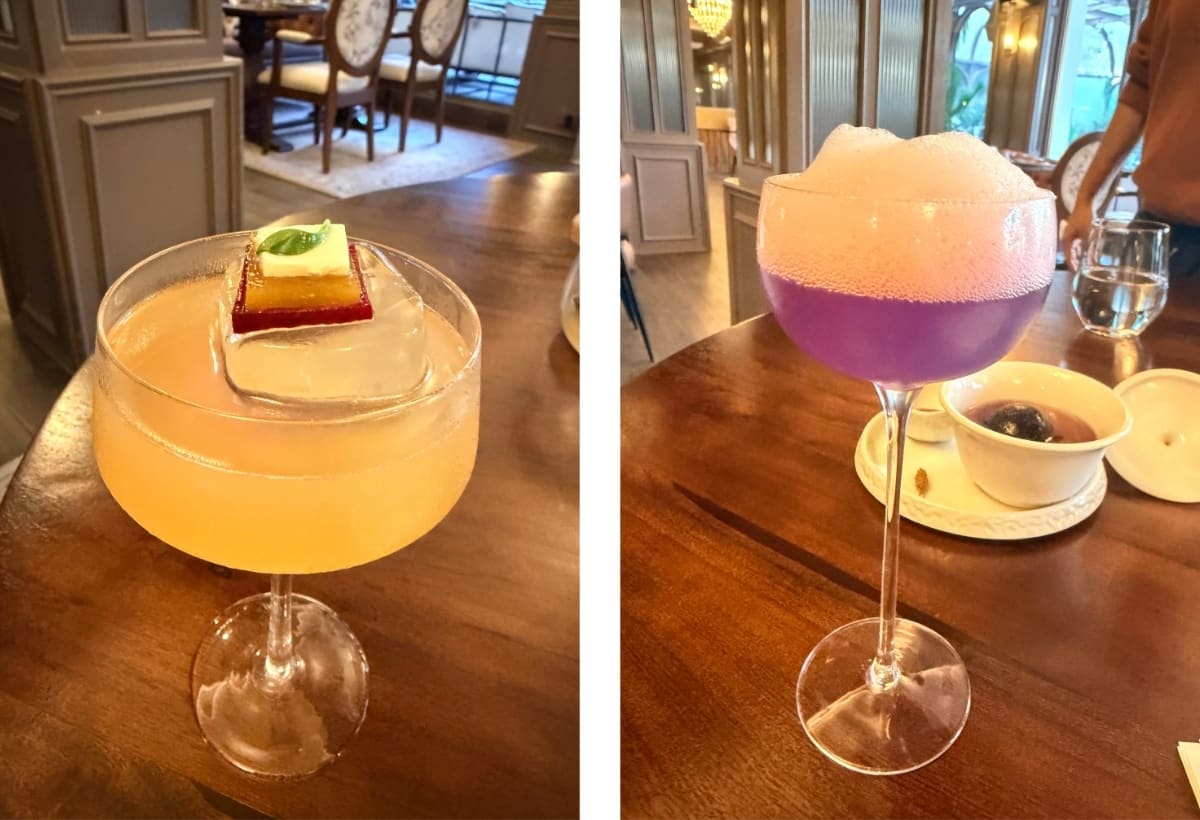
The protagonists here are foraged khajur (dates) and sun-ripened tomatoes. Baretto also introduced me to the art of making a ‘shrub’ with foraged ingredients—a time-honoured mixology technique. Fruits or herbs are layered with an equal weight of sugar and left to macerate for 24 hours, allowing their natural juices and flavours to emerge. The mixture is then gently cooked with an equal amount of vinegar, creating a bright, shelf-stable syrup that preserves the herbaceous and vegetal character of the ingredients while adding a delicate tang.
Mixed with tequila, the drink is unexpectedly sharp and focused. Served in a sleek gimlet glass, ‘Twilight Khet’ initially masquerades as a classic sour. But, like any good plot twist, the garnish steals the scene. Tomato meringue, cheese foam, balsamic gel, and microgreens crown the cocktail, making it look as though the kitchen and bar collaborated on a particularly ambitious group project.
The first sip is delightfully confusing. Is it a cocktail? Is it a Caprese salad served in a glass? Is it the opening course of a tasting menu? If the previous drinks felt like trekking through forests and rugged plateaus, ‘Twilight Khet’ was a golden hour in the countryside—only with considerably better company and a lot more tequila.
As I scanned the rest of the menu, I realised my journey across India was far from complete. The coasts, the Western Ghats and the deserts still beckoned, each represented by ingredients that read like a forager's field notebook: cashew apple, nolen gur and bimli, baobab, kachampuli vinegar with pandi spices, Nilgiri tea and lotus flower.
Unable to resist, I asked, “Barretto, where are you heading next?”
Without missing a beat, a reply came, “ To Himachal again, to unfold a farmer’s story in the mixology world."
It made perfect sense. For Barretto, cocktails are more about a journey of landscapes, communities and ingredients that rarely make it beyond their native regions. The glass, it seems, is simply the vehicle.
As the afternoon slipped into evening, I left with a newfound appreciation for India's wild pantry and a promise to return to savour them through the rim of a cocktail glass. There were still coastlines, deserts and mountain trails waiting to be explored, their stories tucked away in ingredients I had yet to encounter. And if Barretto continues charting India through its foraged finds, the next great Indian road trip may not begin on a highway at all. It might just start at the omakase bar at Soraia, where every pour comes with a new pin on the map.