“If you’re going to Nubra, you have to visit Turtuk,” nearly everyone I met in Ladakh told me. Most travellers head to Thang to get a glimpse of the Line of Control through binoculars, but I listened, as many before me had, and soon found myself in a taxi leaving Leh, bound for Turtuk, a village with a strange name and an even stranger sense of belonging.
A Road Through History
The seven-hour drive offered a condensed lesson in the region’s past. Turtuk was once part of the larger Gilgit–Baltistan region of Pakistan until 1971, after which it became Indian territory, first folded into Jammu and Kashmir and, since 2019, into Ladakh. Wars had passed through, borders had shifted, and identities had quietly adjusted. Officially open for tourism only since 2010, the village carries its history without spectacle.
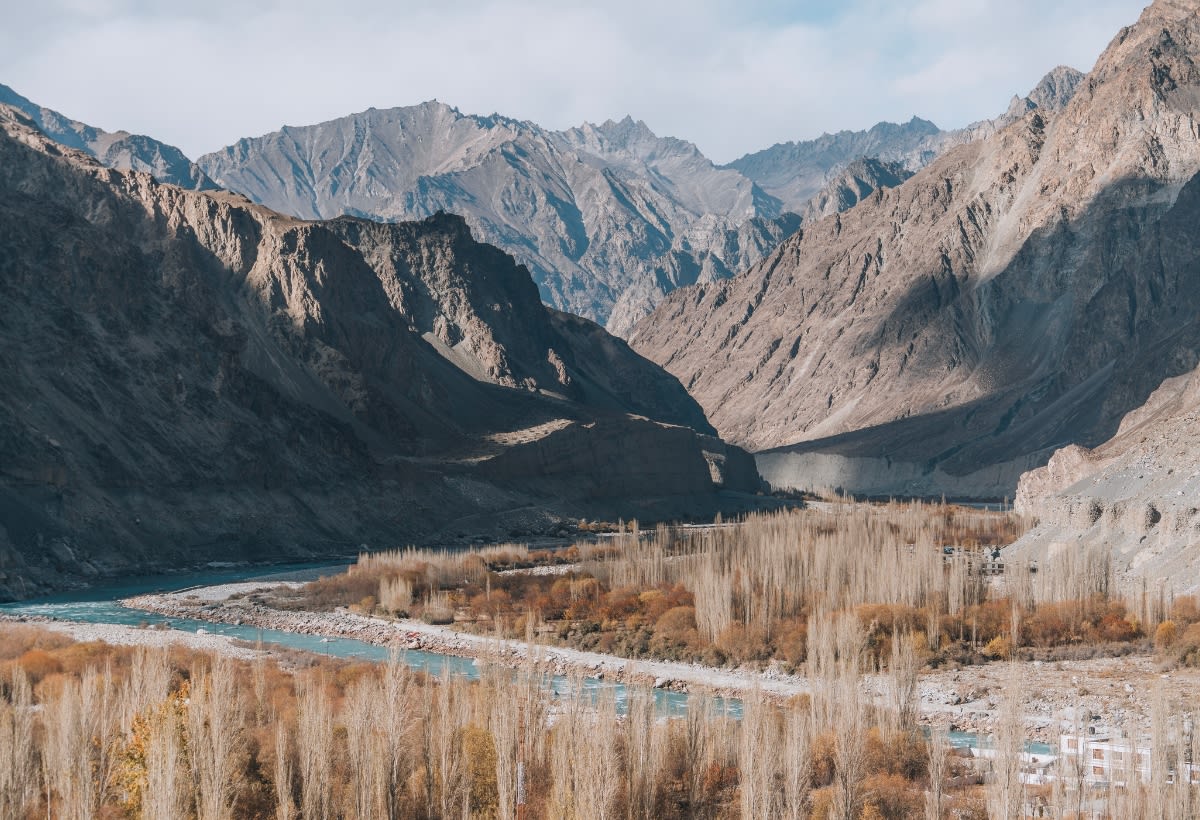
Outside the window, the scenery quickly eclipsed my frustration with the patchy network. The grey sweep of the Shyok River gave way to the climb over snow-laced Khardung La, followed by a slow descent into Nubra’s restrained browns and blues. My thoughts were interrupted when a convoy of Indian Army vehicles began moving alongside our car. They kept to themselves, but the camps on either side, marked by barbed wire, camouflaged tents, and barren mountains without a single settlement, served as a sobering reminder of where we were. The next hour passed in heightened alertness, accompanied by a sense of being out of place.
Then the landscape softened. Tall green trees lined the road, settlements appeared, then people, schools, and signs of ordinary life returned.
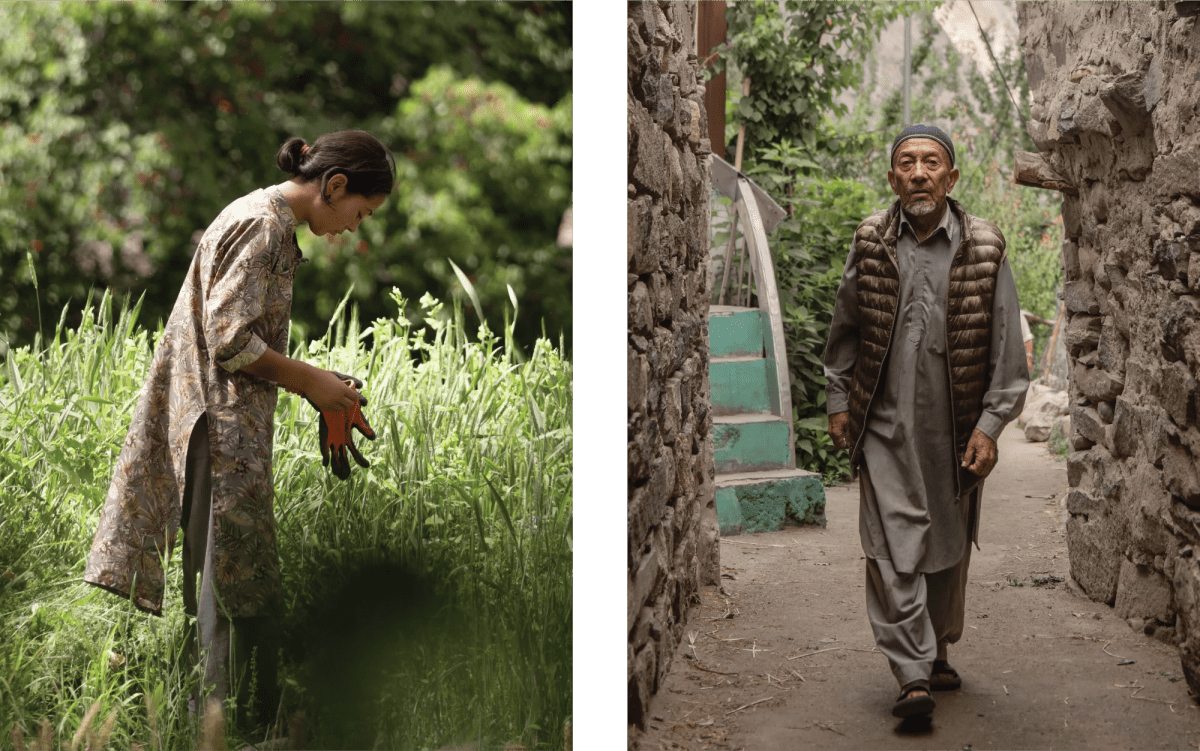
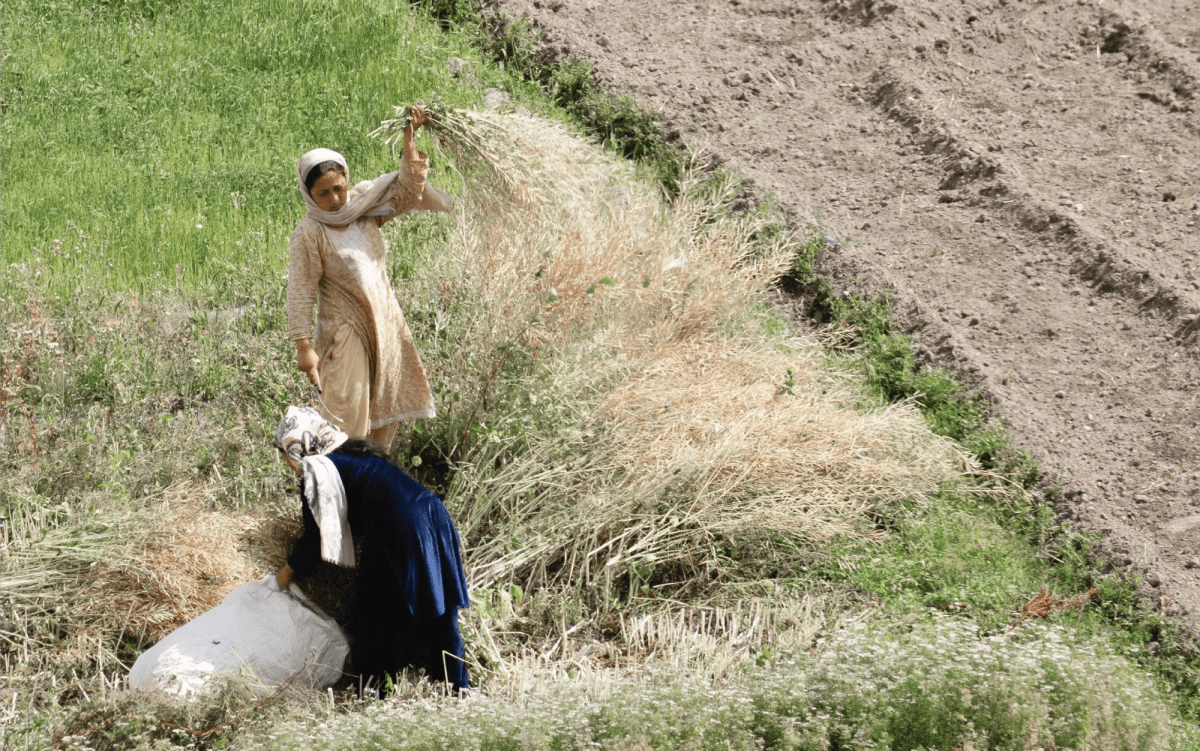
I watched the Balti people as we drove on. Rosy-cheeked and well-built, women dressed in Punjabi suits with pinned scarves, men in shalwar kameez and the iconic Balti caps. They moved through a landscape that felt almost paradisiacal. There was no visible conflict, no urgency, no rush - just people living, unbothered, in a place the world often describes only through borders.
Settling into Turtuk
I arrived at my hotel, Virsa, a wooden-and-stone property rooted in local sensibility. Its founder, Rashidullah Khan, tall, well-built, and immediately likeable, had generously invited me to stay and Moha, the soft-spoken manager from Gujarat, was in charge of making me feel at home.
Over the next few days, these two became my guides and companions.
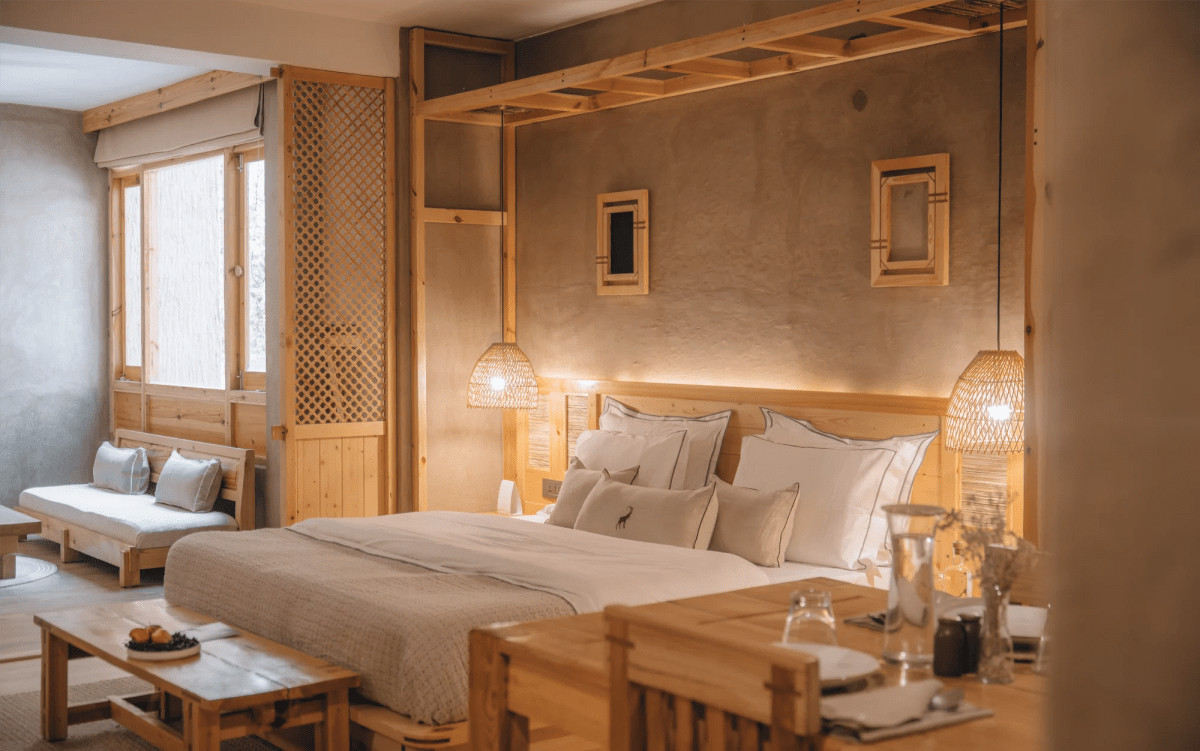
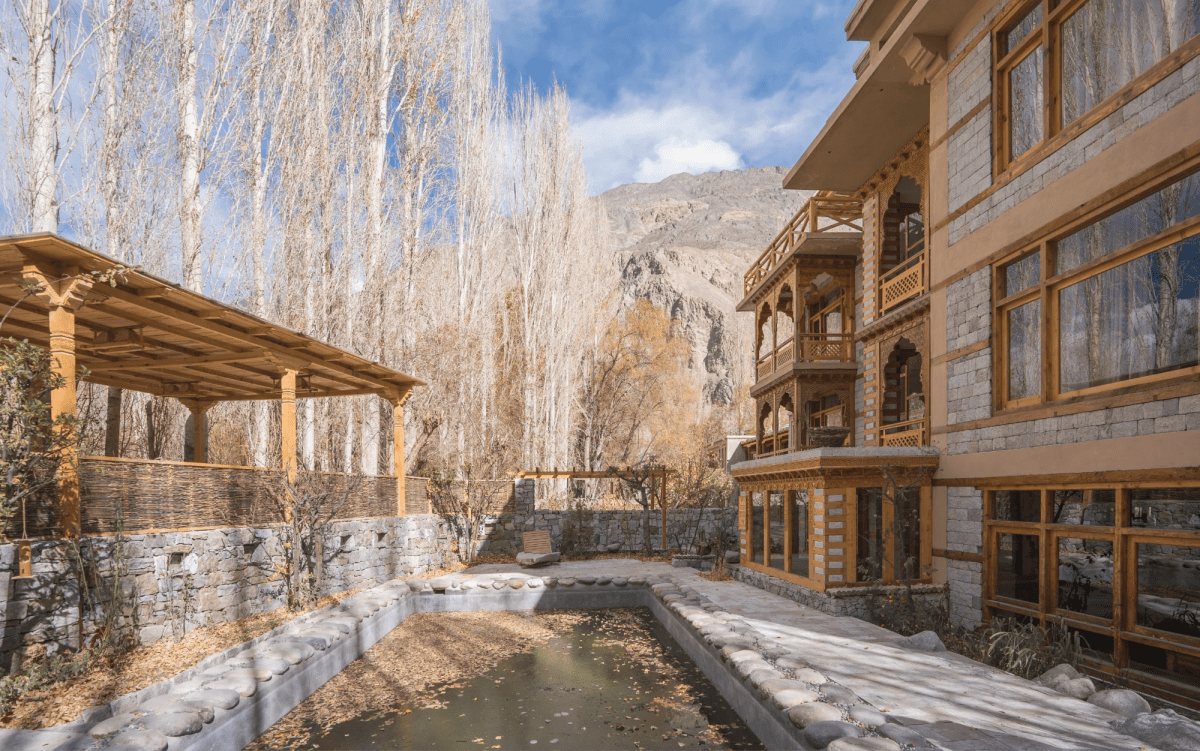
Apricot juice was poured, plans were explained, pleasantries exchanged, but my attention kept drifting. Through the windows, sunlight filtered through tall trees and fell straight into the swimming pool, turning the water into an emerald green I had never seen before. My room carried the same feeling. There was a quiet luxury to it that felt rooted rather than imported, like being inside a Balti home refined by time and care. I realised I was already enjoying Turtuk before the cultural immersion I had signed up for had even begun.
Walking Through Layers
The next morning, accompanied by locality guide Mohammed Ibrahim, I entered Turtuk’s fertile pocket, a world away from Leh’s stark terrain. “Turtuk is very unique,” he said. “It is a hundred per cent Islamic village in a Buddhist-majority region, in a Hindu-majority country.” After a brief pause, he added, “We do have a Buddhist gompa here. It overlooks the entire village.”
We climbed steadily as he spoke. The gompa stood draped in countless prayer flags that snapped softly in the wind. Ibrahim explained that the Indian Army built it as a place of worship for Buddhist soldiers stationed in the region. It is cared for by a Muslim man and remains the only gompa in this area. “Our village is also the gateway to the Siachen Glacier,” he added.
Homes, Memory, and Survival
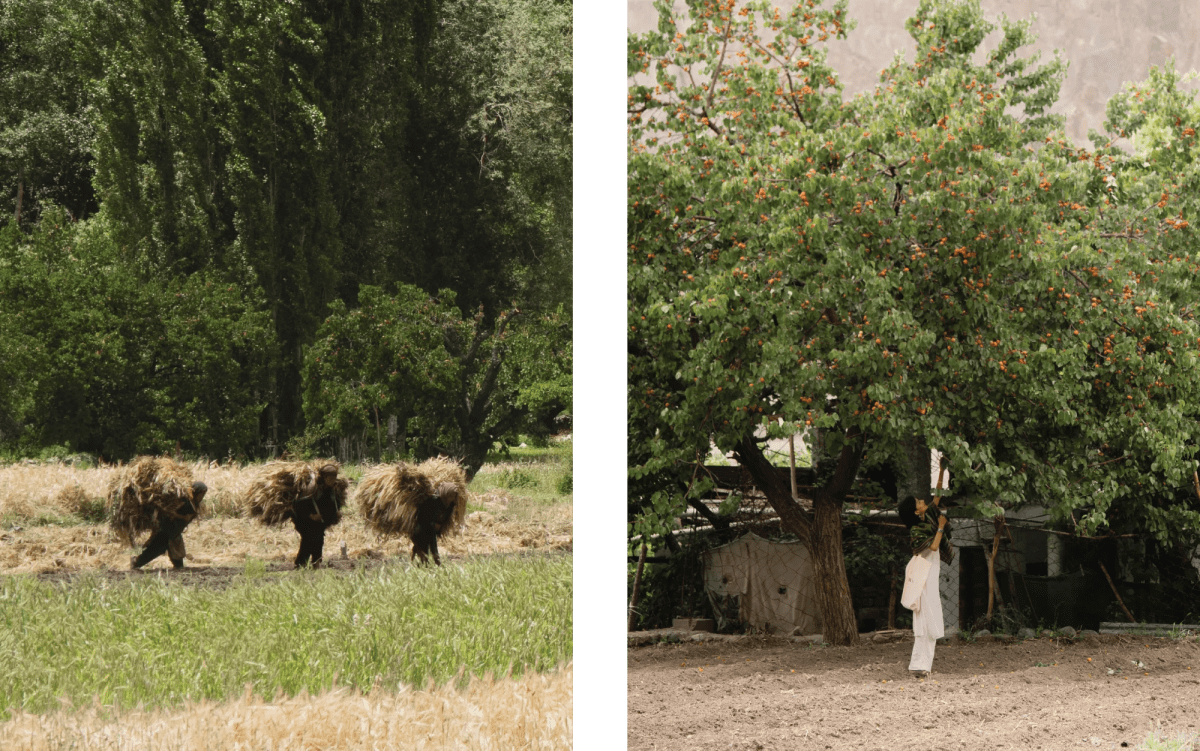
Back in the buckwheat fields, Ibrahim pointed to a nearby mountain. It had been a prime site during the 1999 Kargil war. The Indian Army fought through the nights here, protecting both the land and the people. Everyone in the village had witnessed it.
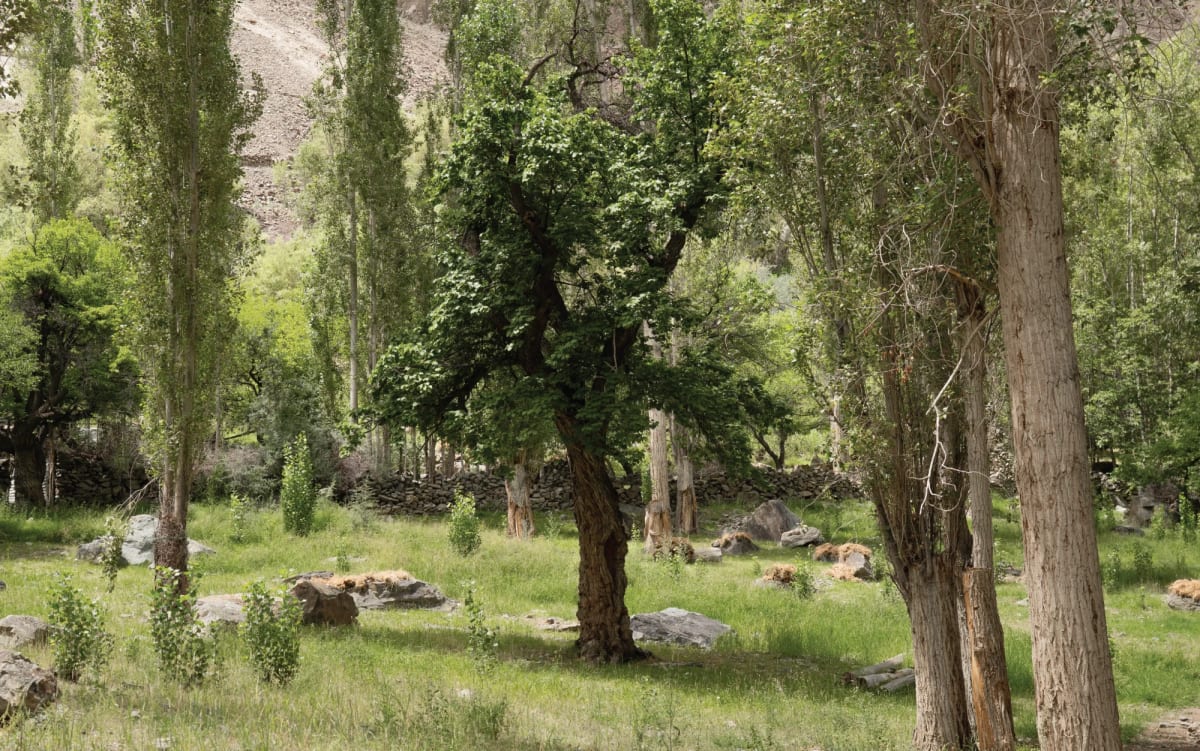
The path led us through poplar and willow trees that felt almost Kashmiri in their softness before descending into a maze of beige, single-storeyed mud houses. Their twig-built gates and Kath-Kuni construction reflected quiet strength rather than ornamentation.
A hand-painted signpost pointed in several directions: historic polo ground, natural cold storage, wartime refugee bunker, waterfall, monastery. The convergence of histories made me pause.
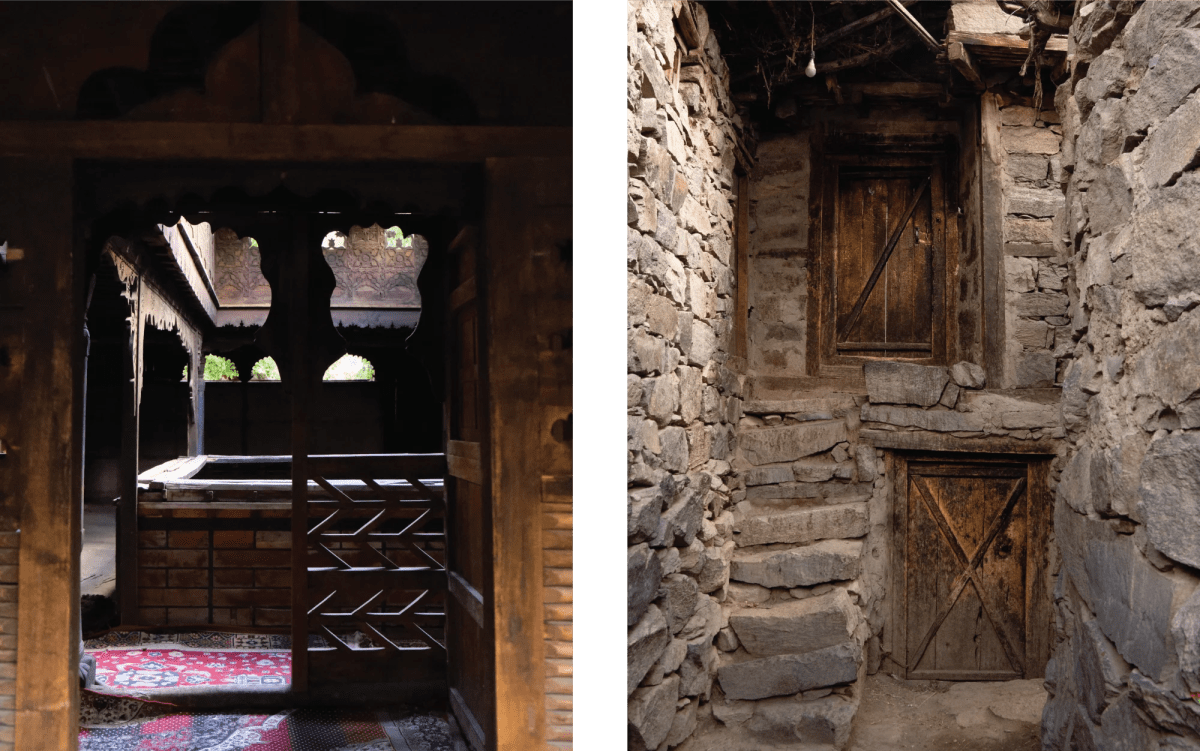
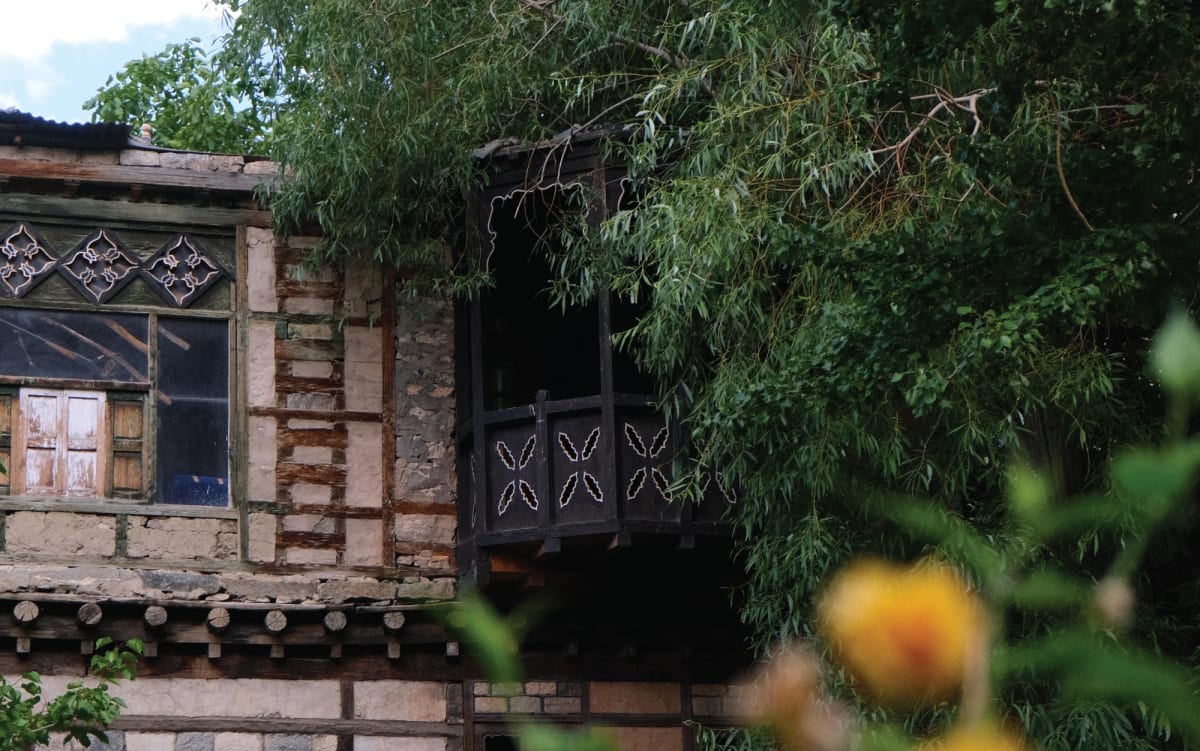
At the Balti Heritage House and Museum, a 140-year-old home opened itself not as an exhibit but as a lived philosophy. Dried apricots were offered before I was guided through spaces shaped by seasons - underground rooms for winter, lighter upper floors for summer, and temperate spaces for spring and autumn. Farming tools, woollens, utensils, and storage trunks filled the rooms. Only the labels felt modern.
Nearby, an elderly man offered a tour of his own home for fifty rupees. Seated in his semi-underground living space, he spoke about his daily life and his forefathers. He showed me ice-trekking equipment once used by soldiers during harsh winters. They had left it with the villagers for safekeeping during the summer. That was why he still had it.
Where War Still Lingers
The Bunker of Memories carried a heavier weight. Used by a local family during the 1999 conflict and later by soldiers, it could hold no more than ten people. Inside, shells, bullets, and metal fragments lay arranged on a small table. Ibrahim picked one up and said quietly that these used to land in their courtyards, and with that, left me speechless.
My lunch could have been at a small Balti café if I had not promised Moha I would eat at Virsa. Run by a women’s self-help group, the café, set around a quiet courtyard with makeshift tables and a lone cot, was quietly tempting.
I returned to Virsa, where a beautiful Japanese meal from its sister venture, Yakitoru, awaited me. Sushi, noodle soup, and fried rice arrived one after another. With no space left in my stomach and my head full of wonder, I lay beneath an apricot tree and closed my eyes, hoping for a brief nap before Ibrahim arrived to take me for the second half of the immersion tour.
Borders, Seen and Unseen
We drove on to Thang, where I was to see the Line of Control with my own eyes. Midway, a sign flashed past: “You are under enemy observation”. The unease returned. When I asked if it was safe, Ibrahim laughed. The mountain ahead, he said, was Pakistan. His extended family lived there. Barely two hundred metres away, tourists scanned bunkers through binoculars while teenagers played volleyball. The ordinariness of it all was disarming.
Turtuk was a world like no other I had ever seen, constantly pushing me in and out of my comfort zone, yet the silence of nature and the novelty in the air had grasped me entirely.
“You should come back in April,” Ibrahim insisted, “there would be polo at one of the world’s highest polo grounds, shifting of the landscape, and you can even take a cold dip in the blue Shyok River, it changes its colour according to the seasons.”
Later, sitting at the Farmer’s House Café, another venture by Virsa, with a cappuccino in hand, I understood that the best journeys do not just reveal the unfamiliar in one go. They help us understand it, quietly and patiently, on its own terms.