I put a hand on the rein.
“I’d like to follow you, and would you tell me how to mount, please? The thing is, I — I have so little experience with riding horses, and it’s not something I’m used to.”
“Well,” Sheila said at length, “first you want to grab a good handful of the mane, slide your foot in the stirrup, and then swing your leg over.”
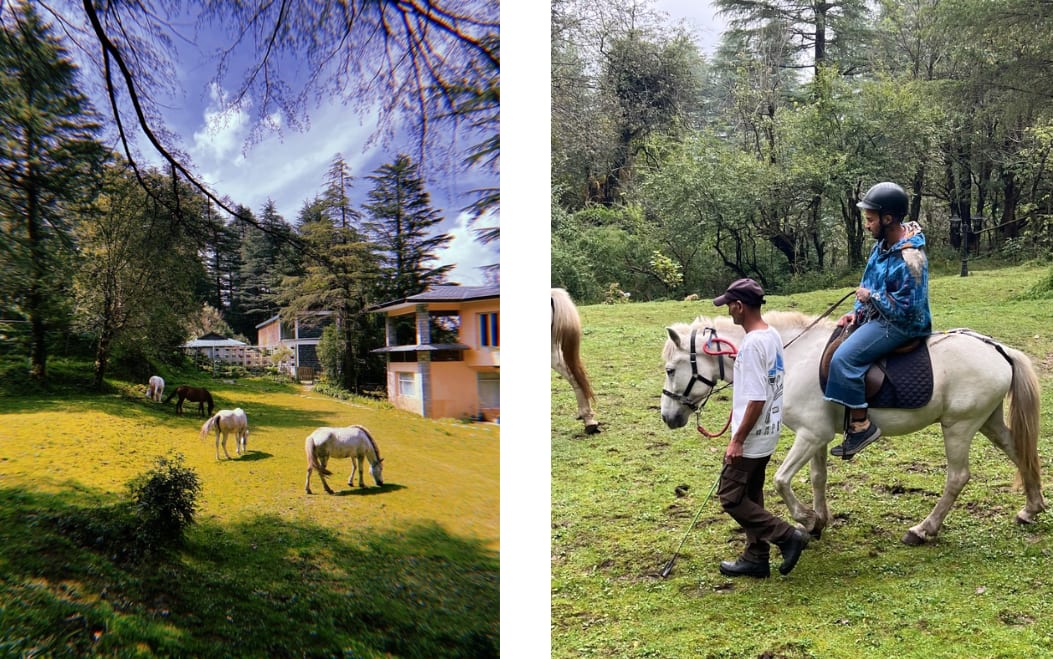
I clambered into the saddle and settled myself. The pony’s ears pricked, then flattened again, and he kept up an easy amble. One of my escorts held the pony’s bit and led me forward.
“You can’t really call it a sixth sense, what horses pick up from people,” Sheila mused, as the pony she was riding quickened his pace. “It’s more like they’re tuned into the energy you’re giving off, so you have to remember to be still, be calm.”
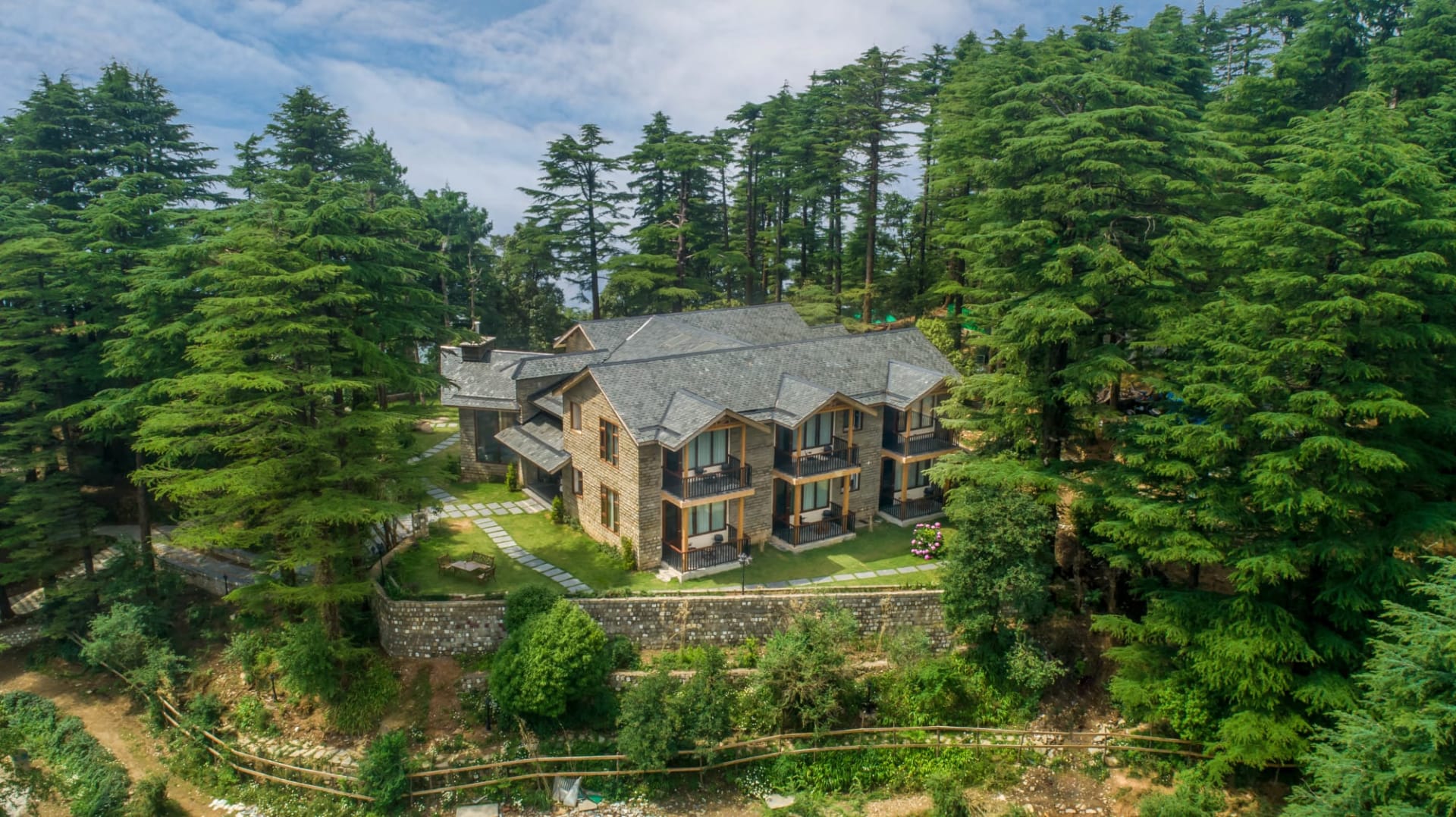
The light notes of musical panic from a yellow-breasted greenfinch rang out in the broad daylight overhead. The piddling rain had stopped, and the air was brisk and resinous with the fragrance of pine forests. Far from the synapse-triggering cities, this ten-acre cliffside resort in Himachal Pradesh felt like a spray of mist on the fevered brow.
Eagles Nest is the El Dorado of idleness, I realized.
Experience Architecture That Refuses To Crumble
As it happens, Sheila continues to live on the estate.
There was a time when she ran Eagles Nest with her partner Bo, splitting their calendar between London and Dharamshala, and you will still find lingering phantoms of their past tucked into the décor like a scavenger hunt of memories. Cheeky marginalia scribbled in books. Artwork, photographs of the ‘dhongri’ before the missionaries arrived, and bronze sculptures.
After Bo’s demise, the management changed. And so did the architecture.
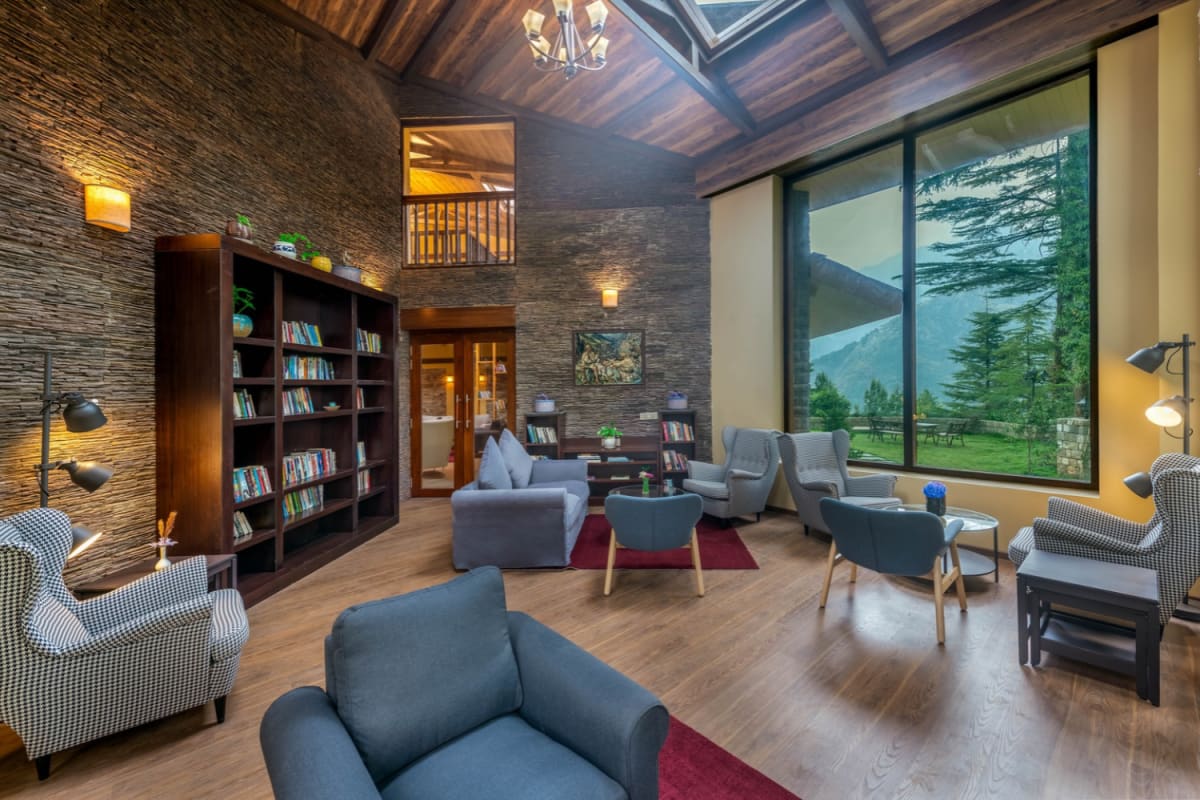
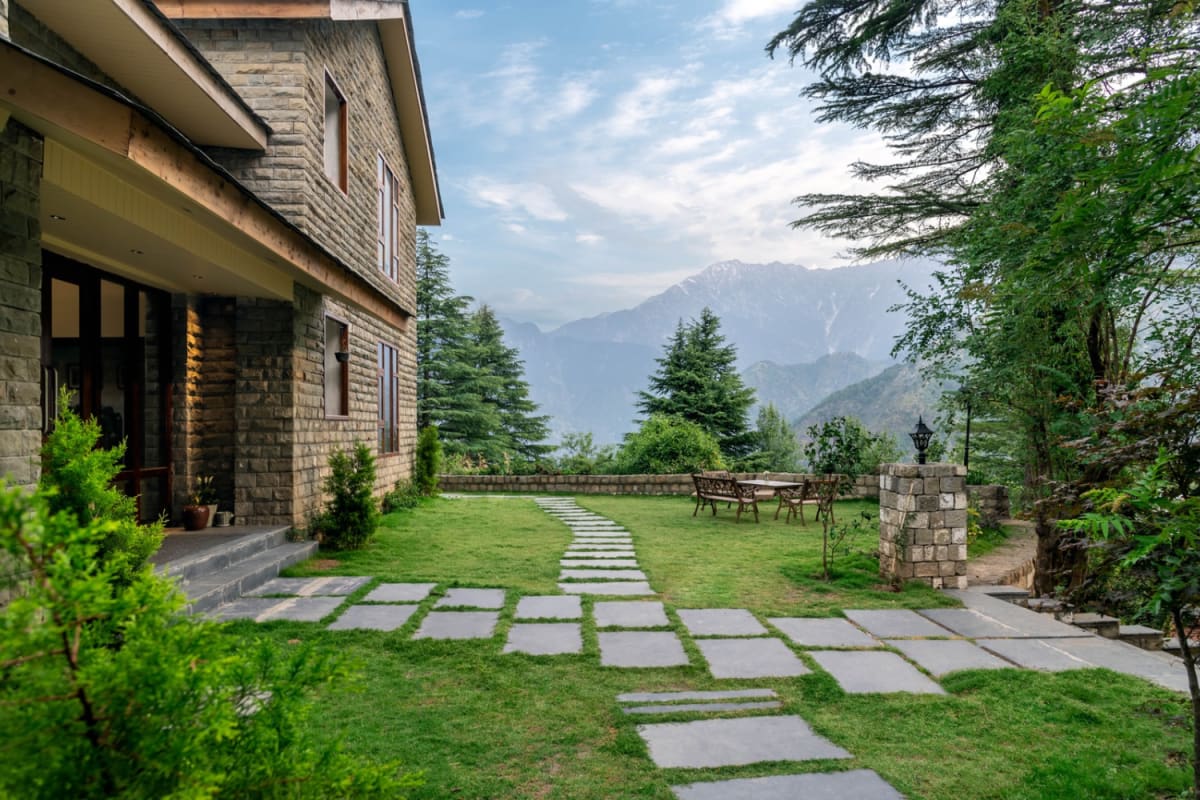
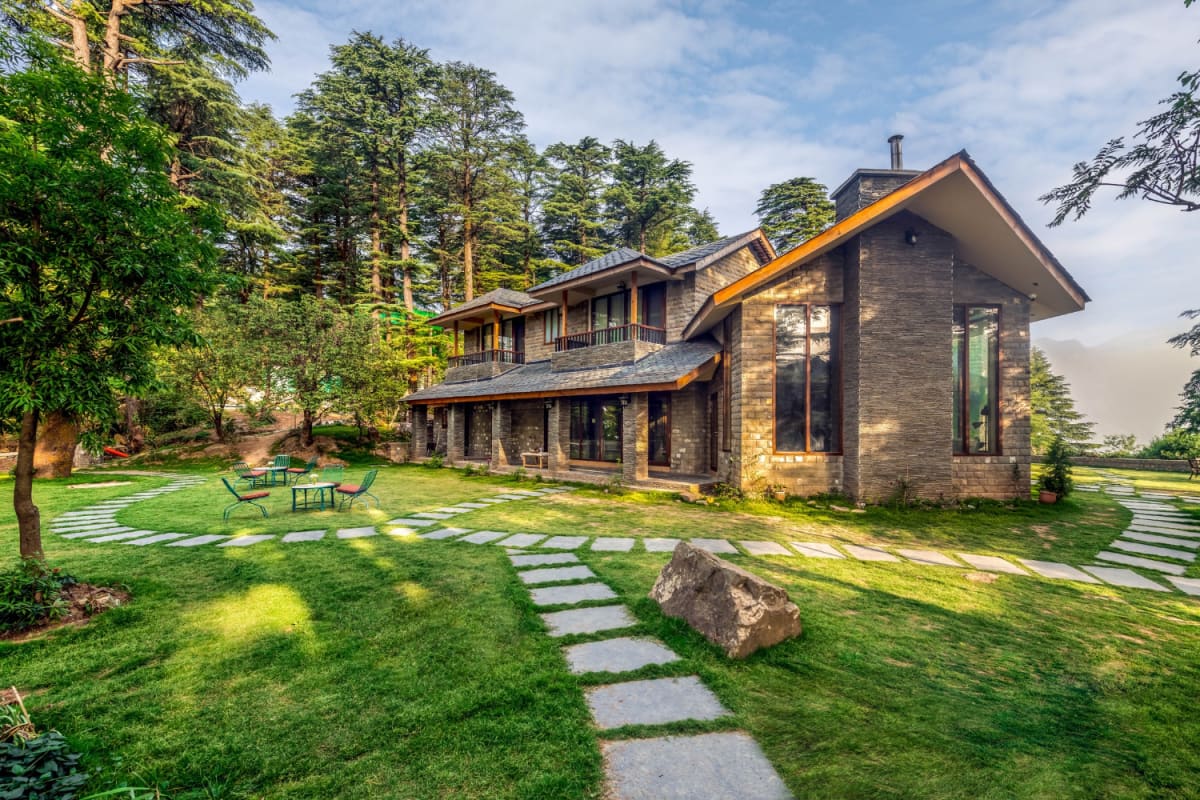
The bulk of the construction was designed to resemble the 150-year-old, missionary-built stone cottage that Bo and Sheila had found in ruins. An elastic skeleton of deodar woodwork was woven inside the local stone masonry, generously borrowing from native Dhajji Dewari and Kath-Kuni techniques, keeping the hotel resilient to all manner of seismic shocks.
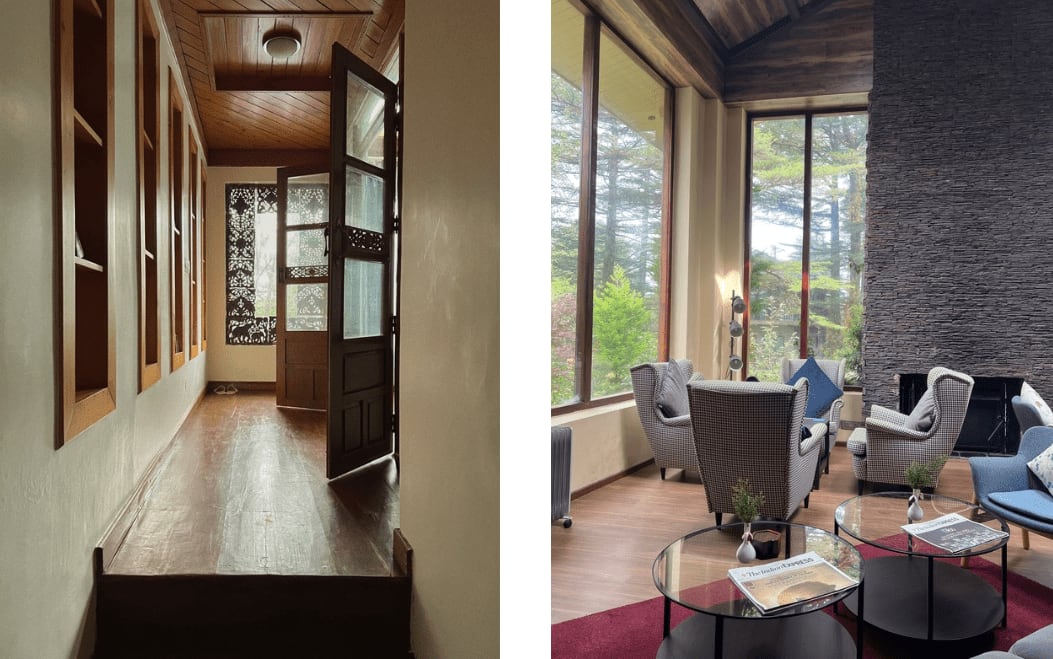
The furniture is a utilitarian mix of organic modernist lodge aesthetics, rustic touches of Himalayan minimalism and a few contemporary elements: wingback chairs from IKEA sit alongside a dry-stack slate fireplace in the den; sustainably sourced acacia wood drop-leaf tables are paired with foldable chairs on the lawn outside the dining room; warm honey-toned timber shelves create a strong sense of zoning in the double-height mezzanine lobby.
Learn The Ways Of The Road
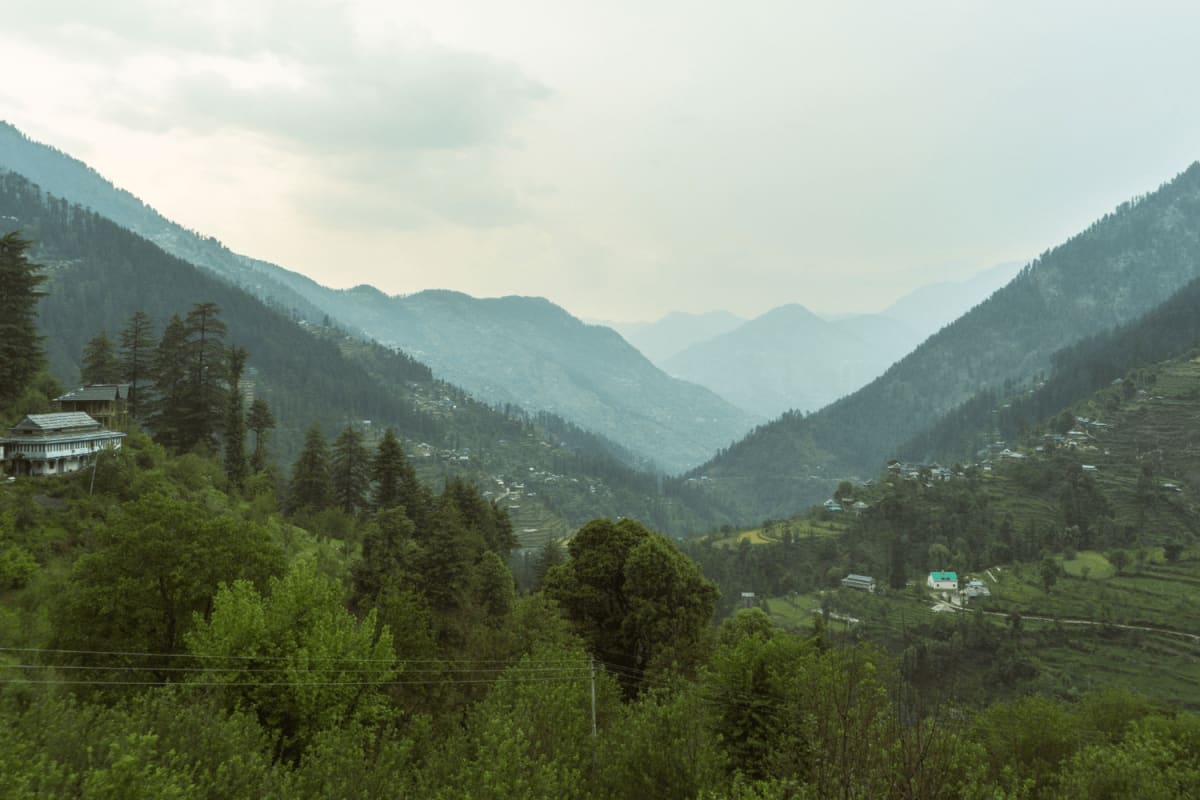
Eagles Nest sits where Dharamkot’s highest motorable road finally gives way to the untamed wilderness of the Triund Trail. Set amid the pink-hued gneissic uplands, the landscape can feel like spring in the morning, only to transform by afternoon as storm clouds gather overhead.
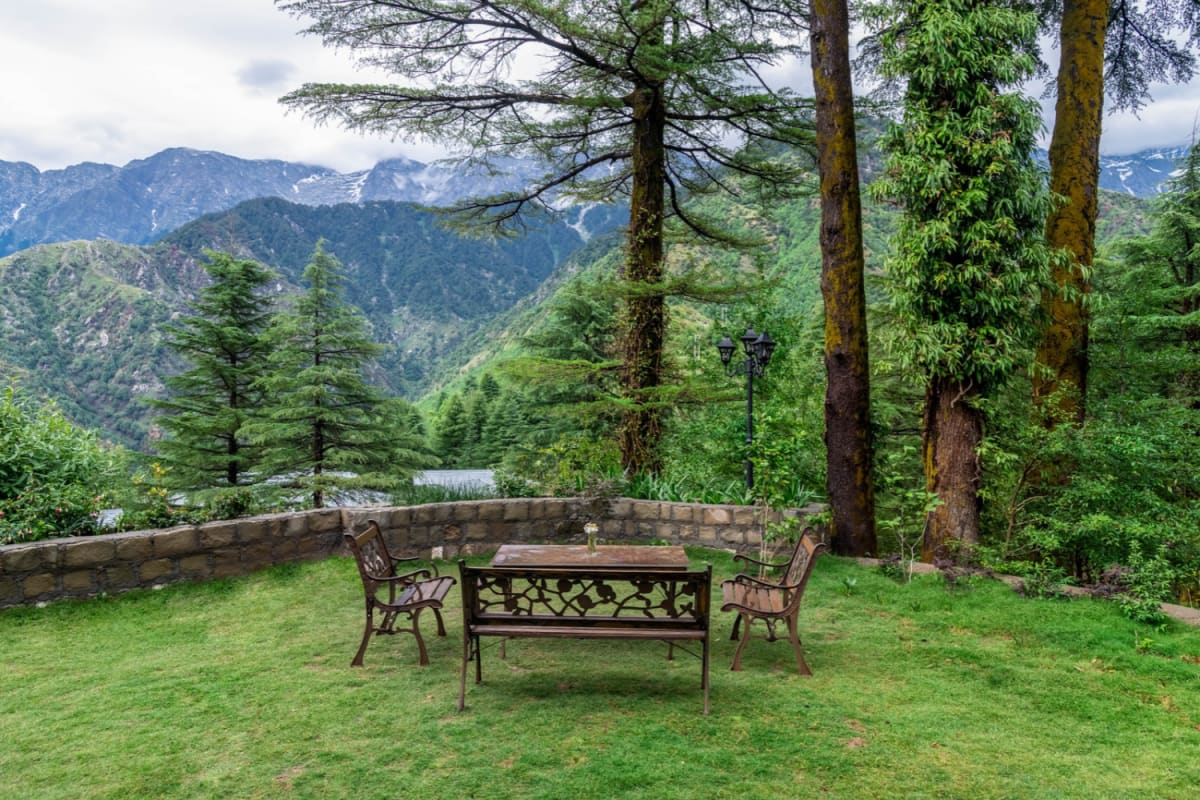
I am quite in awe to think how Bo and Sheila conjured this country-style manor. A fleet of mules would have strained up centuries-old Gaddi shepherd routes, hauling bricks and sacks of river sand, while massive glass windows, porcelain sinks and the copper wiring for underfloor heating in the bathrooms might have been lugged on the backs of lanky Himachali porters.
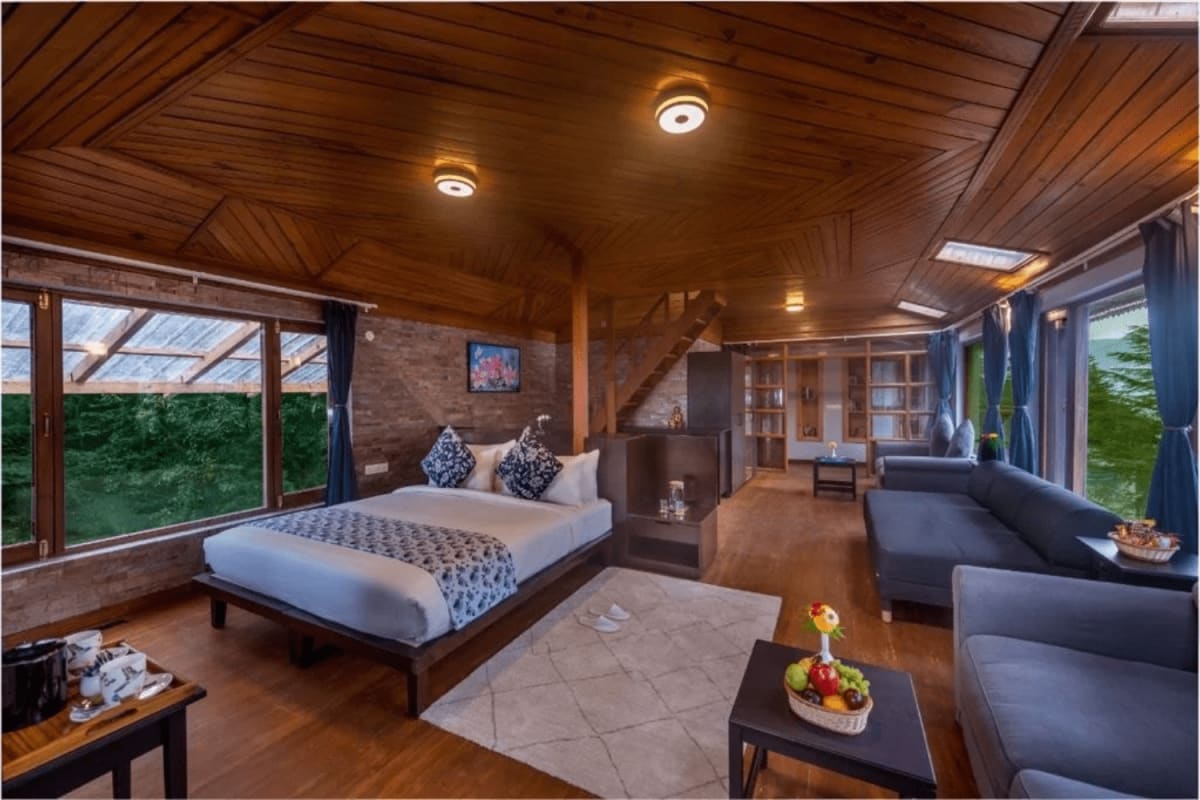
I catch myself on the verge of sinking into daydreams of this nature, as the manager is explaining the hot and cold functions of the shower head to me! The attic room I’ve been assigned feels too large and luxurious for my needs: sloped ceilings, glossy cedar wood, tongue-and-groove millwork, intricately carved panels that act as silhouette frames and cast bronze door handles that writhe with peacocks.
And when I pull back the satin drapery, which runs nearly the length of the room, the manager smiles at my audible gasp. My eyes follow the scimitars of golden light slicing across the rocky cliffs, then plunging downhill into the darkly pooled pine trees below the timberline.
“The mountains are quite something, aren’t they?” He swells with pride.
Tearing my eyes away from the windows, I nod like a schoolboy who has discovered what people really mean when they say ‘picture-postcard view’.
The rain and rhythmic chanting of thrushes serenade me into bed as soon as I am alone, and, piercing right through the slate roof tiles, unexpected orchestral crashes of thunder make me burrow farther into the preheated blanket.
When I wake up, a hundred cravings have bloomed in my stomach.
Indulge In Pahadi Comfort Food
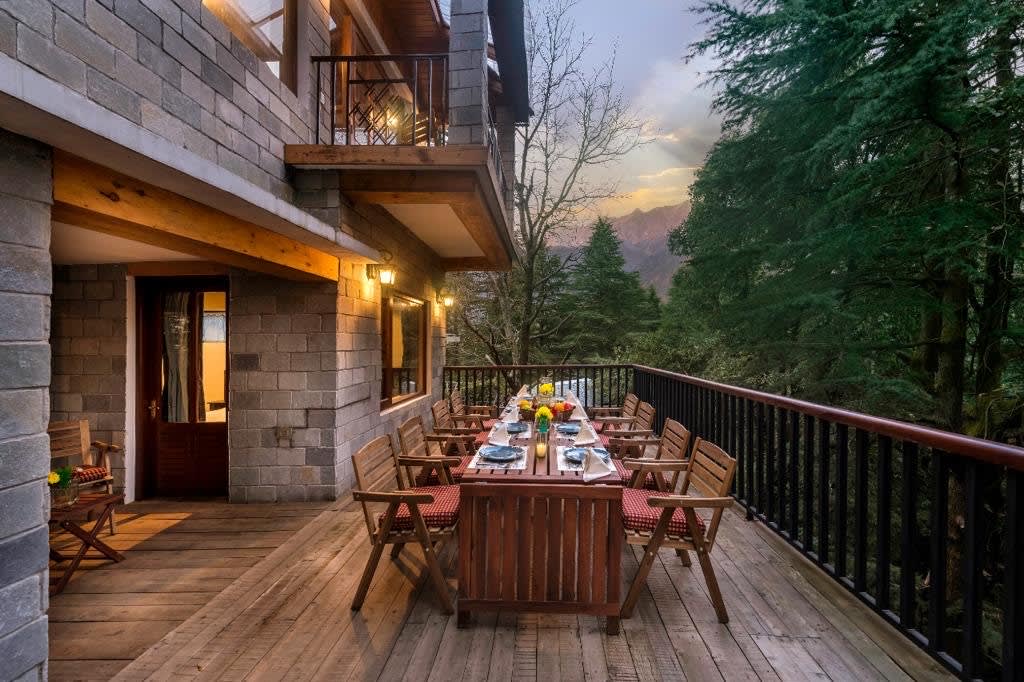
Everything I consume here reflects the immediacy of comfort and zero-waste mindfulness in the Pahadi people’s millennia-old approach to food.
The Chaunsa Dal, topped with smoky Himalayan garlic, ginger, and green chillies, is merely dry-roasted and coarsely ground, with no lengthy hours of pre-soaking or boiling required. The Mandwa ki Roti, with its low glycaemic index, offers the best superfood option for diabetics. Sputtering in kadhai pans across the Upper Dharamshala region, the Rajma Madra bears a slightly sweet flavour rising from full-fat fresh yogurt relentlessly whisked with rice flour before adding the kidney beans. On a crisp autumn evening, the metallic undertones of a nettle soup will make the soreness leave your body like bathwater draining from a pulled plug.
Broaden Your Experience Of Time
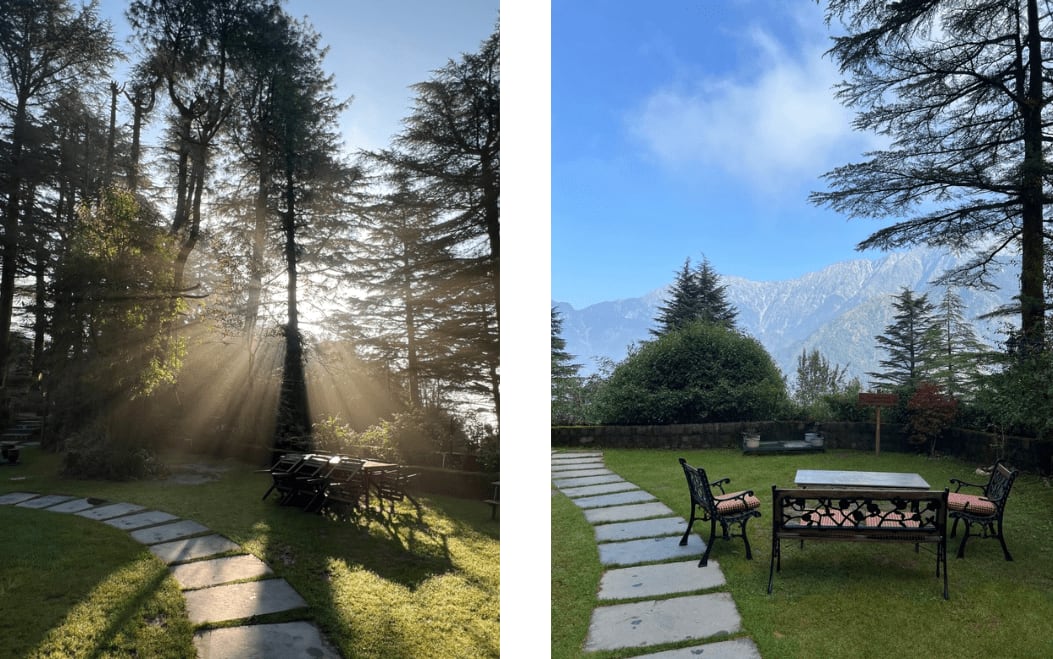
City people display a marvellous knack for making every second count. Even if we are on holiday, it is astonishing how persistently we will fight the diabolical state of inactivity.
In the mountains, however, time affects people differently. Like the chef at Eagles Nest, who has a whole kitchen waiting for him to walk in and run the team through the courses for the day, but he is in the den here chatting with me. Because a paroxysm of memories has taken hold of him.
He hails from an agrarian family in Uttarakhand, and on the busy days of ploughing season, mothers often stayed back in the fields so the little ones would have to run back home and toss whatever they could find into the heavy brass ‘bhaddu’ pots for the night.
“I can still remember the smoky aroma of jakhiya (a sort of wild mustard seed).” His eyes shimmer with nostalgia. “How it would crackle in the oil, and if Amma was cooking, she would add potatoes and some coriander.”
In the backyard of his childhood, the oxen hitched to a ‘kolhu’ pestle are still walking in hypnotic circles, squeezing out warm oil from sesame seeds.
Revel In The Road Not Taken
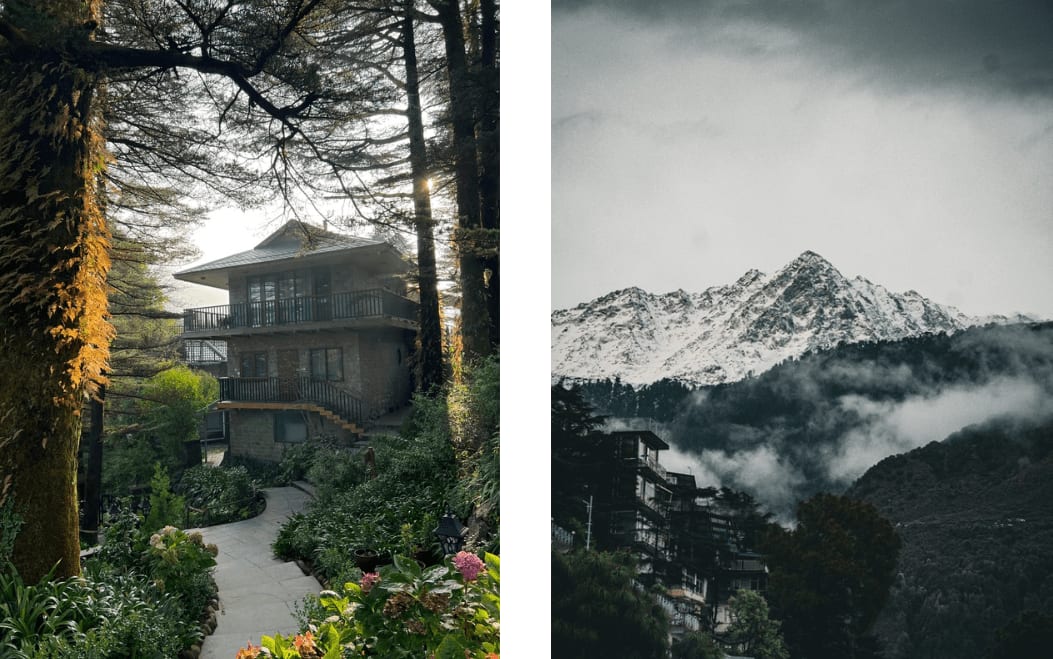
Rushing to catch a sunset on floor mats with a hot plate of Maggi, moving around from one checkpost on your itinerary to another, schlepping your weight up and down the hills would be one dimly clichéd way of ruining the time you spend in the mountains.
Of all the annoying pieces of portent-filled travel wisdom I’ve heard, the most obnoxious one remains that you must make the most of every second you get in your time away from work. It’s the riverside trail I didn’t take to the village they call the Machu Picchu of Dharamshala, or the overpriced praline smoothie I didn’t order at a hippie-infested café in Dharamkot, or the mid-life crisis I didn’t resolve while sitting cross-legged at the Dalai Lama Temple that I think really saved my holiday. How did doing all that ever get to be better than just chilling out?
If you want to relax at Eagles Nest, eat a bowl of watermelon under an oak tree. Watch the squirrel crack a nut on the branches above. Draw the curtains and take a nap.
And if you do find yourself out in the wilderness, then just be still. The trail is beautiful.
Getting There: Gallu village sits 2-3 km above Dharamkot and is the base for the Triund hike. The lodge is on the upper reaches of Dhongri hill, past the Gallu Devi temple, where the motorable road ends and the trail begins.
Address: Eagles Nest, Upper Dharamkot, near Gallu Devi Temple, McLeod Ganj, Dharamshala, Himachal Pradesh 176219.
How to Reach: The nearest airport is Kangra (Gaggal), about an hour’s drive away. Then drive to Dharamkot and finish with a short uphill walk to the property. If you’re coming by train, the usual railhead is Pathankot, and you’d continue by road for about three hours. You may want to confirm the exact drop-off point and luggage help with the lodge.