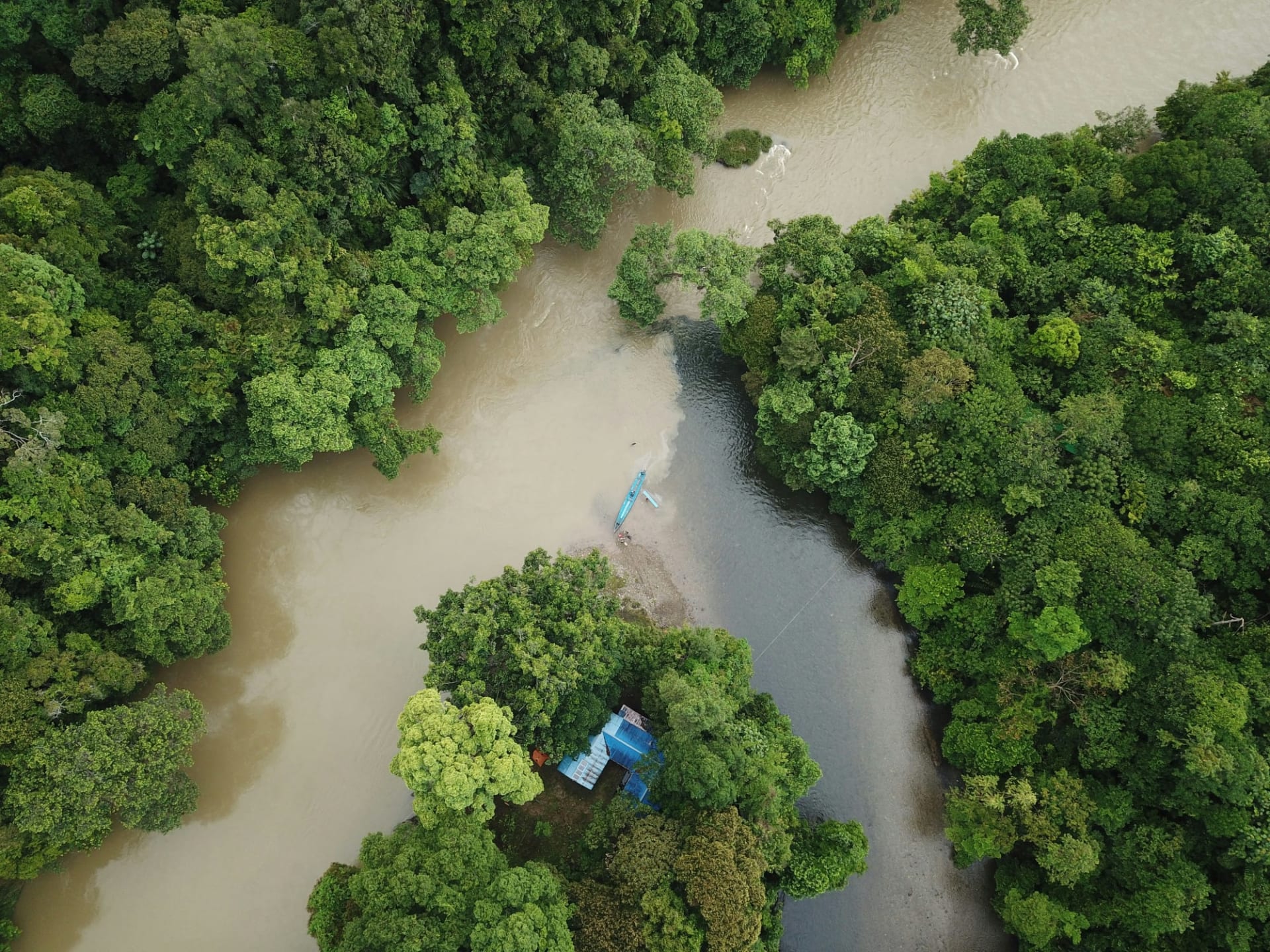
“It seems to me that the natural world is the greatest source of excitement; the greatest source of visual beauty; the greatest source of intellectual interest. It is the greatest source of so much in life that makes life worth living.”
- David Attenborough
My fascination with Borneo began with David Attenborough. His masterful narration, profound knowledge of wildlife, and evident passion for this unique ecological niche first captured my imagination. Initially, I perceived it merely as a place on a map; for the longest time, my idea of Borneo was limited to my biology notes from school - Borneo is home to Rafflesia (the largest flower in the world but actually a parasite!) and pitcher plants. It was only later that I learned the true nature of Borneo - 140-million-year-old earth beneath my feet, few known species, thousands unknown. Waking up to the chittering of birds and lulling into sleep with the clicking of critters. Fascinating how close you can be to something and still not understand it. I savoured every second of feeling tiny.
Understanding Borneo
Borneo is one of the most biologically rich yet often misunderstood regions on Earth. Frequently imagined as a single wild country, it is in fact a vast island shared by three nations: Malaysia (the states of Sabah and Sarawak), Indonesia (known here as Kalimantan), and Brunei. Located east of Peninsular Malaysia across the South China Sea, Borneo is a mosaic of ancient rainforests, diverse cultures, and remarkable wildlife.
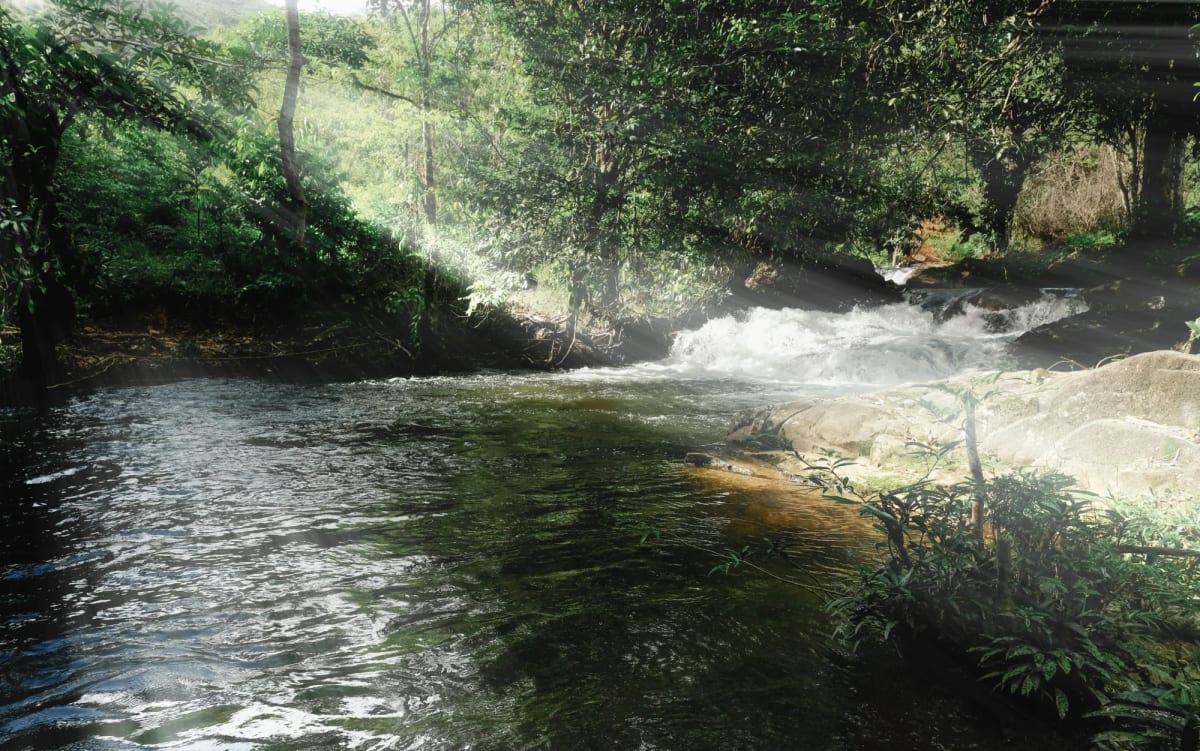
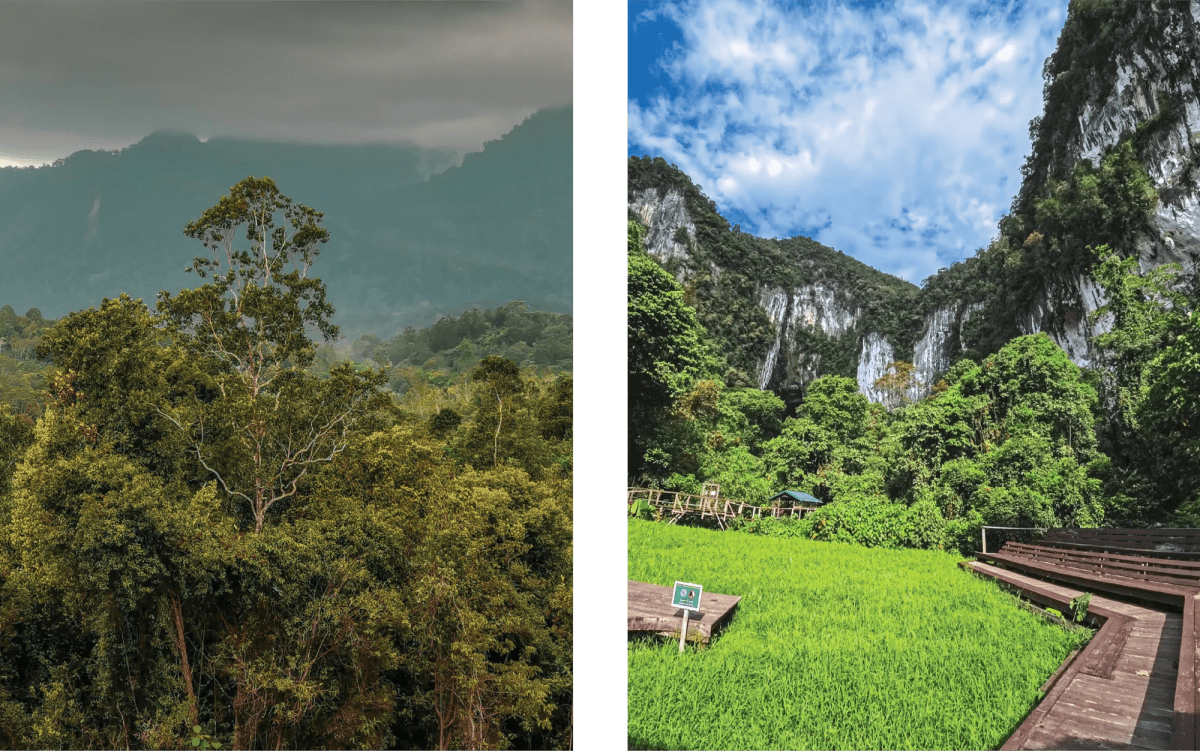
My pin landed on the lesser-known corner: Gunung Mulu National Park in Sarawak. More than just a national park, Mulu is home to the world’s largest underground cave chamber by surface area, the Sarawak Chamber, along with dramatic limestone pinnacles, 2,377-metre sandstone mountains, and over 295 kilometres of explored caves. Here, dense rainforest drapes rugged karst hills while rivers wind through misty valleys, and vast cave systems lie hidden beneath the surface. For millennia, the indigenous Penan and Berawan people have lived in rhythm with this forest.
Getting There: 9 Hrs of Anticipation & Intrigue
Mulu isn’t easy to reach. I literally crossed a sea to be there! It wasn’t a direct, continuous flight. Every stop brought a thrill. But I had to be patient. The travel to Mulu National Park was split into three legs.
The journey began with a landing at Kuala Lumpur International Airport (KUL). After an overnight stay in Kuala Lumpur, I flew early the next morning across the South China Sea to Miri Airport (MYY), the main gateway to Mulu. One of the two prominent cities of Sarawak, Miri is much closer to Mulu than Kuching in the south. After spending a day there, I boarded a MASWings flight, now operating as AirBorneo, for the final hop to Mulu Airport (MZV).
Excitement surged the moment the forest canopy and the winding Melinau River came into view below. I spent the short flight glued to the window, clicking constantly.
The journey lasted barely fifteen minutes before descending onto a single airstrip carved into rainforest and limestone karst. Flying only twice daily, these tiny twin-prop aircraft are the lifeline of Borneo’s interior.
Emotionally, the journey inward felt like a slow exhale. Each leg peeled away another layer of civilisation’s noise. By the time we landed, just 1.5 kilometres from the headquarters of Gunung Mulu National Park, the decompression had already begun.
No announcements. No escalators. No conveyor belts. Just a large arrival hall, with staff lining up luggage while passengers picked up their own.
We were finally in Mulu.
It was blistering outside. Unaware that locals shuttle passengers to homestays for about MYR 5, we decided to walk the kilometre to ours. The homestay sat slightly farther from the airport but only 400 metres from the park entrance.
Slathered in sunblock, sleeves on, scarves wrapped around our heads, we set off. The mountain silhouette teased from afar. As we approached, the terrain revealed itself. Limestone karsts pierced the canopy like ancient monuments. The momentum was building.
The World of Gunung Mulu National Park
Having spent days earlier in the jungles of Peninsular Malaysia with indigenous tribes, I wasn’t unfamiliar with the wilderness or the quiet magic it holds. What I looked forward to here was not just a different landscape, but the chance to encounter endemic flora and fauna.
Afternoons are rarely ideal for spotting wildlife. Most creatures fall silent, conserving energy for their nightly activity, something I had learnt during my post-graduate studies. On our walk to the homestay, apart from the occasional buzz of a passing moped, the forest was quiet, except for a sharp, unfamiliar whistle that echoed through the air.
At dusk, as shadows slowly replaced daylight, the forest announced the shift with a chorus of whistles. This time I recognised it. The amphibians had begun their nightly encore.
The witching hour of the rainforest had arrived. The moment when diurnal creatures retreat, and nocturnal ones awaken.
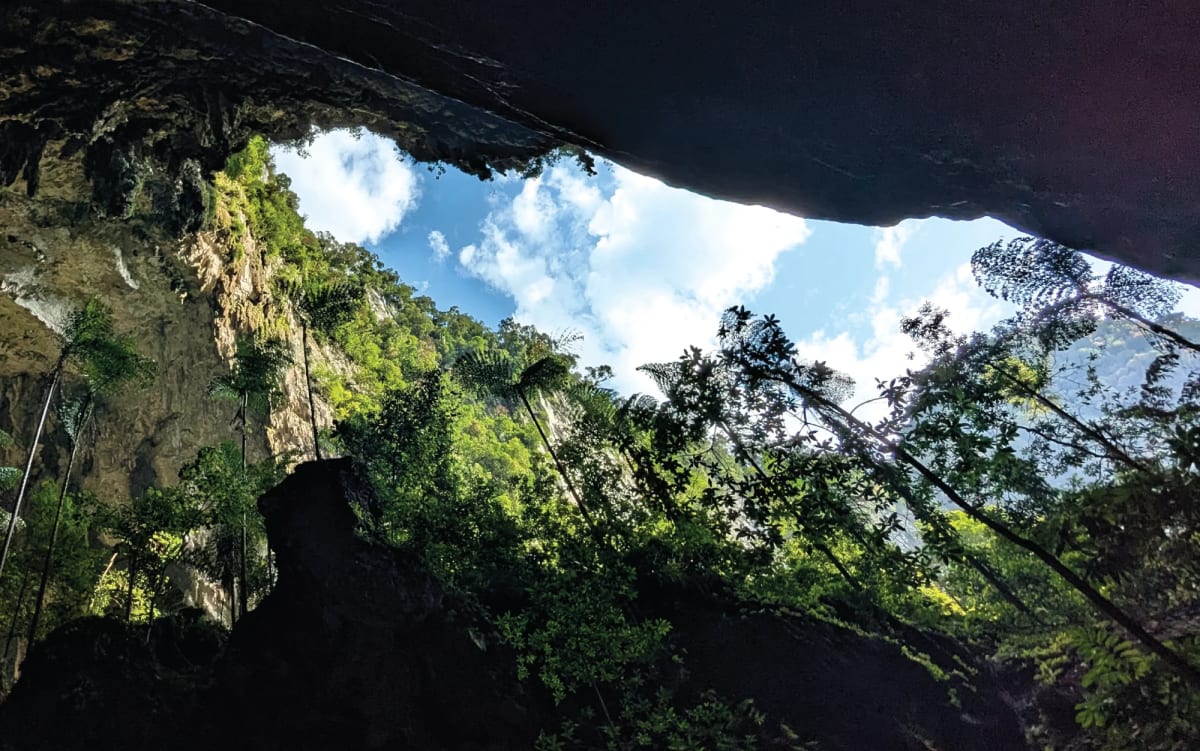
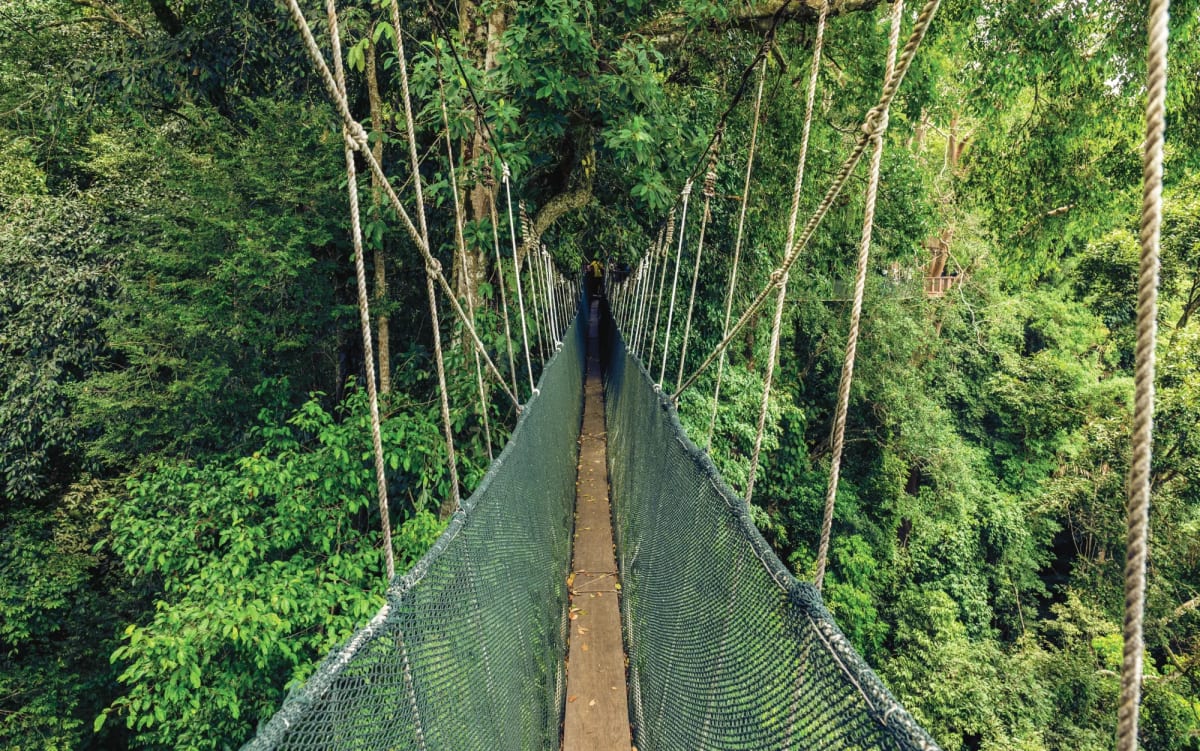
Guided only by moonlight, and accompanied by fireflies, a swiftly crossing monitor lizard, a few stray bats and several furry silhouettes, we walked nearly eight kilometres through darkness to the only supermarket in Mulu. I had never felt this safe or fulfilled. It felt like confirmation that I am, at heart, a forest person. I didn’t want the first night to end, yet I was eager to meet the park’s inhabitants the next morning.
Nothing quite prepares you for entering a national park on foot. As I crossed the sturdy planked bridge over the winding Melinau River, familiar Malaysian sights came into view. Low-hanging unripe Rambutan and the sweet fragrance of frangipani drifted through the air. Soon, I reached the office of Gunung Mulu National Park. The first thing I did was buy my five-day pass. Everything else would follow.
The sound of life was everywhere. Their small bodies betraying their pulmonary strength, the frequency of the Cicadas along with the various bird calls, echoed through the forest. I had surrendered to the sights, sounds and smells of the wilderness.
By the third night, the rain gods had cast their blessing. A drizzle soon turned into a downpour, but it still allowed us to walk barefoot. By night, the thunder applauded, lightning flashed, and rain wrapped everything in a silver sheet. Only the amphibians made merry while we awaited the downpour to die down. Over the next two days, we adapted to the unpredictable weather.
After all, it’s Borneo!
The Night Revelry
Considering the unpredictable weather, I didn’t book the guided walk until the morning of the walk. Before confirming, I checked with the staff whether the previous evening’s walk had been cancelled, as it sometimes is due to rain. Once assured it had run, I booked my evening slot for a small fee separate from the park entry pass.
Having already experienced the forest’s nightly soundtrack, I couldn’t wait to step into it myself.
I had grown fond of the darkness and the piercing chorus of the endangered Bornean Flat-headed Frog echoing through it. Equipped with a rain poncho, a small flashlight, my phone and a DSLR, I walked toward Gunung Mulu National Park in rain-soaked darkness. It was 7 pm.
Only the guide stood at the waiting area canopy. These night walks, organised by the park authority, are led by locals, often from the Penan people community. Soon, the others arrived. Three Danish friends and two Americans joined. Each of us carried a quiet mix of curiosity and nerves.
The guide warned that the rain might limit sightings. Still, we stepped onto the slick boardwalk and moved into the forest. The first thing I noticed was the soundscape. During the day, the forest has opinions. At night, it holds conversations. Frog calls filled the air. Some sounded like banjo strings, others like creaking doors or whistles. Cicadas droned relentlessly. Somewhere in the distance, a flutter. The guide guessed it was a solitary bat returning to its cave.
Within fifteen minutes, the guide’s beam caught luminous green coils on a branch. A green viper. Venomous, lethal and beautiful. It watched us with vertical pupils, perfectly still. We watched it for a few minutes before moving on.
Further along, we found spiny stick insects locked in an awkward embrace. Leaf insects that looked exactly like leaves, complete with veins and ragged edges. Under a broad leaf, a rain-soaked Yellow-bellied Bulbul slept quietly.
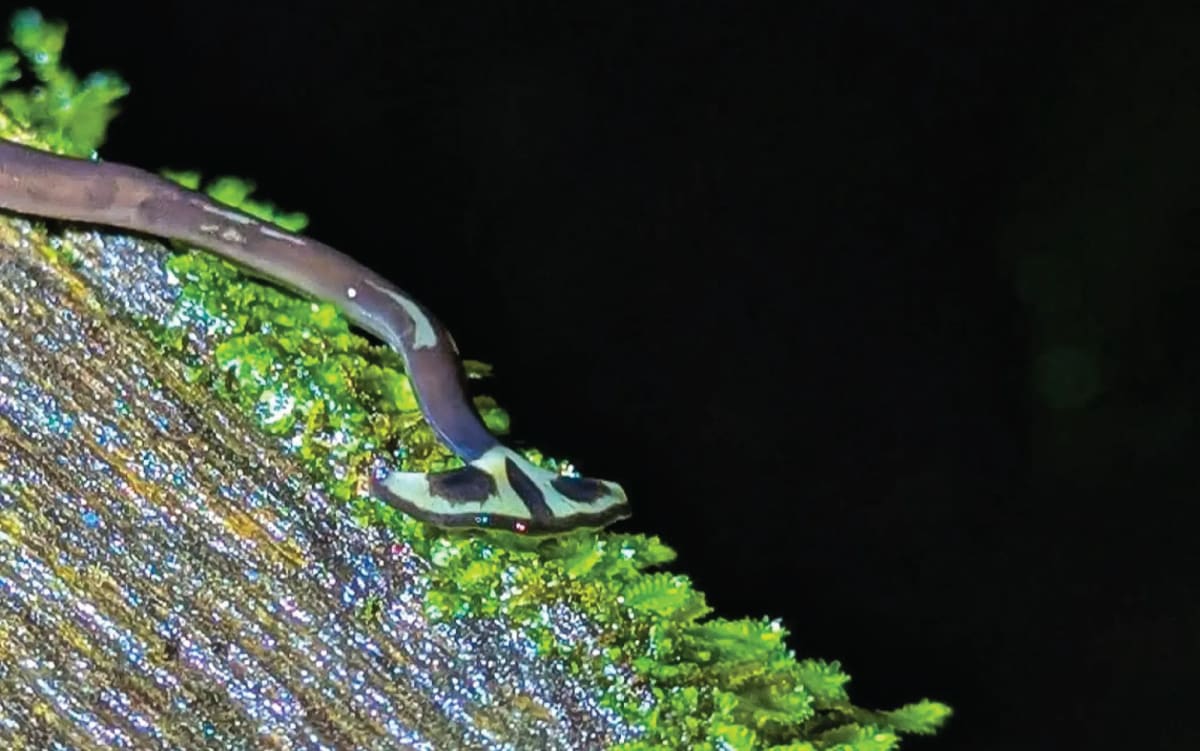
Another curious sight was the hammerhead worm, an invasive species that harms ecosystems by feeding on beneficial earthworms.
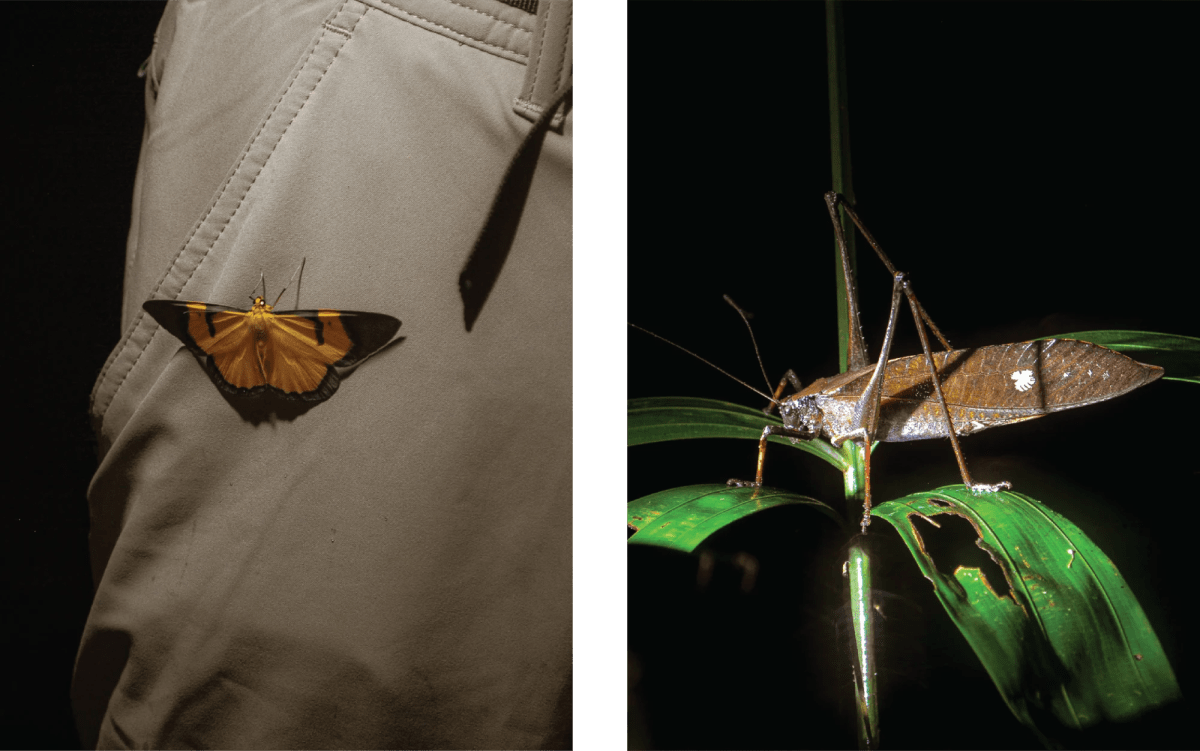
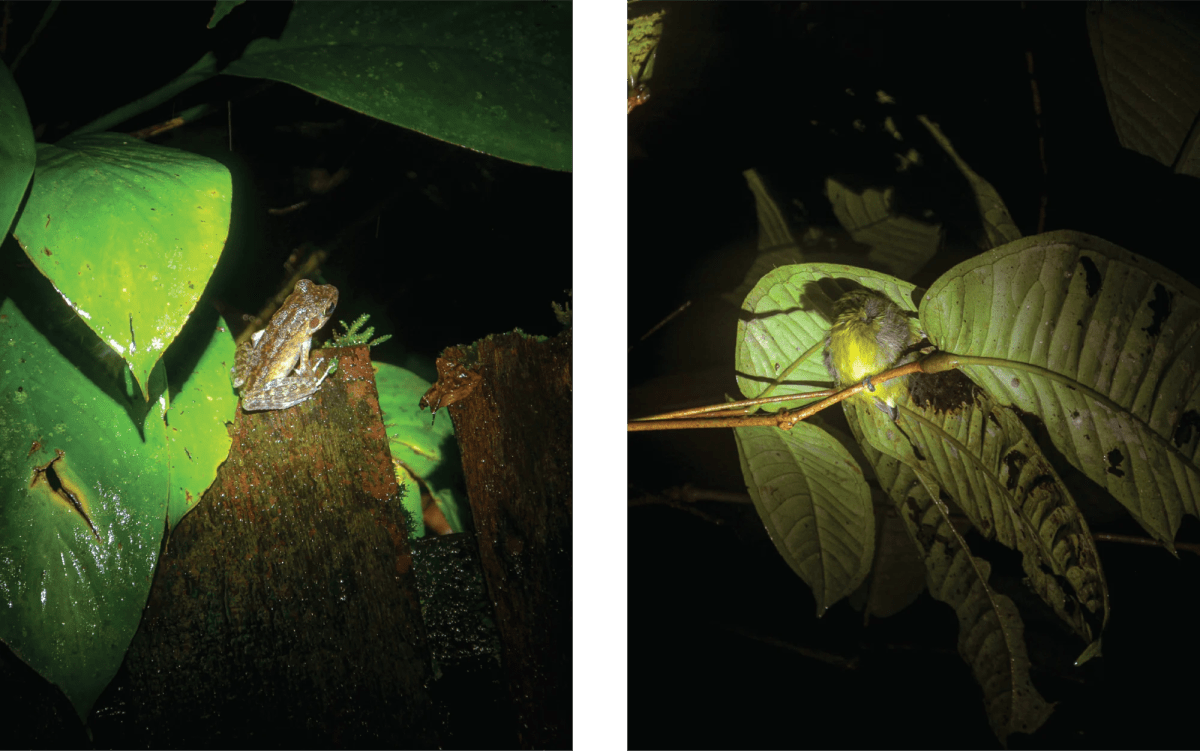
Frogs were everywhere. Tiny ones with enormous eyes. Larger ones with calls like creaking hinges. One remained invisible against moss until it moved.
Darkness sharpened uncertainty. Every shadow hinted at something. Every sound carried meaning. The flashlight carved a narrow tunnel through the black, and beyond it lay the unknown. By the end of the two-hour walk, my senses felt heightened. My mind was processing more than it had in years.
When the lights of the park office finally appeared through the trees, I realised I wasn’t ready for it to end. The night walk at Gunung Mulu did not offer the spectacle of the bat exodus. It offered something quieter and more intimate: a glimpse into the world that wakes when we sleep.
I returned to my modest homestay, content. Outside my window, the frogs continued their chorus. The cicadas never stopped.
Some sensory experiences cannot be captured in photographs. They can only be felt. Humbled, that night I lived Sir David Attenborough’s words,
“We only know a tiny proportion about the complexity of the natural world. Wherever you look, there are still things we don’t know or understand. There are always new things to find out if you go looking for them.”