The driver suddenly stopped the car and told us to get out. We were confused. He pointed towards a run-down wooden cottage with ‘A.R. Medical Store’ painted across the front. My first thought was that someone needed a bathroom break! Without asking any questions, we climbed down a set of mud steps, completely oblivious to what we were getting ourselves into.
The Last Of The Watermills: A 150-Year-Old Legacy
That's when a smell hit me, one I hadn't encountered in years: freshly ground corn. Growing up in Dimapur, Nagaland, I used to ride in our family jeep with my father almost every other weekend to grind corn at the mill near our house. We'd eat it afterwards, mixed with milk and sugar. It was my favourite after-school snack for years.
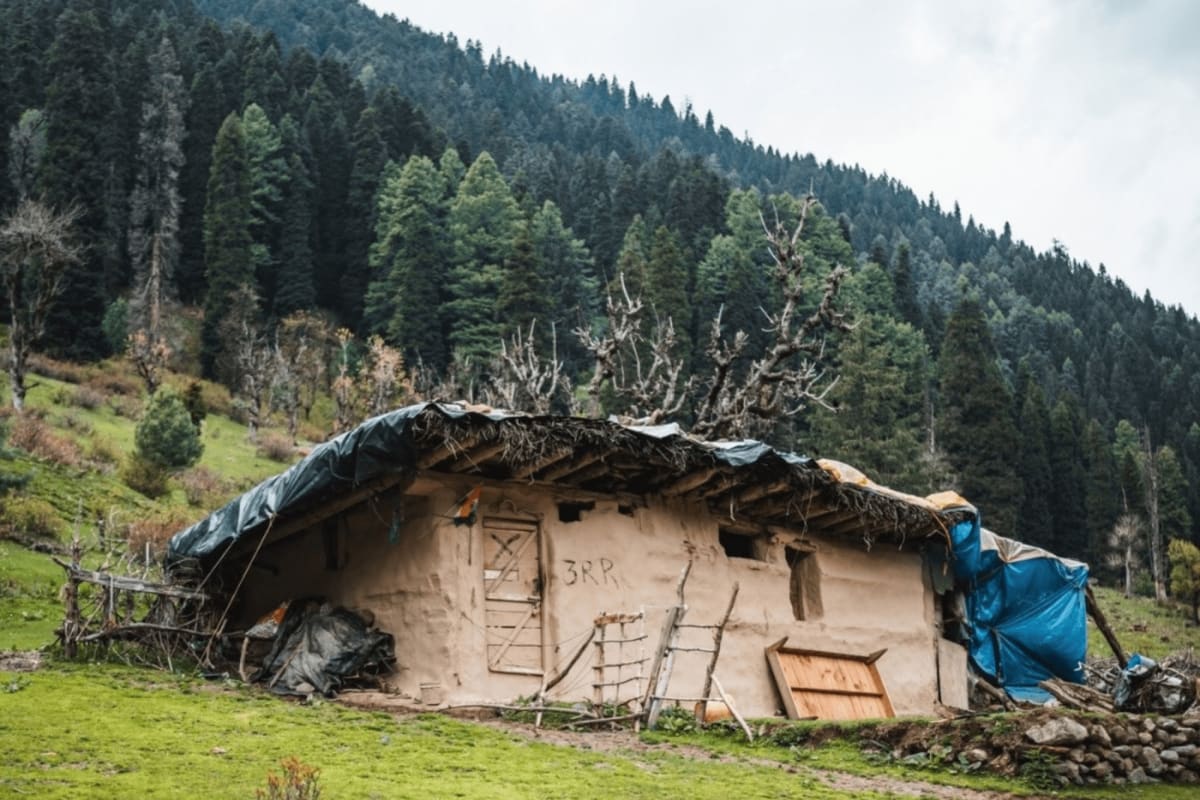
Following this familiar smell, I walked around a bit and found its source. An old man, a local, maybe in his eighties, going by the deep lines the sun had carved into his face and hands, stood beaming at us from inside that same run-down cottage. It turned out we'd arrived at one of the real highlights of the trip: a 150-year-old watermill, one of the last of its kind still standing in the region.
These mills once dotted Kashmir, grinding wheat, corn, and maize between massive stone wheels. Now most of them have shut down, pushed out by modern flour mills, shifting weather patterns, and years of being overlooked. They were typically built near hillside streams, where water was never in short supply, which is exactly what kept them running for so long.
The man who runs this one has been at it for close to 40 years. He wasn't sure who'd take over once he stopped. "My grandfather did this work, then my father, then me," he said. "But I don't have children, so I don't know who comes after me." Most of the watermills still running today are kept alive by men his age, likely the last generation who'll ever do this work, mostly because there's no money in it anymore. Parents push their kids toward school and government jobs instead, and who can blame them, when a craft like this barely pays enough to survive on.
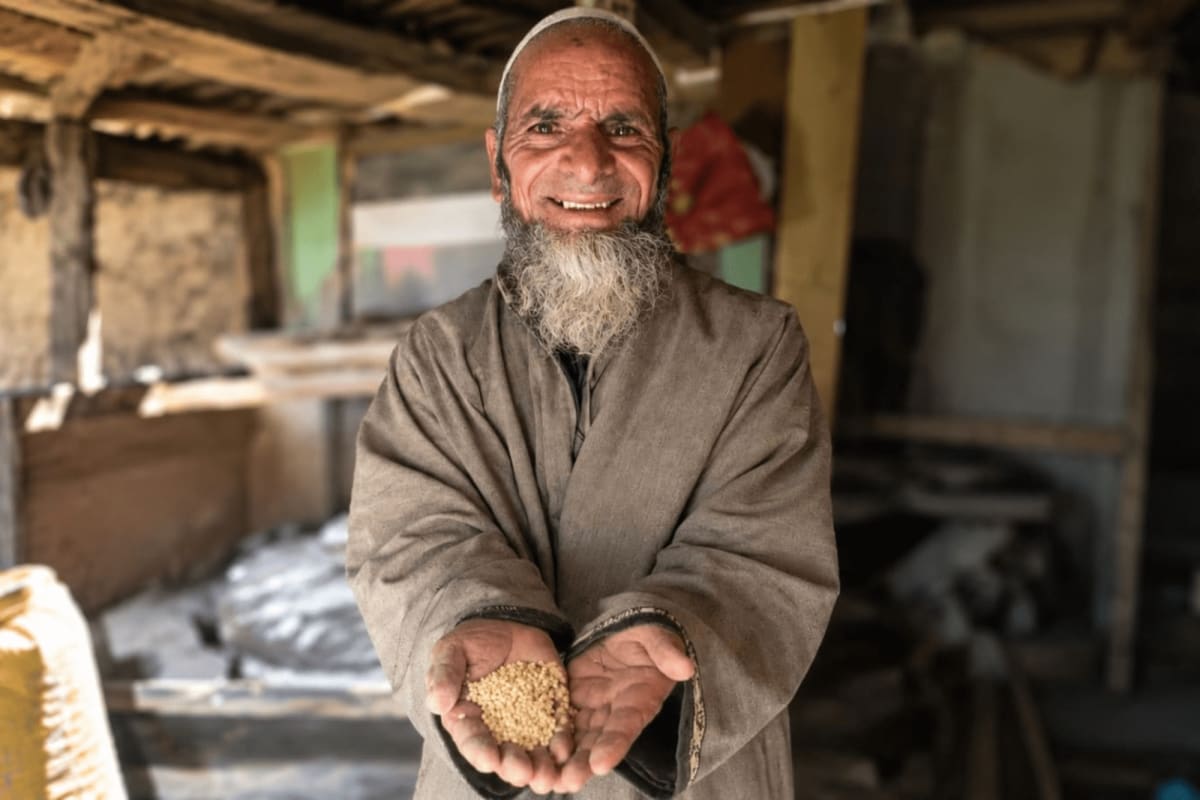
While he sat down to show us the process, I watched his hands move on their own, almost like muscle memory. He pointed toward the stream outside, explaining how the water gets channelled onto a wheel he called a "chak," which spins a shaft connected to two heavy stones. The bottom stone stays still, the top one turns, and whatever grain goes in between comes out the other side as flour, ground fine by nothing but water and stone.
He handed us some of the crushed maize to try, and something about it filled me with melancholy, knowing too well that this knowledge, generations of it, will likely disappear the moment he puts this down for good.
The Kashmir Only The Locals Know
I said yes to a FAM trip to Pahalgam, Kashmir, because I've always believed there's more to the place than Bollywood has ever managed to show us. A little over a year has passed since the Pahalgam terror attack, and almost everyone around me tried to convince me not to go. I'm glad I didn't listen. Bad things happen to good people, in good places, in every part of the world. That doesn't mean we stop showing up for them. And I'll say this plainly: Kashmir is even more beautiful than the movies have led us to believe, and it felt completely safe the entire time. My husband, who backed out of the trip over safety concerns, spent the whole time I was gone regretting it. By the time I landed back in Delhi, he'd already decided we were going together next time.
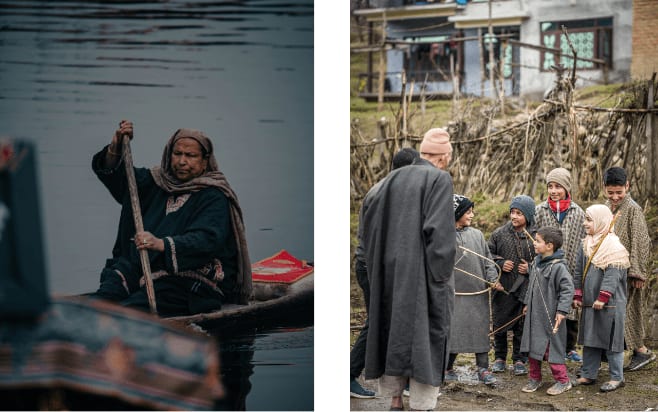
The scenic views, as stunning as they were, weren't why I decided to go. I wanted to experience Pahalgam through the people who've actually lived there for decades, rather than just passing through it the way most tourists do.
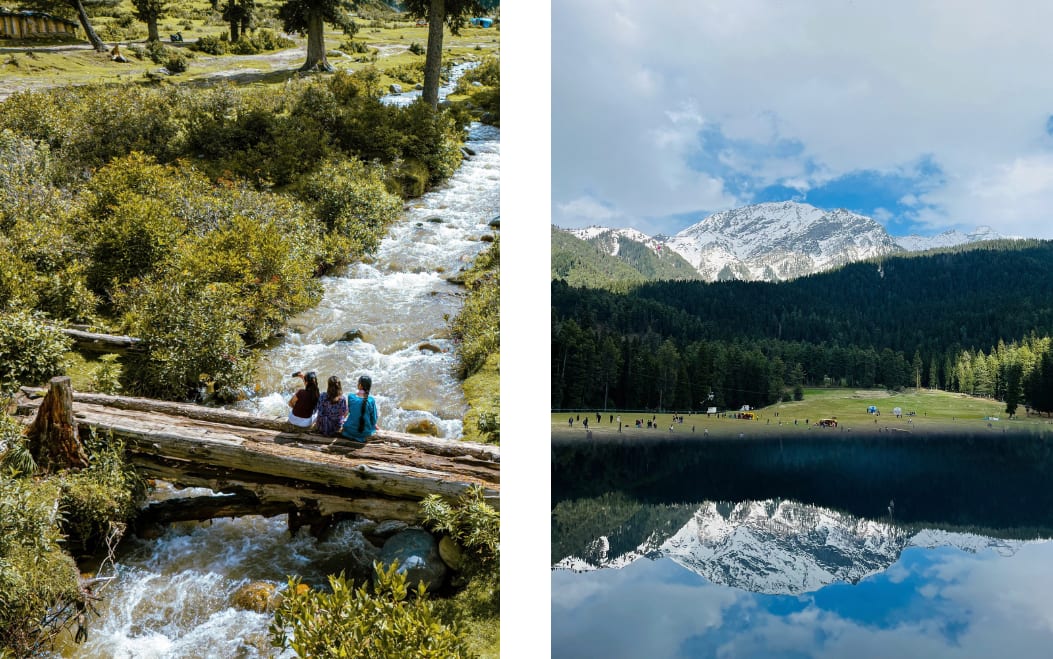
After the mill tour, we made our way to a small bridge separating the town from a cluster of settlements so old they seem to have grown out of the mountainside rather than been built on it, and started walking. The path followed the Lidder, its water an almost unbelievable turquoise. Every time I tried to put my phone away and just walk and enjoy the view like a normal person, something would show up that I just had to capture: a stream, a random cluster of wildflowers, the way the light hit the mountains at one particular turn. So the phone kept coming back out. By the time we'd climbed up, crossed a couple of streams, and gotten close to the village, I think I'd taken over a hundred pictures and videos, which says more about how distracting the scenery was than anything about my self-control.
The Nomad Table That Fed Me Like Family
Nearly half an hour later, breathless and a little sunburnt, we reached a small settlement of mud houses set into the hillside, home to many nomad families.
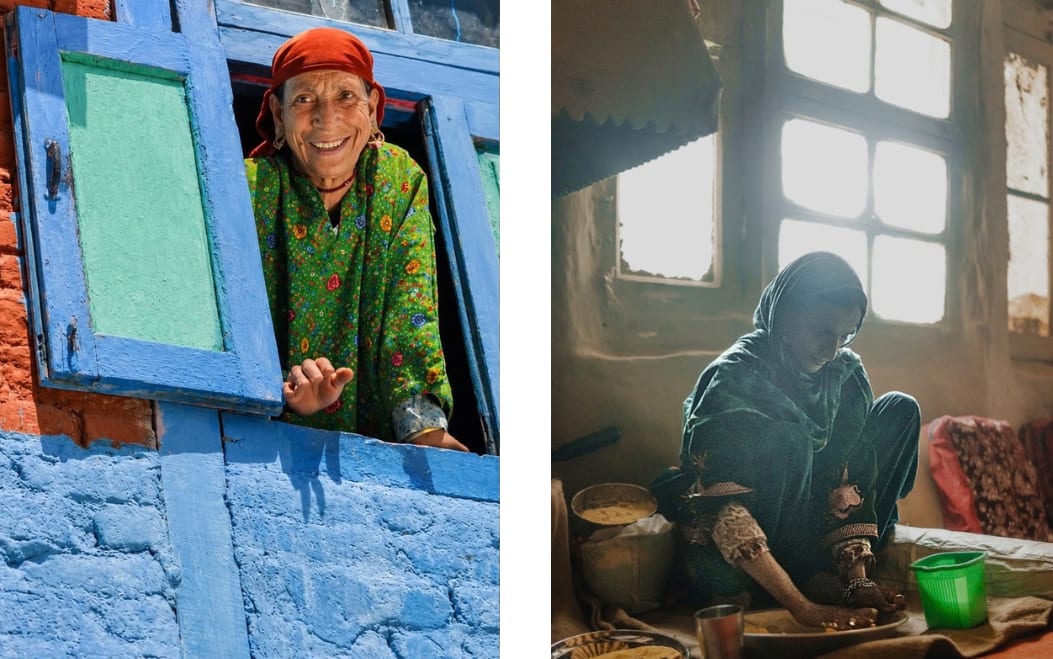
As we reached the host hut, a young boy, no older than seven or eight, ran ahead of everyone else, dragging a plastic chair across the courtyard just so I wouldn't have to sit on the ground as I removed my sneakers. "Didi, aap yaha baithke joote nikaalo," he said. That one sentence, from a child who couldn't have been more than waist-high, told me everything about Kashmir's famous hospitality.
Inside, the house gave away nothing of what it held from the outside. Mud walls held up a low, uneven ceiling of timber beams, a few pinecones and papier-mâché ornaments hanging off them. The walls were dressed in quilts and floral curtains that didn't match each other and somehow worked anyway. One whole corner of the kitchen was just shelves, stacked floor to ceiling with steel tumblers, plates, kettles, and tea strainers, worn smooth from decades of hands reaching for them.
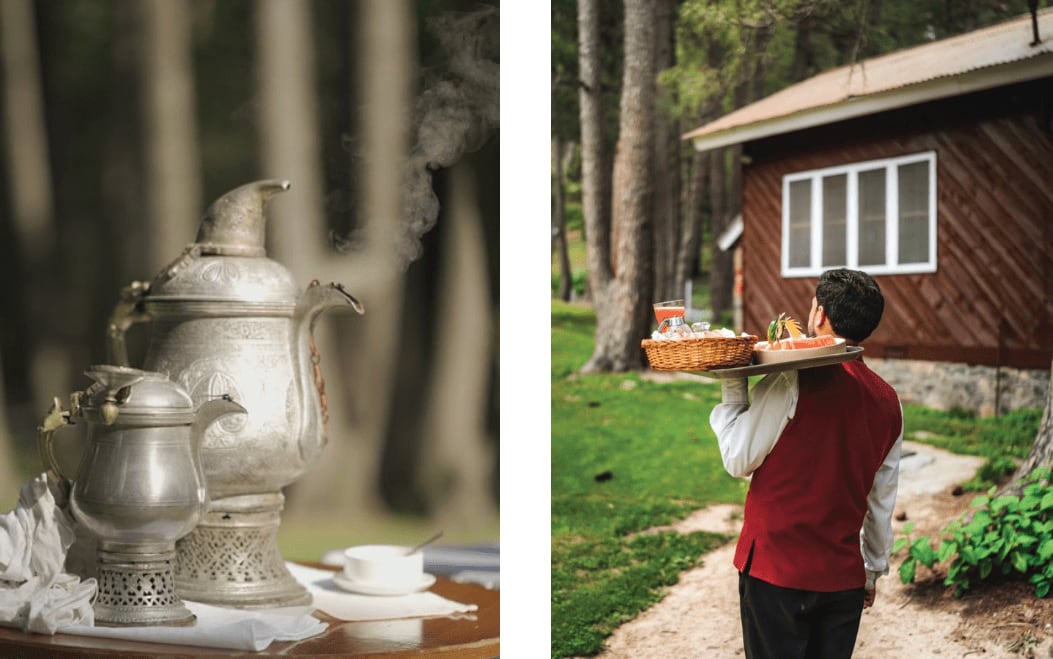
We sat cross-legged on wine-red rugs bordered in gold thread, and watched three women, three generations of the same family, move around a low copper kettle set on a small stove between them. The eldest sat furthest back, a baby dozing against her shoulder, her shawl a soft tangle of paisleys faded from years of sun and washing. Beside her, a younger woman in a mustard-yellow pheran leaned forward and poured kehwa straight from the kettle's spout into small clay cups. I wrapped both hands around my cup, gave it a slow sniff first, then found myself doing that thing I always do, trying to name every flavour in it like some self-appointed food critic. I also had Noon Chai for the first time: salted, pale pink, oddly comforting in a way sweet tea has never managed to be.
Then came the food, and it did not stop coming. Rounds of Girda, thick and slightly charred at the edges, and Lavasa, soft and paper-thin, piled into baskets that kept reappearing every time one emptied. A plate of pale, coarsely ground walnut chutney was a favourite. A deep green mound of saag, cooked down with turmeric and onion until it turned glossy and rich, sat next to a plate of sesame-crusted cookies. A basket of small, freckled apples sat to one side, next to jars of honey and jam with handwritten labels, passed hand to hand without anyone needing to ask.
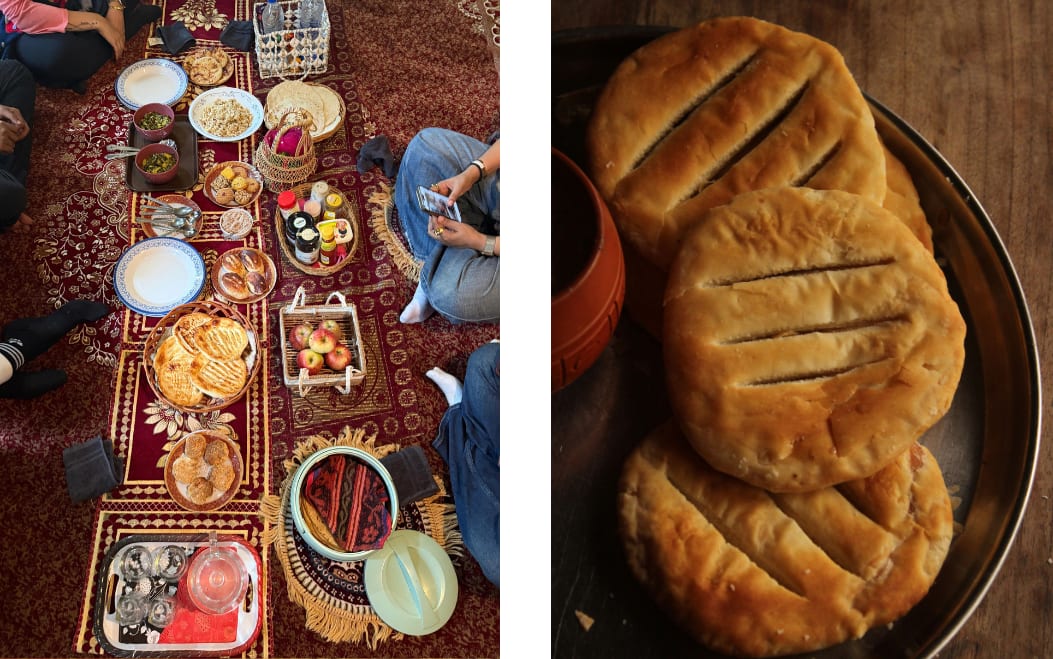
The men of the house sat with us through all of it, refilling plates before we'd even noticed they were empty, asking where we'd come from, whether the mountains had been kind to us, whether we needed anything else, over and over, until it started to feel more like family checking in. We ate, we talked, we lost track of the hour completely, and by the time we finally got up to leave, we were full in a way that had very little to do with food.
Picnic By The Riverside
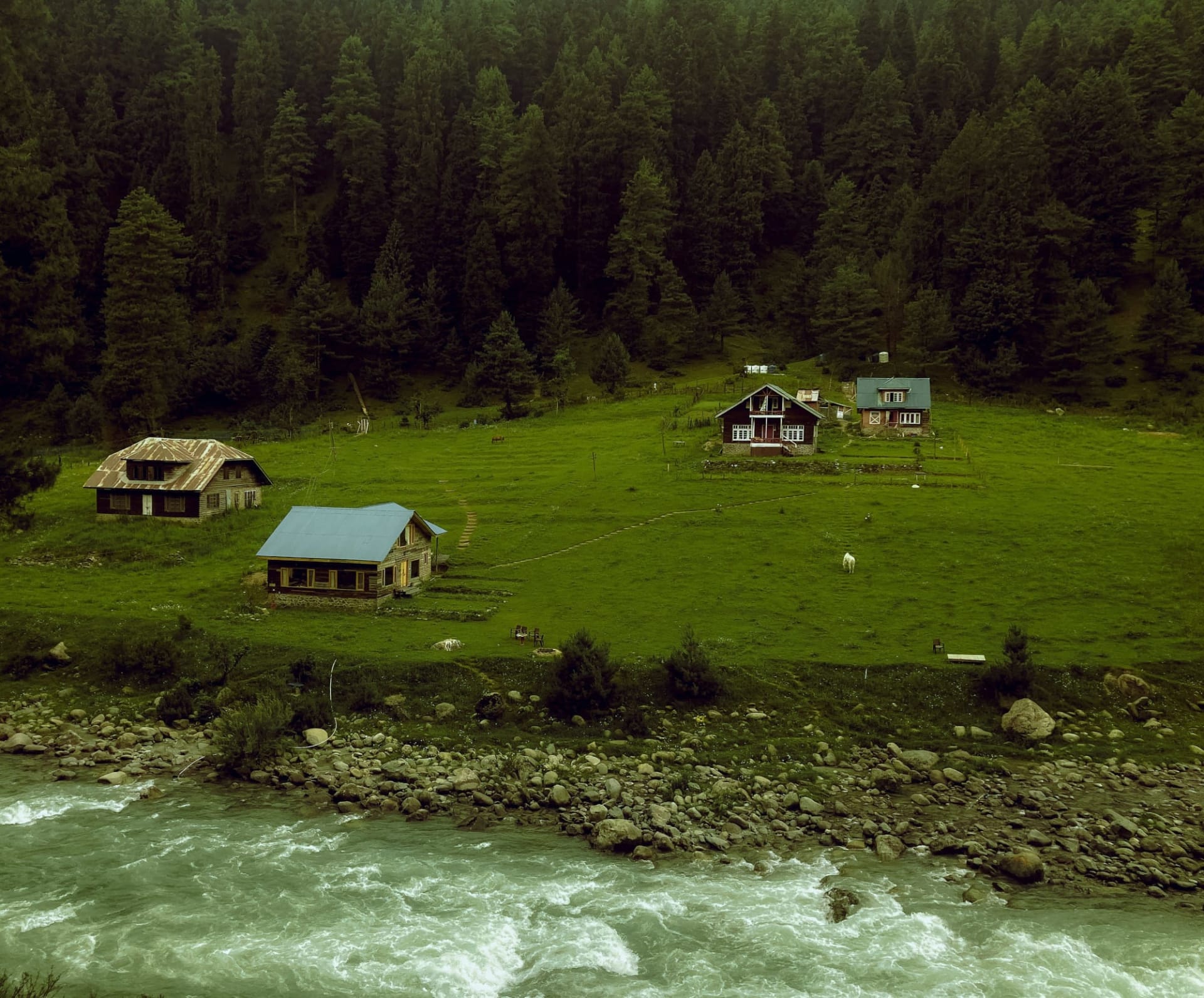
By then, most of us had quietly decided we were too full for the riverside picnic our hosts at Welcomhotel Pine N Peak by ITC Hotels had so kindly arranged. We told ourselves we'd just have a cold drink, take a few pictures by the river, maybe walk through the village instead. That plan lasted about as long as it took to actually reach the riverside.
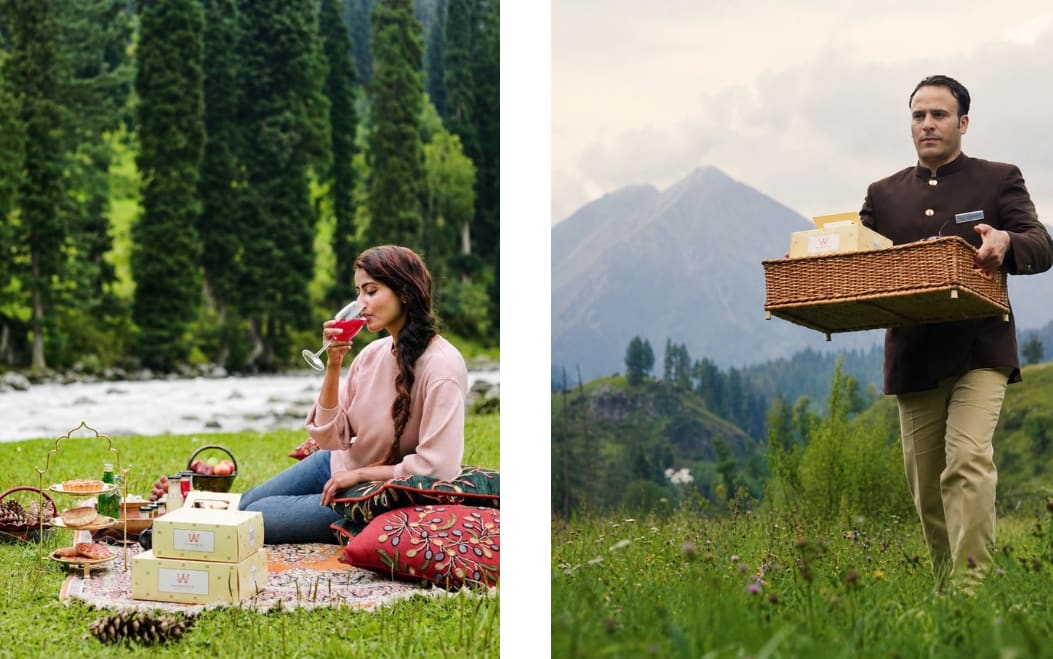
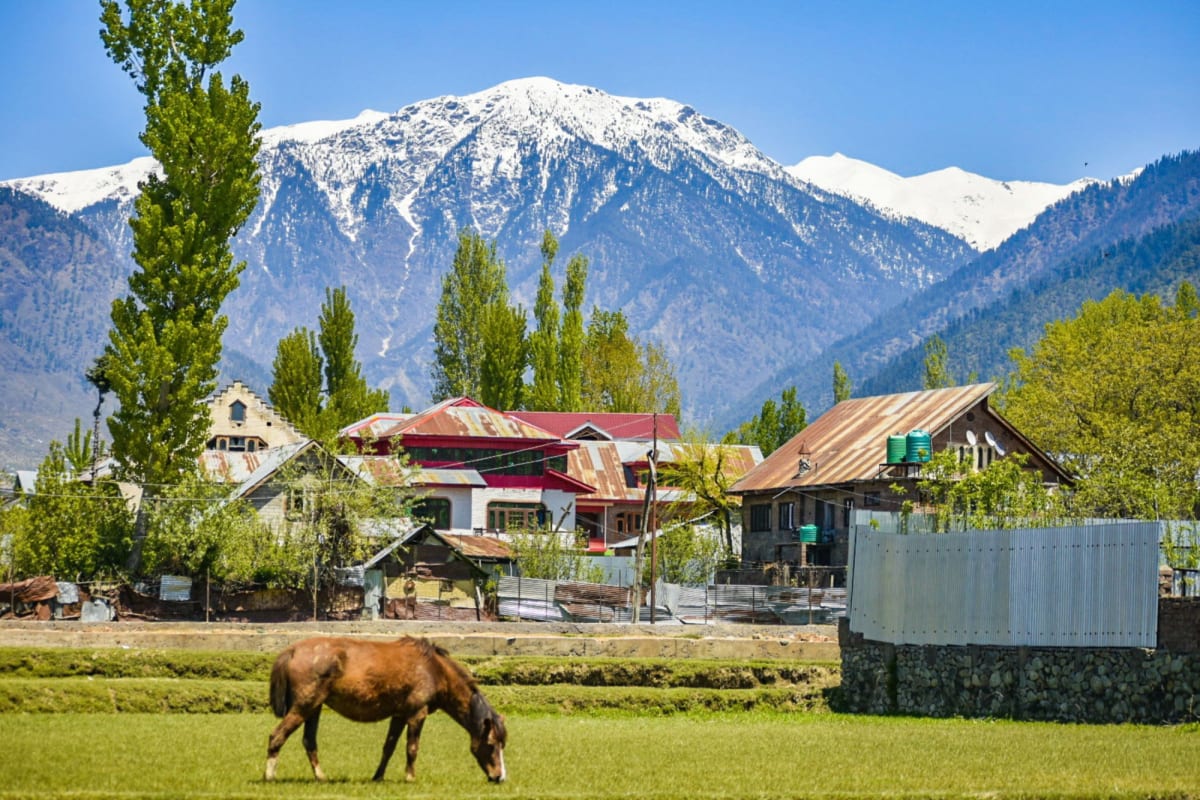
The setting undid us instantly: a grassy hilltop scattered with wild yellow flowers, a cluster of wooden cottages leaning slightly into the wind like they'd grown that way on purpose, and a canopy laid out with linen and a beautiful spread of food. We ended up eating anyway, very happily at that.
Afterwards, a few in the group made their way to the Ashmuqam Shrine in Anantnag, the same one that featured in "Bhar Do Jholi Meri," the hit song from Salman Khan's Bajrangi Bhaijaan.
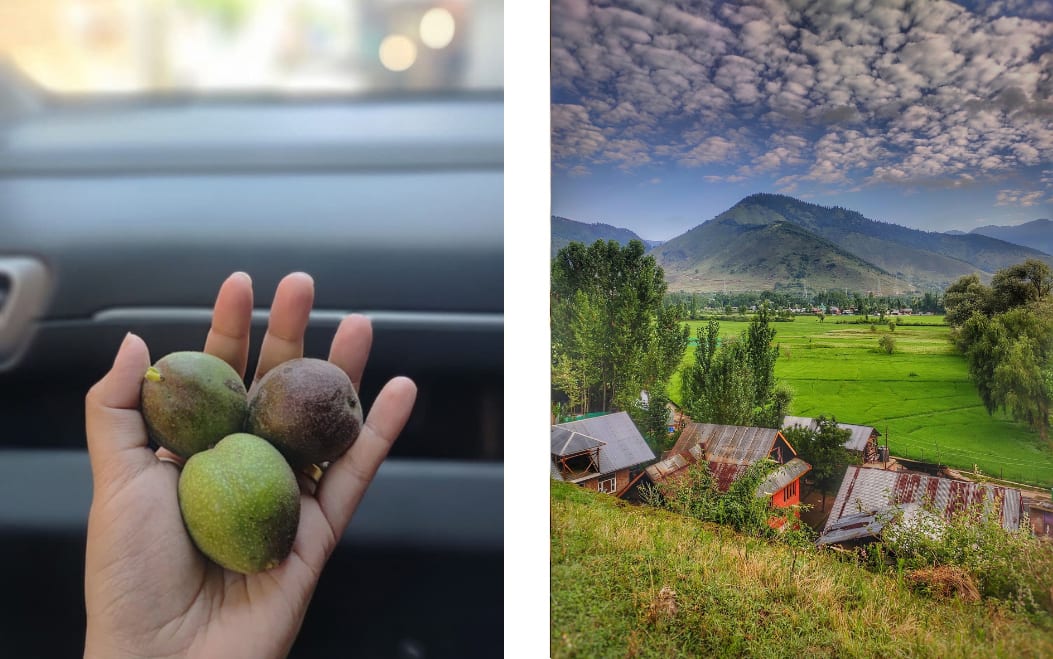
The rest of us had planned a walk through the village, but the midday sun ruled that out fast, so we settled for a slow drive instead, winding past homes framed by apple orchards, cornfields, and walnut trees, past women gathered at their gates deep in conversation, past children playing outside their huts. At one point, our driver stopped, reached up into a walnut tree, and handed us a few straight off the branch, then cracked them open so we could taste them fresh. Most of us had never seen raw walnut before, let alone eaten one minutes after it left the tree.
The Slow Kind Of Luxury
I have to warn you now, before you get too invested. There is no apple orchard in this part of the story either. No neat rows of red fruit against a blue sky, no photograph of me holding a basket looking pleased with myself. What I have instead is slower, and honestly, better.
We drove out to Aru Valley on one of those mornings that makes you forgive the cold. It was about forty-five minutes from the hotel. Aru sits right at the edge of where the trekking routes actually begin, so there's this steady, quiet stream of people heading further in than we ever planned to go. We didn't push all the way to the top, where the buses unload and the crowds gather. We stopped just before that, at the point where the mountains still felt like they belonged to no one in particular, hit by a surreal silence.
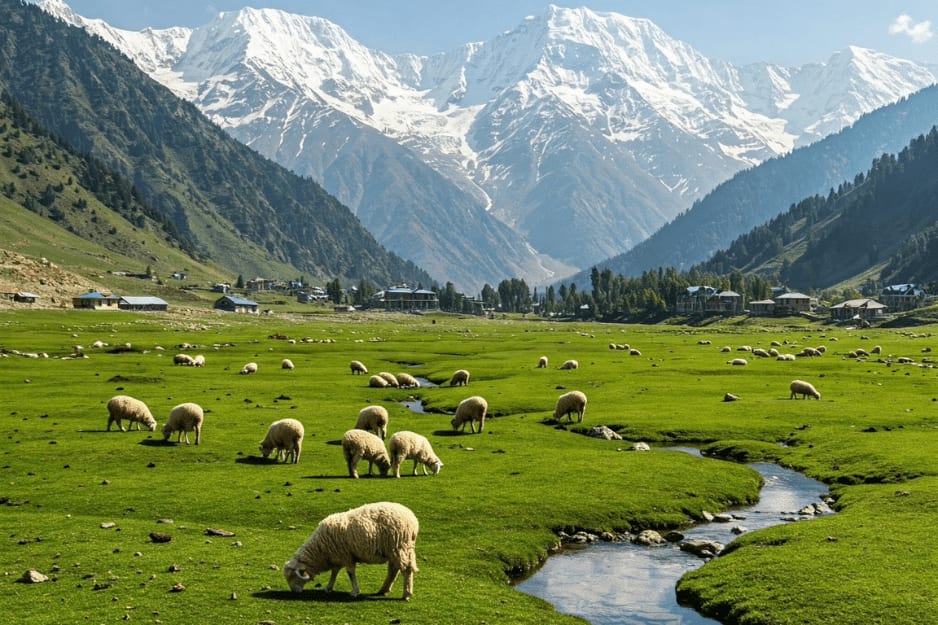
It was August, so no snow, just the mountains doing their regular thing. Green in parts, grey rock in others, little waterfalls streaking down the sides like someone had drawn them in with a fine brush, and still, from that distance, it all looked exactly like postcards. Sheep were scattered across the slopes with a couple of shepherds keeping half an eye on them. Some horses stood around not doing much of anything, which is basically what horses do.
We stopped the car more times than made sense. Someone would spot a view, we'd pull over, take the same photo everyone else had already taken from the same spot, get back in, drive two minutes, do it again. Nobody was in a rush. That's the bit we actually enjoyed the most.
A Quaint Little Sheep Farm
On our second-to-last day in Pahalgam, we didn't do anything remotely productive. Shopped too much, sat too long at lunch, drank a lot of kehwa at a sheep farm. Exactly how I like a holiday to go.
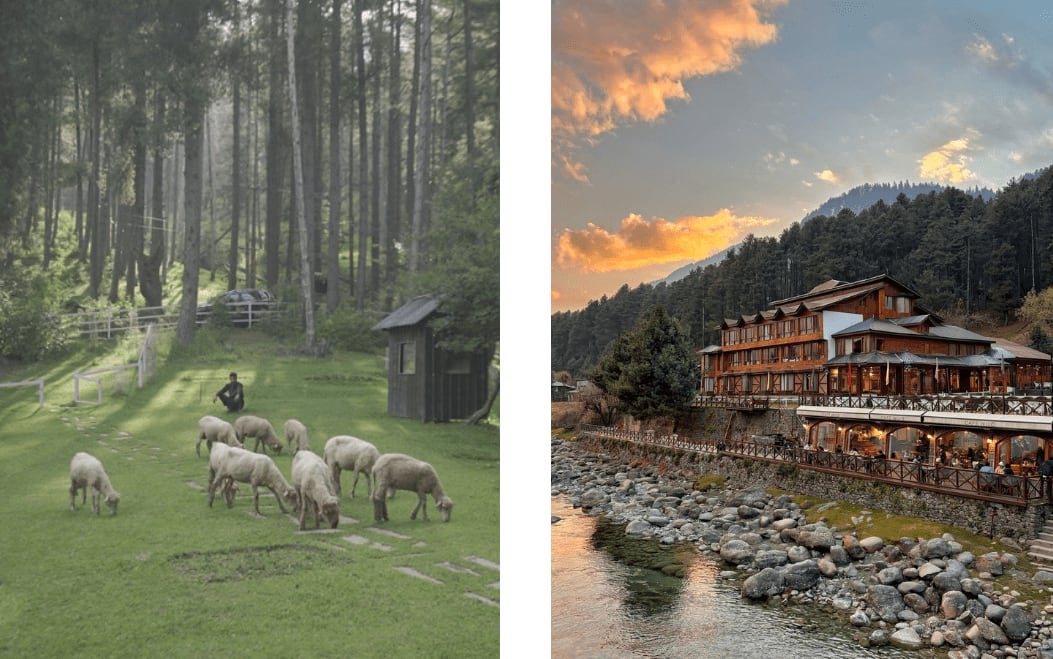
We had lunch at Cafe Wilo, which overlooks the Lidder River. So we sat close enough to hear the rafters screaming below but far enough that none of it was our problem. I'm not saying I enjoyed listening to strangers question their life choices mid-rapid, but I'm also not saying I didn't. I had the river trout, grilled and properly spiced, tasting so fresh I'm fairly convinced it was still in the river an hour before it landed on my plate. There were smashed lamb burgers too, a cheese salad that I'd rate 10/10, and a piping hot cup of hot chocolate I've been embarrassingly nostalgic about ever since.
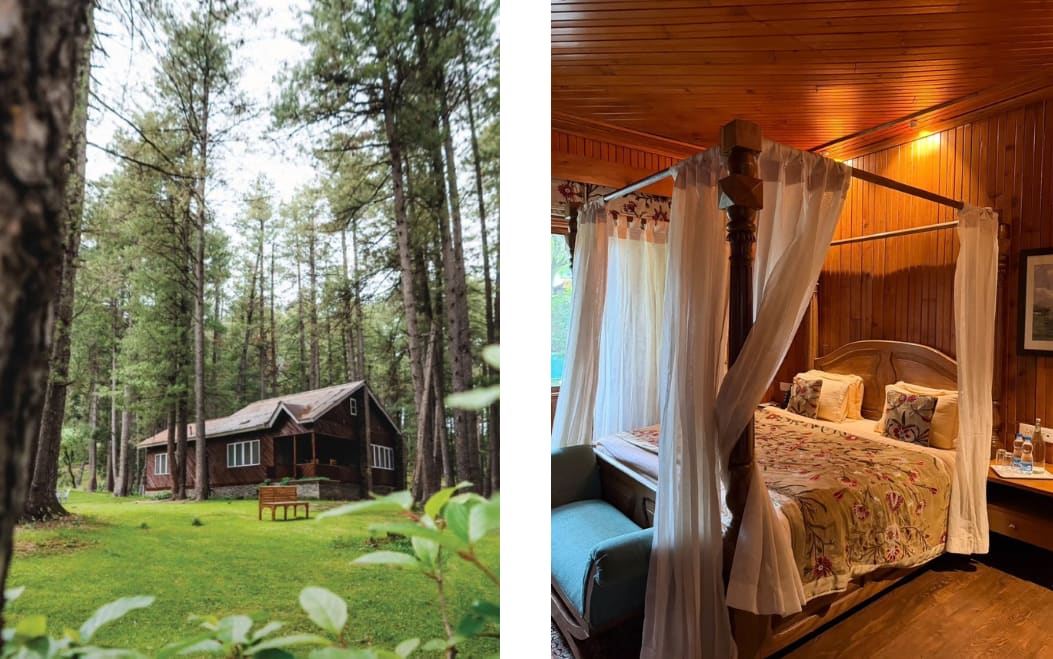
Elfy's Lodge & Sheep Farm is a five-minute walk from there, and I nearly bailed on it in favour of lying very still on the bed in my hotel room. Glad I didn't. Elfy's is not dressed up in any way, just a working farm, sheep everywhere doing sheep things, blissfully indifferent to the fact that we'd shown up to watch them exist. There's a rustic, European-style wooden cottage on the property, run by Heevan Luxury Resort, and you can actually book it if you want to get away from the noise of town for a night.
Asif Iqbal Burza, who owns the place and also runs Welcomhotel Pine N Peak, told me later that the cottage was never really meant to be a business idea. "That's going to be my retirement home," he said, half joking. "Surrounded by some sheep, a small wooden cottage in the middle of the forest, that's how it came to be. And I thought I might as well share that experience with others also. We have lived there. It's one of my favourite places. It's very peaceful, it's very quiet, it's very therapeutic." Sitting there with a cup of kehwa going cold in my hands, watching the sheep amble around, I understood exactly what he meant.
Bargaining For Pherans In Pahalgam's Main Market
There's a big market right in the centre of Pahalgam, and if you're going to shop, do it here. I bought pherans, a couple of handcrafted jackets, and more pashmina than I need, which is the correct amount of pashmina to buy.
Bargaining tip: the first price is never the real price. If a shopkeeper says four thousand rupees, I'll say twelve hundred, knowing full well we'll land somewhere in the middle, usually around fifteen hundred (Na tera, na mera - desi bargaining logic at its finest!).
If you're buying walnuts or almonds to take home, skip the ones still in their shells, even though they look more authentically Kashmiri or fancier. I made that mistake, and when I cracked them open at home, half of them turned out old and dried out. Pay a little extra for the ones already shelled; you can actually see what you're getting.
The Royal Kashmiri Wazwan
Our last night in Pahalgam, Welcomhotel Pine N Peak put together a full Kashmiri Wazwan, and it was easily the best meal I had on the entire trip.
We walked in to find three musicians already playing beautiful Kashmiri music, and had barely settled onto the floor when the food started arriving. Somewhere around the sixth or seventh course, I honestly gave up trying to keep count.
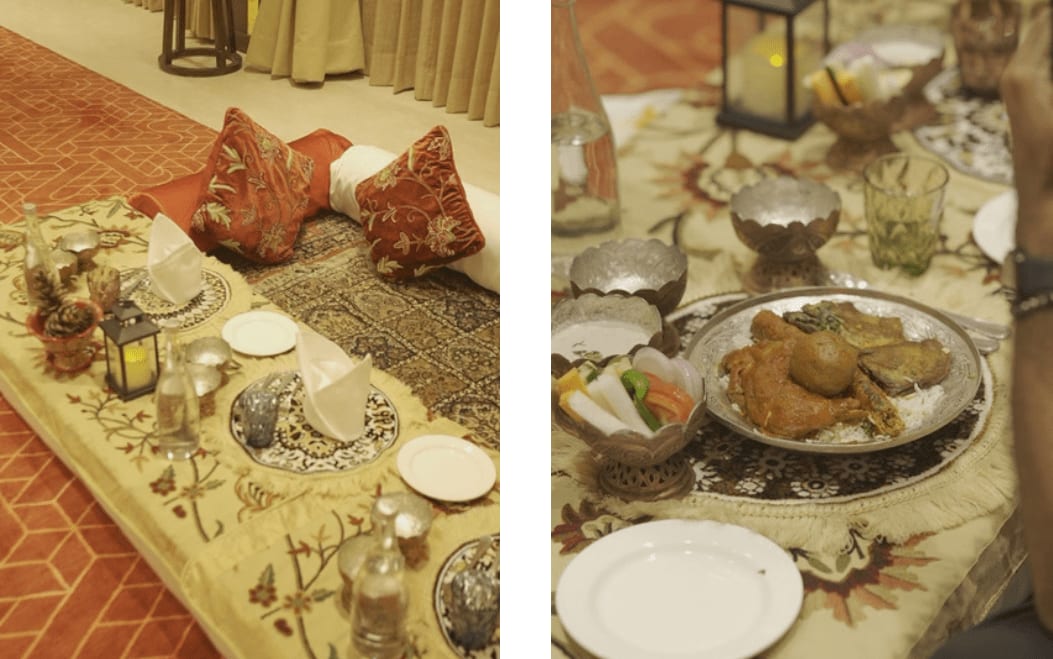
The Tabak Maaz was the clear winner: lamb ribs cooked slowly in milk and spices till they went completely soft, then finished off in ghee so the outside turns a bit crisp. I went back for seconds, and I think two of us went back for thirds too. There was also Gushtaba, a yogurt-based curry, and Rista, the red saffron one, both made from meat pounded down till it's smooth, almost like a very fancy meatball. Not going to lie, those two weren't really my thing. I like my meat with some texture left in it, something to actually chew. What I did love, unexpectedly, was the haak: this simple leafy green dish that managed to taste so, so good while sitting next to ten other meat courses. Says a lot about a cuisine when the vegetable dish can hold its own on a table like that.
Burza's Kashmir
I've stayed in places that call themselves luxurious and places that actually are, and Welcomhotel Pine N Peak in Pahalgam is the second kind. It sits up on the Rajwas Plateau, with the Lidder River below, snow line still visible on the far peaks even in August. Everything about it feels built for slowing down.
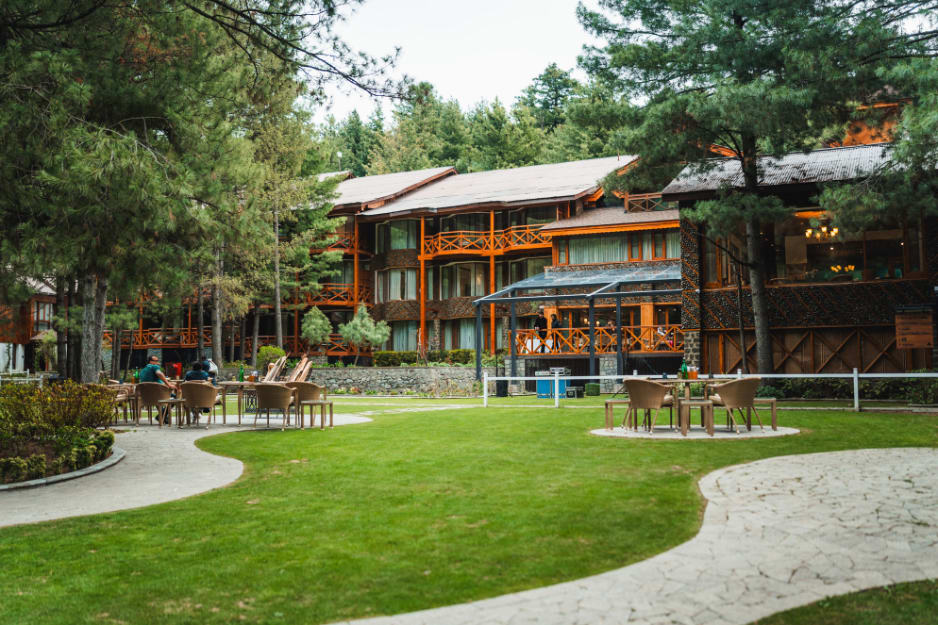
My room was a deluxe, absurdly large for one person, with a view of the mountains that I never quite got used to waking up to. Mornings there were ridiculously peaceful: sunlight pouring in early, and if I timed it right, I'd catch it bouncing off the colourful hydrangeas just outside, throwing these little bursts of colour across the room before I'd even had coffee. It made getting out of bed almost impossible in the best way.
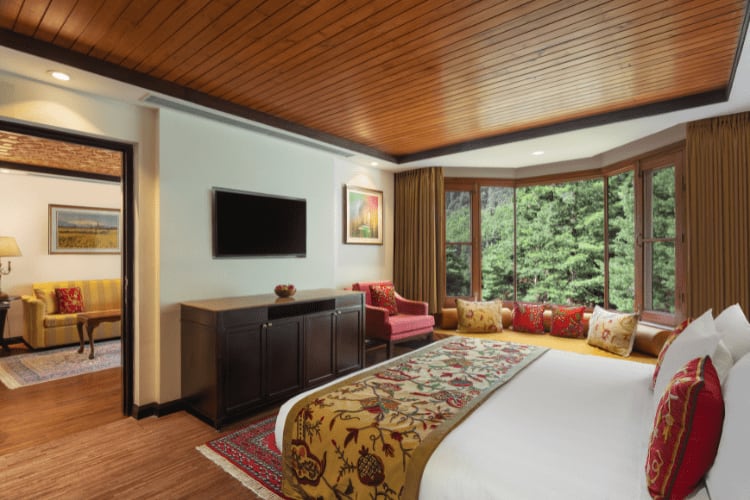
The rooms are adorned with Kashmiri wood carving, handwoven tapestries, and local handicrafts. None of it feels like generic five-star dressing. The cottages come with a butler and a jacuzzi, and apparently the presidential duplex has its own reading library and a window built just for the view.
None of this happened by accident, either. Burza is a second-generation hotelier; his father started the business in the early eighties, and he took over in the early 2000s, and he was fairly direct with me about what he thinks sets the property apart. "It's our Kashmiri culture which I thought needed to be showcased to the world, because that is what makes us unique, more than the scenic views, mountains and the apple orchards." He talked about tying up with ITC in 2012 to bring in international best practices without losing that local identity: the sit-down Wazwan served the way it would be at an actual Kashmiri wedding, the sheep farm, the water mill, all of it built around letting guests experience the place rather than just look at it. Having sat through that Wazwan myself, third helping of ribs and all, I'd say it worked.
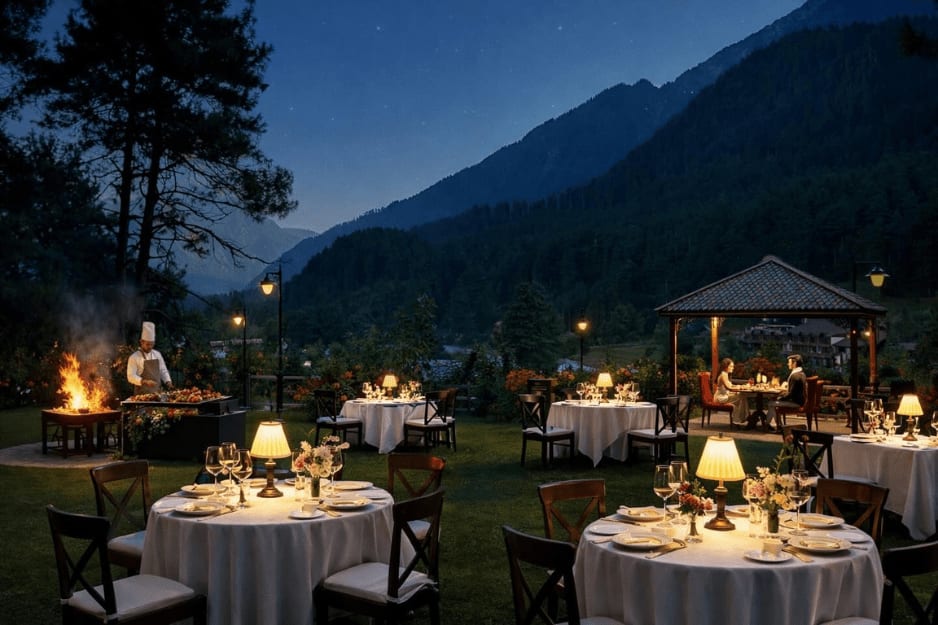
Every evening, without fail, there was a Samavar service, and I really began looking forward to it. Noon Chai and kehwa, poured from copper vessels, warm cookies on the side, and this small ritual of just sitting there with a cup in hand, watching the light change over the mountains. Then there's Gulistan, where dinner happens right under the stars, candlelight, rustic gazebos, and not a ceiling in sight. Our first night there, they did a bonfire tandoori dinner, and the garden was full of other families mid-celebration, someone singing, someone else dancing near the fire, that kind of night.
Never Say Goodbye To Kashmir
On the drive to the airport, back to deadlines and traffic and everything else waiting for me at home, I kept doing the math on how soon I could come back.
Winter, maybe. I want to see Aru Valley the way the locals kept describing it to me while we stood there in August, sweating through light jackets, buried, all the way up, the whole slope gone white and silent.
Maybe even learn to ski in Gulmarg while I'm at it, badly at first, but learn nonetheless.
I'd stay at Elfy's cottage this time. I want a full night surrounded by sheep and pine trees and nothing else, the kind of calm Burza talked about when he told me it's his favourite place on earth.
I never made it to a single apple orchard. I think I got the better deal anyway. Don't you?