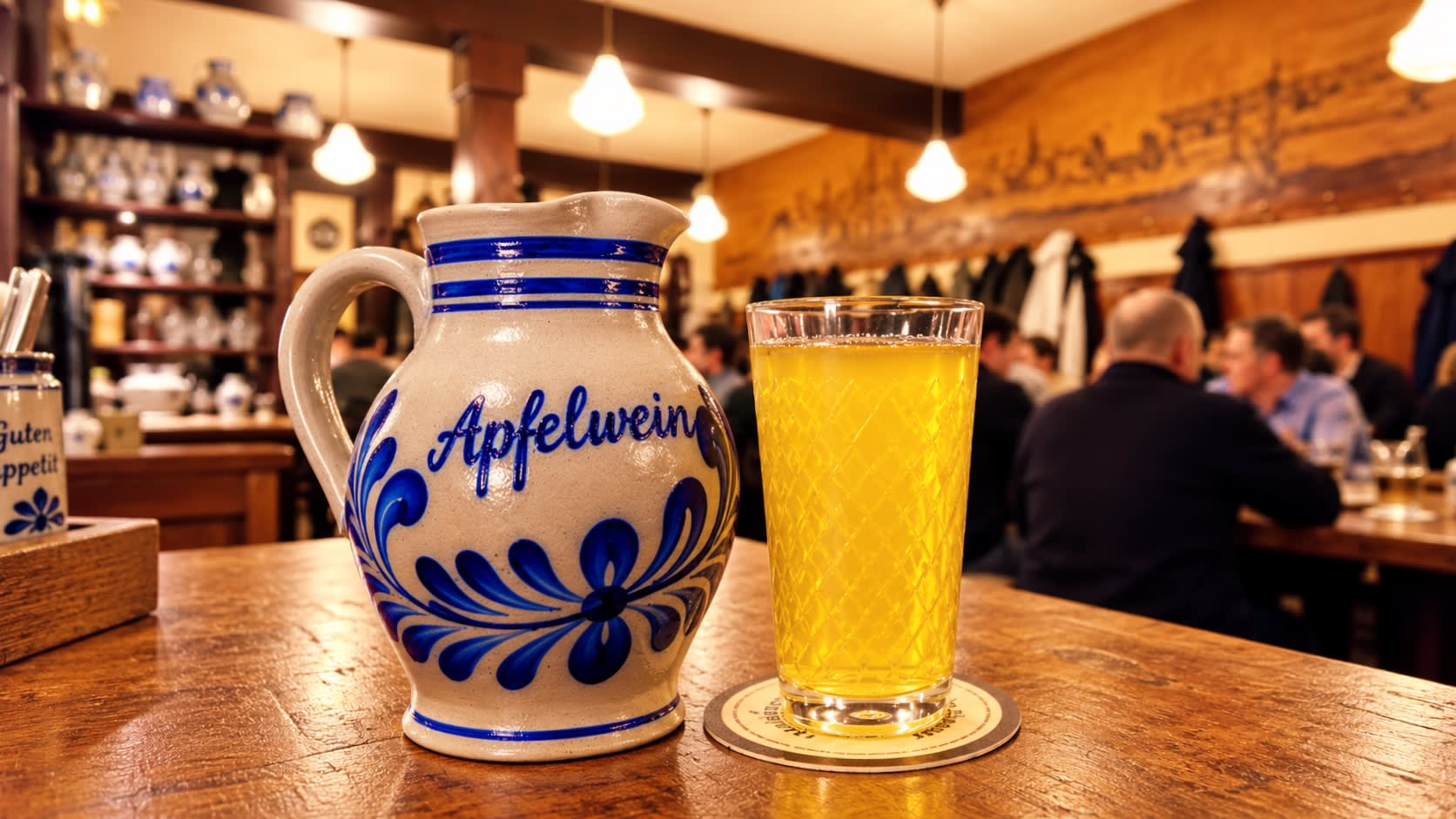
Before you've unfolded a menu or considered what to order at a traditional Apfelweinwirtschaften (apple wine tavern), a grey-and-blue stoneware jug lands on the table with quiet certainty. This salt-glazed stone jug is called a bembel. In Frankfurt, as I noticed, this isn't hospitality; it's an assumption.
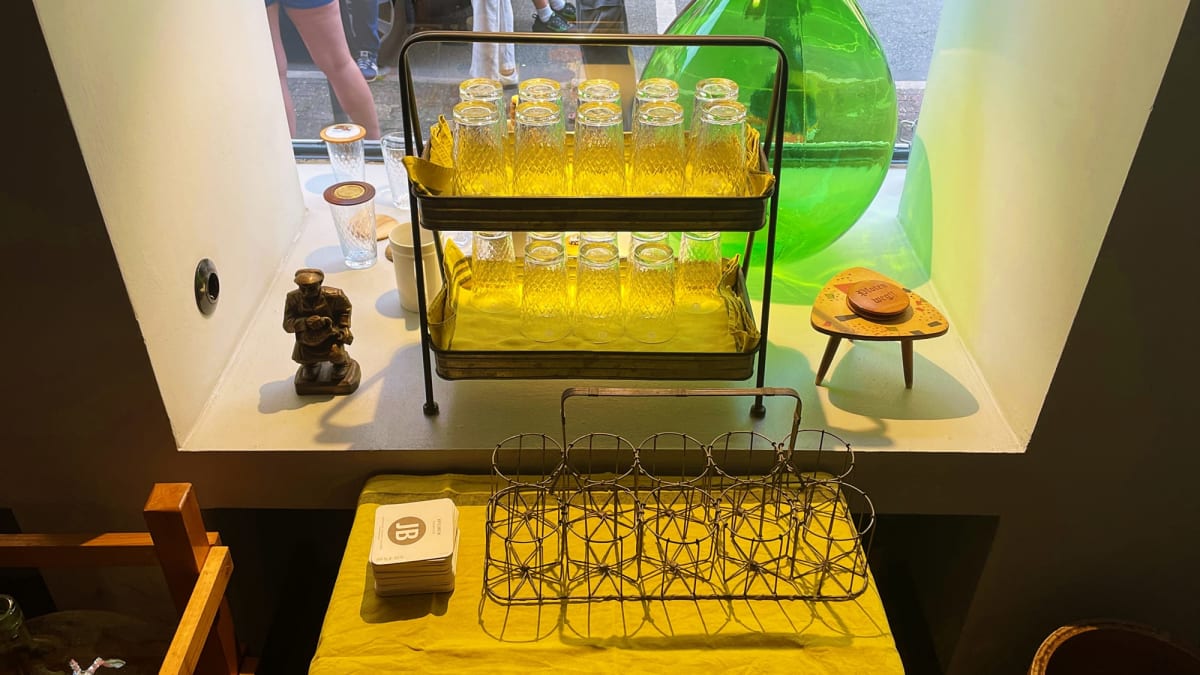
Pia Wagner, whose grandfather Adolf Wagner opened Apfelwein Wagner in 1931, tells me about bembel’s design: “This is how apple wine was kept cold centuries ago, long before refrigeration.” Served in a traditional diamond-patterned Geripptes (glass), my first Frankfurt Apfelwein was bone-dry and bracingly tart—miles away from the sugary ciders most people are used to. Far removed from the cloyingly sweet, fruit-driven ciders of mainstream popularity, its profile aligned decidedly toward the tart complexity of a Basque vintage. The sharpness of ‘Handkäse mit Musik,’ a traditional sour cheese, softened the wine's acidity. The drink’s acidity resets the palate in the same way a white wine might, only with more tannin.
The Logic of a Tart Sip
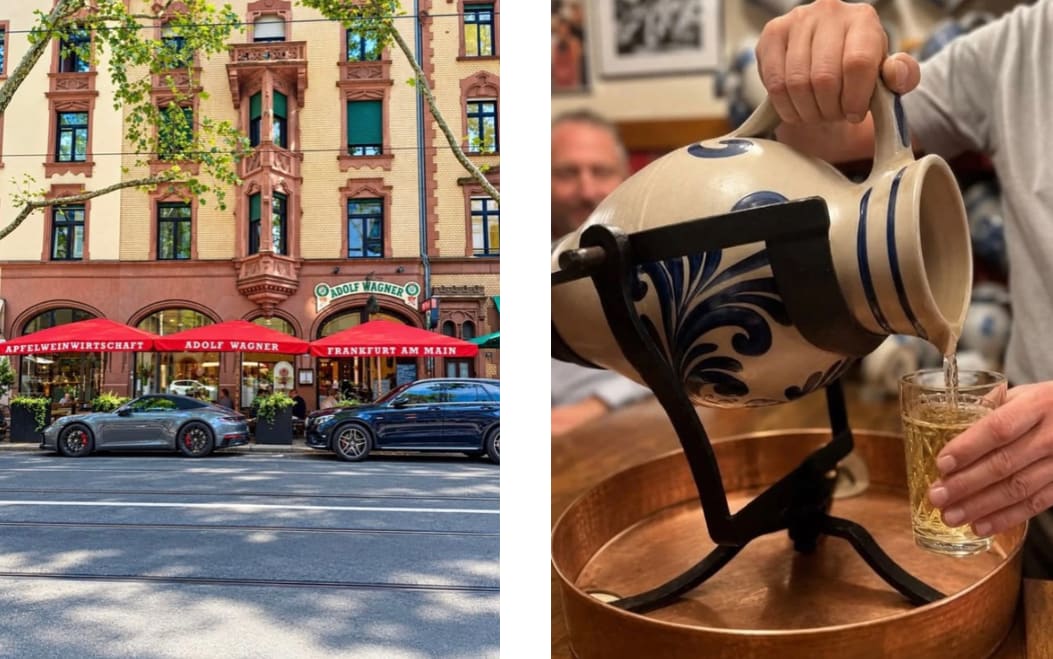
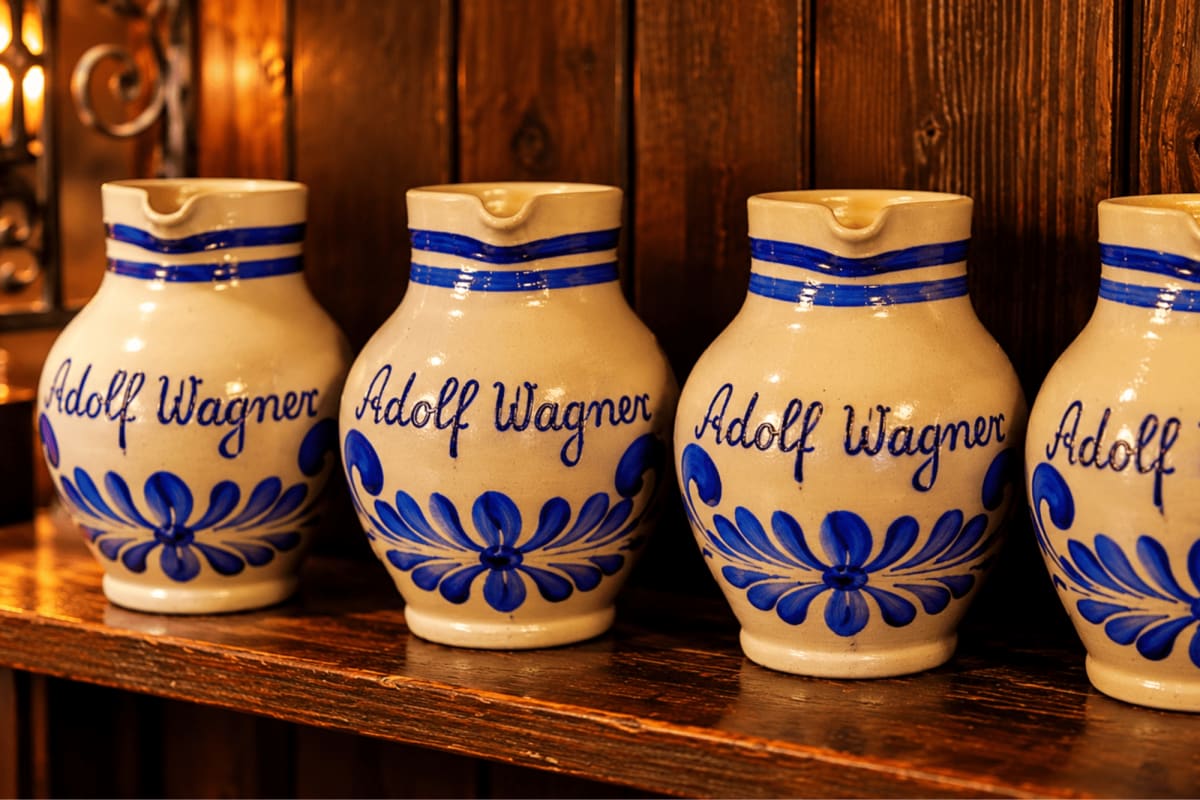
The first sip is a surprise. By the second sip, though, its logic begins to reveal itself. This isn't a drink meant to stand alone — it belongs at the table. The ritual predates Wagner itself. Across Sachsenhausen, historic taverns such as Fichtekränzi, founded in 1849, still begin a meal in much the same way — the bembel arrives before conversation turns to food. For Jens Becker, the third-generation owner of Apfelweinhandlung JB, continuity is less an inherited business than a family relationship with the fruit itself. His grandfather, Georg Cloos, established Germany's first dedicated Apfelwein store around 1915.
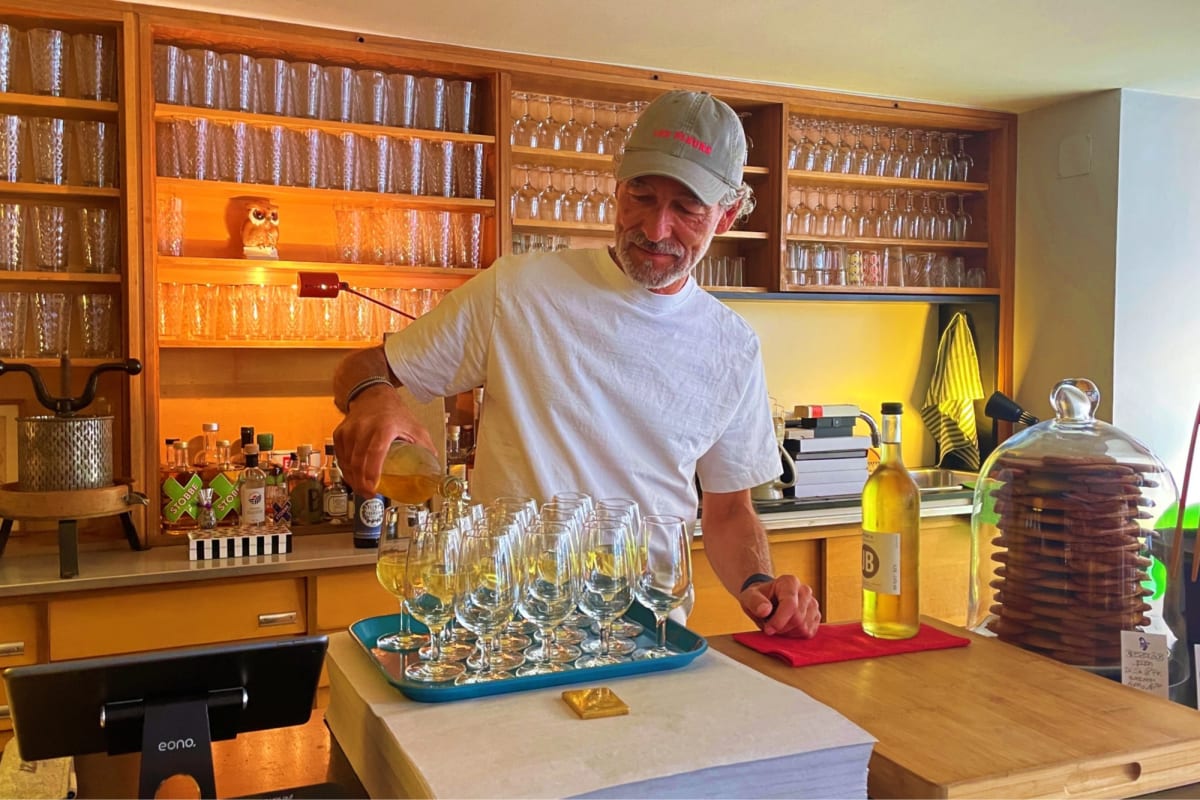
As a child, he helped his grandfather harvest apples from the family’s orchards near Bad Homburg. Today, he makes his own Apfelwein and runs a shop devoted to the drink. Becker's cellar explains why it still tastes recognisably Frankfurt. Long before Cloos opened his shop, Adam Rackles, a producer later named Hoflieferant (Purveyor to the Royal Court), helped standardise commercial production in Frankfurt. “The company played a major role in elevating the status of Frankfurt's regional apple wine during the late 1800s and early 1900s,” Becker tells me, showing me the original framed certificate, an heirloom piece of his family’s history.
Taverns That Made Apfelwein the Face of Frankfurt
Throughout the nineteenth century, Frankfurt's Apfelweinwirtschaftens became the public face of the drink, serving it by the bembel at long communal tables. Some of those businesses, including Fichtekränzi, Zur Buchscheer (1876), and later Adolf Wagner, still anchor Sachsenhausen's drinking culture today. Becker points to one small ritual that explains everything. “When you go to an Apple Wine restaurant,” he says, “you don't have to ask the waiter—get a glass. Or you want a bembel?” In a wine bar, the menu arrives first, offering dozens of labels and vintages. “But in an Apfelweinwirtschaften,” he says, “that is very un-Frankfurt.” Wine asks diners to choose. Apfelwein assumes belonging.
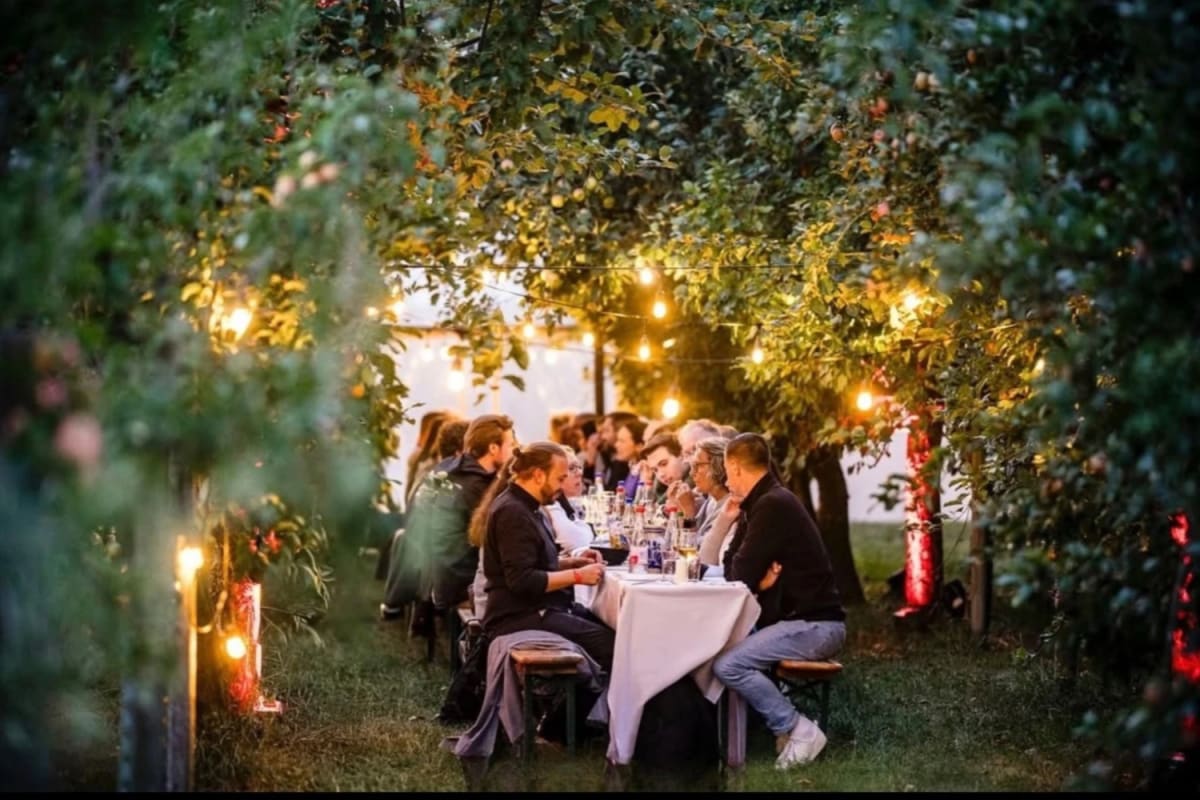
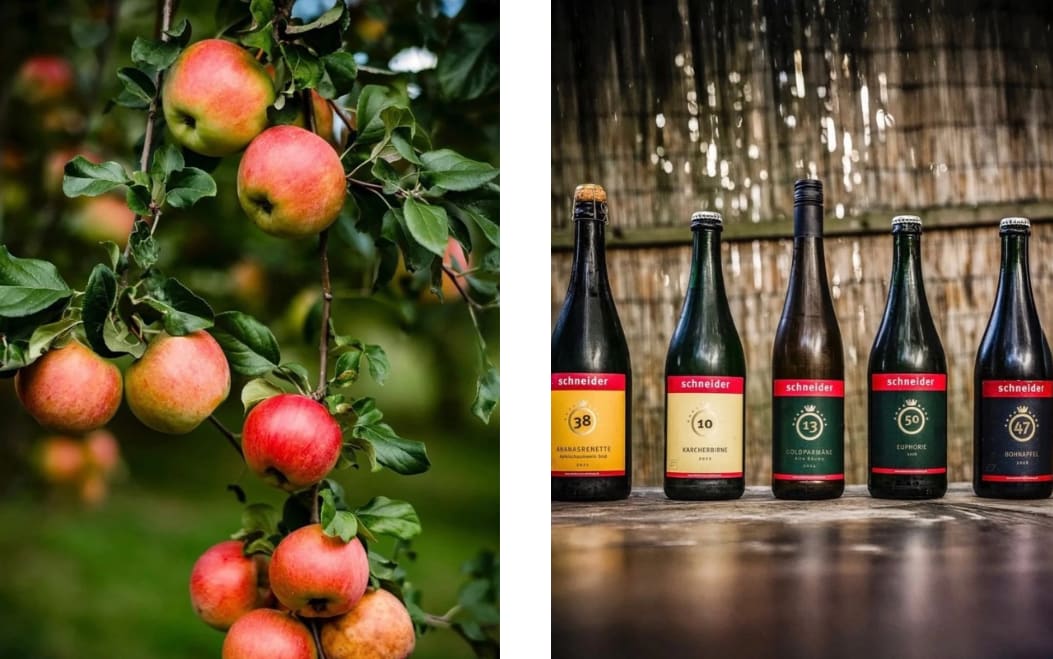
I saw that at Fichtekränzi, where long communal tables still continue to fill with regulars. But for a tasting experience held among the trees, head to Obsthof am Steinberg in Nieder-Erlenbach, where 9,000 apple trees grow across the orchard, representing around 150 varieties. The farm runs apple walks during the season from late August through October.
On Frankfurt's historic Lohrberg hill, the Main ÄppelHaus offers a brilliant look into the city’s apple culture. You can wander through their two-hectare orchard, which is packed with cherries, pears, berries, and heirloom apple varieties. Afterwards, head to the Äppel-Bistro to unwind over home-grown Apfelwein and traditional local dishes, all while taking in the views across the city.
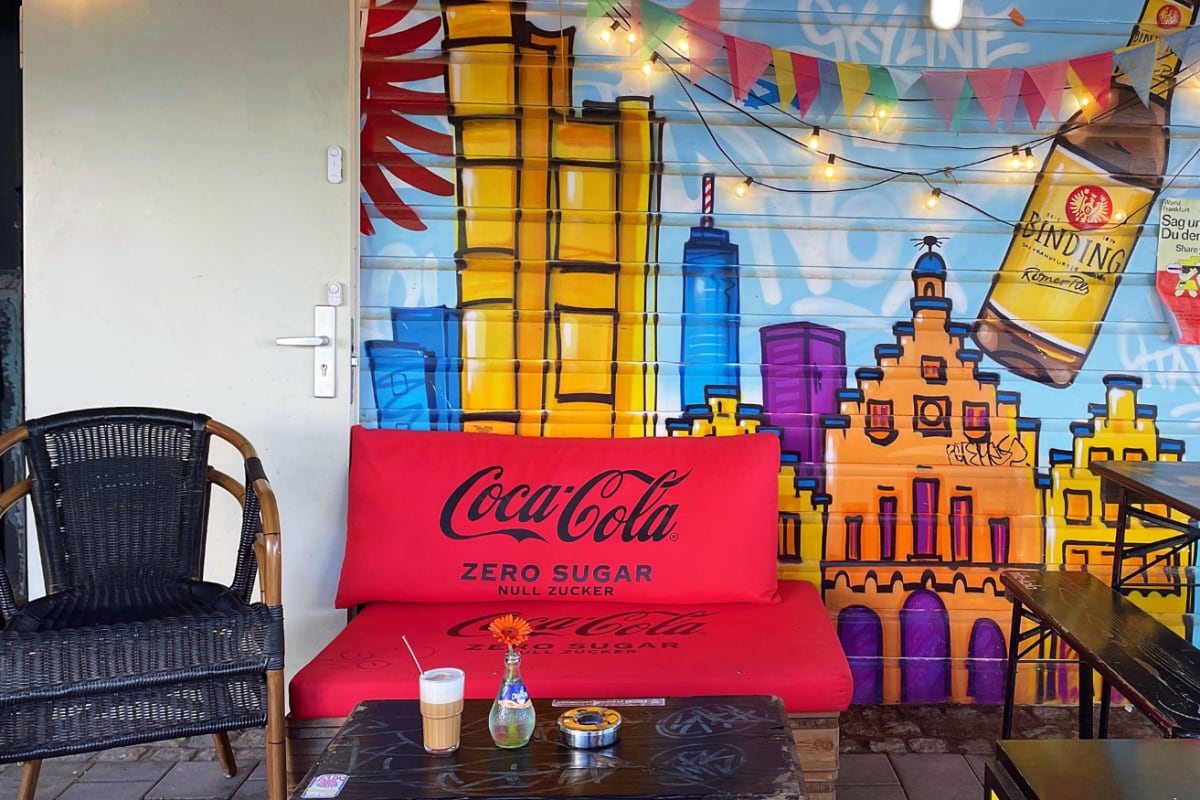
Back in Sachsenhausen, Zum Gemalten Haus has spent generations serving apple wine alongside Frankfurt classics to office workers and extended families. At Struwwelpeter, even the tavern’s identity folds around the drink — the Frankfurt children’s book character stares from the façade, while Schoppen and regional dishes fill the tables inside. One afternoon, I rounded off my visit to Palmengarten with Apfelwein and classic Frankfurter Rindswurst und Würstchen at Caféhaus Siesmayer. Then there’s Zur Buchscheer, which became known for making and serving its own Apfelwein. Together, these places offer a glimpse of the landscape behind Frankfurt's Apfelwein—the orchards, old varieties, and fruit that eventually find their way into the glass.
The Apples Behind The Wine
Becker says that orchards drew him beyond retail into production. “I approach Apfelwein with a winemaker's precision,” he says. His apples come from heritage orchards rather than high-density commercial plantings, where older varieties develop the layered aromatics that define classic Frankfurt cider. One bottling begins with a single heritage French variety, Gold Parmäne. Another blends eight heritage orchard apples with a small proportion of wild apples chosen not for sweetness but for structure.
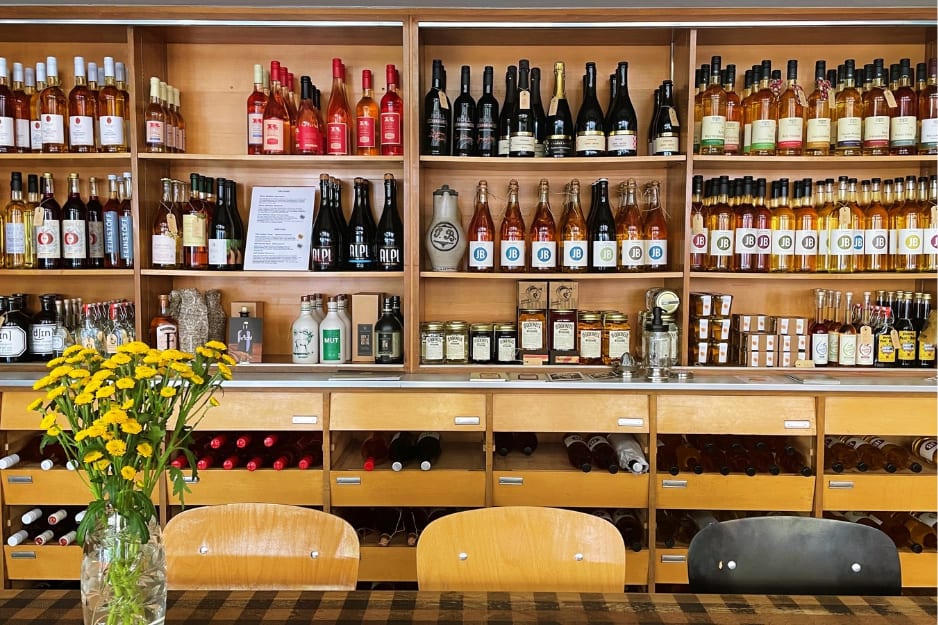
“The wild apple is very small,” Becker explains. “Very strong in tannin and very strong in acidity.” Those qualities allow him to balance each vintage naturally, adjusting texture and freshness through fruit selection rather than additives. Weather also determines sugar and acidity, but blending heritage fruit provides another layer of control. That attention continues in the cellar. Becker's portfolio relies on spontaneous fermentation driven by native yeasts — a process he notes is akin to natural winemaking. “Because I don’t use artificial yeast, my Apfelwein tastes like a natural wine,” he says.
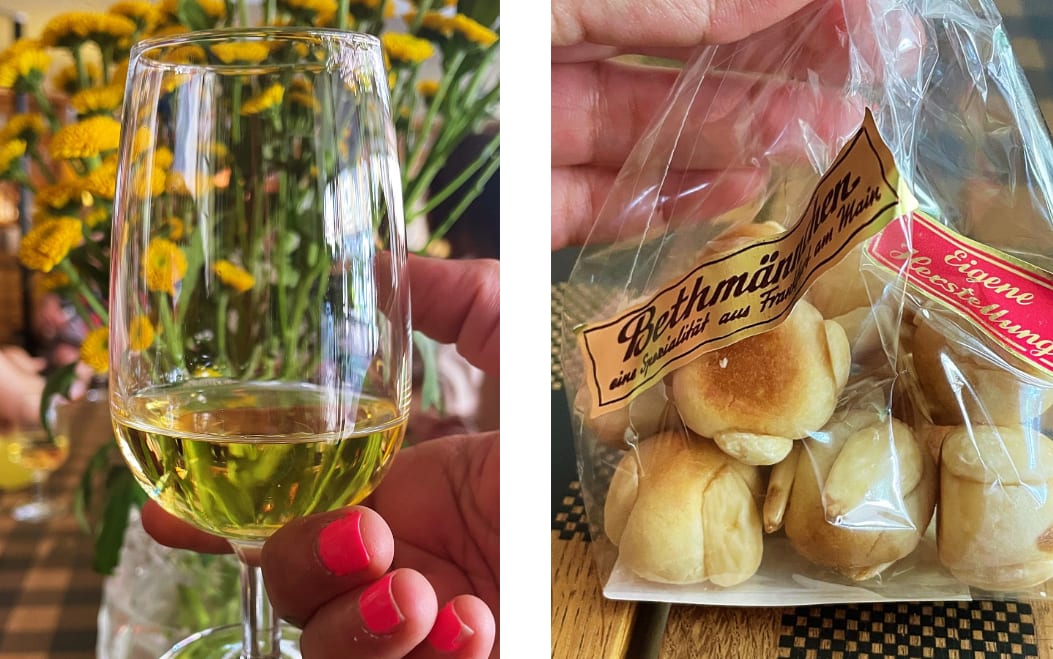
“Fermentation proceeds over three to eight weeks following the autumn harvest,” he says, “allowing the orchard rather than cultured yeast strains to shape the finished wine.” Rather than arresting fermentation through sulphur additions, Becker lowers the temperature of his jacketed fermentation tanks below 10 degrees Celsius, effectively putting the yeast to sleep. “I don't use much sulphur. It’s what causes a headache,” he adds. This clean, natural sharpness is exactly what makes the cider thrive in Frankfurt’s traditional tavern culture.
However, Frankfurt's apple wine culture doesn't end at the tavern door.
The Last Wasserhäuschen
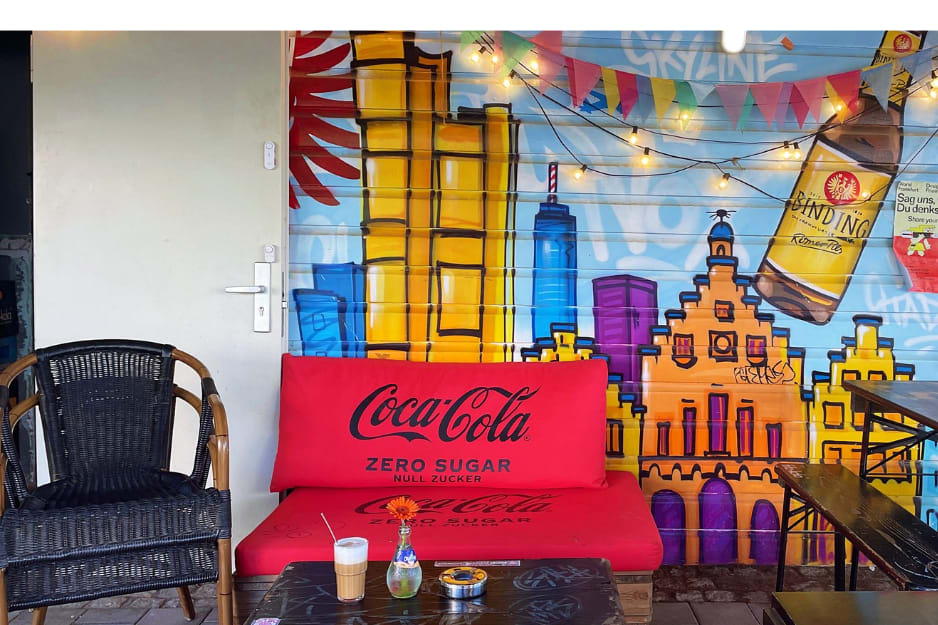
Scattered across Frankfurt are small octagonal kiosks known as Wasserhäuschen, or “water houses.” They initially provided clean drinking water, and gradually evolved into neighbourhood stores, selling everything from bread rolls and coffee to Apfelwein. “Wasserhäuschen were first established in the nineteenth century, often in front of office entrances,” explains local city guide Peter Nething. “They became social spots where people would stop before work, during their break, or afterwards.” As supermarkets and convenience stores expanded, most of these kiosks disappeared, with only around thirty remaining today. For Nething, their distinctive half-moon façades have become shorthand for a particular kind of neighbourhood life. “This was a social institution,” he says. "We want to keep it.”
Whether at Adolf Wagner, where the same family has run the tavern since 1931, or at older institutions such as Fichtekränzi and Zum Gemalten Haus, nobody begins with an explanation of native yeast or orchard varieties. Because long before indigenous yeasts, minimal-intervention cellaring, and heritage orchards became the jargon of the modern oenophile — Frankfurt had already established a drinking culture rooted in those very tenets. Never as a matter of fashion, but of sheer, time-tested utility.
Drink Like a Local
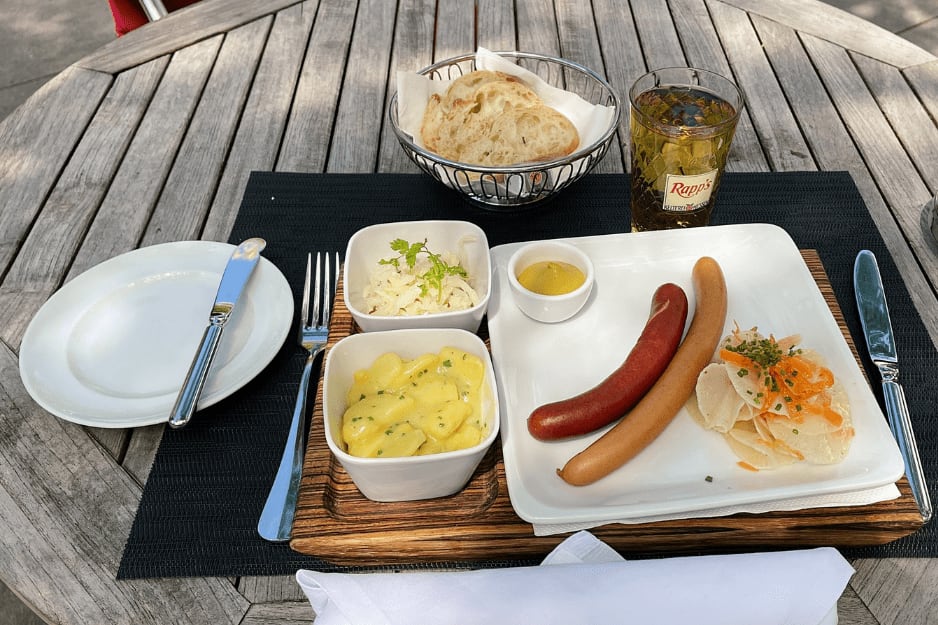
To experience this living history firsthand, order a bembel, not just a glass! Pair it with regional classics such as ‘Frankfurter Würstchen Sausages’, ‘Handkäse mit Musik (sour cheese with onions)’, Pork Schnitzel, Bethmännchen and ‘Grüne Soße (green sauce)’.