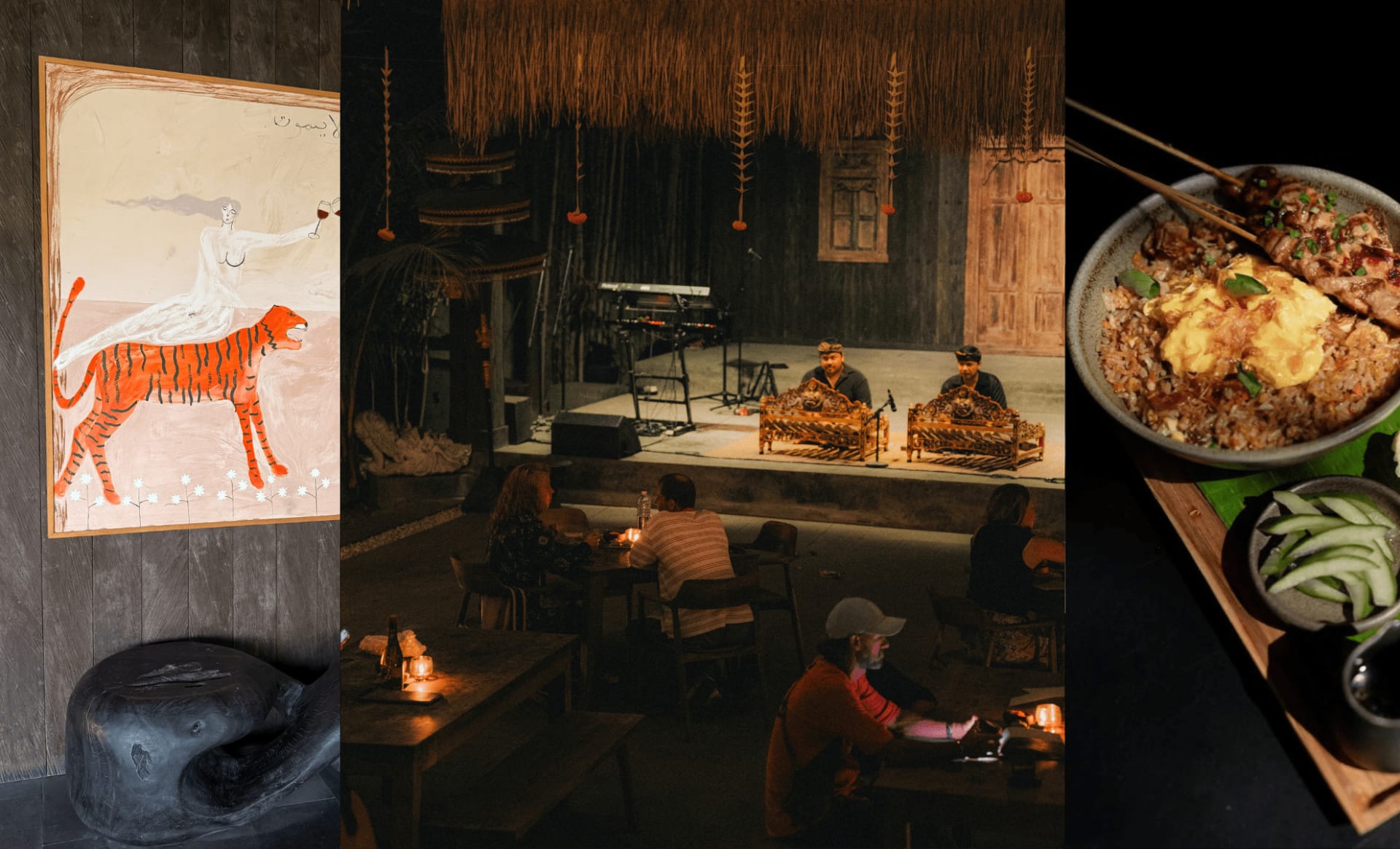
“I want to check out this shop,” my friend said, and that was how we found ourselves stepping into Ulu Shop. My attention immediately wandered to the pottery on display, each piece carrying its own charm. The woman at the store welcomed us and told us how the space celebrated local artisans, with every creation reflecting something of the island’s spirit. Intrigued, I walked out with a tote bag, while my friend picked up a few cosmetics made with local ingredients.
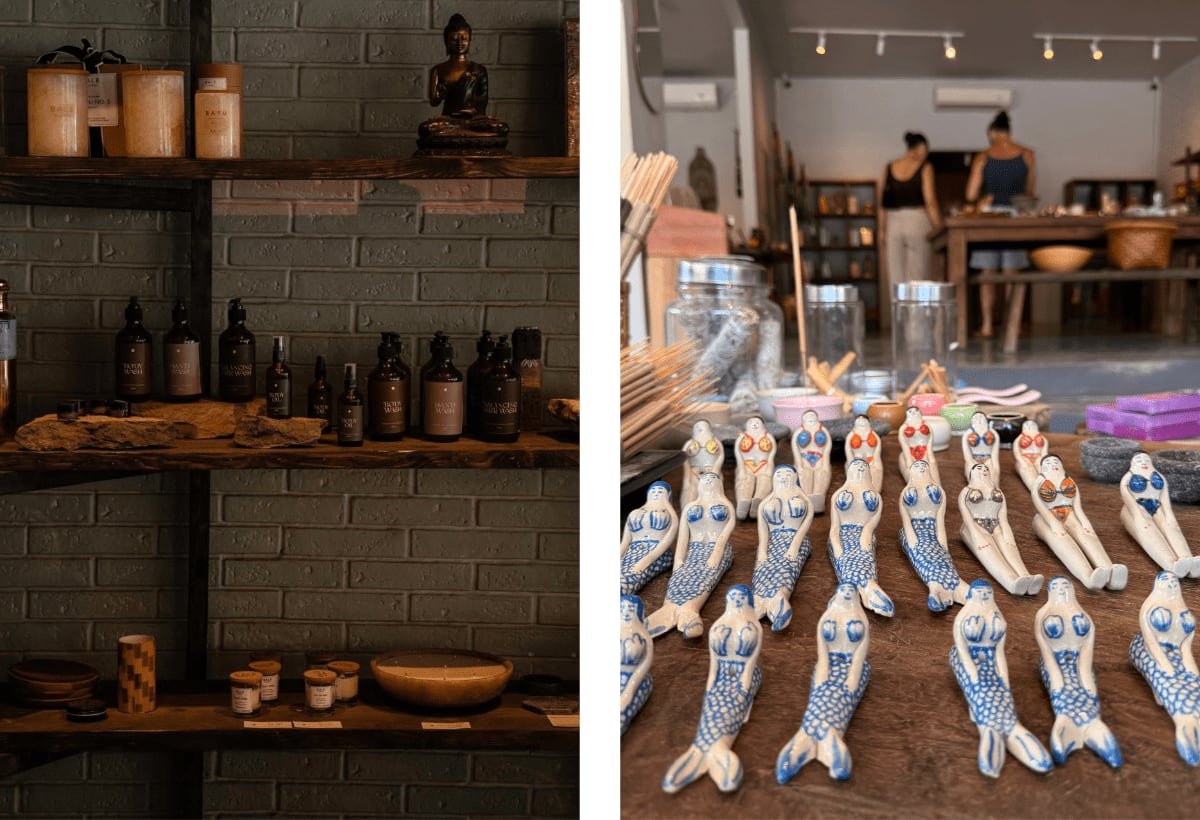
Just as we walked out, a sign beside the shop caught my eye: Nourish. Experience. Unite. Beyond it lay a space enveloped in green, its lush foliage offering a welcome respite from the afternoon heat. Having spent the morning soaking up the sun at Padang Padang Beach, we were looking for somewhere to settle down for brunch. Curious about what lay beyond the sign, we walked in, unaware that this little detour would lead us to another delightful discovery on the island.
A Contemporary Tropical Space Embracing Art
Uluwatu has no shortage of aesthetically pleasing spaces, but Ulu Garden stands apart for the philosophy behind its creation. At first glance, I could sense the love for Balinese culture woven into its design, finding expression in the architecture, artwork, and soulful connection with nature.
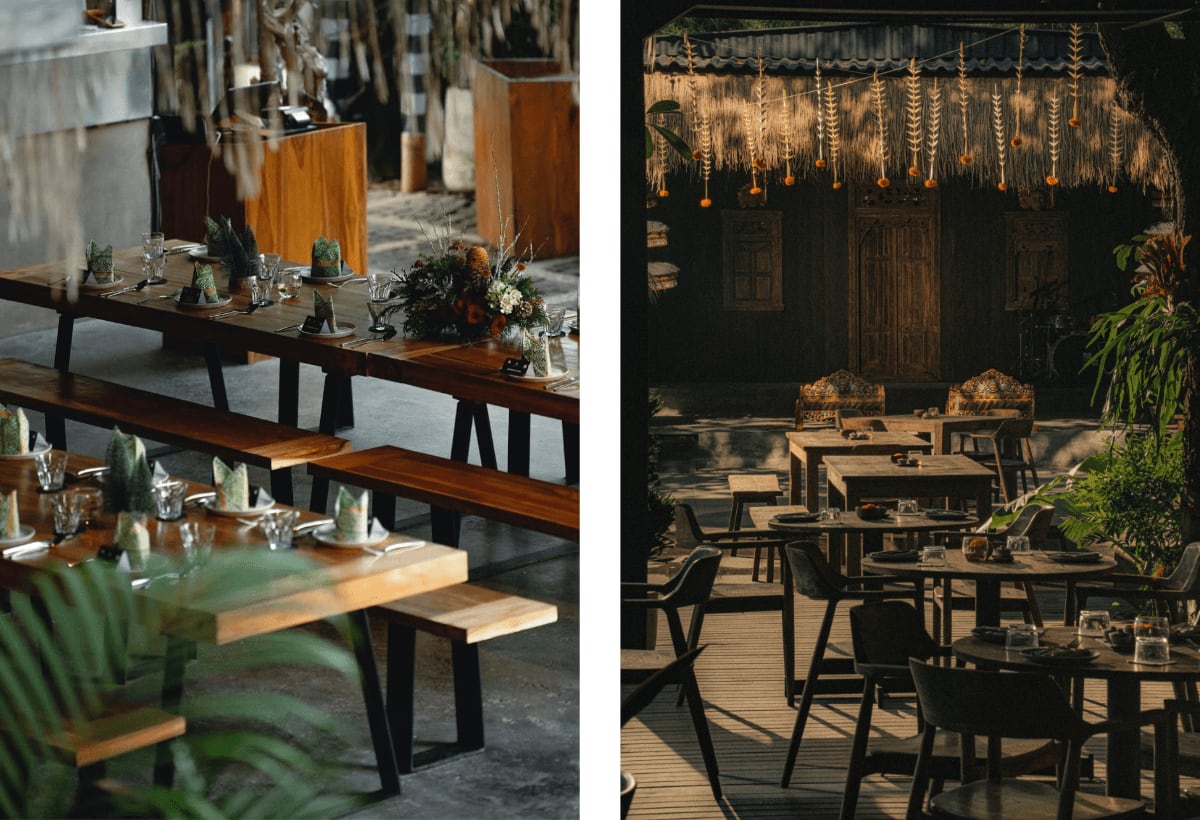
Conceived by Belgian-born Virginie Verellen and Wayan Armina, affectionately known as Armi, a Balinese native of Uluwatu, the restaurant brings together two cultural perspectives in a shared vision. The result is a contemporary tropical space that feels thoughtfully designed without losing its connection to the natural world. Sunlight filters through the canopy of trees, casting shifting patterns across the space, while cane furniture, natural textures, and warm timber lend the setting an earthy, understated charm. Art adorns the walls, adding character without competing with the greenery that remains its most striking feature.
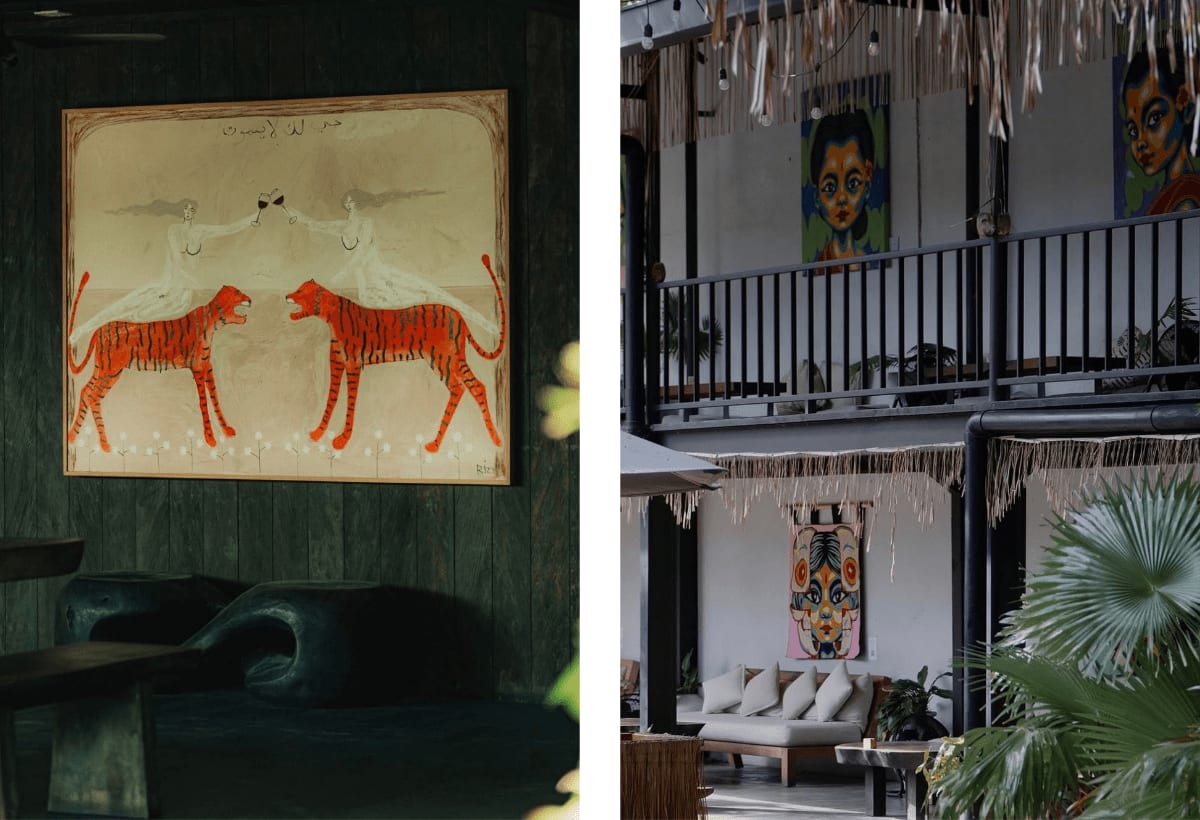
There is an easy fluidity to the space. The wooden deck, with its inviting work-friendly corners, draws those looking to settle down with a laptop and a cup of coffee, while the garden seating has a decidedly more laid-back appeal. Here, conversations linger, meals unfold at leisure, and the dappled afternoon light lends everything a mellow warmth. Whether you come to catch up on work, meet friends, or simply sit back and take in your surroundings, Ulu Garden encourages you to slow down and make yourself at home.

However, what’s on offer is not merely a visual experience. Sound and silence are integral parts of its identity, reflecting Armi’s deep connection to Balinese culture. At one end of the garden, there’s a dedicated stage that hosts traditional Balinese ensemble performances, with the resonant sounds of the gamelan bringing the island’s musical heritage to life. The intricate interplay of percussion and melody offers a reminder that these cultural traditions remain very much alive, while a drum kit nearby hints at the contemporary influences that find a home here, too.

As we settled at a table in the garden, I got talking to Mr Rasta from Ulu Tribe, who shared another interesting facet of the space’s story. Armi, it turns out, is also a reggae musician who performs with his band, Ulu Roots. It seemed fitting that a place shaped by the meeting of cultures should embrace music as another form of creative expression, allowing Balinese traditions and contemporary influences to coexist effortlessly. As the colours of dusk set in, the garden comes alive as the stage lights up for traditional performances or live bands playing well into the night.
With Nasi Goreng and Satay, Other Flavours Flowed Around the Table
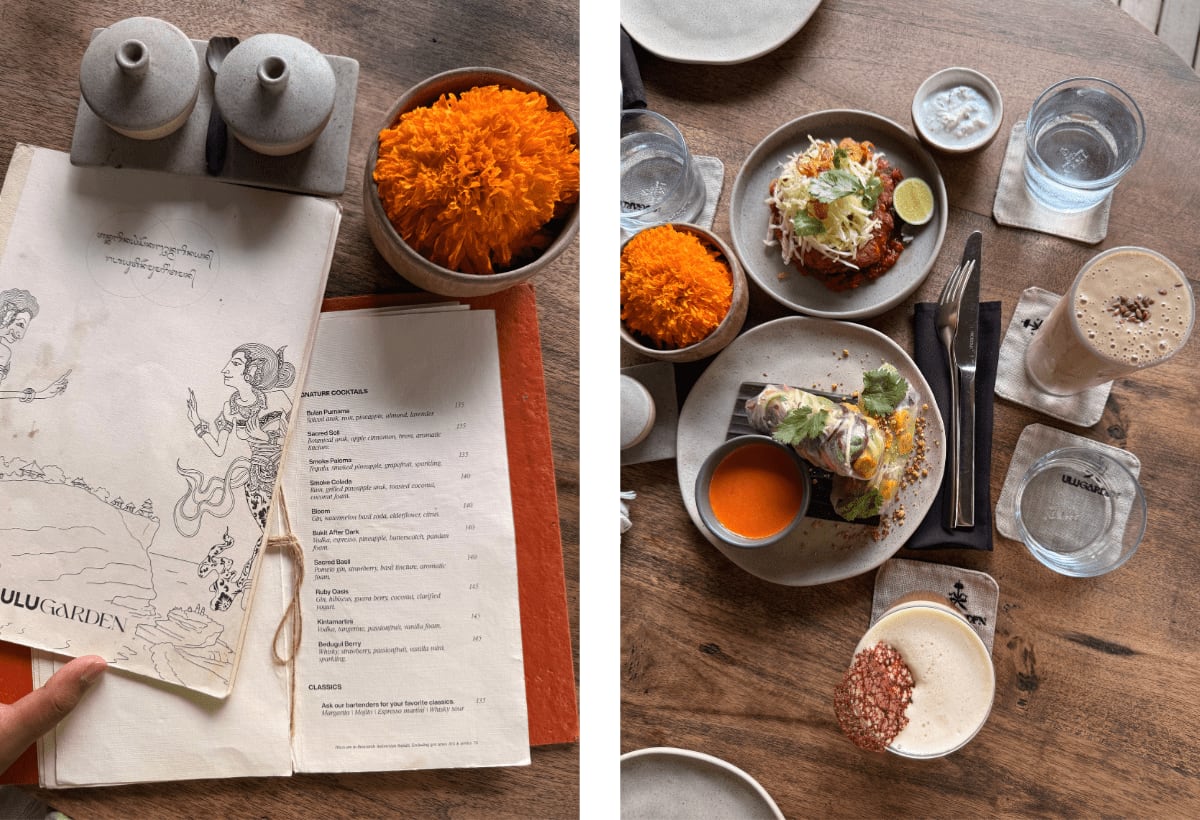
At Ulu Garden, the menu tells a story that extends beyond the familiar repertoire of Indonesian favourites. Rooted in Balinese culinary traditions yet open to influences from elsewhere, it brings together local ingredients and contemporary sensibilities, with an emphasis on freshness, flavour and the pleasure of sharing a meal. The approach feels thoughtful without being fussy, allowing the ingredients and their flavours to take centre stage.
When the menu arrived at our table, I found myself admiring its cover, adorned with Balinese artwork. It was a small but lovely detail, reflecting how the island’s artistic taste extends well beyond its galleries and craft shops. Turning to the drinks menu, I settled on ‘Sacred Soil’, one of the restaurant’s signature cocktails. After all, a leisurely afternoon in Bali seemed the perfect occasion for a little indulgence! Made with arak, a traditional Indonesian spirit, the drink brought together notes of apple, cinnamon and an aromatic tincture. The botanical flavours made for a refreshing first sip, while the warmth of the spirit lent it just enough character. My friend, meanwhile, had ordered a ‘Cocoa and Peanut-butter Smoothie’. Rich and creamy, it earned an immediate seal of approval from her. Between the two drinks, we had rather different ideas of an afternoon pick-me-up, but both seemed perfectly suited to the languid mood of the garden.
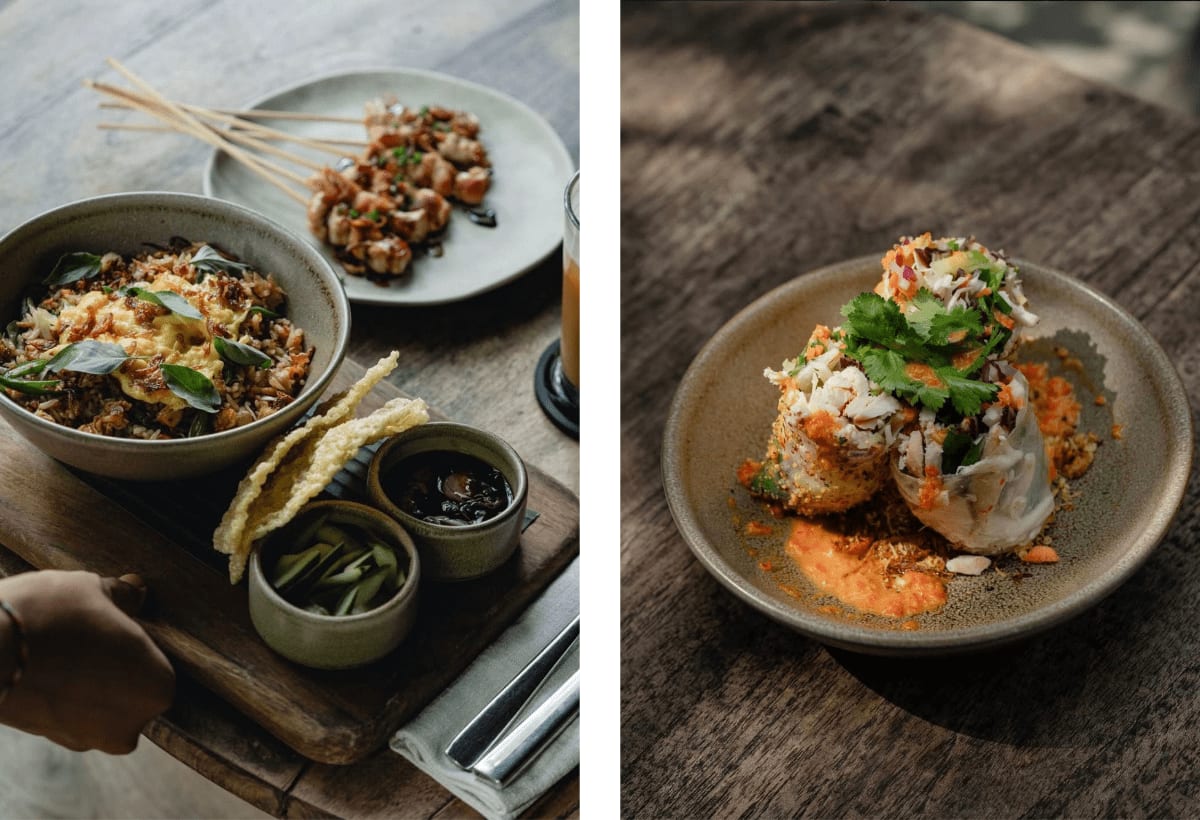
Dewi, from Ulu Tribe, stopped by to help us navigate the menu and recommended the ‘Fresh Rice Rolls’ and ‘Corn Fritters’ to begin with. The rolls arrived wrapped in delicate rice paper, their filling of fresh, organically sourced vegetables offering a crisp, clean bite. A squeeze of lime brightened the flavours, while a sweet lime dip on the side added a gentle citrusy contrast. Light and refreshing, they were just the sort of starter I craved after a morning spent under the Balinese sun. The corn fritters, by contrast, brought a little more indulgence to the table. Golden and crisp on the outside, they were served over sambal bajak, a cooked Indonesian chilli condiment traditionally associated with East Java. Unlike sambals that rely primarily on the sharp heat of raw chillies, this preparation develops its flavour through sautéed ingredients, resulting in a deeper, more rounded taste with savoury notes and a hint of sweetness. Its warmth complemented the fritters beautifully, lending an extra layer of flavour to each bite.
For our second course, we turned to two Indonesian classics I had been looking forward to: ‘Nasi Goreng’ with ‘Chicken Satay’. Crisp nori chips added an unexpected textural contrast, while sweet soy brought a gentle sweetness to the savoury flavours, giving these much-loved staples a contemporary touch. Then came the ‘Coconut Tofu’, one of the restaurant’s popular dishes. A comforting combination of coconut rice, sautéed tofu and fresh vegetables, it was served with a generous helping of sambal matah, a traditional Balinese condiment made with finely chopped raw shallots, fresh chillies, lemongrass, and garlic, brought together with warm oil.
It was the sambal matah that stole the show, delivering a lively interplay of sharpness, citrusy fragrance and heat. We found ourselves asking for several extra servings, its bright, piquant flavours adding a lively edge to every mouthful. What I loved most was how the different elements complemented one another without overwhelming the ingredients, allowing the familiar dishes to feel both comforting and unexpectedly fresh.
As we settled further into the afternoon, the food became part of the larger experience of Ulu Garden: generous, unhurried and best enjoyed in good company. There was no rush to move on to the next stop or tick another place off our Bali itinerary. We were content to let the conversation wander, share another bite and enjoy the garden around us.
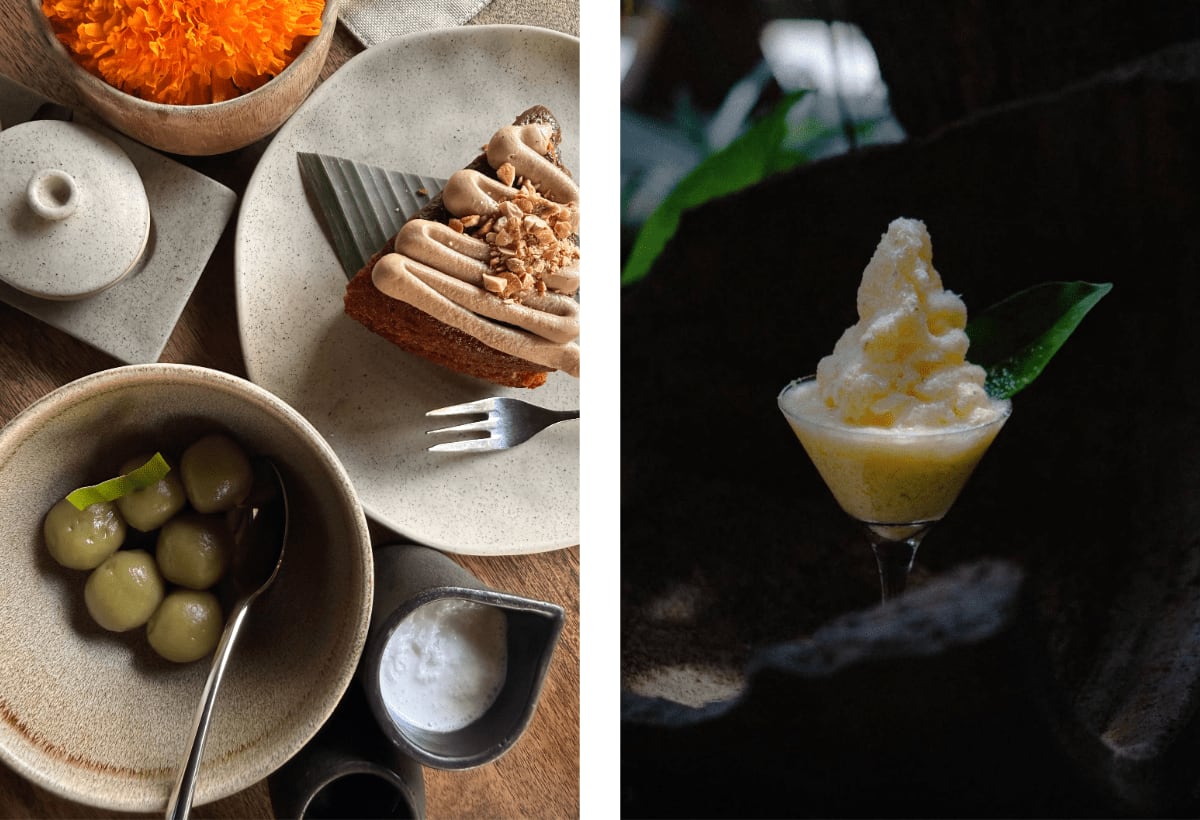
For dessert, Dewi came to our rescue once again, recommending the ‘Klepon Bowl’, a playful interpretation of the traditional Indonesian sweet. Made with pandan-infused mochi, coconut cream and palm sugar, it brought together flavours and textures I had never quite experienced before. The mochi had a gentle chewiness, the pandan lent its fragrant sweetness, and the palm sugar added a rich, caramel-like depth, all softened by the creaminess of coconut. Alongside it came a slice of carrot cake, soft and spongy, served with cashew cream. It was a lovely way to round off our meal, with both desserts offering their own take on indulgence.
Beyond the Table, A Journey into Balance and Wellbeing
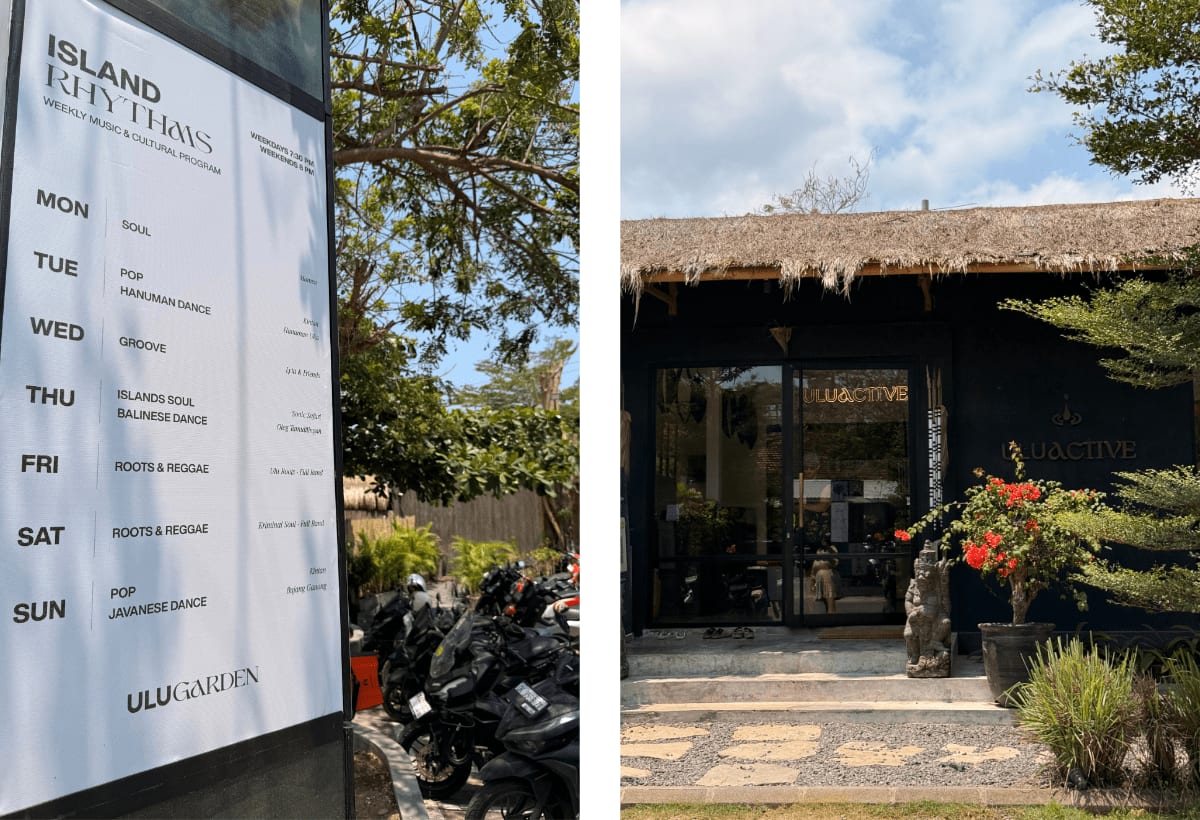
Just as we were settling into that post-dessert contentment, Mr Rasta offered to show us another side of the Ulu Tribe experience. We followed him to Ulu Active, a dedicated fitness space equipped with a gym and areas for movement sessions, including yoga and Pilates. It felt like a natural extension of Ulu Garden’s philosophy, where nourishment extends beyond what is on the plate to encompass the care of the body and mind.
And there was more to discover! Mr Rasta told us about the upcoming Ulu Spa before taking us around an inviting in-house sauna, complete with an ice pool and a heated plunge pool. The contrast between hot and cold offered another way to unwind after a day spent exploring Uluwatu, adding to the range of experiences available within the space.
It became clear that the space was envisioned as more than a collection of dining and lifestyle spaces. In my conversations with Mr Rasta and Putri, the Marketing Director, I learnt that for Armi, it all comes down to the essence of being human. Through music, he draws on ancestral wisdom; through food, he celebrates the simple act of nourishing life; and through community, he hopes to preserve the warmth and sincerity so deeply rooted in the Balinese spirit. As Ulu Garden continues to evolve, this philosophy remains its guiding force, bringing together people and nature, art and spirit, and the traditions of the East with the influences of the West. Perhaps that was what made our afternoon here so memorable.
What began as a spontaneous search for a brunch spot turned into an introduction to a place where every element seemed to tell a larger story, inviting us to slow down, reconnect, and discover a side of Bali that lies beyond its familiar postcard images.