
In Copenhagen, wellness is not treated as an indulgence reserved for weekends or luxury escapes. It is embedded into the city’s culture, shaped by its relationship with nature, design, and the Scandinavian philosophy of balance. Long before wellness became a global industry, Nordic traditions embraced cold water immersion, communal saunas, and the restorative power of slowing down.
Now, a new generation of wellness spaces is reimagining those rituals for modern travellers, and few places capture that evolution quite like CopenHot. Set along the waterfront on Refshaleøen, Copenhagen’s former industrial shipyard district turned creative enclave, CopenHot offers a distinctly contemporary interpretation of Nordic wellbeing. It is first-of-its kind yet understated, design-conscious and deeply elemental.
When we arrived on a crisp afternoon in the month of May, the atmosphere already carried a quiet buzz. The space was lively without feeling overwhelming, filled with a mix of locals, couples, and travellers who all seemed to have gathered to slow down. Conversations drifted through the steam, firewood crackled nearby, and the contrast between the icy harbour air and the warmth radiating from the saunas created an atmosphere that felt both energising and deeply calming at the same time.
We had deliberately booked a late afternoon slot so we could watch the sunset from the hot tubs, and it turned out to be the perfect decision. As daylight began to soften across the waterfront, the harbour reflected muted shades of gold and grey, steam rose dramatically into the evening air, and the entire setting took on the kind of cinematic atmosphere Copenhagen does so effortlessly well.
A Wellness Destination Rooted in Place
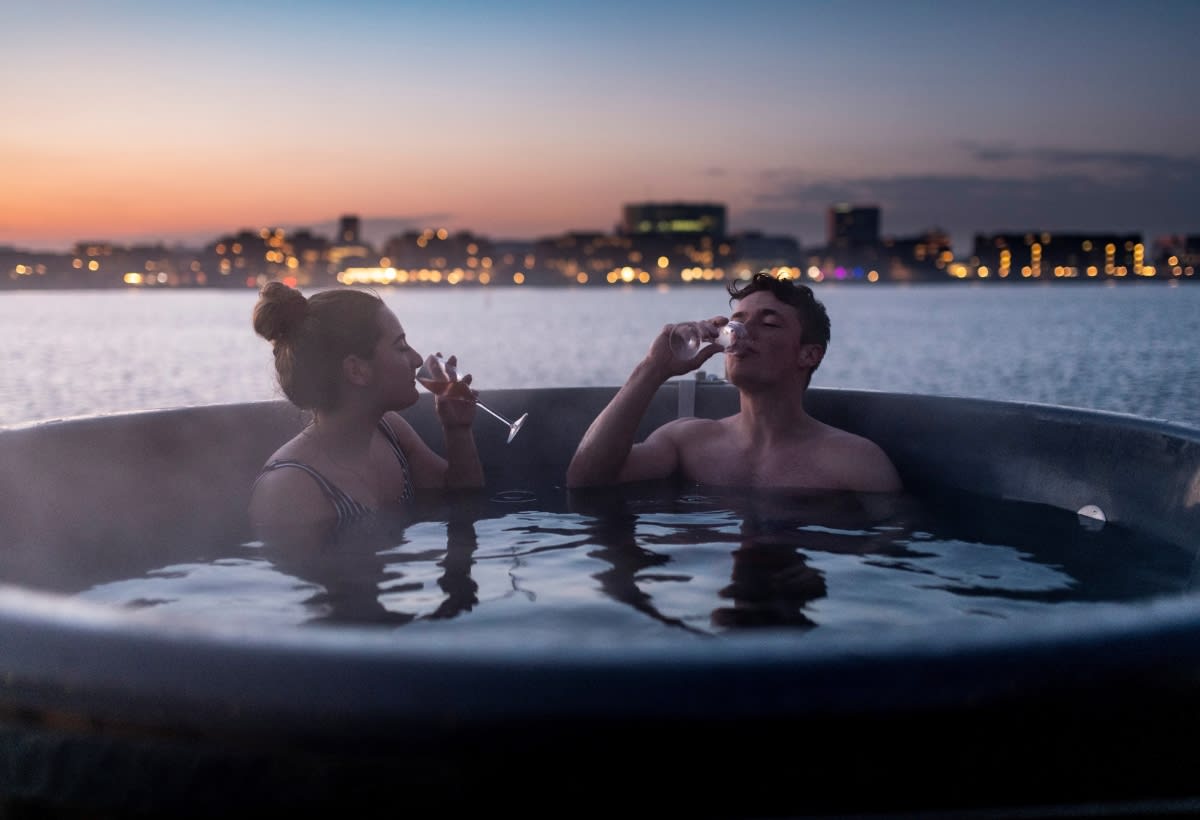
What immediately distinguishes CopenHot is its setting.
The neighborhood of Refshaleøen has undergone a remarkable transformation in recent years. Once defined by shipyards and heavy industry, the area is now home to creative studios, experimental restaurants, cultural spaces, and some of Copenhagen’s most progressive hospitality concepts. Yet traces of its industrial past remain everywhere, creating a landscape that feels raw, textured, and unmistakably Nordic.
Against this backdrop, CopenHot’s steaming outdoor hot tubs and wood-fired saunas feel both novel and entirely natural.
The concept is built around what the founders describe as New Nordic Wellness, offering wilderness-inspired wellness facilities, placed within an urban environment. Rather than recreating the polished atmosphere of a conventional luxury spa or an indulgent sauna space, CopenHot embraces the earthy elements. Firewood heats the saunas and hot tubs, cold harbour winds move through the open air spaces, and guests transition between intense warmth and icy plunge pools as part of the traditional Scandinavian bathing ritual.
The experience feels intentionally unrefined in the most sophisticated way possible. There is luxury here, but it is found in atmosphere, authenticity, and connection rather than excess.
‘Little Siberia’ and Copenhagen’s Industrial Legacy

The name itself carries local history. Years ago, shipbuilders working on Refshaleøen referred to this particular area as ‘Little Siberia’ because it was considered the coldest part of the island, exposed to relentless harbour winds throughout the winter months. Rather than distance itself from that industrial heritage, CopenHot chose to preserve it. Today, Little Siberia has been transformed into a striking wellness space where fire-heated hot tubs, rustic saunas, and oversized cold plunge pools sit against a backdrop of steel structures and harbour views.
The contrast defines the experience. Steam rises into the cold Nordic air while guests move between heated pools and freezing water plunges. Industrial architecture frames the waterfront while candlelight and firewood soften the atmosphere. It feels immersive rather than curated, allowing the surrounding environment to become part of the ritual itself. In many ways, Little Siberia encapsulates Copenhagen’s ability to reinvent former industrial spaces without erasing their identity.
The Garden Hot Tub Experience
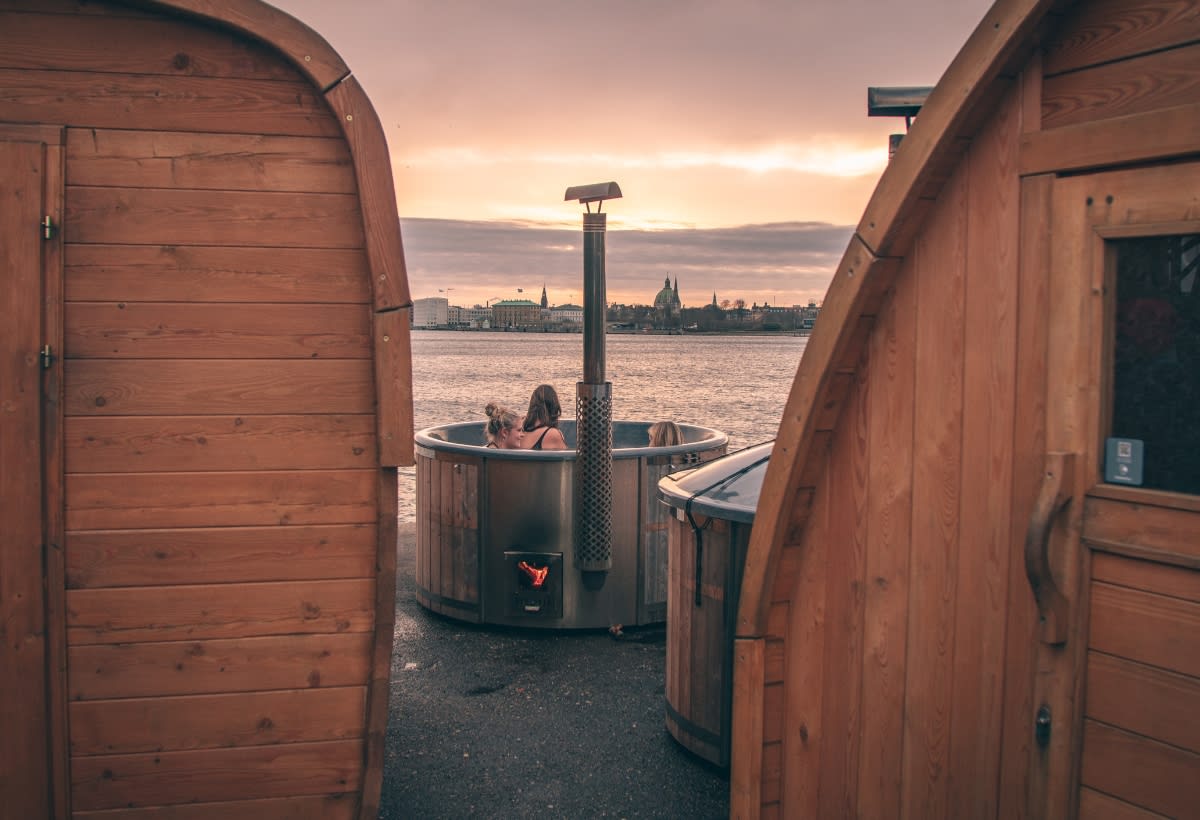
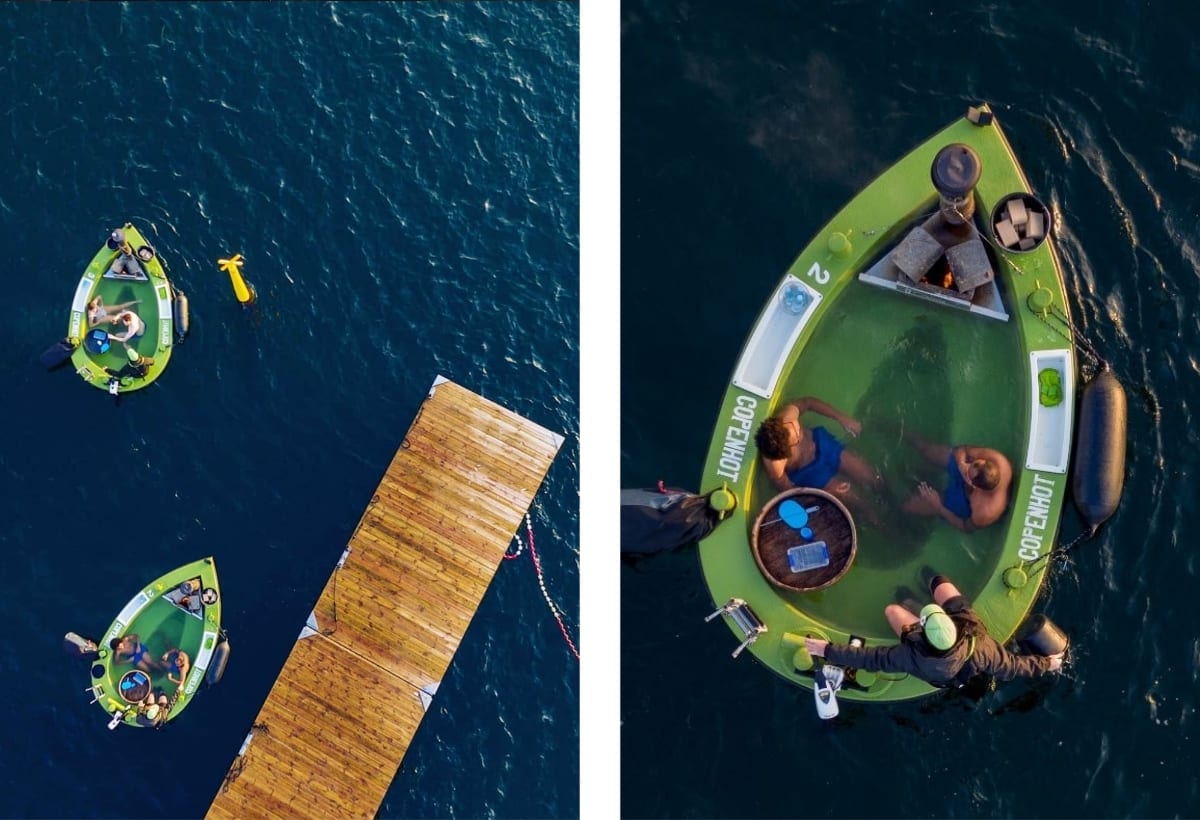
Located within Little Siberia, the experience invites guests to spend ninety minutes in a 40°C fire-heated outdoor hot tub overlooking the harbour. Each tub accommodates up to five or six guests and is booked privately, creating an atmosphere that feels intimate and relaxed from the moment you arrive. I visited with my partner and a couple of friends, and it quickly became one of the most memorable experiences of our time in Copenhagen. Before settling into the hot tubs, we grabbed a couple of beers from CopenHot’s in-house bar, and as the evening light began to shift over the harbour, the atmosphere transformed completely. Steam drifted into the cold air, the industrial skyline softened into silhouettes, and the warmth of the water contrasted sharply with the winter temperatures outside. There was something deeply calming about the entire experience, despite the dramatic surroundings.
The Scandinavian Sauna Tradition And More
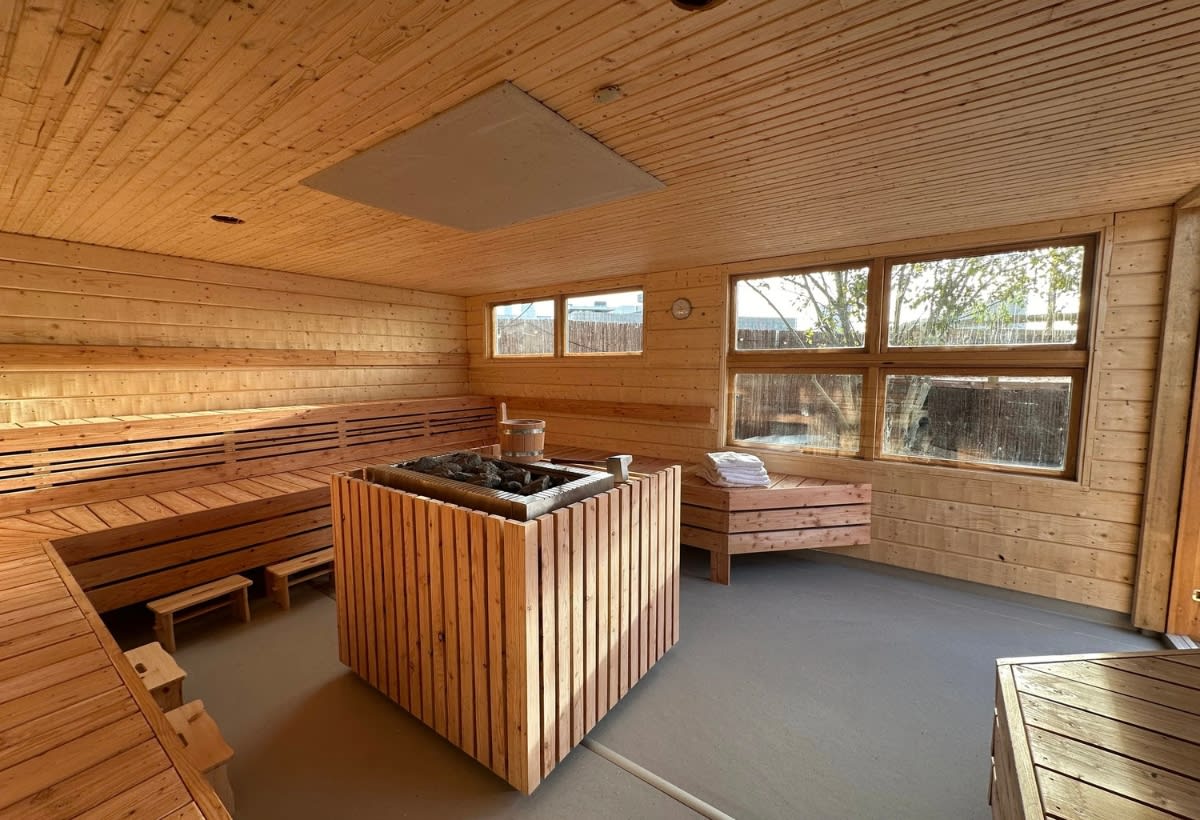
For visitors seeking a more traditional Nordic sauna experience, the Dragon Sauna offers a deeper connection to Scandinavian bathing culture. Unlike modern temperature-controlled saunas, guests are responsible for maintaining the fire themselves. Feeding the wood-burning stove becomes part of the ritual, allowing guests to regulate the heat throughout the session and engage more directly with the experience.
The Sauna Hut and the Appeal of Simplicity
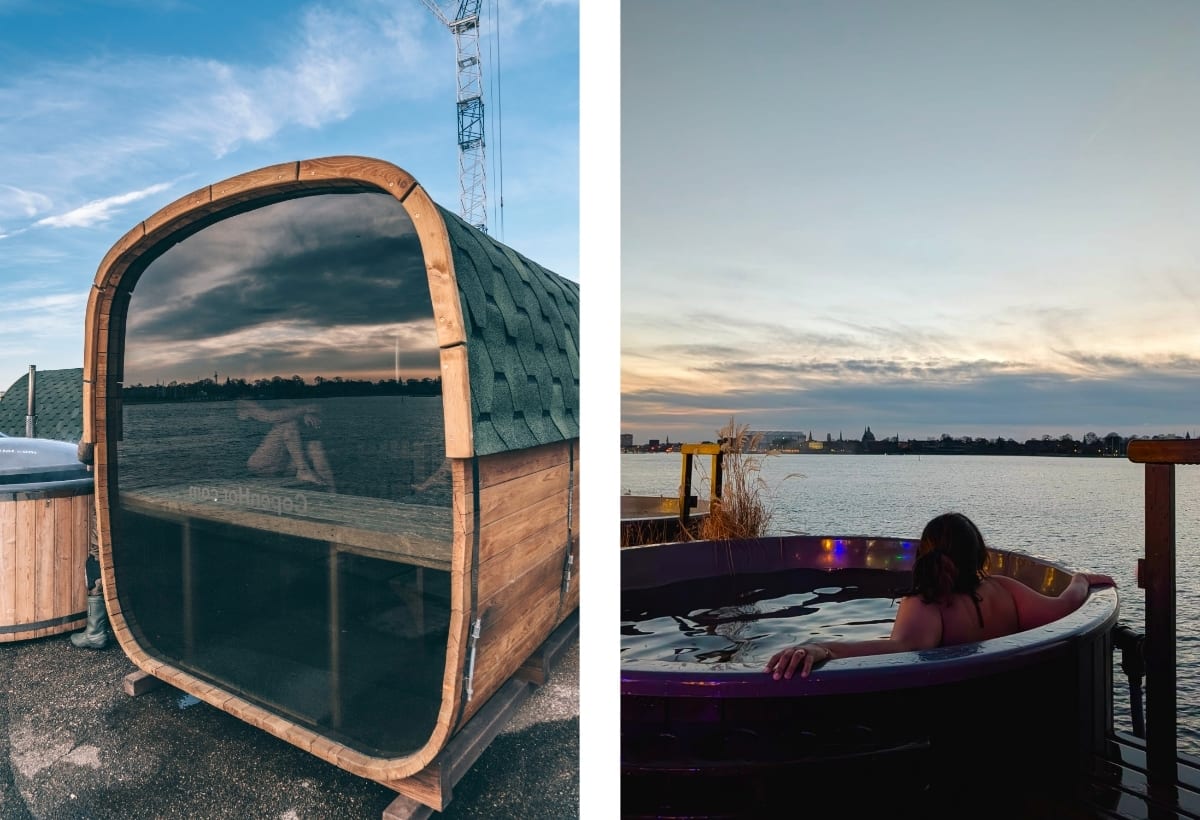
Positioned beside the cold plunge pool within CopenHot’s garden, the small wooden hut is designed for two people and has become one of the venue’s most booked experiences. Rustic and understated, it strips wellness back to its essentials: warmth, silence, and stillness. For couples, especially, the experience feels deeply restorative. Without distractions or excessive design interventions, the focus remains entirely on the sensory rhythm of heat, cold, and calm. It reflects one of the defining qualities of Scandinavian hospitality: the understanding that simplicity, when executed thoughtfully, can feel far more luxurious than excess.
A Different Perspective of Copenhagen
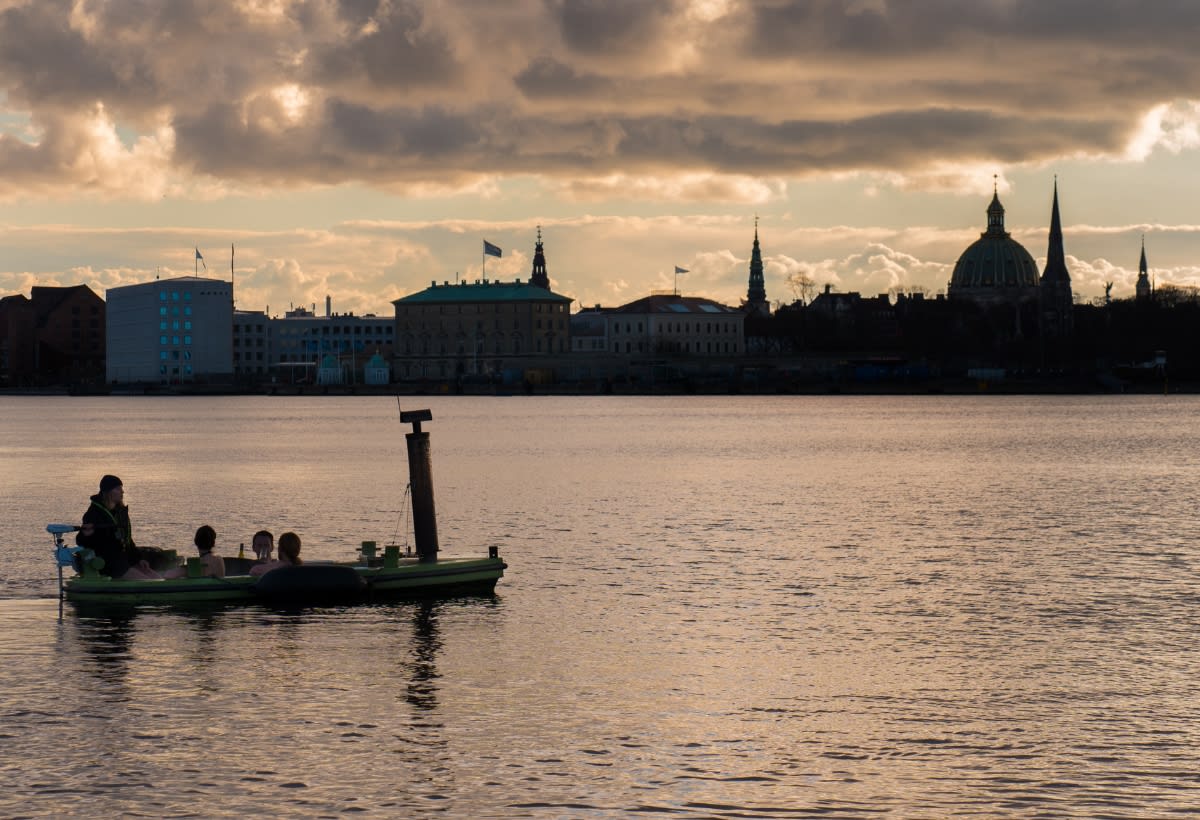
The beautifully restored Sloep Tour Boat offers private canal experiences through Copenhagen’s harbour, accommodating up to eleven guests with a captain included. Unlike larger sightseeing cruises, the atmosphere feels personal and unhurried, allowing guests to experience the city from its most defining perspective.
Of course, CopenHot’s floating hot tub boats remain among its most iconic offerings. Drifting slowly through Copenhagen’s canals while immersed in steaming water beneath the Nordic sky is the kind of experience that feels uniquely tied to the city itself. It captures Copenhagen at its best: relaxed, design-driven, quietly adventurous, and deeply connected to the water.
The Future of Nordic Wellness
What makes CopenHot particularly relevant today is its understanding of how modern wellness is evolving.
Millennial and Gen Z travellers are increasingly drawn toward experiences that feel immersive, local, and emotionally resonant rather than traditionally luxurious. They seek spaces that combine design, sustainability, community, and authenticity in ways that feel natural rather than performative.
CopenHot succeeds because it embodies those values effortlessly.
Its near CO2-neutral operations, reliance on firewood heating, and connection to Copenhagen’s industrial landscape all contribute to an experience that feels rooted in place rather than detached from it.
Whether soaking in a fire-heated hot tub at sunset, stepping into icy plunge pools beneath winter skies, or warming up inside a rustic sauna as harbour winds move through Refshaleøen, the experience encourages guests to slow down and engage fully with their surroundings. And underlying the entire experience is the unmistakable influence of hygge, the Danish philosophy centered around comfort, connection, and mindful enjoyment. In a city celebrated for its ability to balance innovation with quality of life, CopenHot feels entirely emblematic of contemporary Copenhagen itself.