If alternative medicine had a glamorous cousin with a wellness obsession and an uncanny ability to read your body like a detective novel, it would probably look a lot like Tulåh Life.
At this futuristic wellness retreat in Calicut, Kerala, health is not viewed as a collection of unrelated complaints but as a deeply interconnected ecosystem, where stress, sleep, gut health, immunity, metabolism, muscle function, and even your state of mind are quietly conspiring behind the scenes. Founder Faizal Kottikollon believes that most medical reports reveal only fragments of the story.
Tulåh’s answer is a formidable 95-page, patent-backed health report that pieces those fragments together into a comprehensive picture of wellbeing. Rather than presenting guests with a series of mildly alarming numbers, the report generates an integrated health score designed to help them understand their bodies as a whole. The data is then archived on the Tulåh app, creating a personalised health record that evolves over time.
But before embarking on any grand journey towards healing, one must first persuade the mind to stop behaving like an overworked browser with 47 tabs open.
Enter Sonorium.
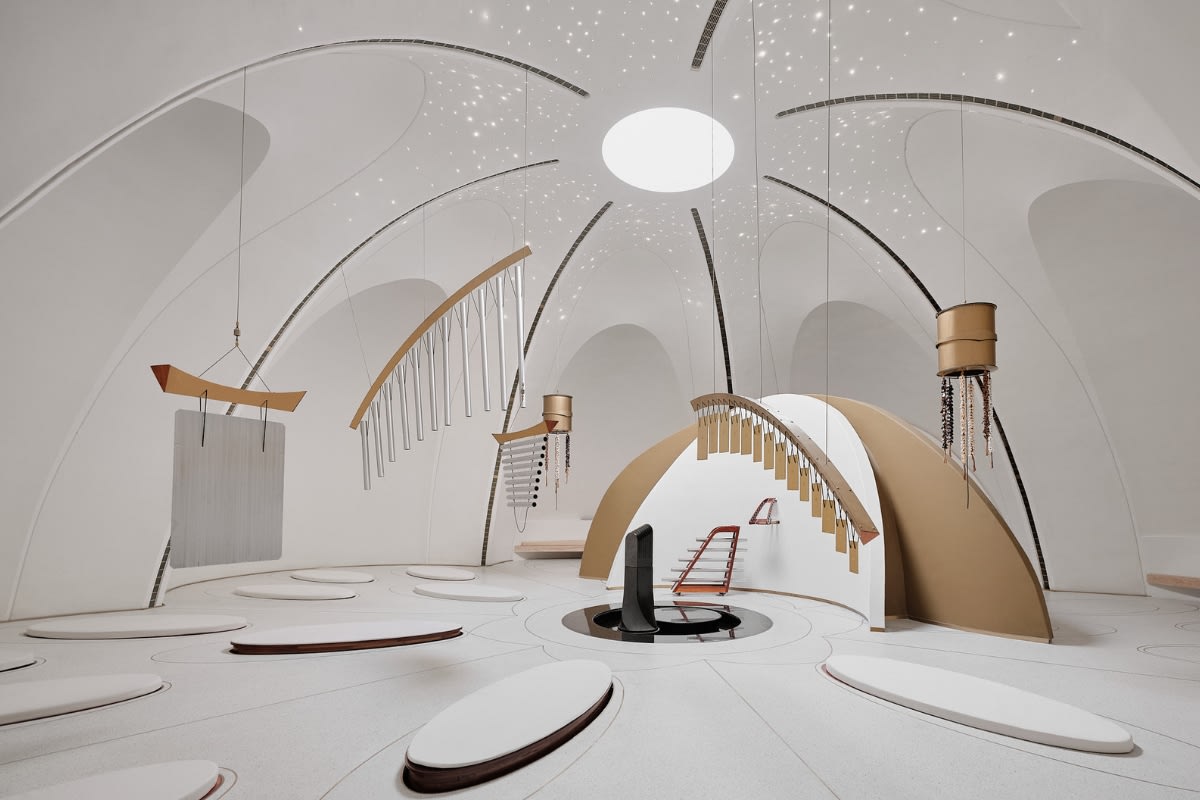
Inspired by Auroville’s iconic Matrimandir, Kottikollon conceived what is now envisioned as the world’s largest sound healing dome. Calling it merely a meditation space feels a bit like describing the Northern Lights as “quite nice”. Sonorium was designed not simply for stillness but for healing through vibration. Part healing chamber, part living instrument, the dome creates a sensory experience unlike anything most wellness travellers are likely to have encountered before.
Team Travel Handmade spoke to the experts behind Tulåh about the philosophy driving this ambitious wellness concept, the science and spirituality underpinning sound healing, and why the future of luxury travel may well involve surrendering to frequencies inside a giant resonating dome. After all, as Kottikollon puts it: “As human beings, we are all connected through energy. We are nothing but vibrations of the universe”.
Where Sound is Not Merely Heard, But Felt at a Cellular Level
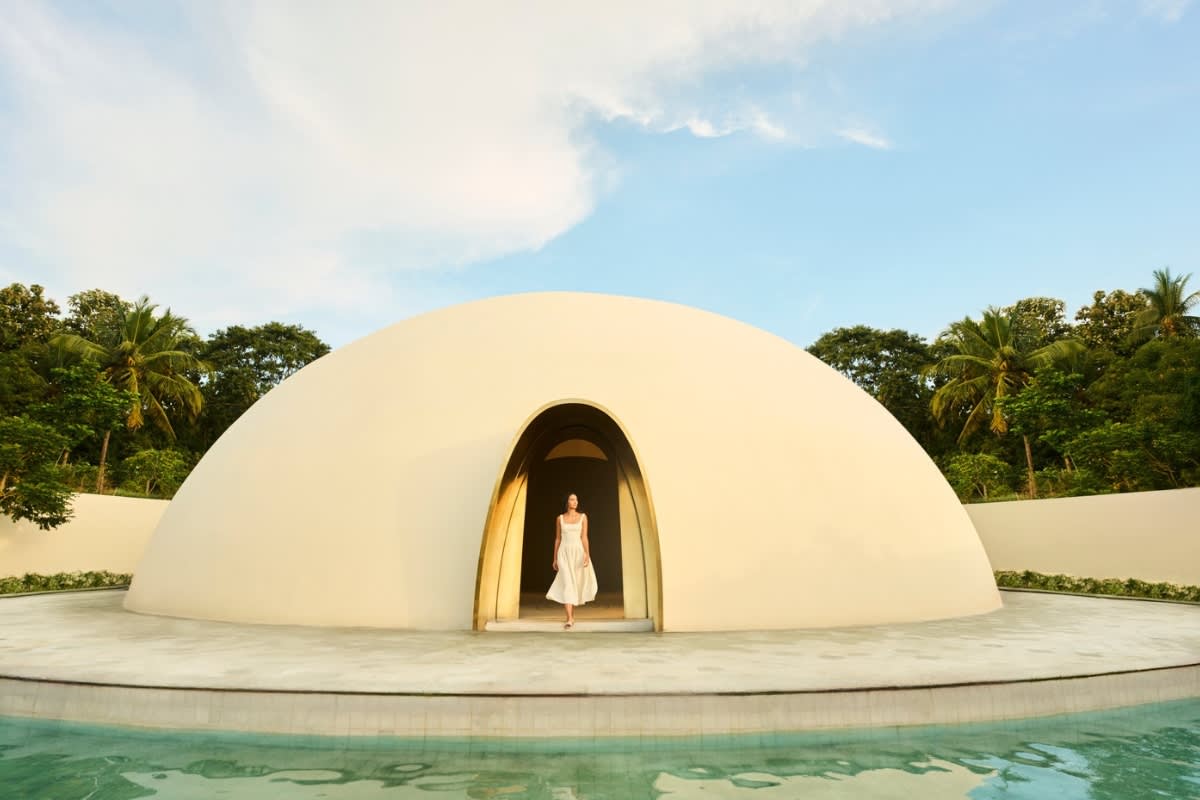
At Tulåh Clinical Wellness in Calicut, the architecture does not attempt to tame the landscape; it moves with it. Nestled into the natural contours of the terrain is Sonorium, an extraordinary sound-healing dome shaped like seven unfolding petals, each representing one of the body's seven chakras. Equal parts spiritual sanctuary and acoustic marvel, the space was designed by A.R. Rahman to facilitate deep emotional and physical restoration through carefully orchestrated frequencies and vibrations.
Yet beyond the striking architecture and the Rahman connection, what intrigued us most was the experience itself.
“What, exactly, does healing sound like?”
According to Muthu Samy Sankara Narayanan, sound-healing specialist and clinical yoga practitioner at Tulåh Clinical Wellness, the experience inside Sonorium is designed to fully envelop guests, quietening the mind while encouraging the body to slow down, soften, and reset. Within the dome, sound is no longer something you simply hear; it becomes something you feel moving through you.
The structure functions both as a healing chamber and a living instrument. Carefully calibrated frequencies travel through the architecture, transforming the space into an immersive sonic environment. Layers of gongs, plate bells, tubular bells, singing bowls, chimes, and nature-inspired ambient sounds ripple through the dome, creating waves of vibration that seem to wash over every corner of the room.
Rather than presenting a conventional musical performance, Sonorium guides guests through an evolving sonic journey. The soundscapes shift according to the intention of the session, the collective energy in the room, and the emotional state guests bring with them. One moment, the vibrations may lull you into a deeply meditative stillness; the next, they may surface emotions you did not realise you had been carrying.
The effect is something akin to a meditative sound bath, but on a far grander scale. Designed to quiet the relentless noise of modern life, Sonorium offers guests the rare opportunity to tune inward, reconnect with themselves, and rediscover a sense of balance through vibration, resonance, and sound.
The First-Ever Upgrade in Sound Healing
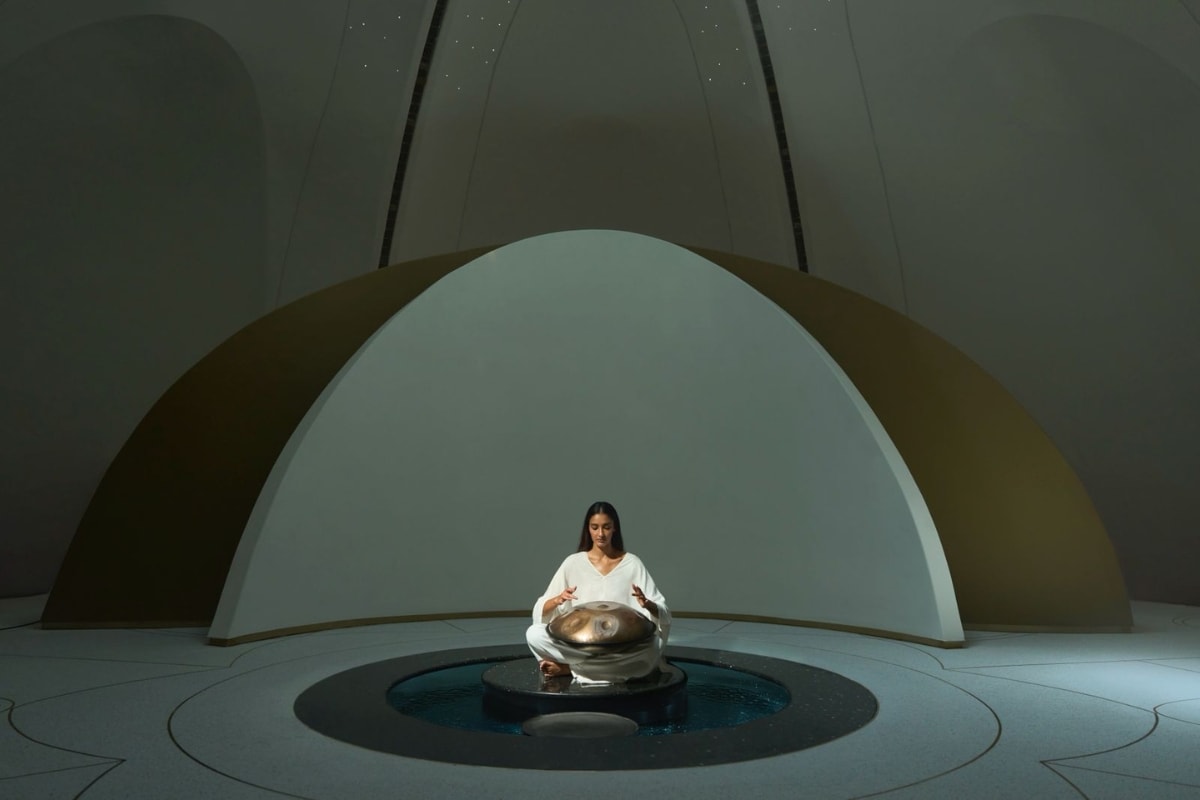
At the original Sonorium, the Nidranantar formed the focal point of the sound-healing experience—a space of profound stillness around which specialised ‘New Waves’ instruments were carefully arranged to create an immersive acoustic environment. At Tulåh, this concept has been further refined with the introduction of advanced vibrosonic beds, designed to enhance both the sensory and therapeutic dimensions of the experience.
Strategically positioned within the dome, these beds create a cocoon of resonance and spatial sound, enabling guests to experience vibration not only through hearing but throughout the body. Rather than emanating from a single source, sound unfolds in layered frequencies that move fluidly through the space, creating a dynamic interplay between acoustics, architecture, and vibration.
The circular configuration allows sound waves to travel around and through the body, fostering a heightened sense of immersion. As tones converge, overlap, and dissipate, guests perceive subtle variations in depth, texture, and movement, lending the soundscape a remarkably organic quality. The experience is not static but continuously evolving, shaped by resonance and the spatial characteristics of the dome itself.
According to Mr. Narayanan, the effect is both deeply meditative and restorative. Guests often report sensations of weightlessness, profound calm, and heightened inner awareness as the combination of spatial sound and tactile vibration helps quiet mental activity and guide the nervous system into a state of deep relaxation.
More than a passive listening experience, the Sonorium invites guests into a carefully orchestrated encounter with sound, where vibration becomes a medium for stillness, introspection, and renewal.
An Architectural Language Drawn from Ancient Cave Sanctuaries
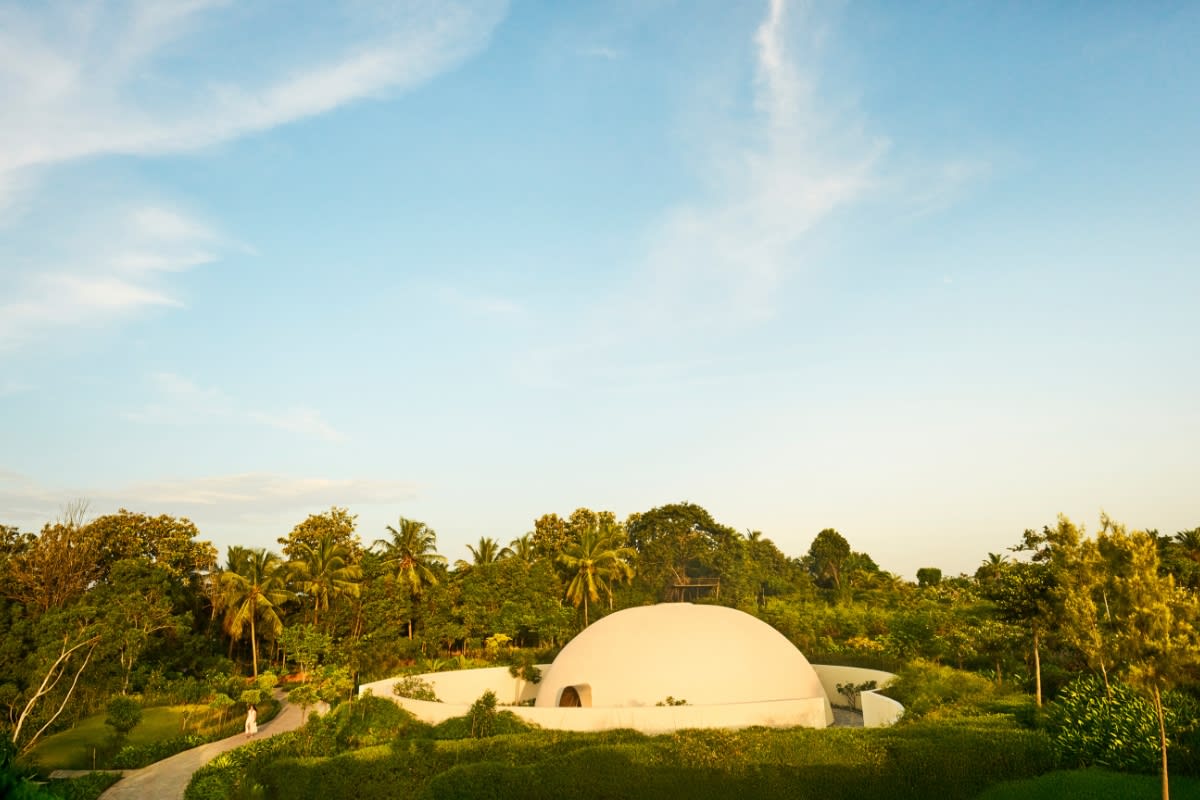
The dome itself is integral to the Sonorium experience. Far more than an architectural statement, its form has been carefully designed to optimise acoustics, allowing sound frequencies to travel fluidly and evenly throughout the space. The curved structure enhances resonance, spatial depth, and sonic movement, creating an environment where sound is experienced not from a single direction but as a fully immersive, multidimensional presence.
The design comprises seven unfolding petals, symbolising the seven chakras of the body and reinforcing the dome’s connection to balance, alignment, and inner awareness. Beyond its symbolic significance, the architecture draws inspiration from the contemplative stillness of ancient caves—spaces long associated with meditation, introspection, and spiritual practice. The enclosed environment minimises external distractions, fostering a sense of grounding and sensory withdrawal that encourages guests to turn inward and engage more deeply with sound and vibration.
As mentioned earlier, the Sonorium also takes inspiration from Auroville’s iconic Matrimandir, reflecting a philosophy centred on inner consciousness, self-discovery, and personal transformation. In many ways, it serves as the spiritual heart of Tulåh—a sanctuary dedicated to stillness, reflection, and renewal. More than a venue for sound healing, it is a contemplative space designed to facilitate profound rest and a deeper connection with oneself.
Immediate Effects Of Sound Healing Inside Sonorium
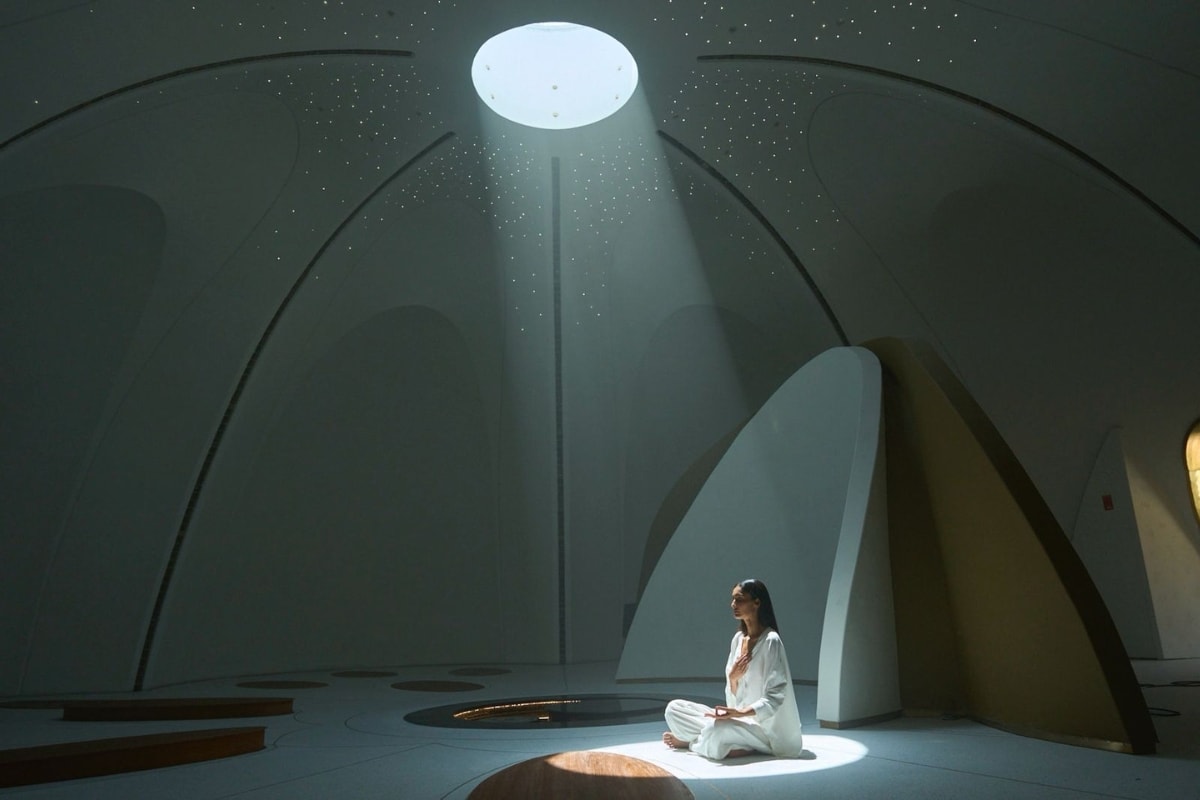
Mr. Narayanan explains that the vibro-acoustic beds are far more than a wellness novelty. Embedded within them are integrated speakers that transmit gentle sound vibrations through the body, allowing guests to experience resonance not only through hearing but through touch and sensation. The result is a deeply immersive experience in which sound becomes both audible and tangible.
By combining airborne sound with tactile vibration, the system engages multiple sensory pathways simultaneously. Frequencies move through the dome and the body in tandem, creating an environment that encourages the nervous system to shift from a state of heightened alertness into one of rest and restoration. The effect is subtle yet powerful, fostering a sense of grounding that extends beyond conventional listening.
According to Mr. Narayanan, the immediate responses are often both physical and emotional. Guests frequently report a profound sense of calm, quieter mental activity, slower and deeper breathing, and an enhanced awareness of the present moment. For many, the experience creates a rare opportunity to disengage from the constant stimulation of daily life and enter a state of genuine stillness.
For Faizal Kottikollon, founder and visionary behind Tulåh Life, Sonorium was never intended to be merely a wellness attraction. Conceived through years of collaboration with architects, acousticians, and sound engineers, the dome was designed as a healing instrument in its own right—an environment where sound becomes a catalyst for restoration and self-regulation.
His philosophy is elegantly simple. “If everything in existence carries a vibration, then health is simply a matter of being in tune. Music is the art of proportions and frequencies, while sound healing is the science of those frequencies. To repair anything, you must first reset it.”
In many ways, Sonorium serves as the overture to the wider Tulåh journey. Before diagnostics are analysed, therapies prescribed, or wellness protocols initiated, guests are invited to undertake a simpler yet perhaps more profound act: to pause. To quiet the mind, regulate the nervous system, and arrive fully in the present moment. Within the resonant stillness of the dome, healing begins not with intervention, but with awareness.
Getting There
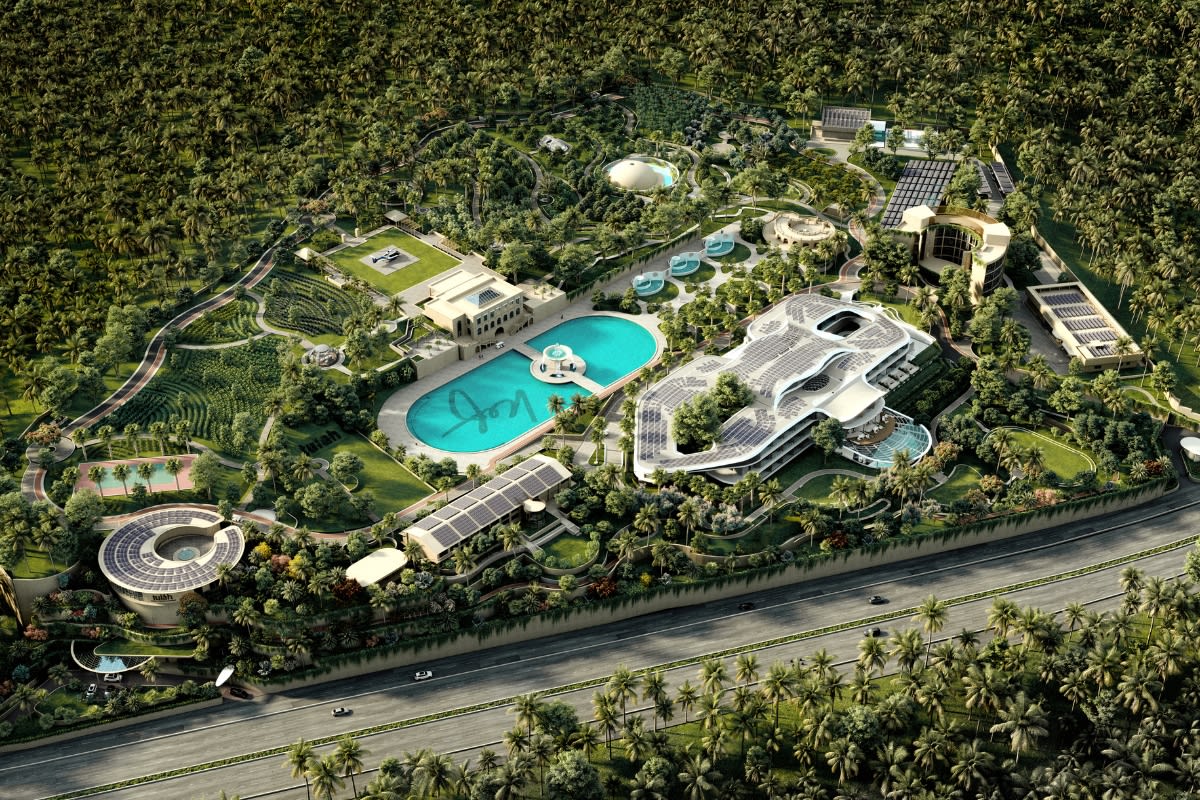
The retreat is located approximately 30 minutes from Calicut International Airport, making it easily accessible for both domestic and international travellers. Those arriving by rail can disembark at Kozhikode (Calicut) Railway Station, situated around 40 minutes from the property.
For guests who prefer a more seamless arrival, private helicopter landings can also be arranged at Tulah Clinical Wellness with advance notice.