It is not my first time in Ladakh. I spent a month here last year, doubling up as a volunteer at a pre-primary school, with only five weekends to indulge the traveller in me. I tried to make the most of them, but Ladakh quickly proved too vast to be taken in over a handful of days. A year later, I was back — this time following a different trail through the region, one that moved through its stories, materials, memories and ways of living.
This was the trail of the sā Biennale in Ladakh, known as the ‘World’s Highest Regenerative Art Biennale’, curated by Vishal K. Dar with co-curator Tsering Motup Siddho. Its 19 regenerative art installations were spread across eight sites along the NH1, the Leh-Srinagar highway, occupying old settlements, homes, mountainsides, and riverbeds. Rather than bringing an outside lens to Ladakh, the works drew from what was already there — its folklore, architecture, crafts, trade routes and relationship with the land. I found myself looking at a place I had visited before through a slightly different lens.
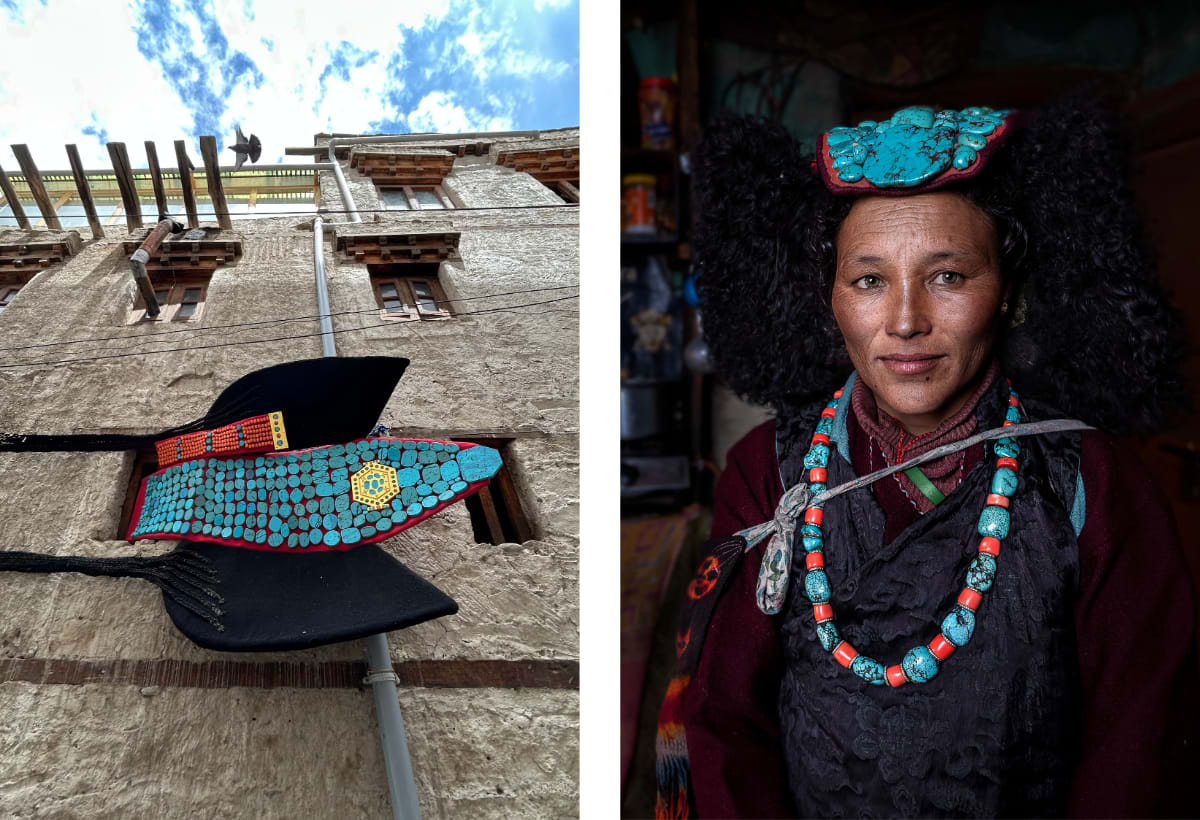
The first installation that caught my eye was in Leh’s Old Town, a historic crossroads between Tibet, Kashmir and Central Asia, where monasteries, the Jama Masjid and traditional Ladakhi houses sit alongside one another. On one such house, local artist Stanzin Wangail had installed Manmo, a turquoise-studded, serpent-like form that enters through one window and emerges a few windows away. It felt almost like the house had acquired its own guardian. I was immediately reminded of the perak, the turquoise-studded headgear worn by Ladakhi women, though Wangail’s work draws from the manmo — powerful female nature spirits associated with mountains, springs and the wild landscape. Here, manmo seemed to protect the layers of folklore and memory held within the Old Town.
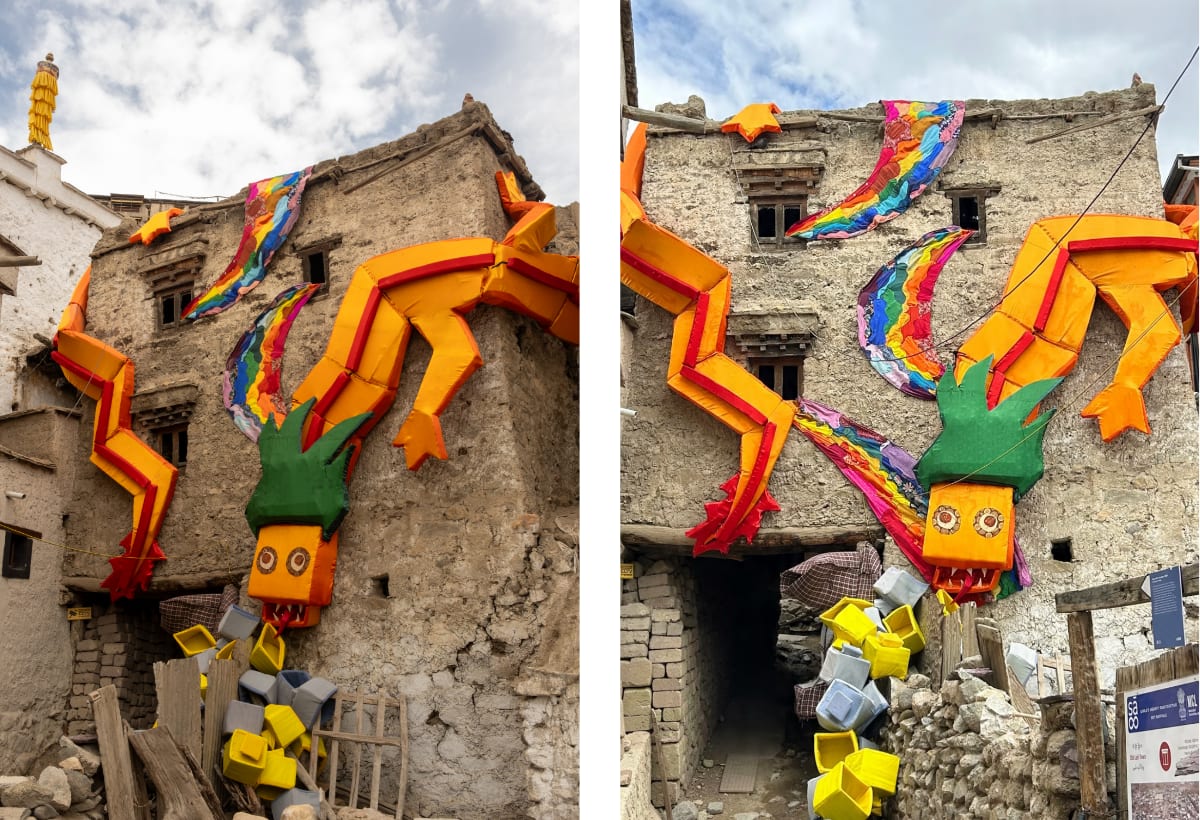
A few streets away, local artist Tashi Namgial’s Za s Chu Thunge brought a burst of colour — and a childhood tale — to another beige wall. Almost like a textile dragon, the work depicts a Ladakhi story about an old shoe thrown towards the end of a rainbow in the hope that it will burst open to reveal treasure. There is something wonderfully childlike about the idea: that something old and discarded might unexpectedly contain something precious. Standing before it, I found that its simple promise of fortune worked on adults, too.
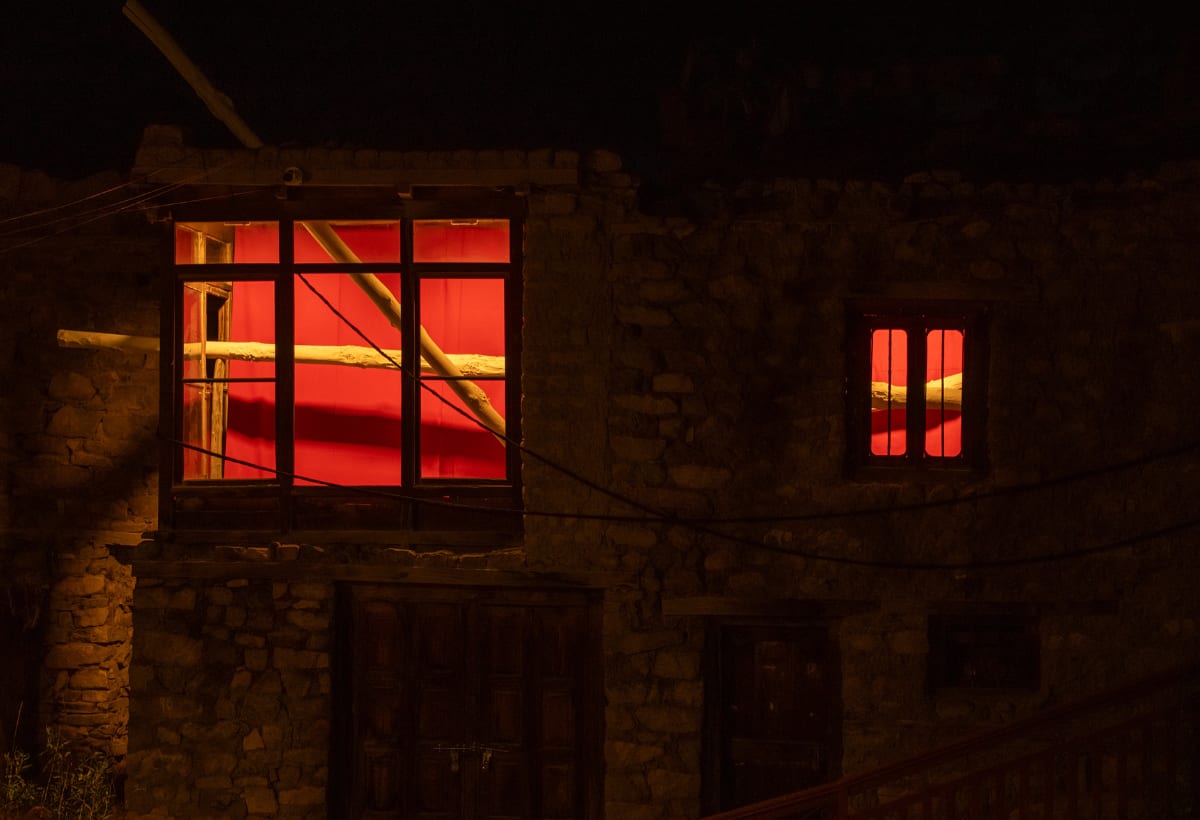
Higher up in the Old Town, Jigmet Angmo’s Dungjonma and the Inward House brought folklore into direct conversation with architecture. Dungjonma, a traditional Ladakhi folk figure, was said to be a man-eating witch who pulled out the dungma — the main wooden beam supporting a house — and rode it through the night. Angmo reimagines her as a flying female superhero who rides the beam and protects Leh. The story becomes particularly compelling once you consider the architecture: in a traditional Ladakhi house, where timber beams are fundamental to the structure, stealing one threatens the house itself. A folk tale becomes, almost incidentally, a lesson in how people understood the buildings around them.
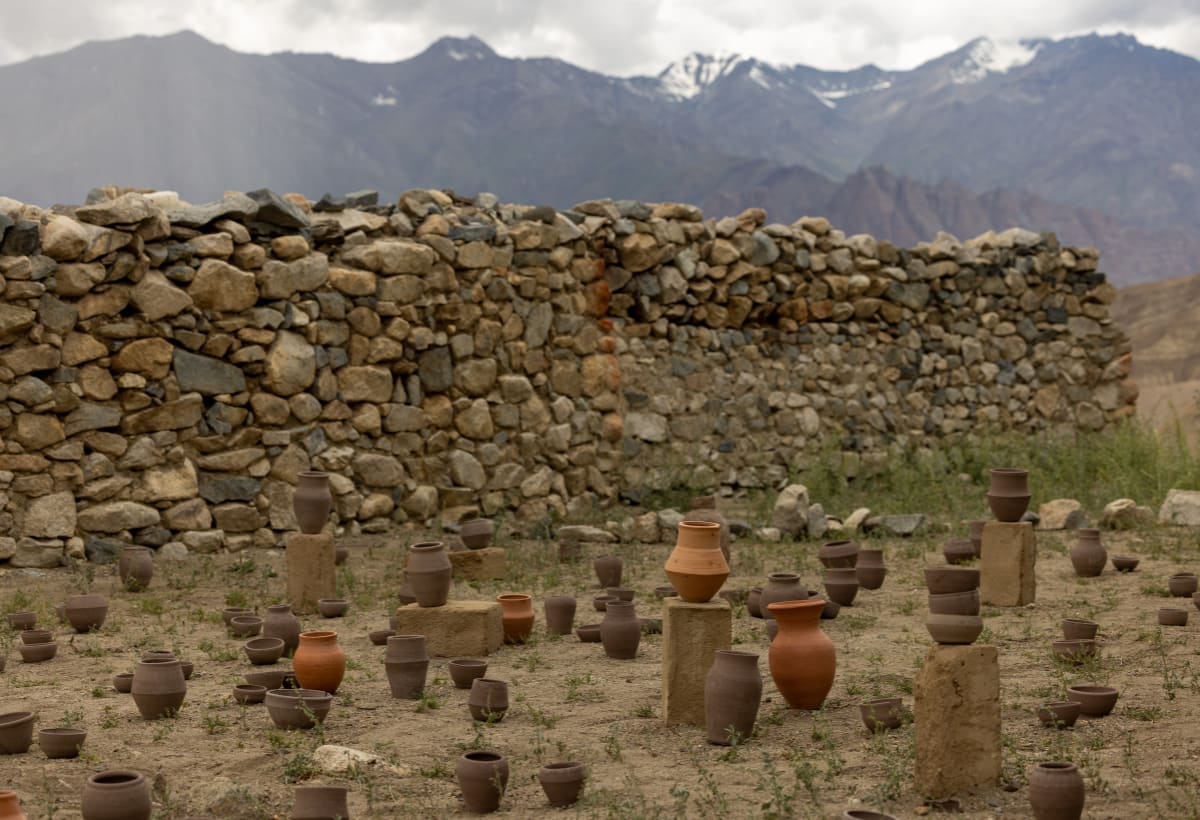
Go a little further from Leh, and you reach the pottery village of Likir. Home to Likir Monastery, the Maitreya statue, and centuries-old pottery traditions, it is a high-altitude cold desert environment with limited rainfall and strong seasonal shifts. Here, even today, potters, farmers and monastic communities continue traditional knowledge systems — this is the site for Shupiwe Chongwe's 'Vessel.' A small road that pretends to go around the monastery actually takes you to this piece of land, which is dotted with pots of different soil colours, shapes, sizes, and forms sitting on the ground, subjected to the quick weathering in the area. The installation brings your focus to the fact that Likir is still one of the places where this traditional Ladakhi pottery practice is being revived and preserved, making it an interesting example of how an old craft continues to survive alongside changing lifestyles. However, the future looks bleak, just as the chances of all these pots surviving a month-long Biennale.
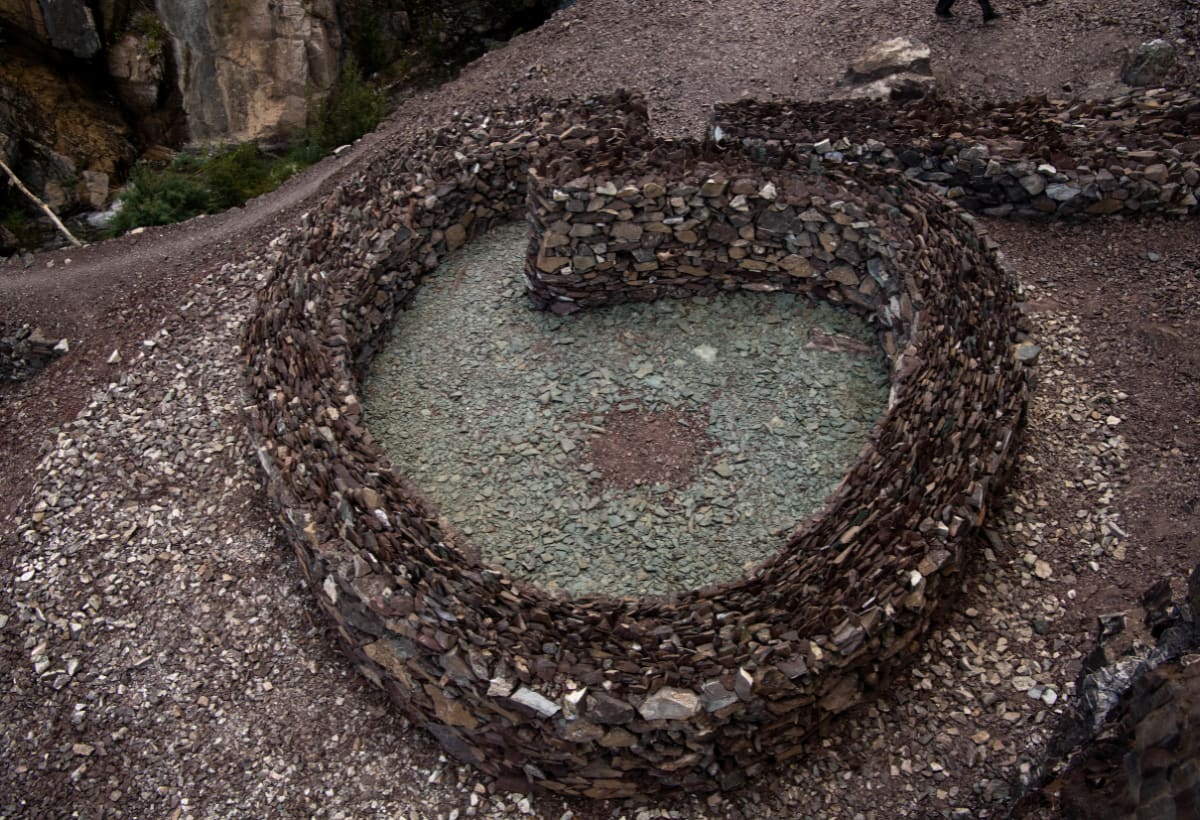
At Nurla, a beautiful village in the sham district of Ladakh, Urgain Zawa’s Remnants of Belonging requires a little more effort to reach. You climb down to a bridge, cross it, and hike upwards before the installation reveals itself: an open loop of stones, river pebbles, weathered timber, papier-mâché, local soil and animal bones. The materials are arranged with a logic reminiscent of traditional stone masonry, yet nothing feels imposed on the landscape. Looking at them together, I found myself thinking about how naturally they belonged there — and how easily that relationship could disappear. The work made impermanence feel less like an idea and more like an observation.
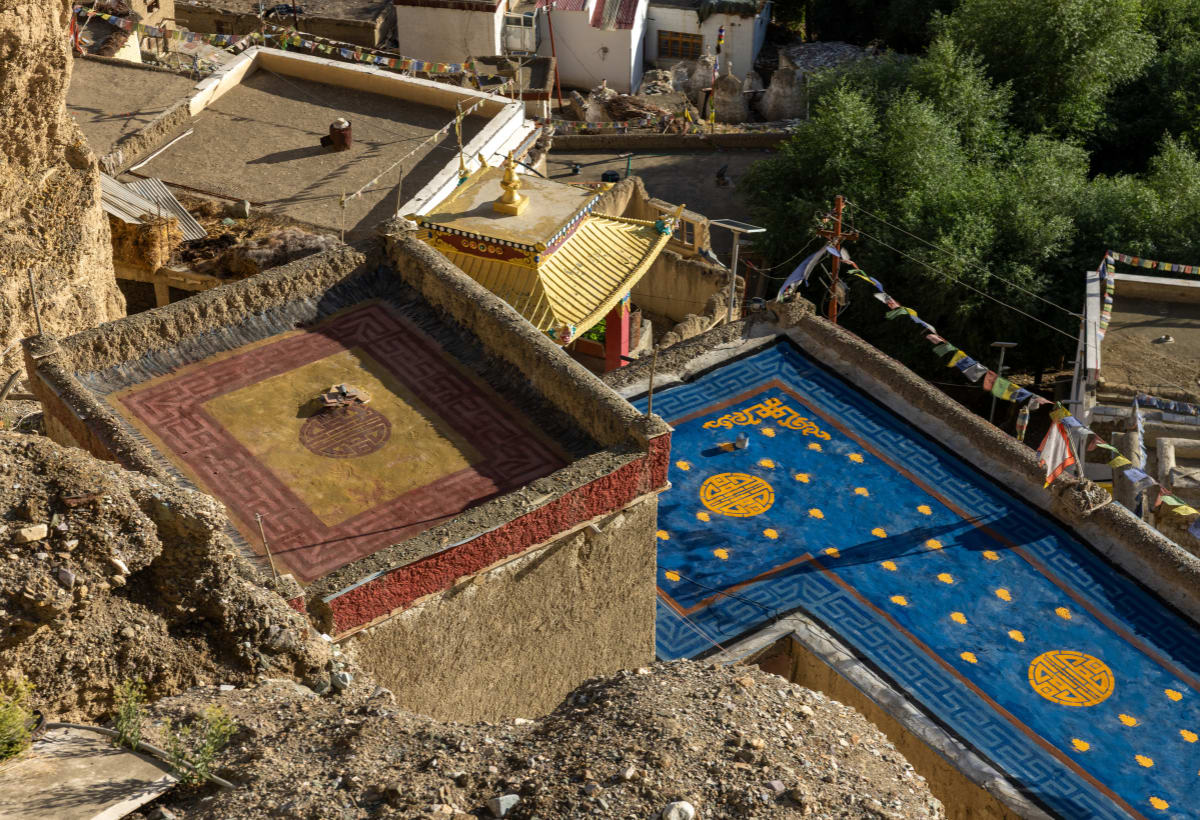
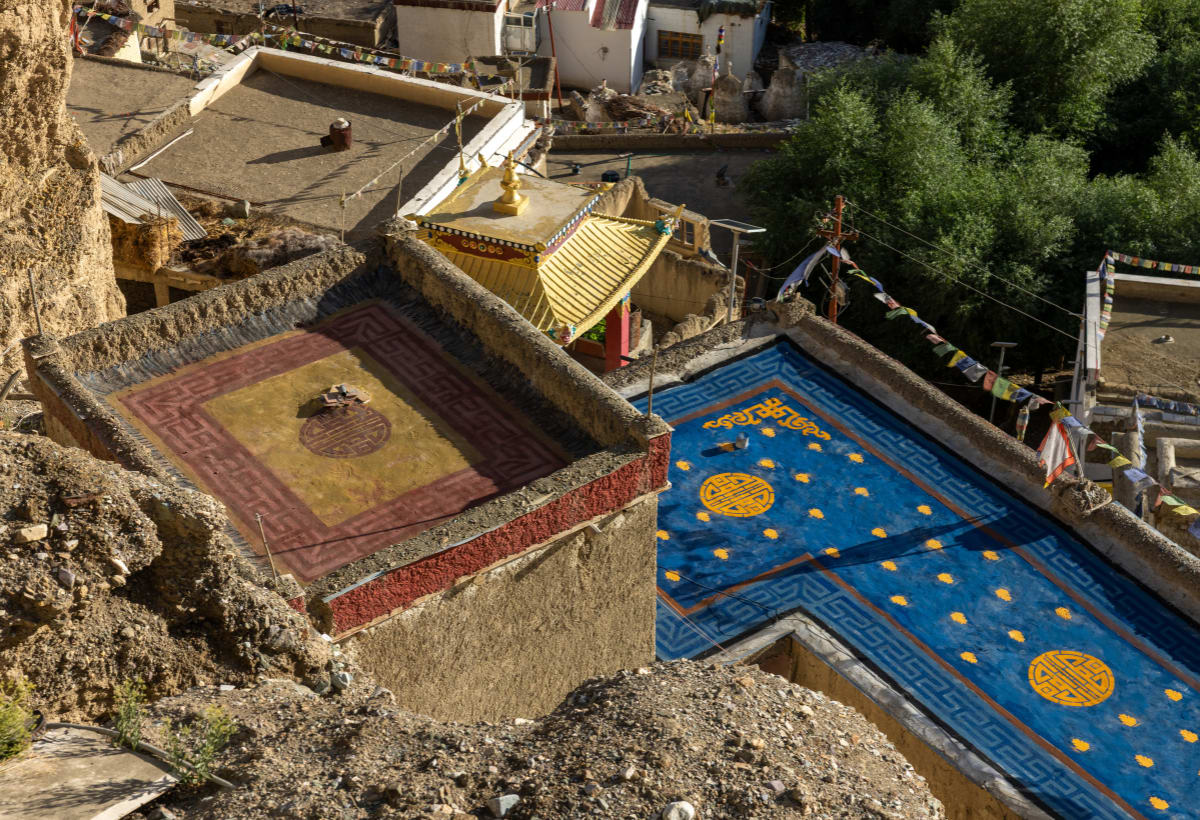
Near Lamayuru, 125 kms west of Leh, Amrit Karki’s Rising From the Soil, Soaring to the Sky transforms the rooftops of a house into two red and blue, carpet-like surfaces. Painted with natural pigments and local soil, their geometric borders and motifs recall the visual language of Tibetan, Chinese, and Central Asian textiles. By the seventh day of the Biennale, however, the colours had already begun to fade, exposing the mud plaster beneath. It was perhaps the clearest example of the work explaining itself. Designed to scatter and return to the earth through wind, rain and footsteps, it also made the effects of Ladakh’s increasingly unpredictable weather impossible to ignore.
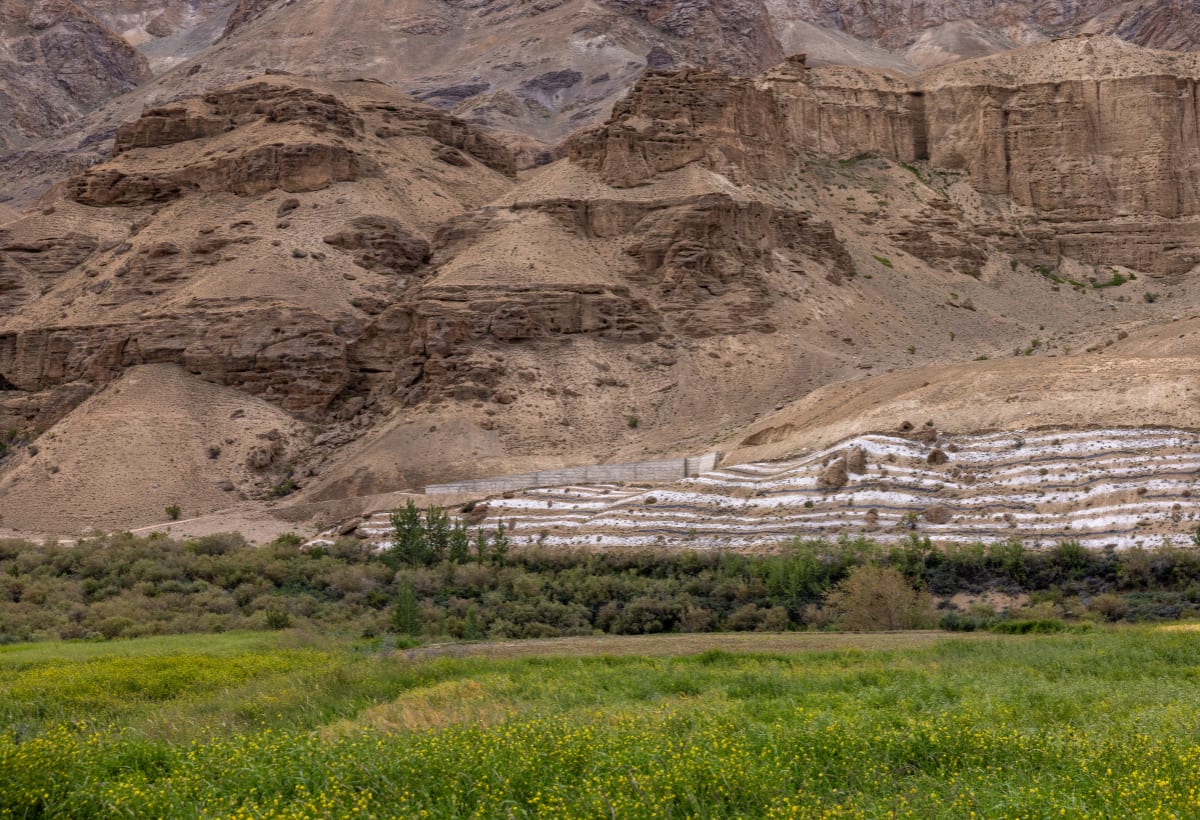
The final stop was Mulbekh, where Stanzin Samphel’s The Memory of Routes sits almost invisibly against the mountainside. From the NH1, faint whitish stripes mark the lower half of a mountain. You could easily miss them if you did not know what you were looking for. They represent, on a much smaller and representational scale, old Silk Route paths that once passed through Mulbekh, an important waystation between Kashmir and Ladakh. Samphel marks these forgotten routes with soil, clay and natural pigments, turning the mountain into a quiet record of movement. It felt fitting that the work was not something to look at closely, but something to look for — a reminder that some of Ladakh’s histories survive simply because people remember where they once walked.
That was what made the sā Ladakh Biennale feel distinctly Ladakhi. The works did not impose themselves on the landscape; they drew from what was already there — its stories, buildings, materials and memories. Following the trail, I found myself reading Ladakh differently: not as a collection of spectacular places, but as a landscape where culture and geography are almost impossible to separate.