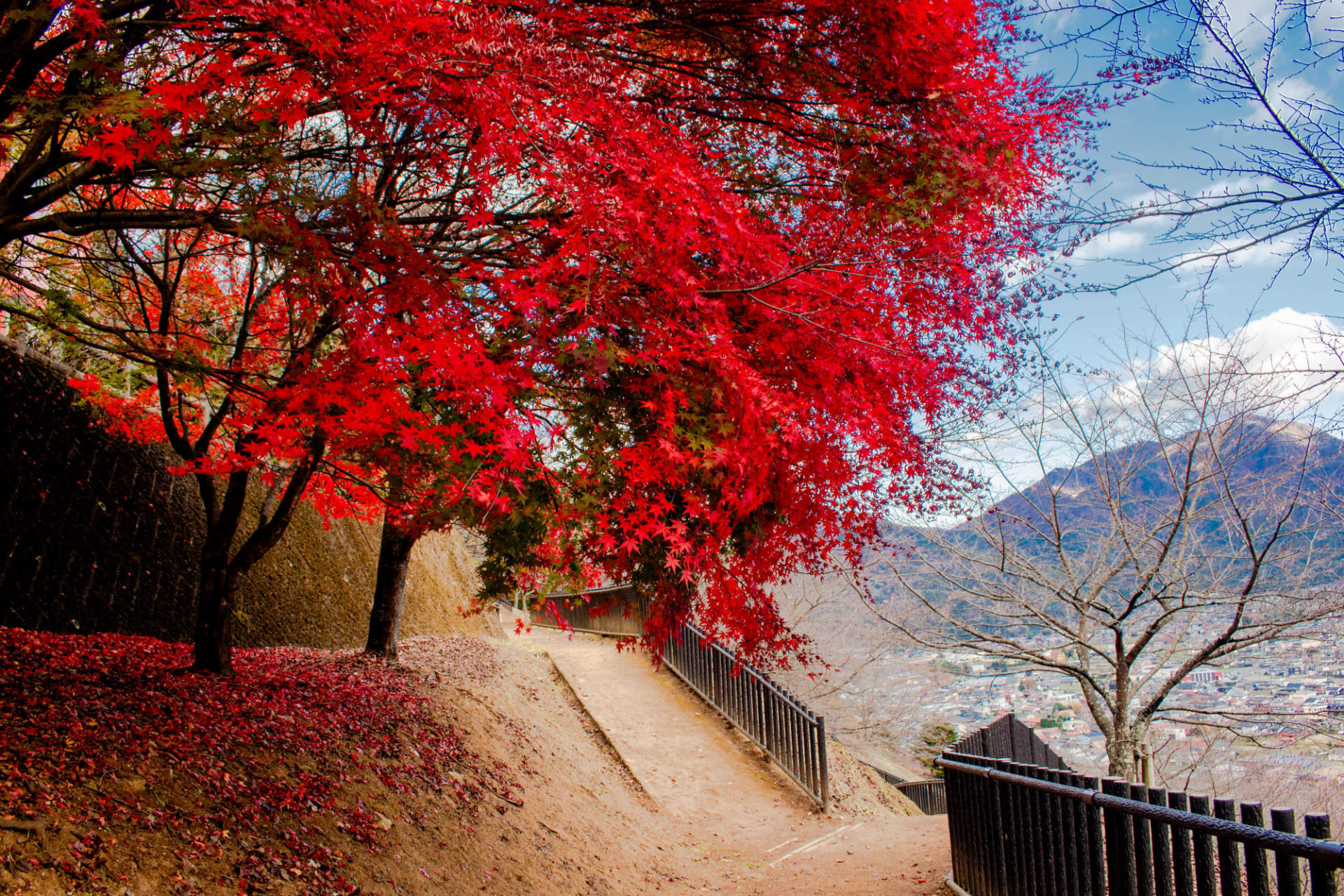
Whoever coined the term Japlanning knew what they were doing, because trust me when I tell you, it is not for the faint-hearted! Creating an itinerary for a Japan trip requires your wholehearted attention. And if you are a solo traveller, my prayers are with you. But perhaps that is the first lesson Japan teaches you: you don't simply arrive here and wing it!
Yes, I said it. Japan is for everybody, and yet, it isn't. It isn't your typical European vacation where you can be gloriously spontaneous and let the day take you wherever it wants. Japan comes with restraint. Not restraint in how it treats its visitors, but in what it expects from them. Japanese people do not tell you explicitly how to behave. The expectation is much quieter: respect for the land, the people, the culture and the systems. Three weeks of solo travelling through this quietly choreographed country made me increasingly aware of that.
The Unwritten Architecture of Discipline
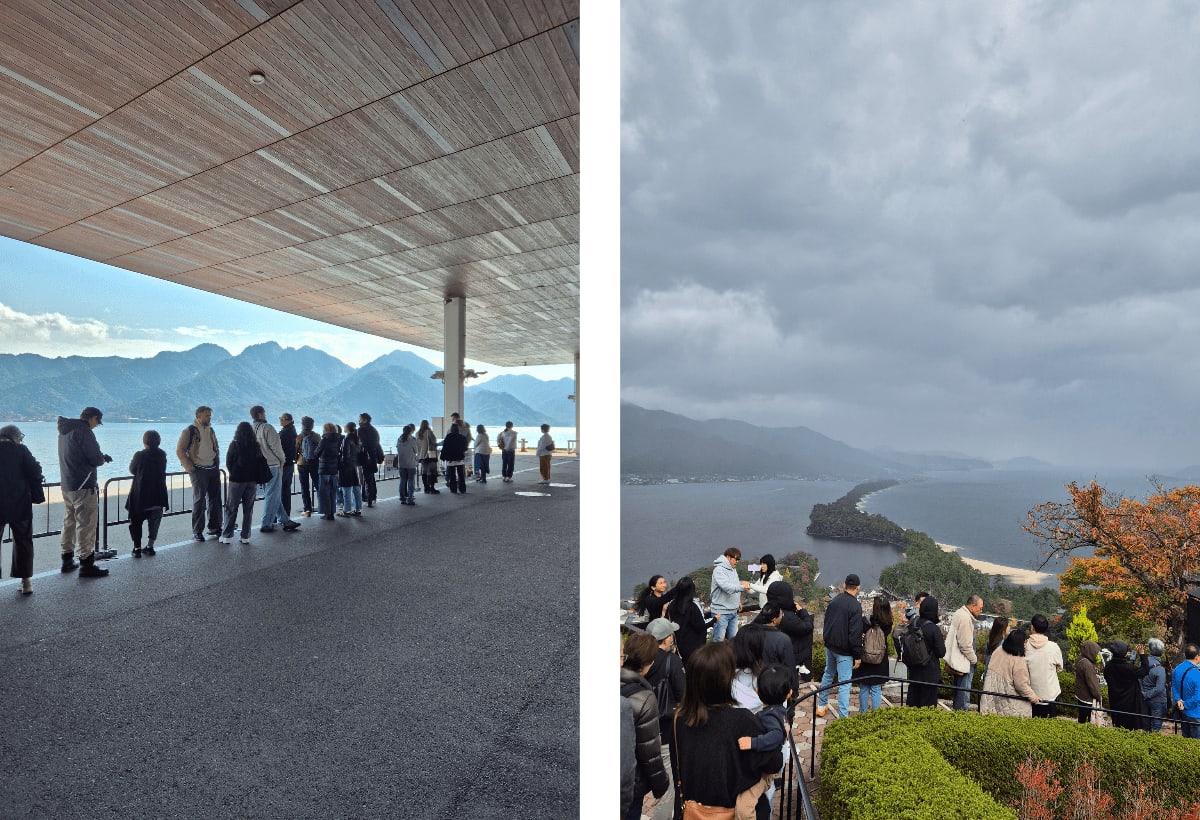
One of the things I remember most vividly is waiting in line. For food, at train stations, outside cafes, at convenience stores. I found it fascinating. In Japan, the queue was the system. There were floor markings, designated places to stand, and a tacit understanding of whose turn came next. After a while, I realised I wasn't really looking at just queues. I was looking at deeply ingrained culture.
Something fundamental about Japanese culture kept revealing itself in these small moments: the idea of not being an inconvenience to others. It isn't necessarily written down as a rule, but you see it everywhere. People seem to have an instinctive awareness that they are sharing a space with other people. I started wondering if the spaces were shaping the behaviour, or if the behaviour had shaped the spaces.
When the City Does the Thinking
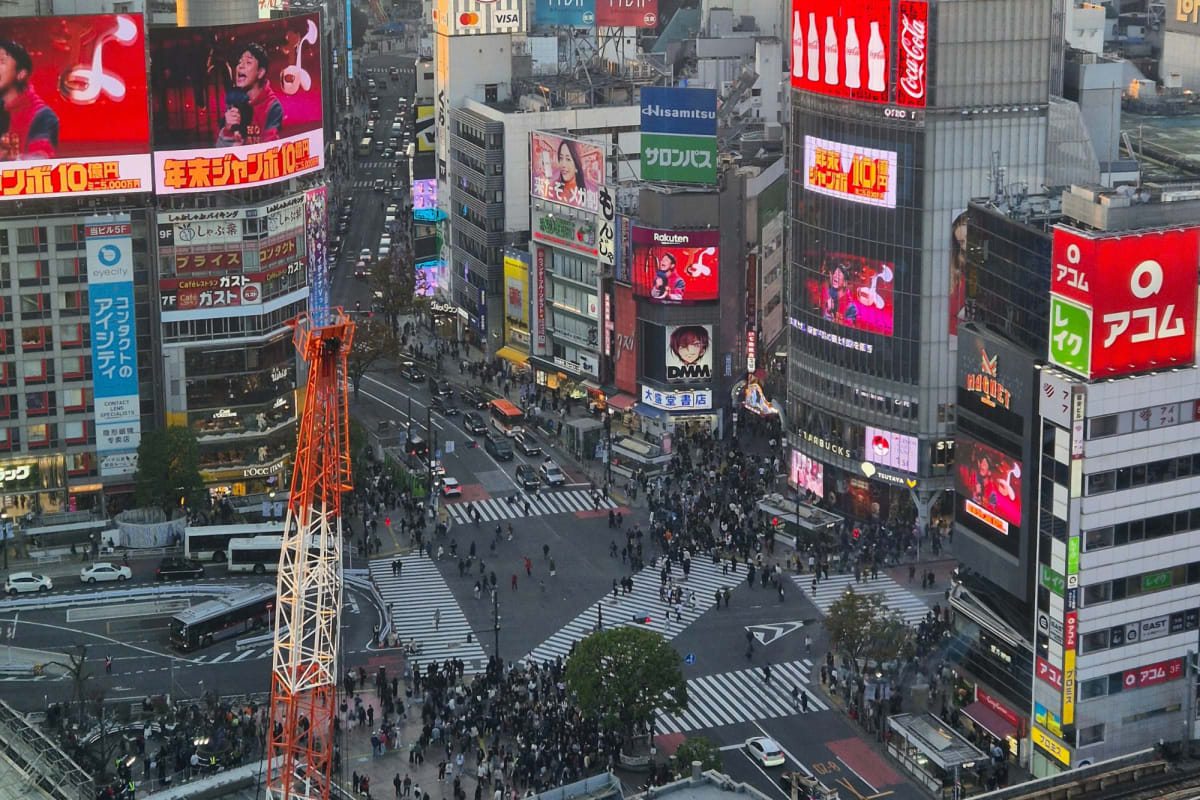
Tokyo was where I started noticing the quieter ways a city can shape how people move through it. At Shibuya Crossing, the sea of commuters makes the intersection look chaotic from a distance, with thousands crossing from every direction at once. But the moment the lights change, and you step into the crowd, the apparent chaos gives way to an almost ridiculous efficiency. People move around one another without jostling for space, the crowd disperses as quickly as it gathers, and an intersection that should feel overwhelming somehow moves with remarkable ease.
That made me wonder: how can a city this crowded make a person travelling alone feel this comfortable?
The answer wasn't one piece of infrastructure. It was the relationship between infrastructure and behaviour. Tokyo somehow manages to have a lot going on without constantly getting in your way. I saw that relationship everywhere. The Braille running along the sidewalks, the hoardings and interactive displays that had somehow become part of Tokyo's visual fabric, and then the manhole covers. Something I would normally walk straight over had suddenly become a scavenger hunt, each worth photographing. A completely functional piece of civic utility had become a miniature artwork depicting a story and a sense of place. Japan had somehow turned sewer infrastructure into a travel collectible. Naturally, I started collecting them.
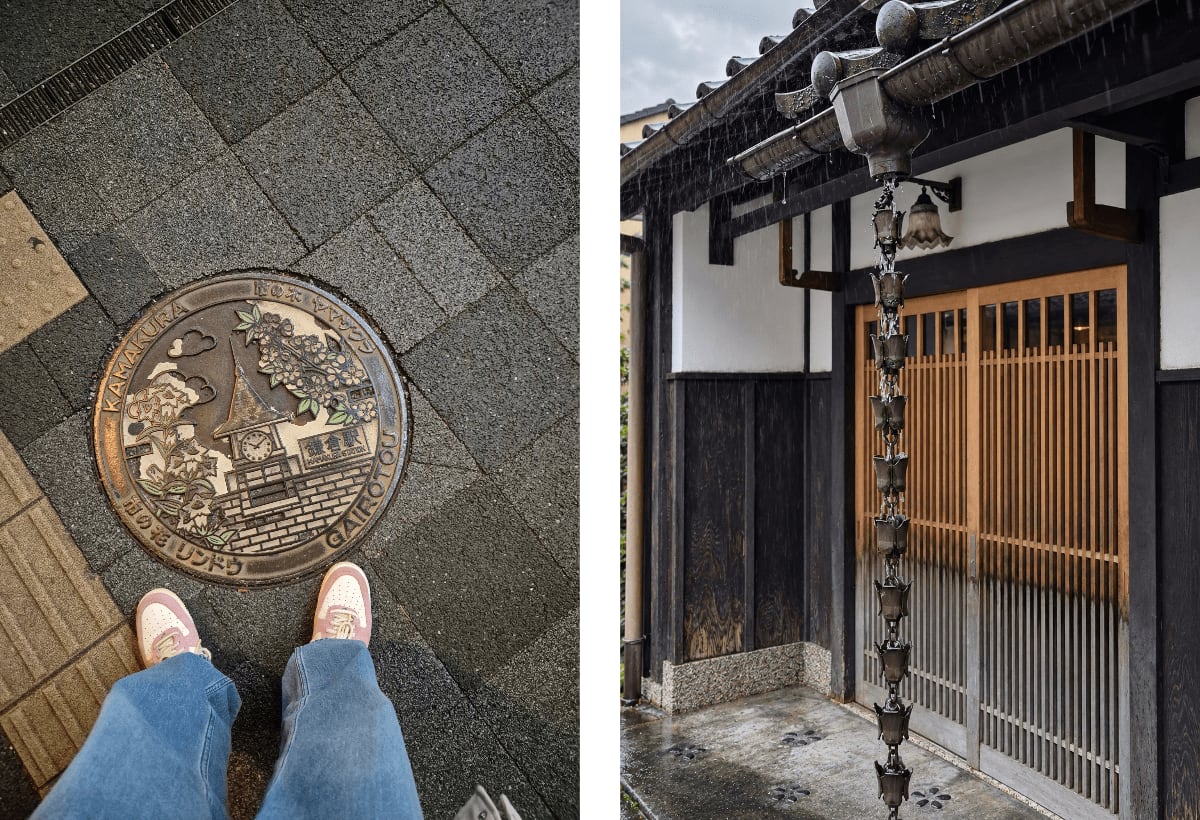
Even the rain chain gutters caught my attention. I had never thought of a downspout as something worth looking at, but in Japan, a simple chain could turn the movement of rainwater into something almost theatrical. That was what I was beginning to understand about Japan. Comfort doesn't always come from the things you notice immediately; sometimes it comes from a multitude of small decisions that make a place easier to inhabit.
Even along Omotesando, where the architecture and storefronts are virtually designed to make you look up, I found myself looking down at the street. The metal guardrails, which could easily have been treated as purely functional infrastructure, became places where people paused or leaned to sit. The distinction between what was designed as infrastructure and what people had made part of their everyday public life seemed wonderfully blurred.
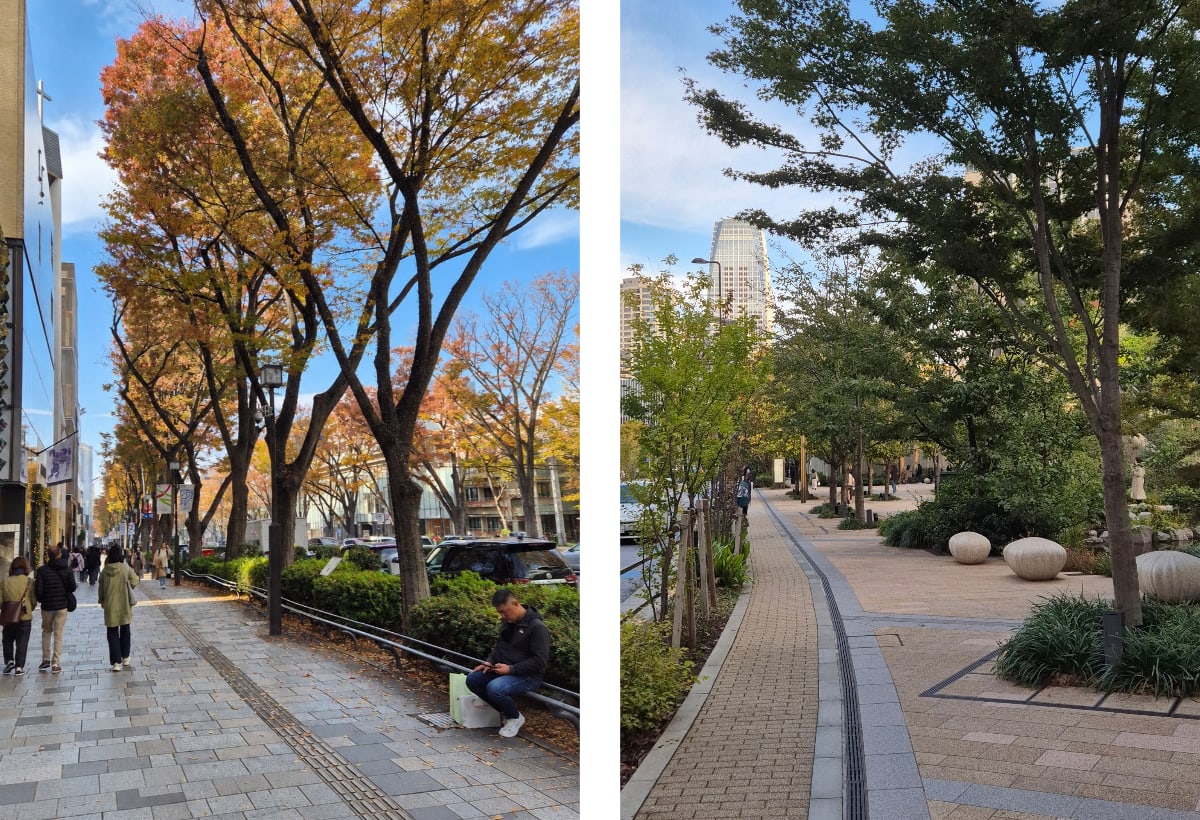
It got me thinking about what it feels like when infrastructure works so discreetly that you barely have to think about it.
Azabudai Hills was probably the clearest example of this for me. Architecturally, it is an obvious spectacle: its towers designed by Pelli Clarke & Partners, and the public realm and lower-level architecture with iconic curvilinear slopes shaped by Heatherwick Studio. But what I remember most wasn't standing there looking up at a skyscraper; it was walking through it. The scale felt surprisingly familiar. You could move through the development.
without feeling swallowed by it. The greenery, paths, changes in level, and the way the buildings framed the spaces around them made it feel more like part of the city than an isolated mega-development. That mattered because it brought architecture down to the level of the person walking through it. And walking became a big part of how I experienced Japan.
Where the Street Becomes the Story
My experience of exploring Kyoto was the polar opposite. Wider roads gave way to narrow streets lined with timber facades, tiled roofs, tiny entrances, and almost no visual noise. The streets around Sanenzaka and Ninenzaka are steep, busy, and undeniably tourist-heavy, but they still retain a sense of place because they are themselves part of the cultural experience. The same was true of Kyoto's covered shopping arcades. They seemed to just keep going, and they single-handedly sheltered me from the rain on more than one occasion. Shops, food stalls, matcha stores and tiny restaurants spilled into the walkways, making the streets feel lived-in rather than simply designed for visitors.
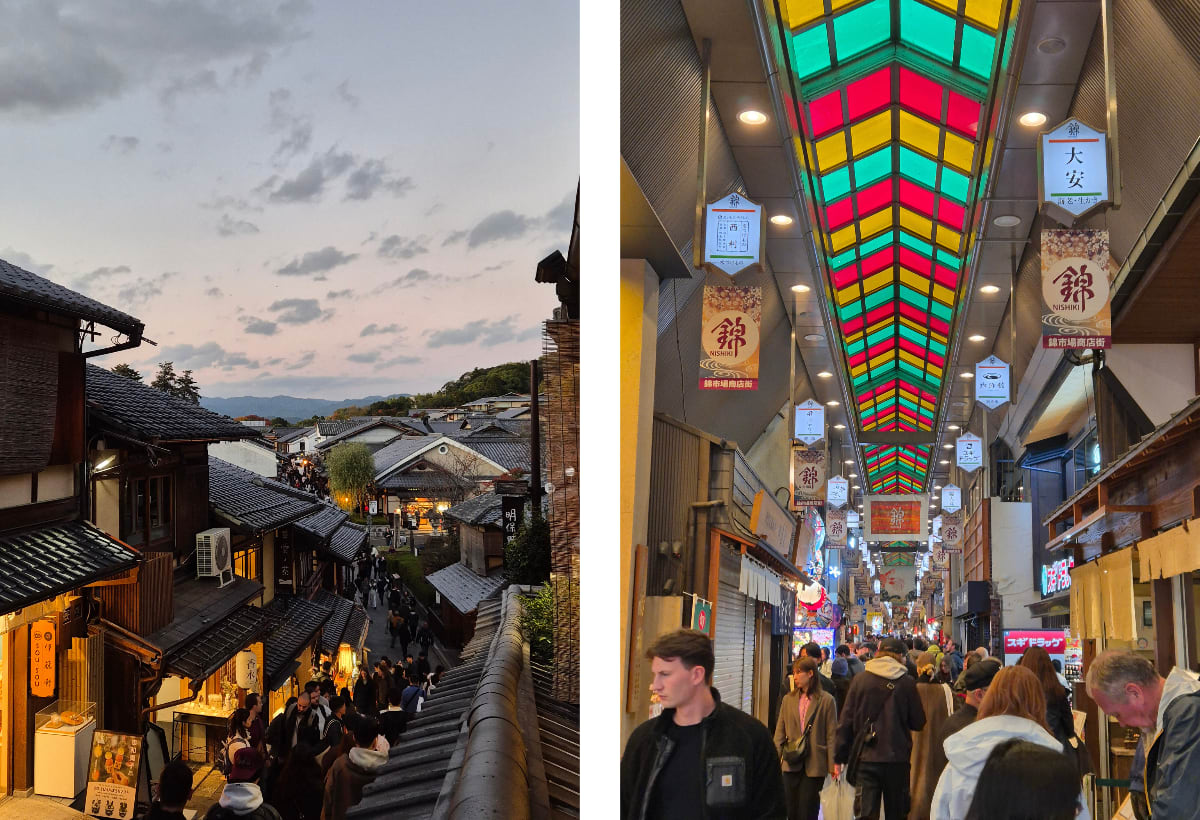
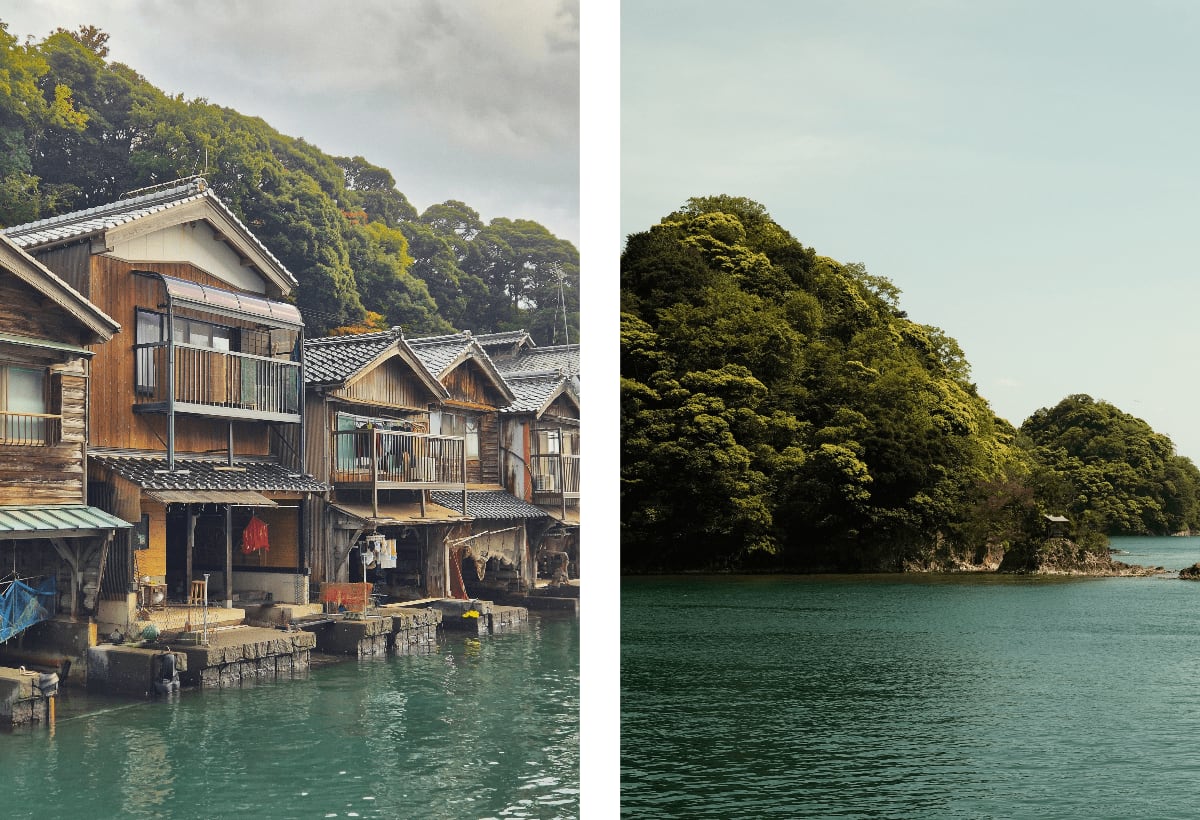
It made me think about cultural infrastructure in a way I hadn't before. Sometimes, culture survives because ordinary life continues around it. I saw that most clearly when I travelled out to Ine, a small fishing town where the pace felt impossibly removed from the big cities. With a population of around 1,800, Ine has retained its fishing culture and distinctive funaya boat houses along the water. Rather than feeling preserved as some kind of perfect historical set, the town felt alive. The locals hadn't given up the place simply because a larger city offered more opportunity. That, too, felt like infrastructure to me. Not the concrete-and-steel kind, but the cultural kind that allows a place to retain its identity because people continue to inhabit and protect it.
Safe Enough to Get Lost
The biggest thing I noticed as a solo traveller was safety. I remember seeing little children travelling alone on buses and the subway. Not teenagers, little children getting themselves to school, navigating public transport and moving through a city that can otherwise feel enormous. I found that strangely reassuring. The physical environment wasn't working in isolation; it was being supported by a culture that understood how to use it. For a solo traveller, that kind of freedom is hard to design on paper.
The Architecture Was the Point, Until It Wasn't
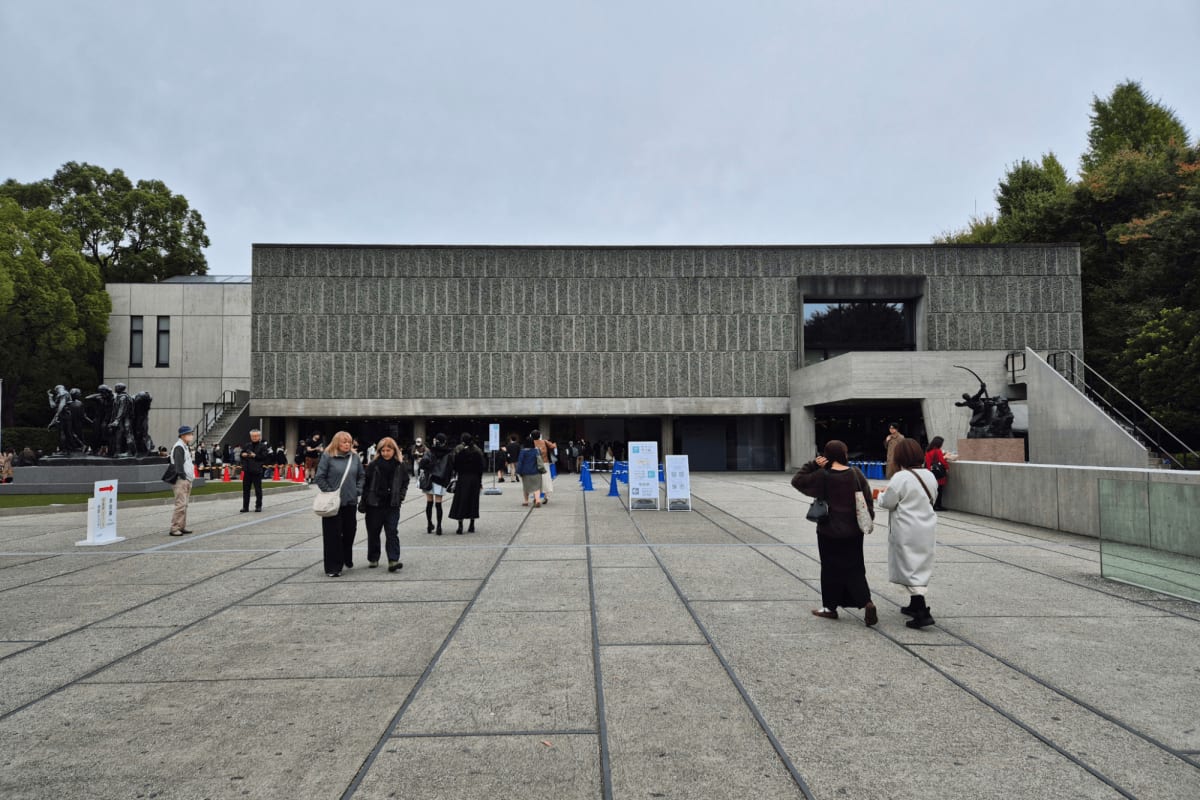
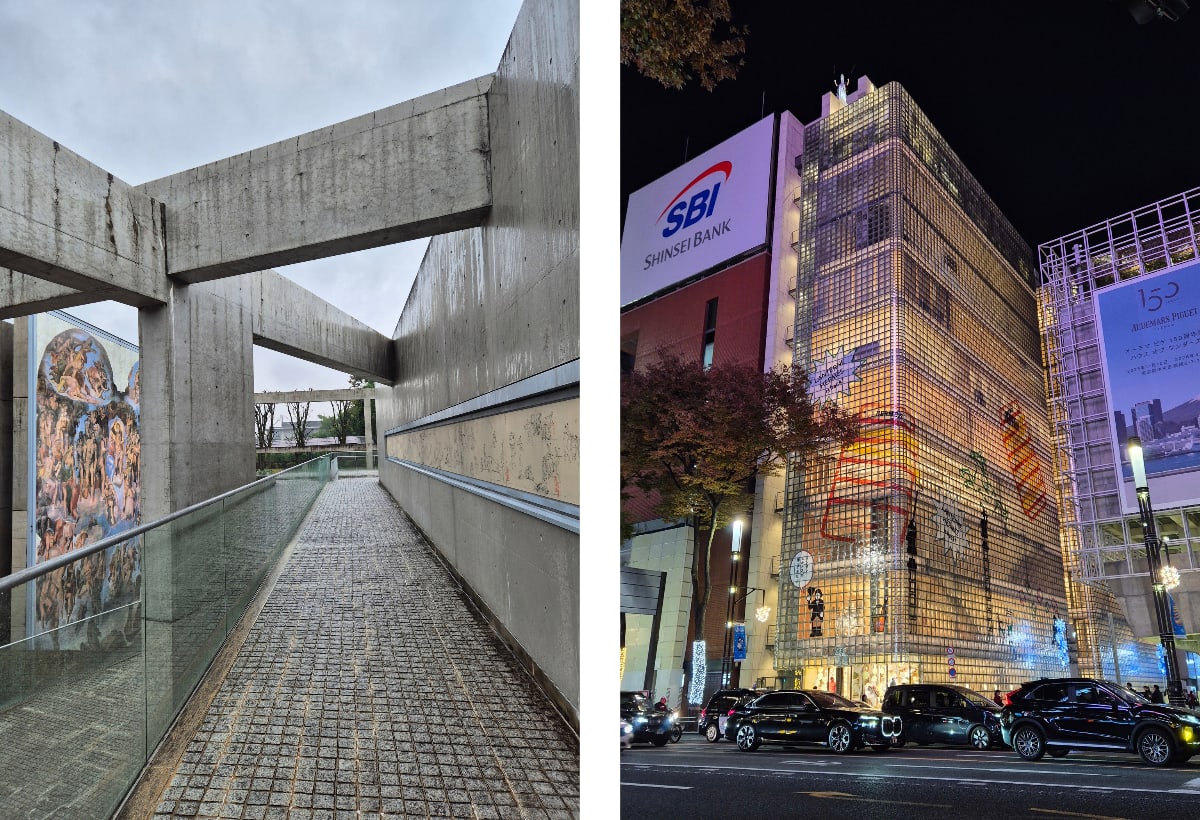
Of course, as an architect, I wasn't going to spend three weeks in Japan without obsessing over buildings. Tokyo gave me my dose of Brutalism and Modernism. I finally saw Le Corbusier's National Museum of Western Art in Ueno and found myself thinking about how strange it is that a building so deeply associated with European Modernism sits within Tokyo and feels completely at home. Ginza offered a completely different architectural conversation that seemed almost inseparable from the shopping experience. The Maison Hermès by Renzo Piano, for instance, uses its glass-block façade to glow like a lantern after dark, making the building impossible to separate from the street around it.
Osaka gave me another version of the city. There was the Umeda Sky Building, Hiroshi Hara's extraordinary pair of towers linked high above the ground, but there was also the city's less polished side. One late night, I was startled by the extremely loud noises of motorcycles outside my hotel. I looked out of the window and saw groups of young riders passing by. After days of encountering Japan's quieter, more restrained side, the noise felt almost jarring. Only later did I discover the connection to the Bosozoku, Japan's motorcycle youth subculture. Maybe a city's identity is as much about what disrupts it as what is carefully designed. Osaka felt more unruly than Tokyo, but never devoid of character.
And then Kyoto gave me my clearest lesson in restraint. The Garden of Fine Art wasn't actually part of my original itinerary. But a rainy day changed my plans, and I ended up here instead. In hindsight, it almost feels like I was meant to. I spent nearly two hours at this Tadao Ando marvel, an open-air museum built around a deliberately pared-back experience. Ando wanted to bring together light and shadow, water and sound, and sitting there, I began to understand the intention behind it. There wasn't much to “do” in the conventional sense, so I simply walked through the spaces. The rain somehow became part of the experience rather than something happening outside it.
Hiroshima brought my architectural trail back to Le Corbusier. Having seen his National Museum of Western Art in Tokyo, I immediately recognised his influence on Kenzo Tange's Hiroshima Peace Memorial Museum: from the raised pilotis to the exposed concrete and rigorous geometry. Tange's design is unmistakably rooted in post-war Modernism, but here, it carried a different weight. Within the Peace Memorial Park, the structure felt inseparable from the memory the place holds, giving its architecture a significance far beyond form.
Somewhere Between Stations
The least expected part of the trip was falling in love with trainspotting, which still makes me laugh because I had never considered myself remotely interested in trains. But along the way, I stopped seeing Japan simply through its architecture and began noticing how design becomes part of everyday life. I was entirely on my own, yet I rarely felt like I had to figure everything out alone. Somewhere in that contradiction was the most valuable lesson for me. Some of the most effective design is the design you never consciously notice. Japan's invisible design was everywhere, quietly connecting a place to the people using it. Travelling solo in Japan changed the way I understood that. A city feels intuitive when its design anticipates the person moving through it. These characteristics don’t exist in isolation. They are the accumulated result of decisions, habits, and expectations that allow a place to function as more than its physical form.
I still think about those queues. At the beginning of my trip, I believed them to be a distinctly Japanese habit. By the end, I had started seeing them as a small demonstration of what happens when the physical environment, behaviour, and cultural expectations within society reinforce one another.