“When you come to Rajasthan, you want to see a fort, a gentleman with a large moustache, a safa turban, and a hukum on his lips,” quips entrepreneur, biomedical engineer, and co-founder of Mharo Khet, Rajnush Agarwal. “We wanted to be a more forward-looking project, because I reckon the future of hospitality is not extractive, it’s reciprocal.” At first, there was a mild sense of disbelief among the denizens of Jodhpur when the story began making its rounds: a farm in the village of Manai, less than an hour from the city, where kale, Japanese shiso, and Brussels sprouts could quicken to life in the sun-bleached, blisteringly desolate scrubland.
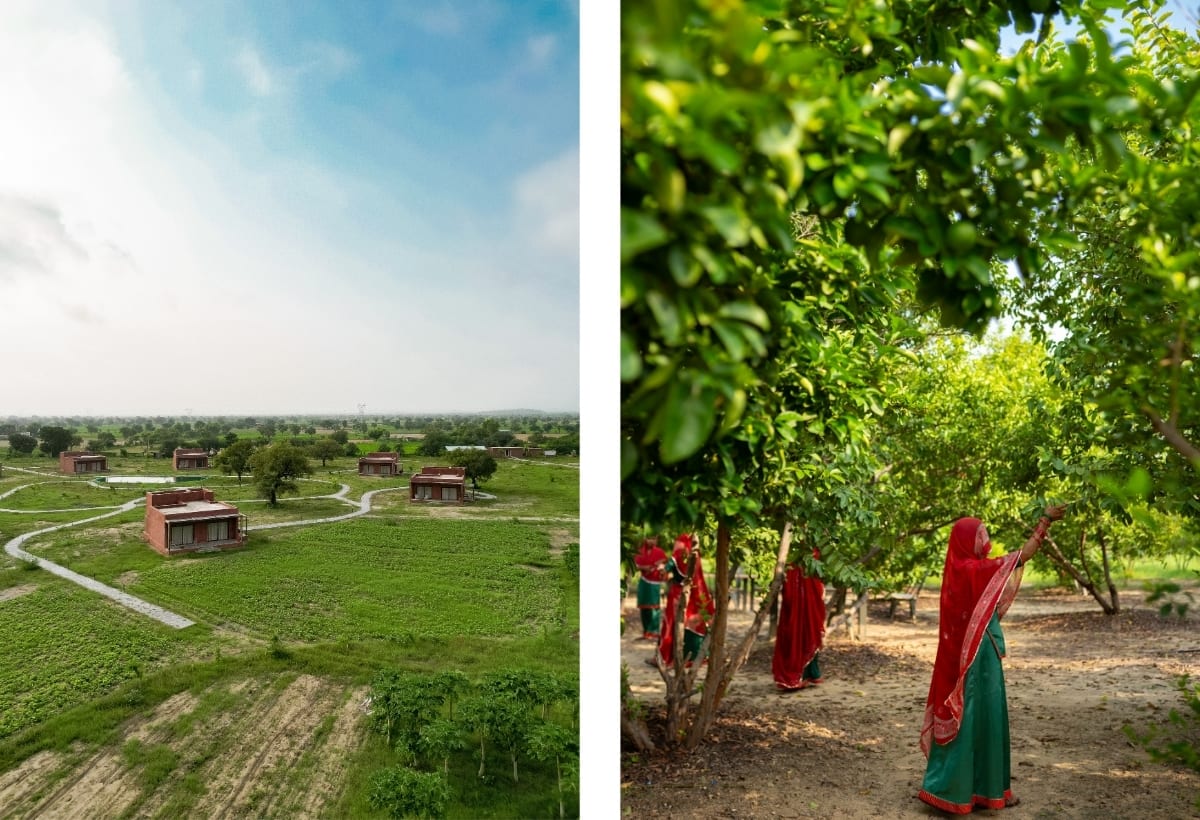
“We grow over 110 varieties and 65 species of trees, and I’d say more than 70 percent of our crops are native to the Indian subcontinent,” Rajnush gushes with contagious optimism. “If you talk to people from half a century ago, and look at conventional Rajasthani fare like ker, sangri, gatta, or papad,” he explains, “it’s all dried produce, because there were never any fresh vegetables growing here on this sandy soil.”
A ‘Mistake’ Project
When Rajnush and his partner, Vedika Agarwal, returned from chasing the cherry blossoms in Japan in 2019, the idea of a plant-forward dining experience had already begun to sprout in their minds. “That’s where we saw how much prominence vegetables were given,” says Rajnush. “An A5 Wagyu beef was priced not much higher than the baby veggies in Kyoto, and being a bania, I knew I could pull this off back home.”
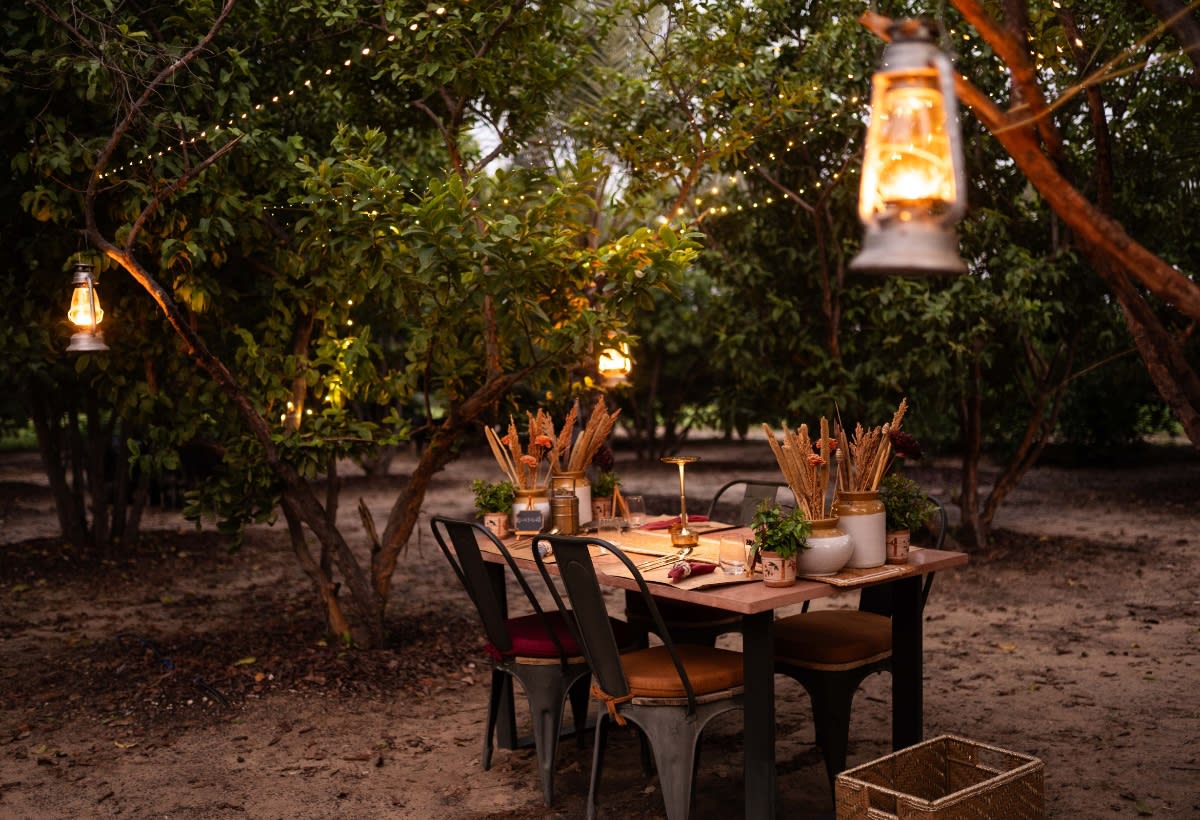
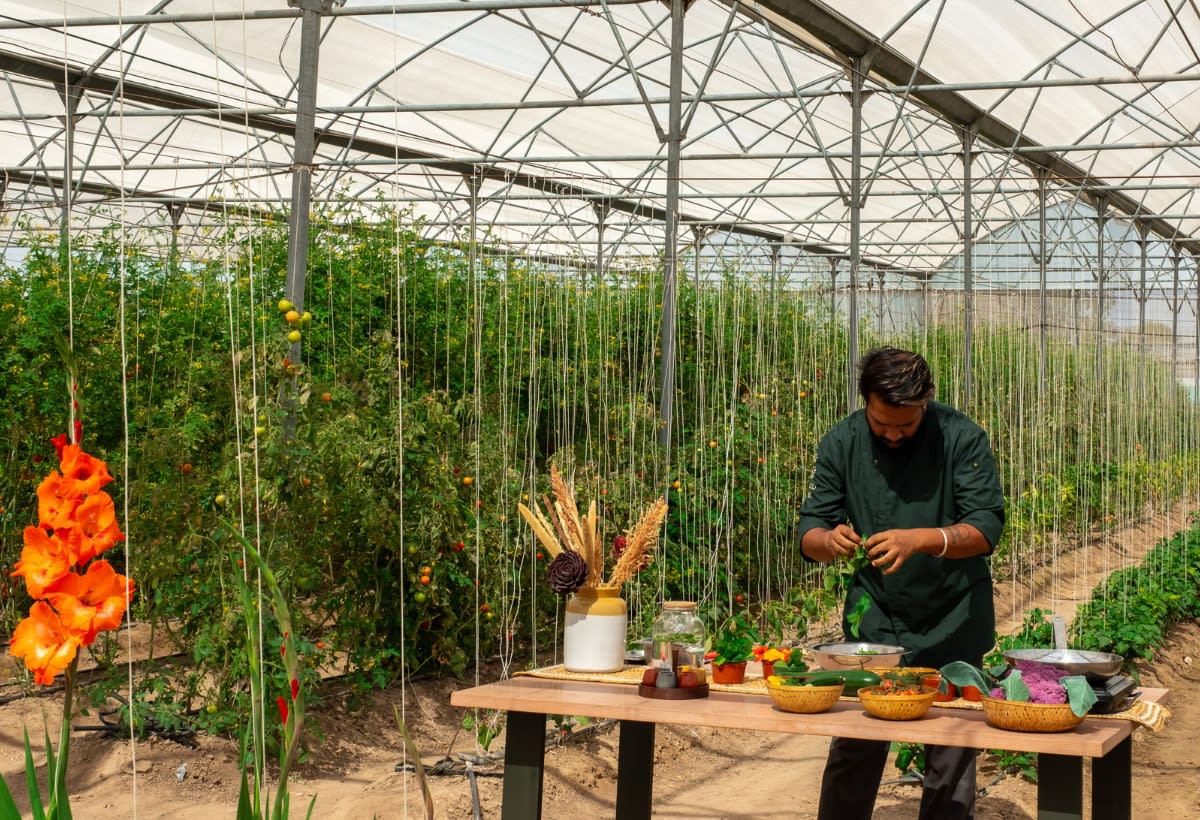
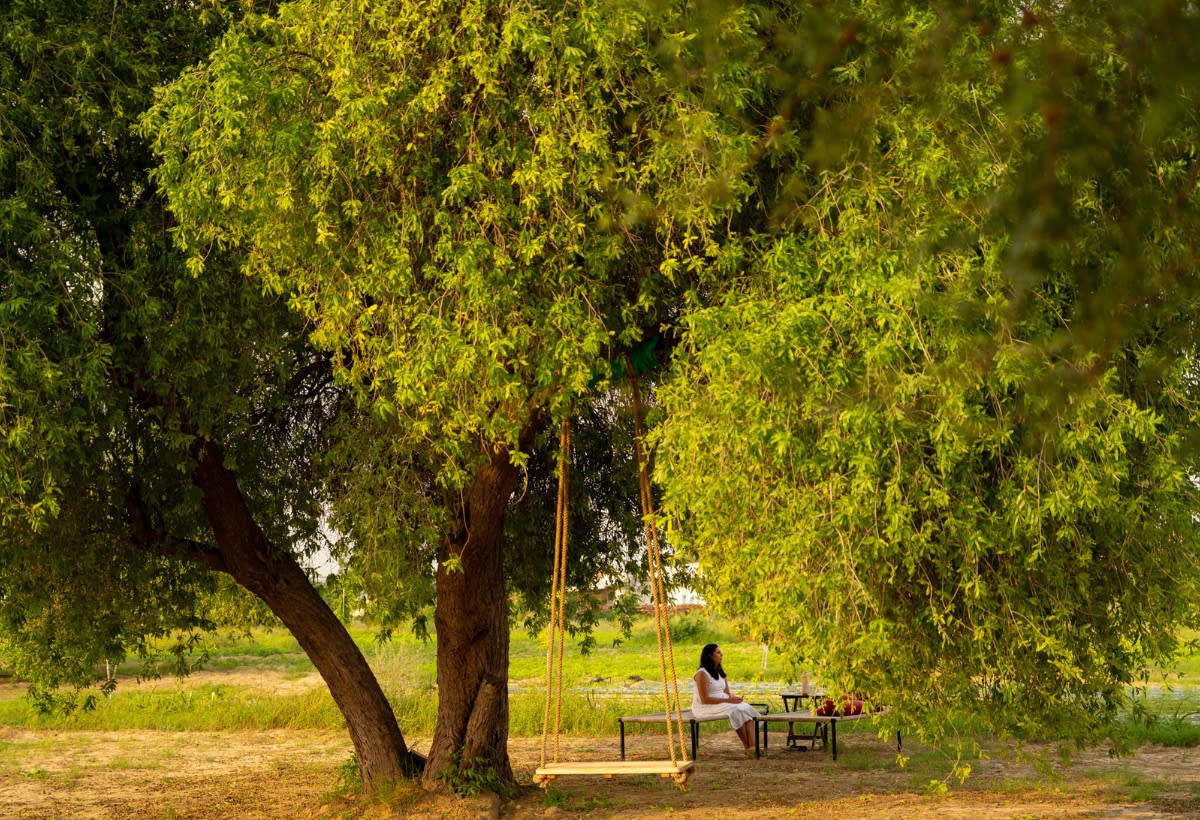
It was only the year after, when the pandemic struck, that the couple warmed to the idea of selling their organic, 100% chemical-free produce. “The farm’s been with my family for over 37 years now,” Rajnush points out. “However, we are also known to be more experimental farmers and grow almost 50 varieties of exotic produce.” You will find Sorrento lemons and violetta from Italy, strawberries, broccoli, and Greek oregano, among others, in a greenhouse where the controlled environment is carefully optimised for humidity and temperature. Instead of merely inviting sceptics for a recreational farm walkthrough, Rajnush had the brainwave to host a Sunday brunch in November 2021, where guests could witness the harvest while seated under the dense canopy of a guava orchard. The gamble paid off. “In November 2022, we thought of expanding more and doing both meals of the day, all days of the week, and people still kept coming.”
Celebrate The Vitality Of Fresh Produce
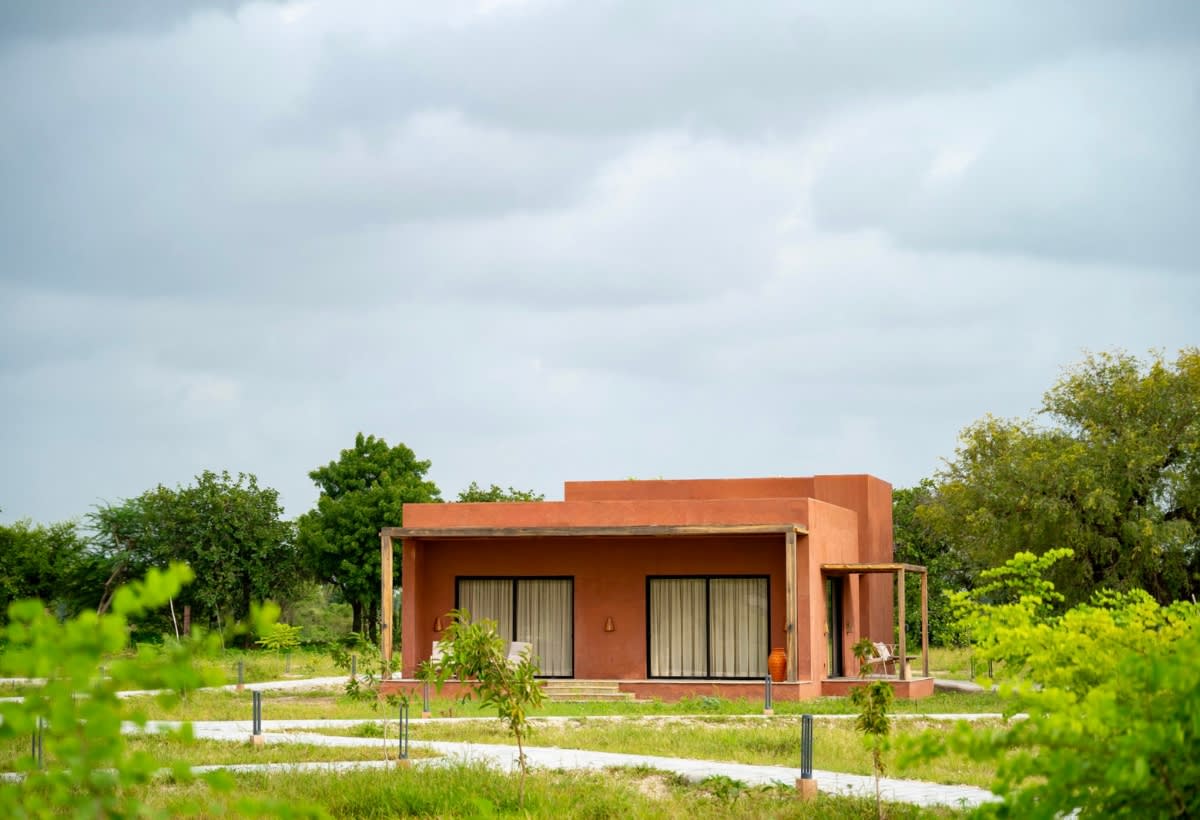
Since then, the husband-and-wife duo has been transforming this 40-acres farm for more than five years into an eco-conscious pastoral retreat recognised by Time magazine. With its cluster of ten terracotta-hued, 2,000 sq. ft. cottages, Mharo Khet is shaped by a hard-earned respect for the circle of life, years spent working alongside farmers from the village of Manai, and an understanding of how fresh produce can transform the very alchemy of our taste buds, allowing the palate to appreciate subtler, more earthy flavours as our neural pathways gradually learn to detect them.
While it’s safe to say that Indians love fresh produce, if you peek inside the pantry of a cosmopolitan desi household today, its shelves are bound to be laden with highly processed foods and packaged snacks. But for most of the subcontinent’s pre-colonial history, the traditional thali was innately designed to provide a balanced diet using in situ, seasonal ingredients. This makes it all the more incredulous that more than 70% of urban households in our country do not meet daily fibre requirements, while the intake of leafy greens remains paltry at best. It may seem as though the average Indian has become disconnected from the food chain. “Nowadays, people in cities know next to nothing about where their food comes from,” Rajnush laments. “They don’t know that a carrot doesn’t grow year-round, or how seasonality comes into play.”
Witness The Circle Of Life
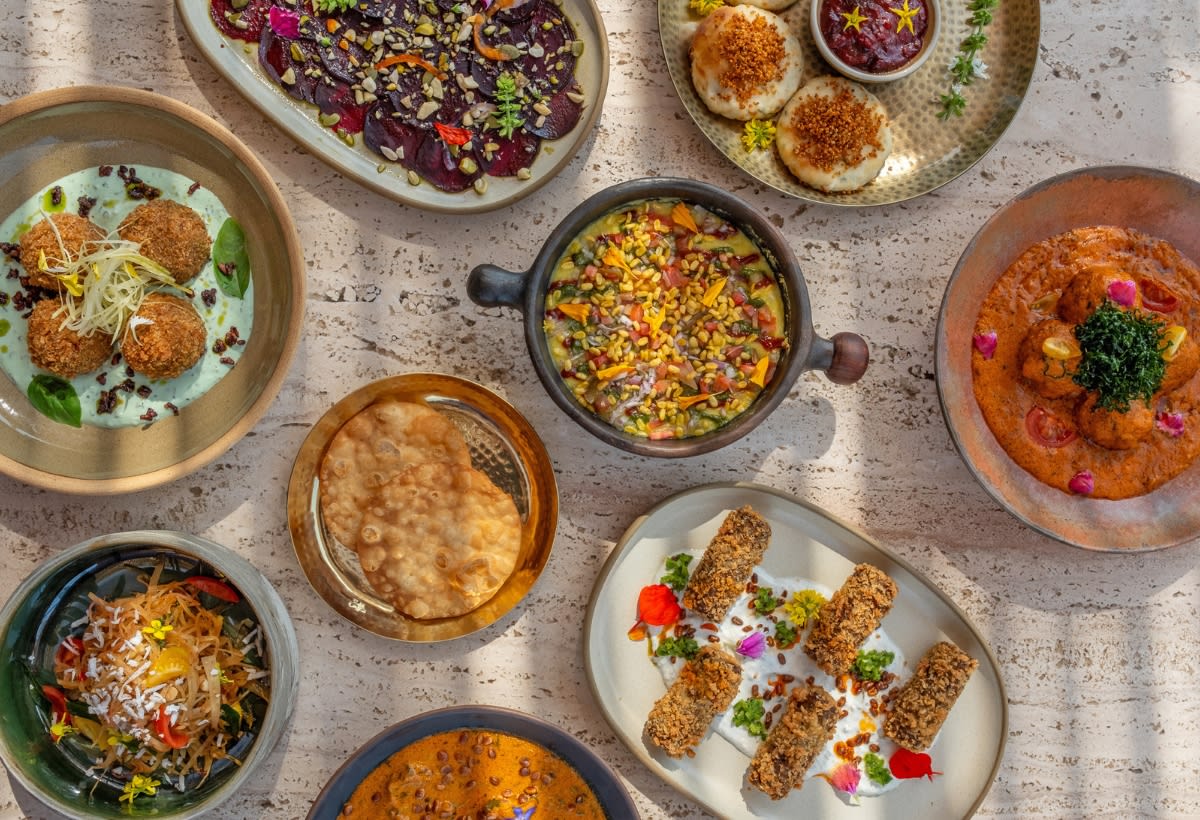
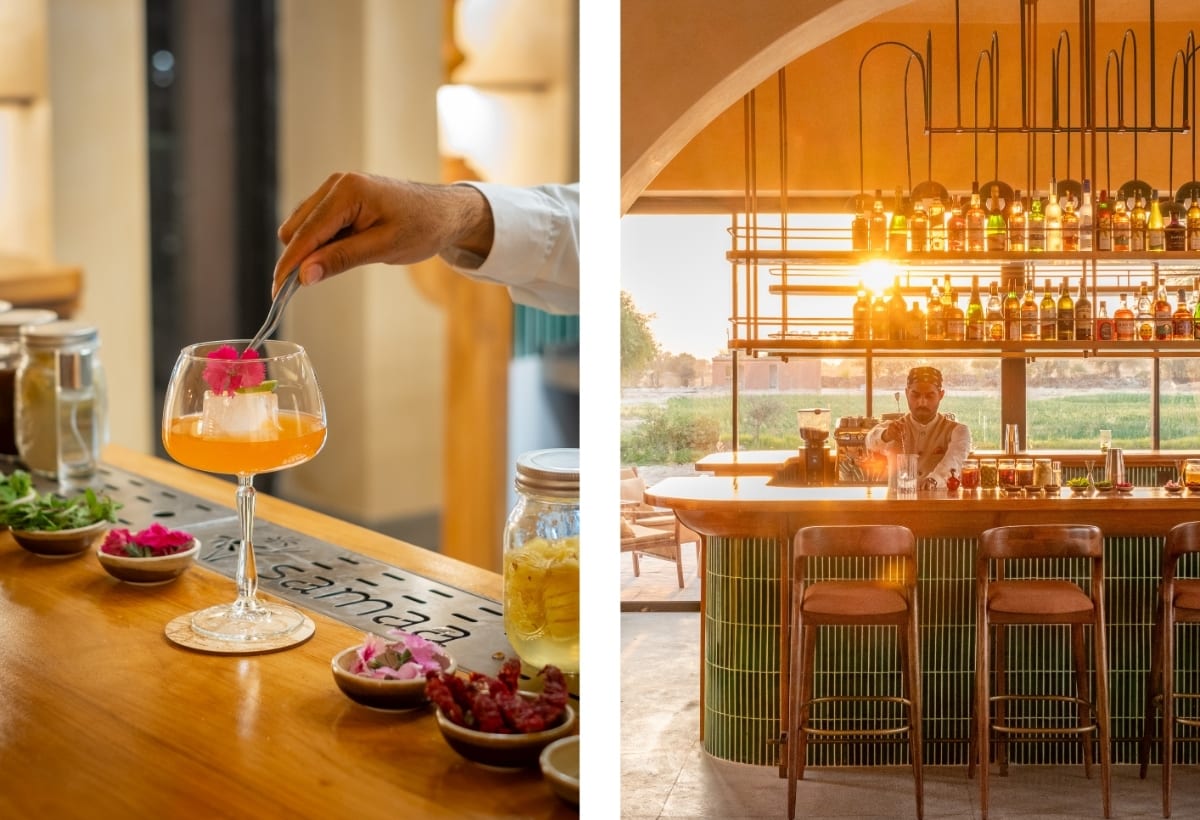
At Mharo Khet, this affinity towards nature’s rhythms feels instinctive across all three restaurants on the property, subliminally challenging the way we think about what we eat. There’s Aab for a poolside sundowner, and Samaa, where one encounters a finely calibrated orchestra of familiar ingredients and household culinary traditions.
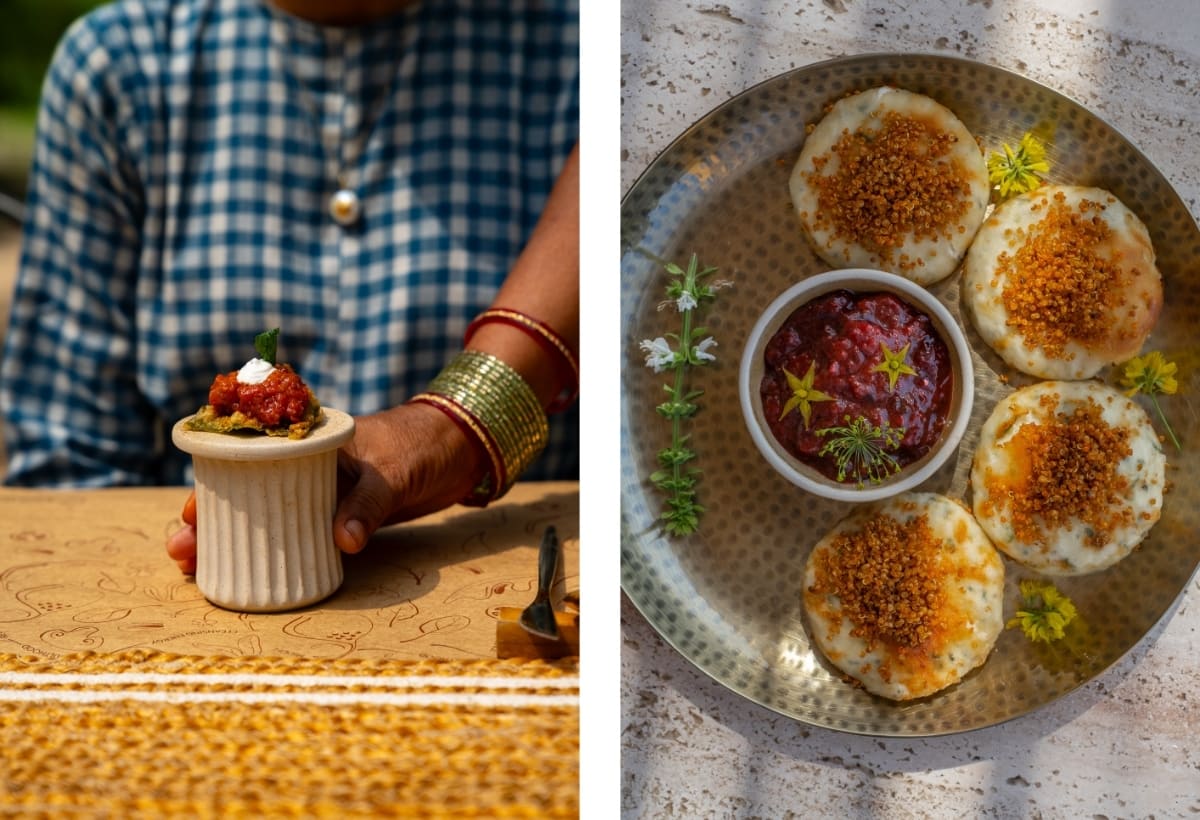
The pièce de résistance, however, is Paeru, where everything, including the signature desserts, captures the essence of each season. There are charred sweet potatoes glazed with brown butter and pomegranate molasses, or a chilled buttermilk soup sharpened with celery, poured over bell pepper kimchi and served alongside a millet biscotti. This is dining for the artist’s palate, where you’re sure to encounter something delightfully offbeat. Back in March this year, the amuse-bouche read: Thayir Saddam, Kokum, Nasturtium. This translated into a crisp potli of nasturtium leaves cradling a dollop of curd rice, served with banana chips and podi, alive with contrasting textures.
Originality, with A Dash of Storytelling
That you get to forage a few ingredients within the bounds of the estate and learn to cook two of the nine courses isn’t the most non-conformist aspect of dining at Paeru. Nor is it the fact that the menu changes every month, with fresh produce harvested by guests just before live kitchens are set up beside the guava orchard. It is that the experiential, wildly befuddling spread is, at its core, life coming full circle.
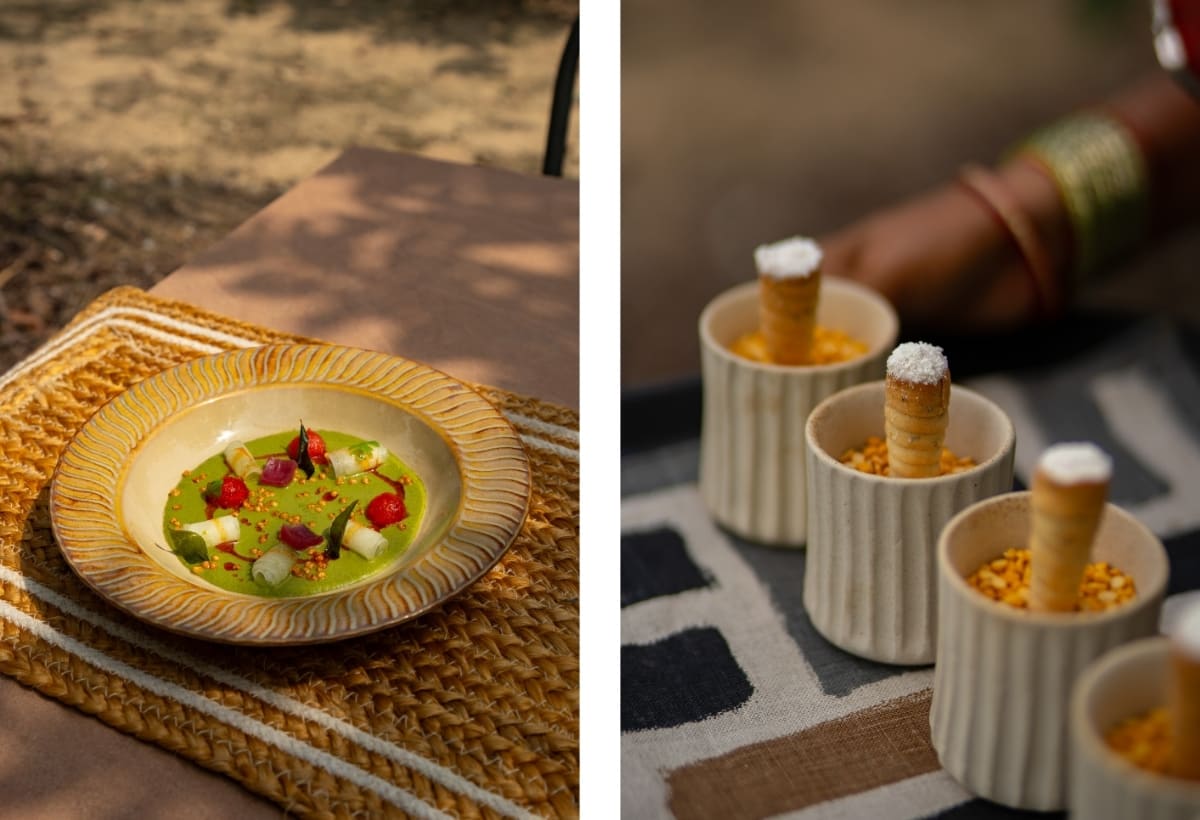
Each course embodies a decade of growing older, moving from infancy to adolescence and beyond, and as you pass through each milestone, the flavours and complexity of the dishes evolve in poetic synchrony. By the time you arrive at the fourth course, the so-called midlife crisis, your meal is served on a half-broken plate with “singed flavours, and no matter how much you try to keep it together, it will keep falling apart.”
Land-Forward, Rooted in Tradition
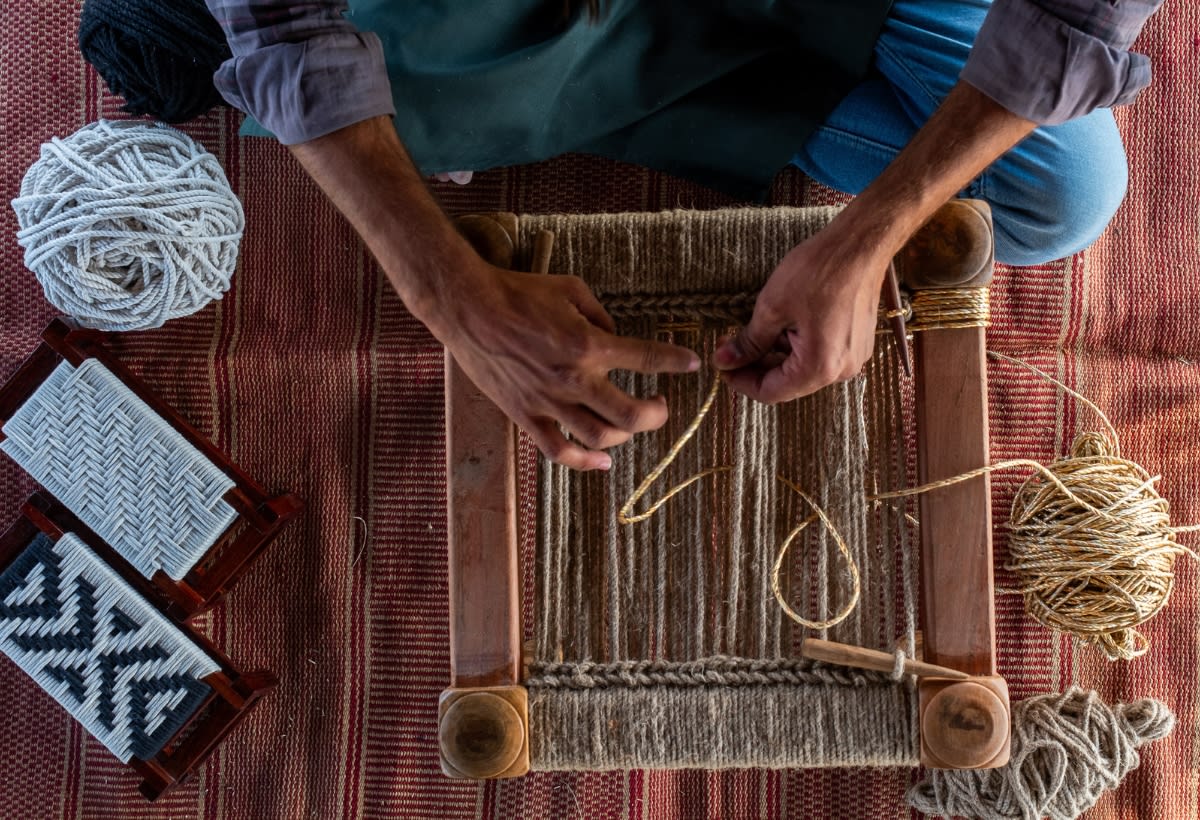
Immersive experiences across the estate are centred around local tradespeople: potters, artisans, people with real lives and daily commitments. “Rather than training our staff to pull off something that would feel like a staged workshop, we thought it made more sense to partner with community members, or saajhi as we call them,” says Rajnush. Whether it’s sound healing sessions with Tibetan singing bowls, a masterclass in charpoy weaving, or the unforgettable sunrise ‘champi’ massage, resident guests relish the rare privilege of being enveloped in a living tapestry of heritage.
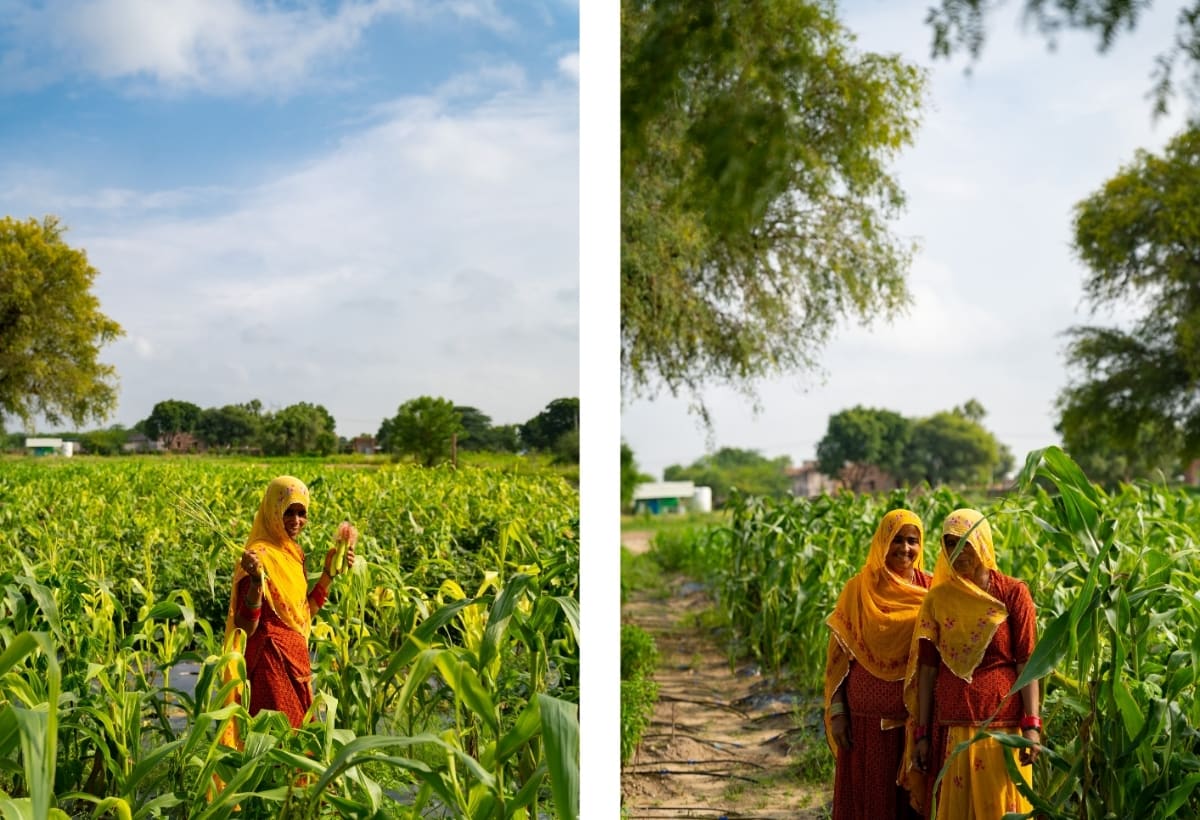
Hospitality has long been vested with a gruelling, almost masochistic legacy: untenable hours, job insecurity, and the gender pay gap becoming de rigueur. Rajnush has no inclination to replicate that framework. “I have twenty-four farmers, out of which 21 are women,” he points out. “We offer them the same pay scale as their male counterparts, and we give them flexible working hours so they can go home during the day, look after their families, make their meals, and come back.”
Bespoke, Not Cookie-Cutter
For blue-blood cognoscenti and conscious travellers alike, swooping into Rajasthan from across the world, Mharo Khet is a well-deserved detour from the chhatri palaces and stepwells of bygone Marwari royalty, a place where nature’s bounty comes together at the table in an incontestably luminous way. Moreover, in a convenience-oriented, fad-driven dining culture often preoccupied with what is trending, Mharo Khet remains steadfast in preserving its foundational values. “In today’s world of luxury hospitality, you have to be inclusive without compromising your ethos,” Rajnush tells us. “Some guests look at the partridges wandering around the estate and ask if we can cook the meat, but ours is a vegetarian menu, so we simply cannot oblige.”
It is figures like Rajnush and Vedika Agarwal who remind us how our relationship with food can be at its most intimate. Their creative direction is adroit and firm-handed, underpinned by a celebration of Indian culture and an inventive, distinctly contemporary interpretation of its heritage. Mharo Khet radiates simple pleasures because it is guided by people who understand the bittersweet anticipation of nature’s fleeting cycles.