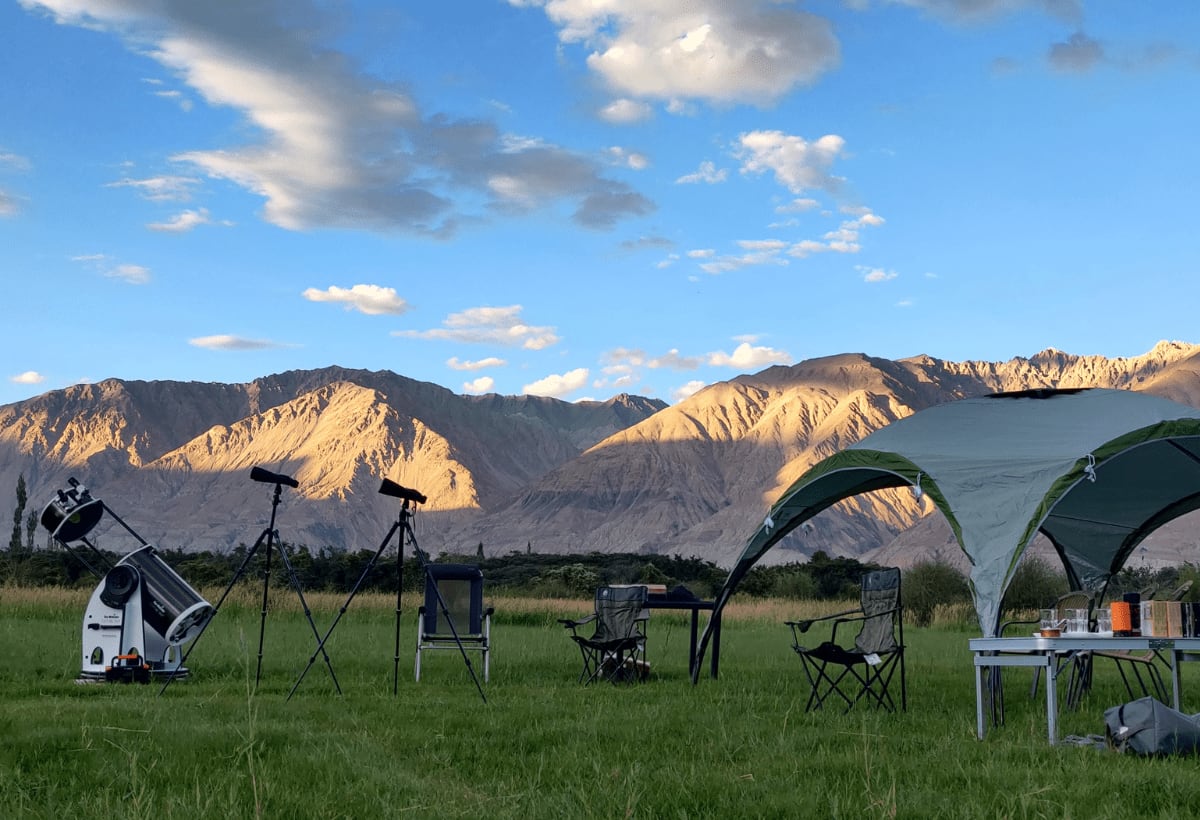
Like most people arriving in the mountain desert for the first time, I was instantly seduced by its stark beauty: snow-capped mountains against an impossibly blue sky, monasteries perched on lonely cliffs, winding BRO roads, and a silence that seemed to stretch beyond the horizon. And amid all that ruggedness were smiling, magnanimous people, living ordinary lives alongside extraordinary beauty.
Then the dark, clear night arrived, and I was star-struck!
On my first trip in 2022, I spent nearly two weeks in an involuntary digital detox (thanks to my foolish decision to carry a prepaid SIM), riding an emotional rollercoaster that seemed to match the winding roads. But when I returned to normal, two weeks later, normal suddenly felt completely not normal.
I returned to Ladakh in 2023, this time as the manager of Ladakh Eco Resort (the same resort where I stayed in 2022). That's when I began to understand the true charm of Ladakh — a place where the most interesting stories aren't always found on its roads, but sometimes are built into its walls.
The Indigenous Marvel Called ‘The Rammed Earth’
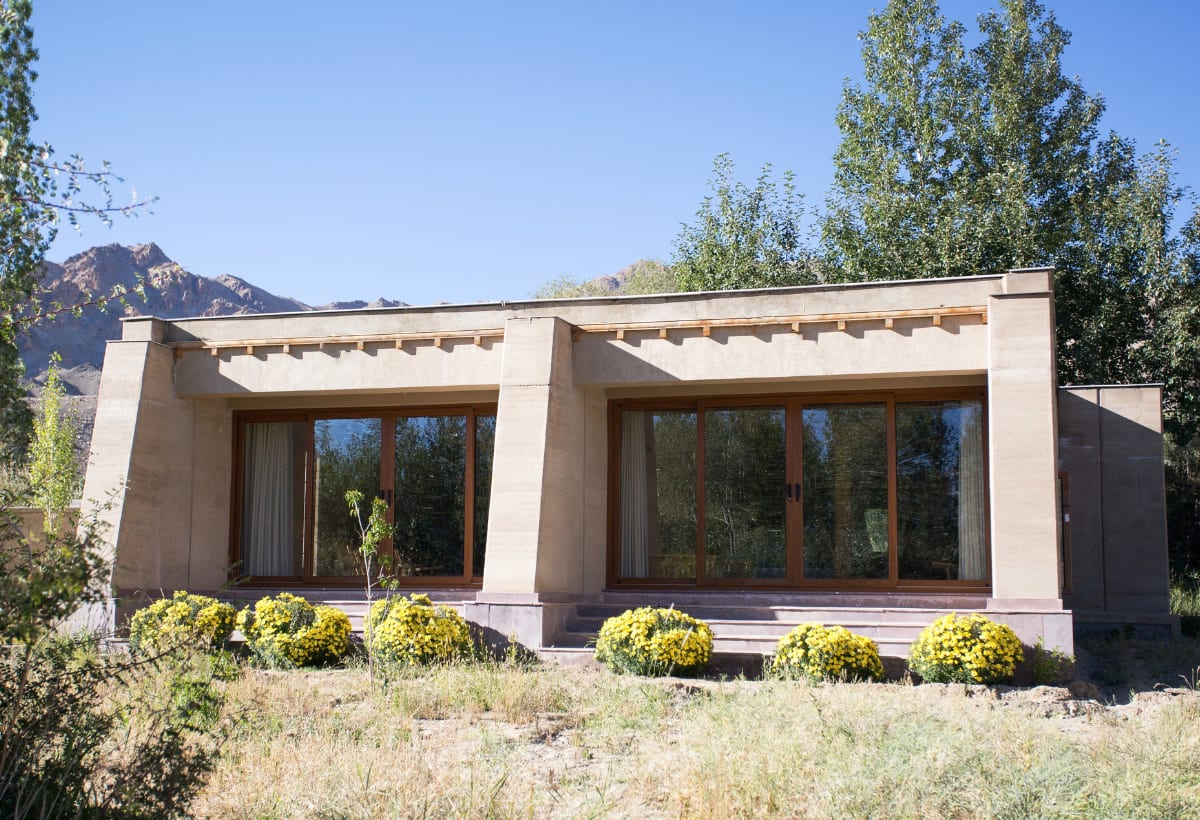
Ladakh Eco Resort is a sustainable property in Spurka, Gangles, about 3.4 km from Leh’s main market, spread across two acres between the mighty Khardung and Stok ranges. Calling it stunning is like calling Mt Everest ‘tall’! Gasping for breath, partly from the lack of oxygen and partly from the sheer beauty, you enter its unique cabins, unlike any architecture you’ve seen before.
“Are the cabins really made of mud?” I wondered, suddenly worried about the limited winter clothing I’d packed for June.
Norboo Wangchuk, the resort owner, seemed to guess my hesitation, having hosted enough poorly prepared Mumbai folks in the same Decathlon jacket. “The cabins are built using rammed earth and wood. Rammed earth is an ancient construction technique in which layers of earth are compressed to create thick, incredibly insulating walls. You will not feel even a little cold when you are indoors,” he said, smiling. And he was right.
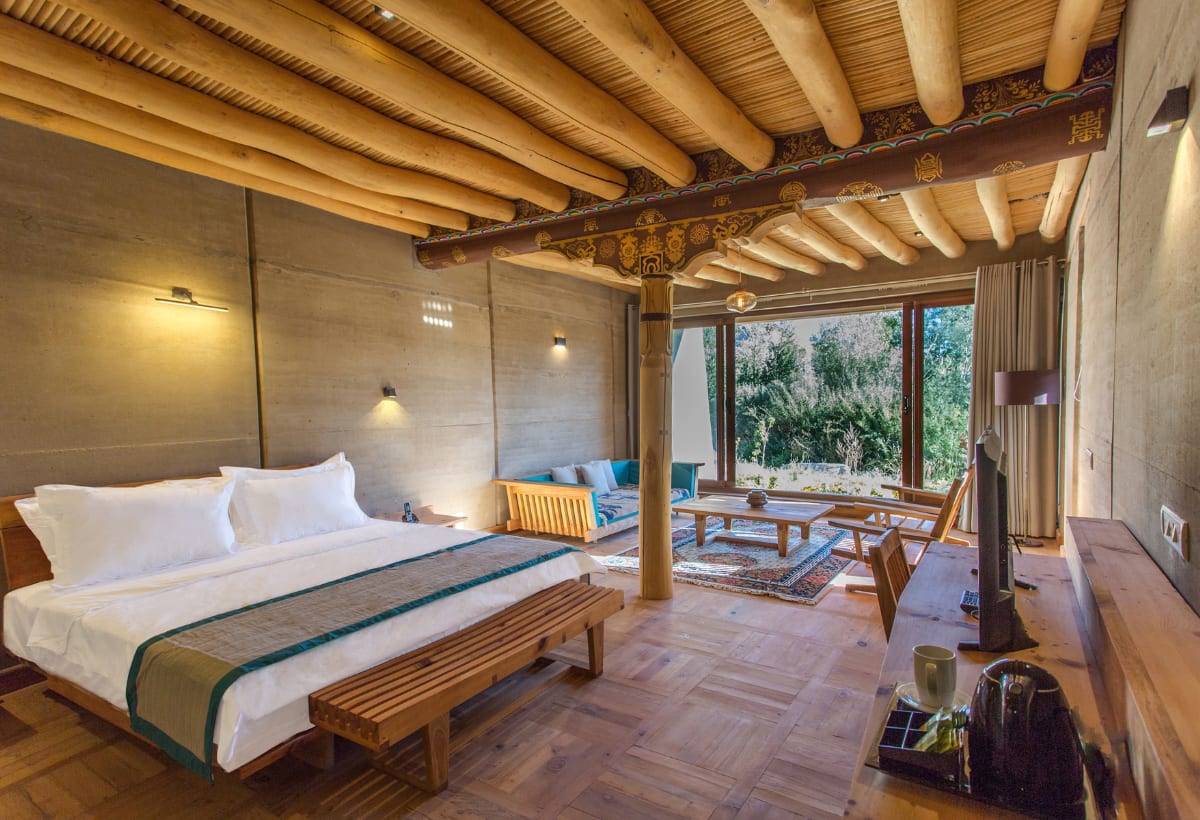
While I had to layer my Decathlon gear with my mom’s shawl and 2 pairs of socks to step outside, inside I could easily walk around in my trusty Mumbai cotton pyjamas. In Ladakh, where temperatures can plunge dramatically in winter, rammed earth isn't just sustainable for the sake of design. It is architecture that understands its landscape. To complement the raw, earthy walls inside, Norboo approached his friend and furniture designer from Leh, Rabga, an NID Ahmedabad alumnus, to design solid-wood furniture for the space, made from timber sourced from Kashmir.
DID YOU KNOW: The rammed earth technique has been reintroduced and refined in Ladakh by engineer and environmentalist Sonam Wangchuk, whose work with earth architecture and passive solar design has demonstrated that traditional knowledge can be a sophisticated answer to contemporary environmental problems.
For the cabins and parts of the restaurant, Norboo used earth and wood rather than importing conventional modern materials, asking, “What is more natural than building with the earth below our feet and the sun above our heads?” That sentence stayed with me. The cabins don’t try to compete with Ladakh's landscape; they coexist, allowing the landscape to remain the protagonist.
Though the resort is nestled amid barren, brown mountains, there is a strange sense of peace and beauty wherever you walk, inside the 15 cabins or out in the open spaces. Surrounded by beautiful willow trees, Selchang and Malchang, along with apple and poplar trees, local seabuckthorn shrubs, and more, hollyhocks, wild lilies, and liliums, every step comes with a burst of colour and happiness you can only experience in the Himalayas. As I wandered around and spotted a patch of peas, their vibrancy was impossible to resist, and I asked the chef to make them for dinner. They happily obliged. For those seeking a farm-to-table experience, the property also has an extensive kitchen garden growing fresh carrots, spinach, cauliflower, and cabbage, along with Kashmiri vegetables such as haq saag and kushu tam.
DID YOU KNOW: Ladakh Eco Resort is just one of the buildings built with the indigenous technique of rammed earth. The nine-storeyed Leh Palace — built in the early 17th century CE, when Ladakh was under the rule of King Senge Namgyal, and still standing strong — is another testament to the legacy, resilience, and power of rammed earth.
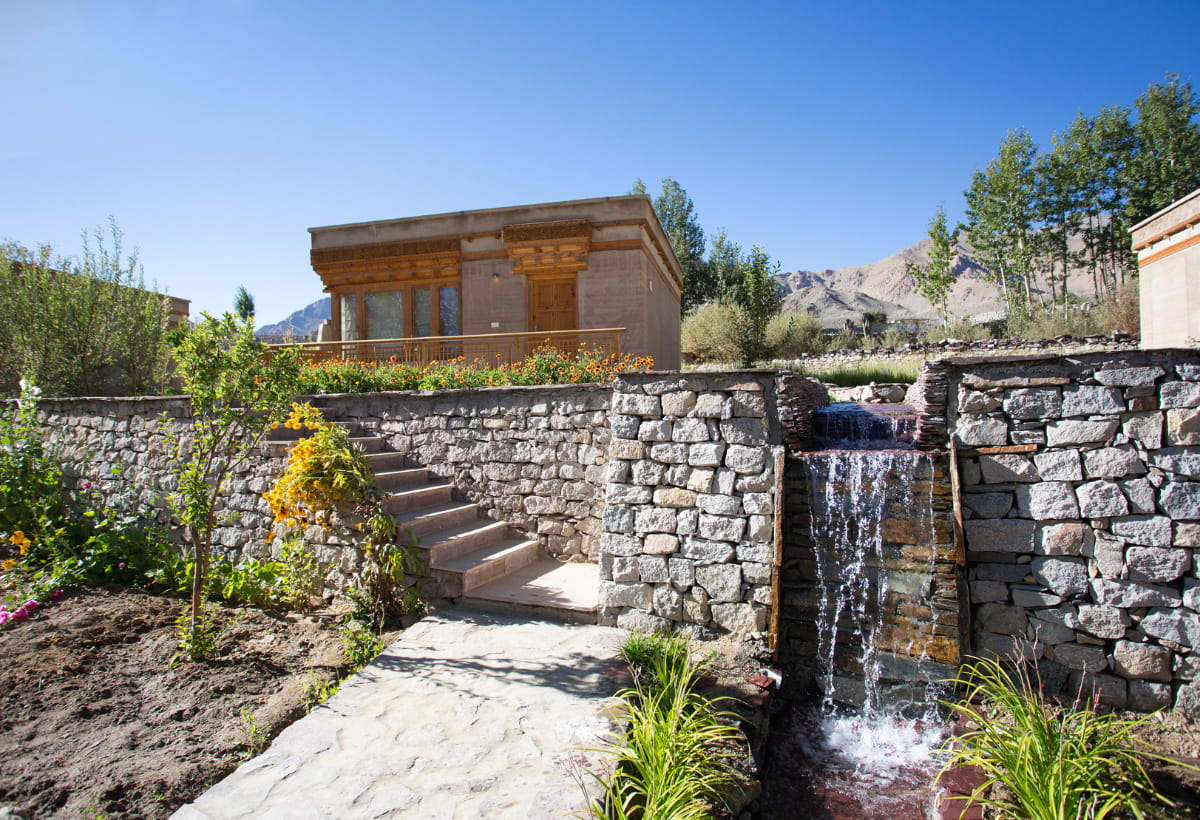
Sustainability is woven into the daily chores, meaning initiating plastic-free ideas within the resort. The team also encourages slow tourism by working with travel agents who promote sustainable travel and longer stays, while organising local hikes and walks, yoga, local markets, and more, as well as educating guests about local culture, history, and environmental struggles.
Wild Changthang: Horseback Safari on the Tibetan Plateau
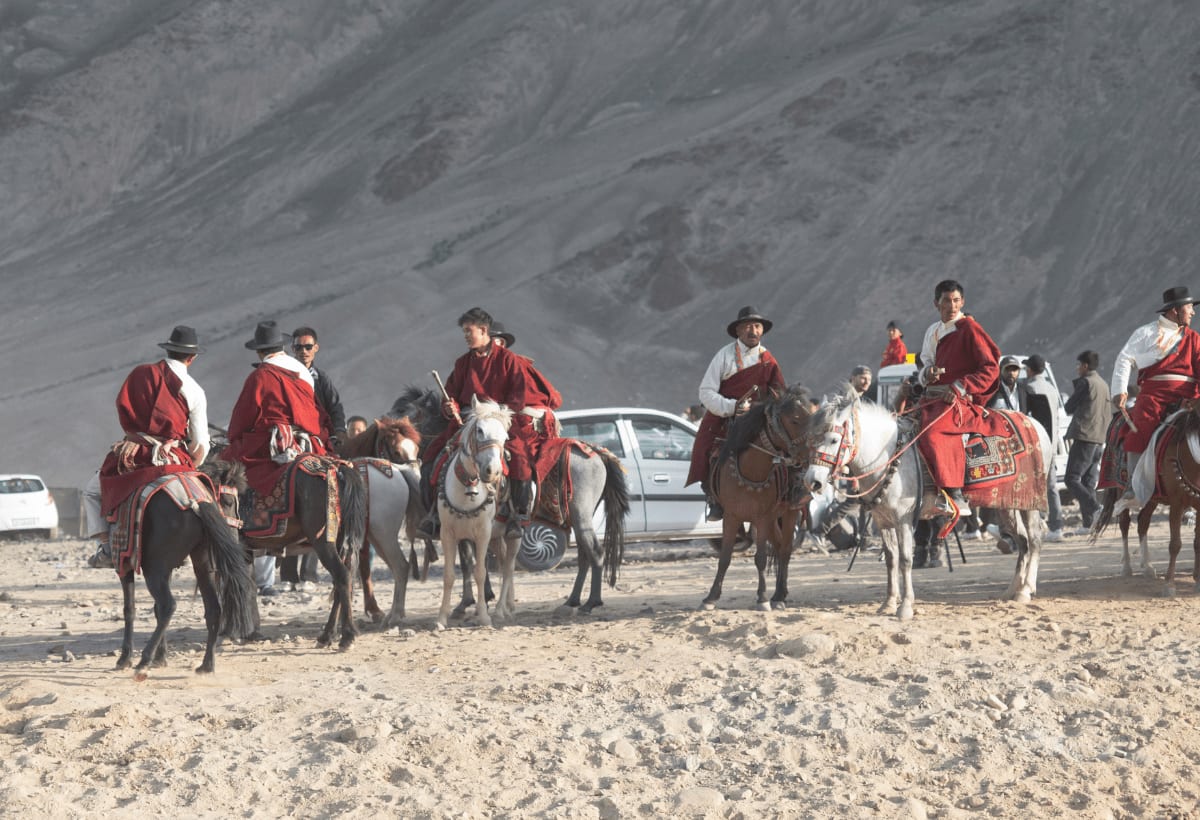
While it might be a modern buzzword, in Ladakh, sustainability has long meant something deeper than using less plastic or installing solar panels. It is about drawing from indigenous knowledge and asking whether tourism can give back to communities shaped by centuries of life in this harsh landscape. Take the Changpas, a semi-nomadic Tibetan pastoralist community that has lived across Ladakh's high-altitude Changthang plateau for generations. Their pastoral way of life has evolved over thousands of years, but today, the growing pressures of tourism are beginning to challenge this delicate balance.
Jigmat Wangchuk, founder and curator of Mantra Himalaya, who also works closely with Ladakh Eco Resort and organises a carefully curated horseback safari on the Tibetan plateau, believes people are what make a place. He works to honour these communities while creating livelihoods. “One of the most meaningful ways to experience Changthang, one of the best places where you can truly go off the road, is also one of its oldest: on horseback. The only mode of transport back in the day was horse…”, he adds, “…and it would be a dishonour to our history if we let that old ritual die. Because of 4x4s, no one treks anymore, let alone on horseback. These nomads end up selling their horses. It's neither good for the terrain nor for the people. We wanted to give these old tribes an honest and good source of income while preserving Ladakh's heritage.”
Jigmat’s horseback safaris follow old passes and routes through the landscape inhabited by the Changpa nomads. “We have designed horseback riding with the Ladakhi nomads. We want people to experience the authentic nomadic lifestyle.”
At over 4,500 metres, the experience isn't designed for conventional tourism. Jigmat conducts just one or two rides a year, mostly through word of mouth. The restraint is deliberate. While cars add pressure to the fragile ecosystem, horses remain part of a culture that is itself slowly disappearing. His approach is community-based tourism at its most meaningful, combining meals in traditional homes, nomadic experiences, farming visits, and itineraries where the money flows directly to local families. “After days spent traversing Ladakh’s wild plateaus, riding along ancient lakes, and meeting the nomads of Changthang, you leave with a deeper connection to its raw beauty, timeless traditions, and the quiet bond forged with the land and its people,” he adds.
The Night Sky Of Ladakh
This is what Ladakh looks like when you have the stars above and the mountains beneath your feet. With some of the clearest, darkest skies in the world, Ladakh is also a dream for stargazers, and on clear nights, it is easy to see why. I remember walking back to the resort after a shift on a full-moon night, feeling as though the moon had come down to earth.
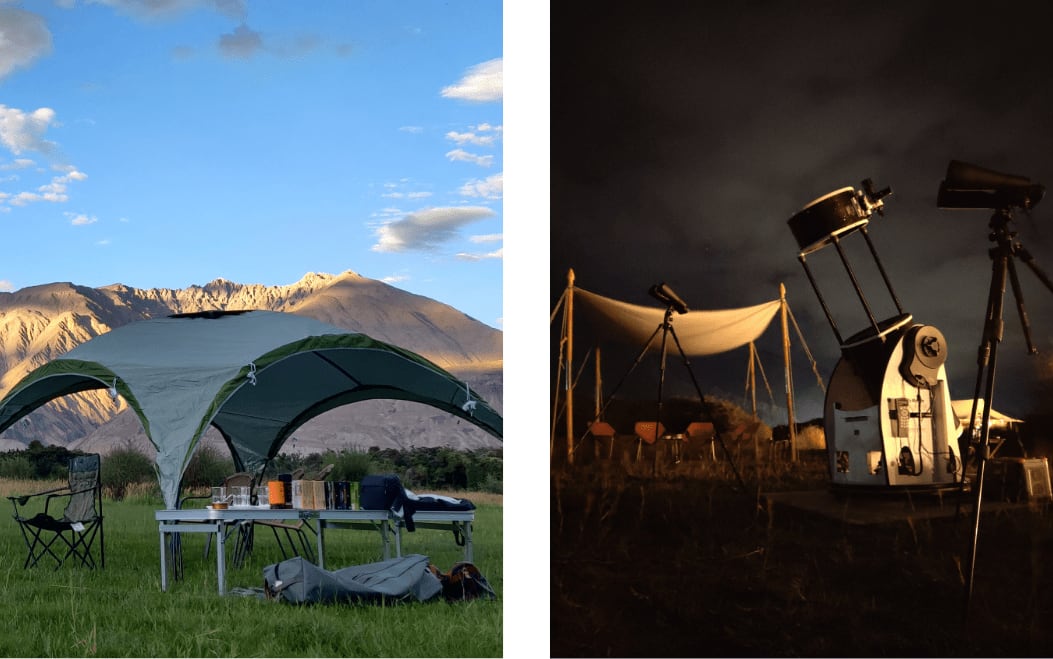
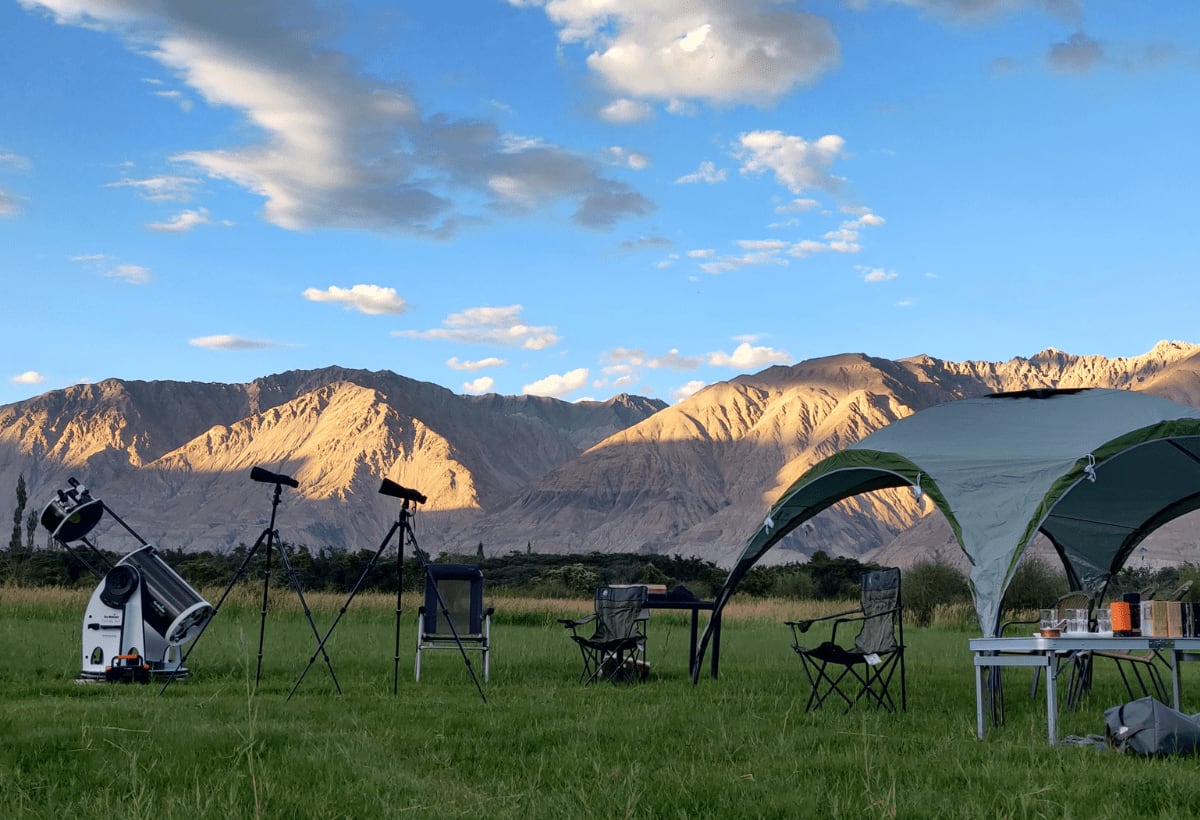
Ladakh's extraordinary dark skies are an asset that remains relatively unexplored. Deleks Namgyal, who has run Ladakh Safari for 15 years, was inspired by a friend who works as an astrophysicist in Hanle and by a retired army officer whose passion for astronomy became part of the idea. He now works to preserve Ladakh’s self-reliant culture with new tools, one of the most compelling tools being stargazing experiences.
The difference is in the storytelling. A telescope can show you the Milky Way; it cannot, by itself, tell you why the cosmos matters. So instead of lining up tourists for a quick look, the experience is limited to four or five people at a time. A dedicated dark-sky site, a 14-inch Celestron Dobsonian telescope, and high-powered astronomy binoculars turn the night into an immersive experience rather than another stop on the itinerary.
Having witnessed the surge in domestic tourism over the past decade, Deleks admits the industry initially got caught up in the growth. “But then we realised it’s not just a commercial boom,” he says. “I want to work with the larger Ladakh story.” For him, that means questioning how much tourism the landscape can absorb. He has advocated for scientific studies on carrying capacity and worked with the district administration to limit tents and visitors at increasingly congested trekking sites.
His philosophy is simple: Ladakh shouldn’t become a mass-tourism destination; it needs the right travellers. “We are developing the stargazing site as well now, but with the same local sensitivity: stone, mud and wood sourced locally, rather than materials transported from elsewhere. The future of Ladakh lies not in bringing more people to the same places, but in helping fewer people experience more of it,” he adds.
The Ladakh Of Mud And The Sky
The more time you spend in Ladakh, the harder it is not to fall for it. But the traveller also has to be mindful and accept Ladakh's ideas and character, as the onus of ‘sustainability’ isn’t on the terrain and its people alone. I returned in 2023 to give back to a place that had opened my eyes to landscapes I never knew existed, only to find that Ladakh had more to teach me. This mountain desert is more than a dramatic escape from city life. Its landscape carries centuries-old stories, its earth remembers ancient horse routes, and its history lives on in monastery walls and star-filled skies. You just have to slow down enough to listen. As a self-confessed city girl, I arrived looking for an escape and left feeling changed.
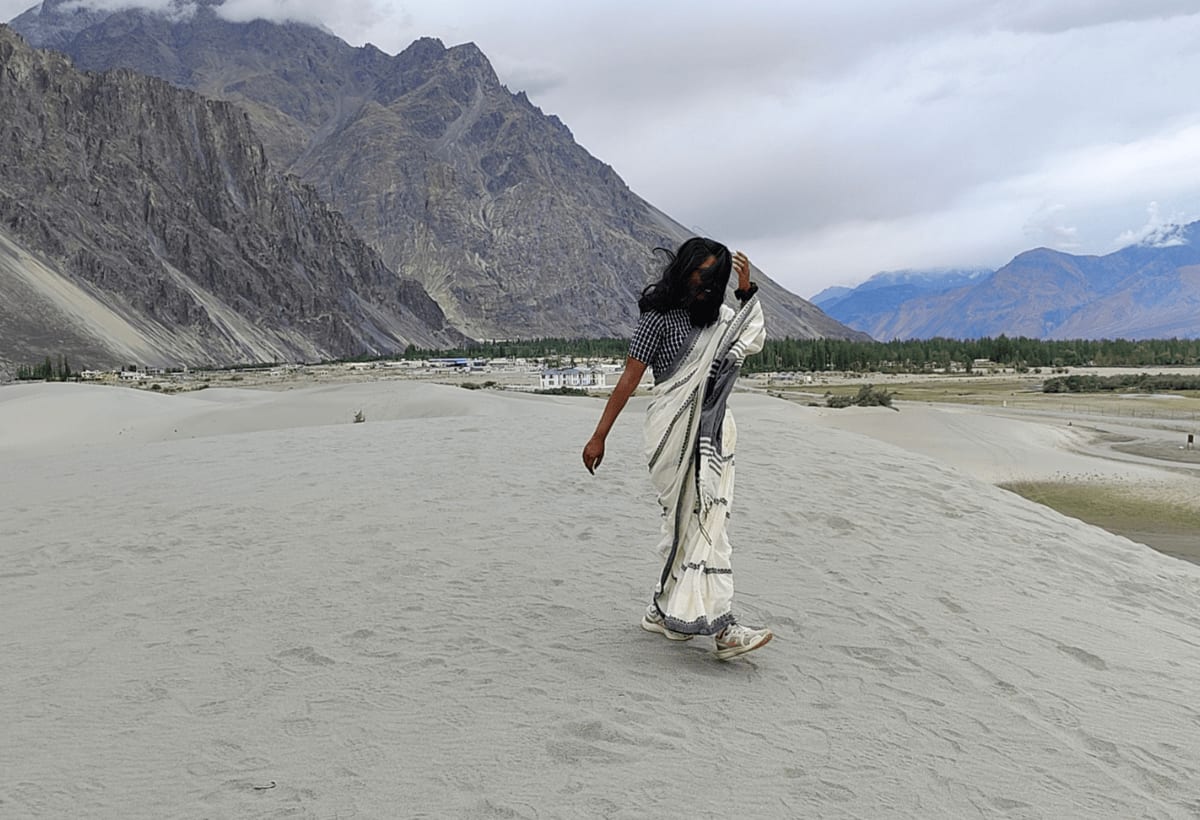
In Ladakh, if you're willing to climb, you can quite literally reach for the stars.