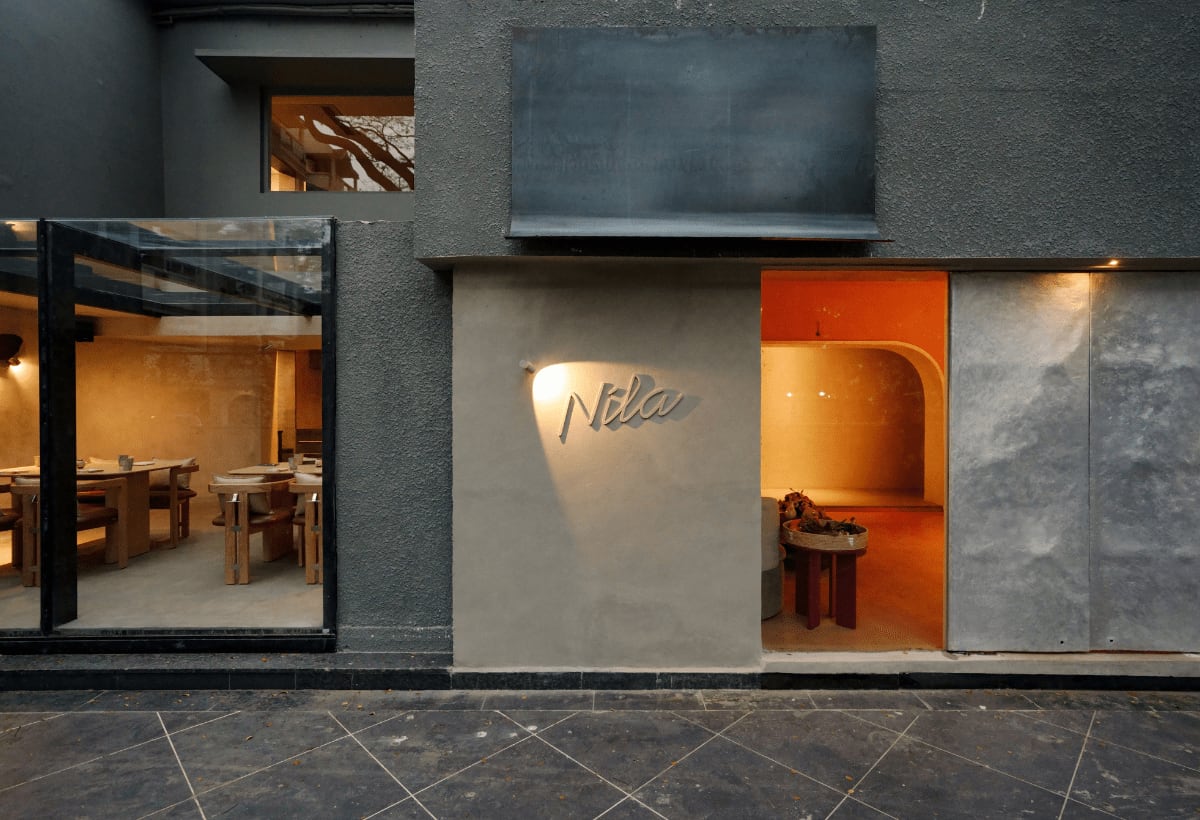
When I met Chef Rahul Sharma one afternoon in May at Nila for an interview, he sat with me and talked about how it was finally time to introduce Bangalore to new dining experiences. “We’ve had pop-ups, immersive experiences, endless cocktail bars, and now, I feel like the dining scene is ready for something new.” By something new, he meant his 12-course prix fixe tasting menu, which alter every few months. At that time, his debut menu, described as ‘An Exploration of Northeast India’, specifically the Naga region, was on its way out to make way for a ‘Backwaters of Southern India’ menu.
Often, when new places open in Bengaluru, I’m hesitant to try them in their first month. Experience has taught me that one of the easiest litmus tests for a new F&B venue is to see whether it can survive the initial wave of influencer visits and press coverage, make it past the first six months, and still find ways to surprise its guests.
I knew this was the case with Nila when, several weeks after my conversation with the Chef, a stranger, who is now a colleague, happened to tell me about their experience of trying the Kerala menu. They had waited a couple of weeks for their turn because a friend had made the reservation well in advance. He told me to go hungry because the portions were generous. They went as a group and loved it because, as he put it, it was different.
I smiled and realised Chef Rahul was onto something after all.
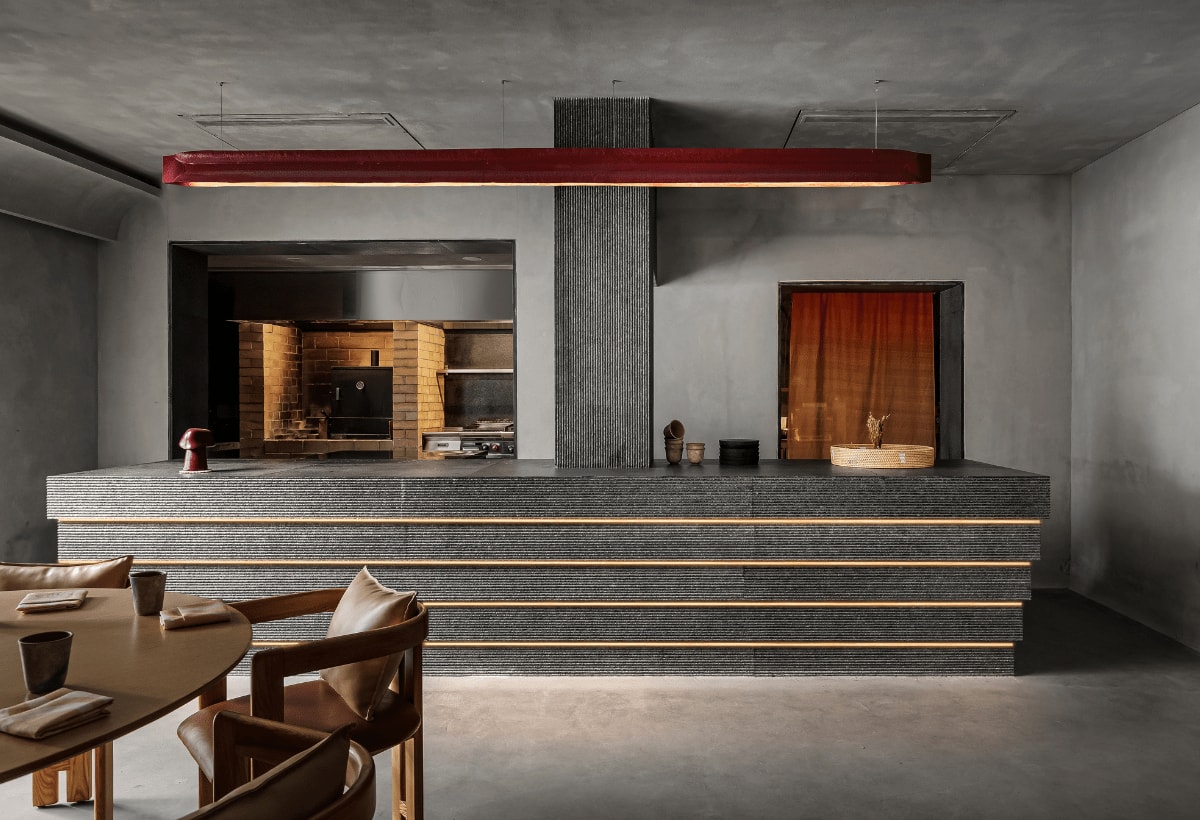
Whenever possible, when I try new places on assignment, I take a plus one, usually an industry outsider who can disagree with me and notice things I might miss while I’m being taken through the ideas, menu, and concept. They tend to be more honest and instinctive about the flavours and food. For this experience, I took my partner, who is always amused when I convince him to experiment with food. As it turned out, Nila was the perfect date spot, which was exactly what we were in dire need of at the time.
In early September, when I arrived at Nila for dinner on a weekday, they were on their third menu: a high-altitude cold desert exploring the rocky terrains of the north, often subject to extreme conditions. However, unlike before, the focus was not on the geography but on how an ecosystem with constraints contributes to food. For their second menu (Nila Chapter 2), locally abundant rice and coconut, essential ingredients of the region, were foundational to the courses. In contrast, the third menu (Nila Chapter 3) embraced a different philosophy. ‘Scarcity is not a limitation but a force,’ notes the menu we received at our table, referring to distinct ingredients grown in harsh conditions and often used in relation to the availability (or lack) of others.
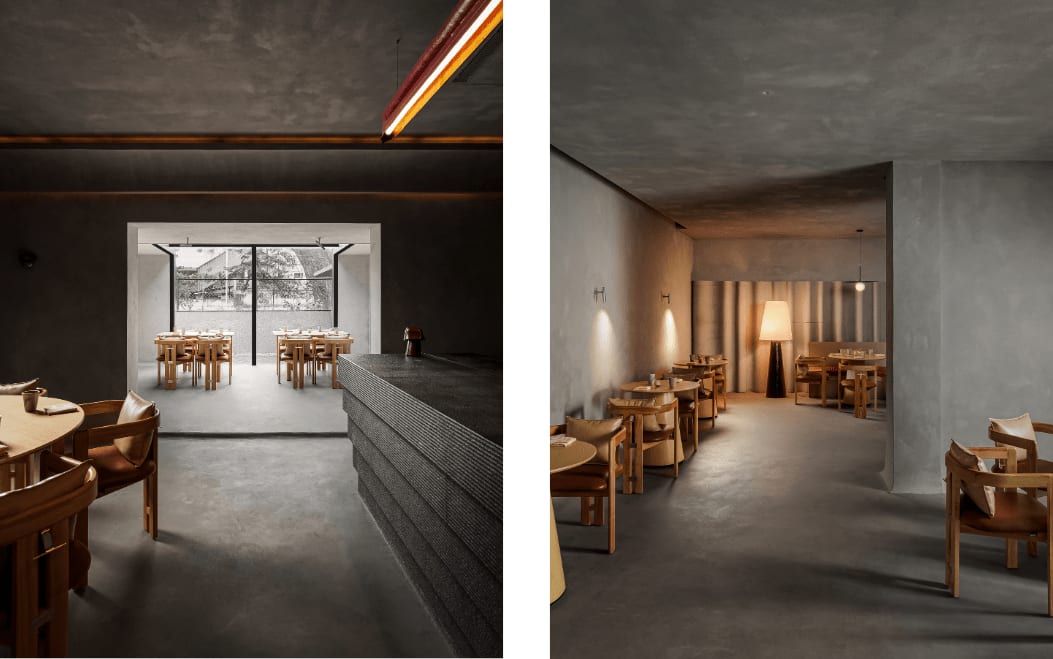
Out of excitement and anticipation, we arrived well before our reservation, so the team invited us to explore the upstairs bar, ‘Moonjar’, which had opened just a few weeks earlier. Open only on weekends, the space above the restaurant carries the same sense of intimacy and affection for whimsical design and soft forms. Glass lamps, mostly circular, dot the room. One cast a silvery shadow across our black table: an extension, of course, of the moon-phase theme that Prachi Joshi of Designworx had carried through the restaurant downstairs.
The bar team was quick to point us toward two current crowd-pleasers: ‘Elixir No. 3’, essentially a clarified buttermilk with soju, and ‘Penumbra’, made with wine, cherries, house-made cola, and sweetened with molasses. Surprised and delighted by the concoctions, we carried our drinks downstairs to dinner because our table was ready even before the drinks arrived.
Typically, before the meal, a member of their team – for us, it was Ayan – walks us through the philosophy and menu. Laid out on a coffee table at the reception of the restaurant is a selection of herbs, seeds, and pulses that Ayan explains: “Everything you see here has been used in the menu.”
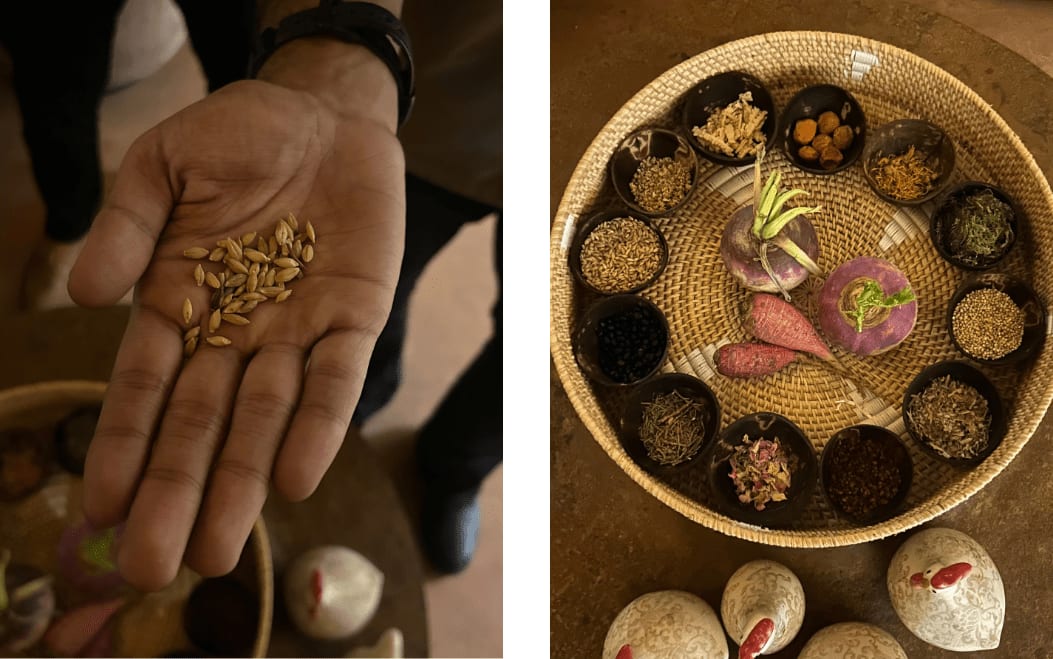
He lets us smell and taste the juniper twigs, the hardened and dried apricots, buckwheat grain, and crumbly remains of the chhurpi cheese. And then he leaves us with a question. “Juniper has been used to smoke the salmon you will eat later today,” he reveals. So does that make juniper an ingredient in the dish or simply part of the device used to cook the fish?
One of the constants of the menu is its multi-course structure, reminiscent of French fine dining but distinctly Nila in its naming. The hors d’oeuvres arrive as ‘Living Room,’ typically a selection of appetisers meant to be shared, followed by ‘Sharing,’ which moves between dishes for the table and individual portions. Then comes the ‘Feast’— the main course — before ‘Dessert’ brings the meal to a close. The number of dishes within each course can vary, but across this particular menu, 12 dishes were spread across the four stages, including two main courses and three desserts.
What I loved more than the unusual absence of cutlery, however, was how deliberately the meal taught us to eat it. At the start of the courses, the hospitality team placed a small wooden ring on the table, fitted with a wet towel for cleansing between courses—a clever, elegant upgrade on the finger bowls that usually appear at the end of an Indian meal. It was a small detail, but one that immediately signalled that this would be a meal best approached with attention.
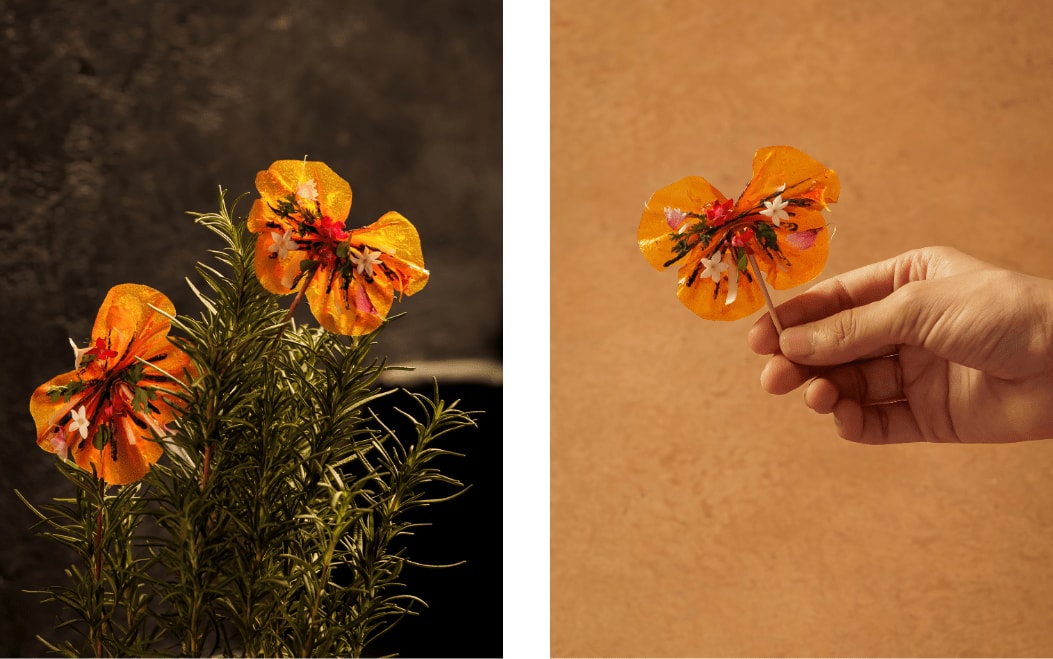
Just as I was admiring this contraption, a rosemary plant appeared on our table, bearing just two flowers. These were ‘Rakstey Karpo’ apricots, considered an exceptionally sweet variety from Ladakh, reimagined as delicate leather flowers and served with pickled apricot and micro herbs.
Shaped like butterflies or flowers, depending on what your imagination saw, they tasted anything but sweet. Their sharpness took me straight back to the aam papad I used to bite into during summers at my grandmother’s house in Delhi.
We were off to a great start.
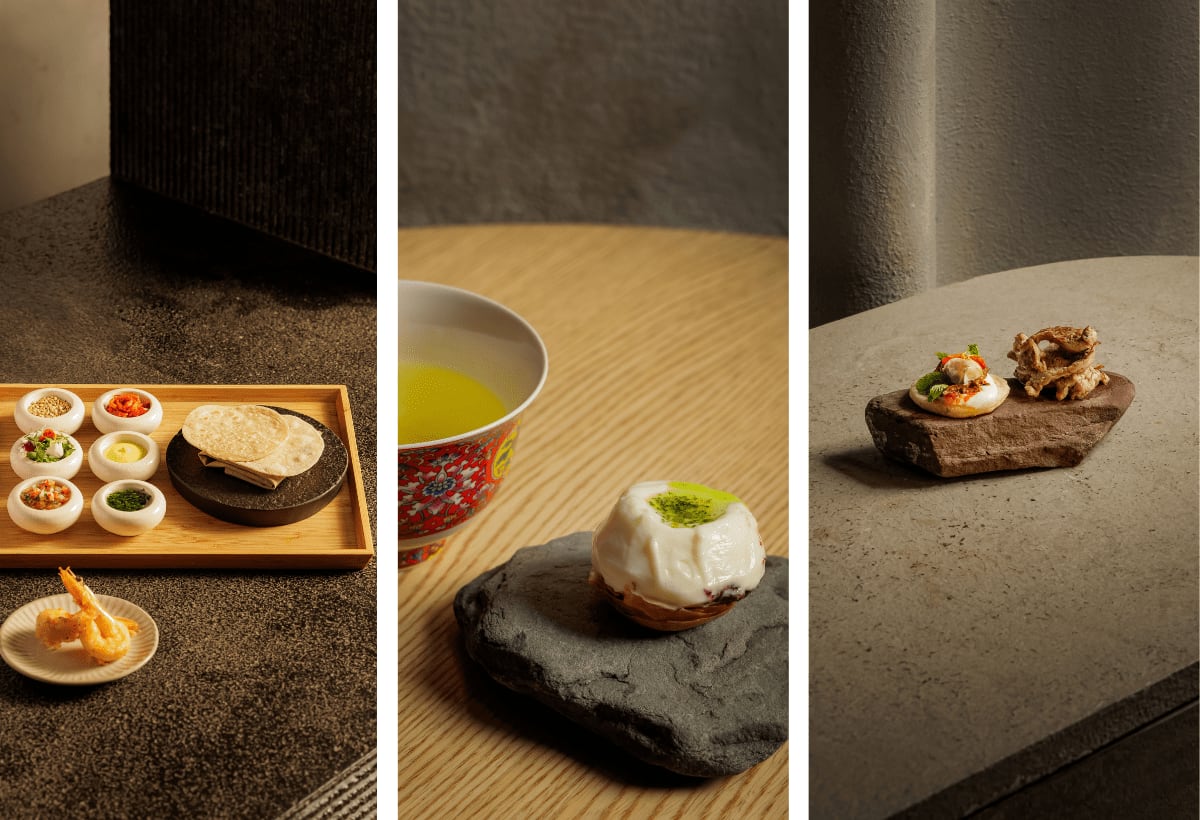
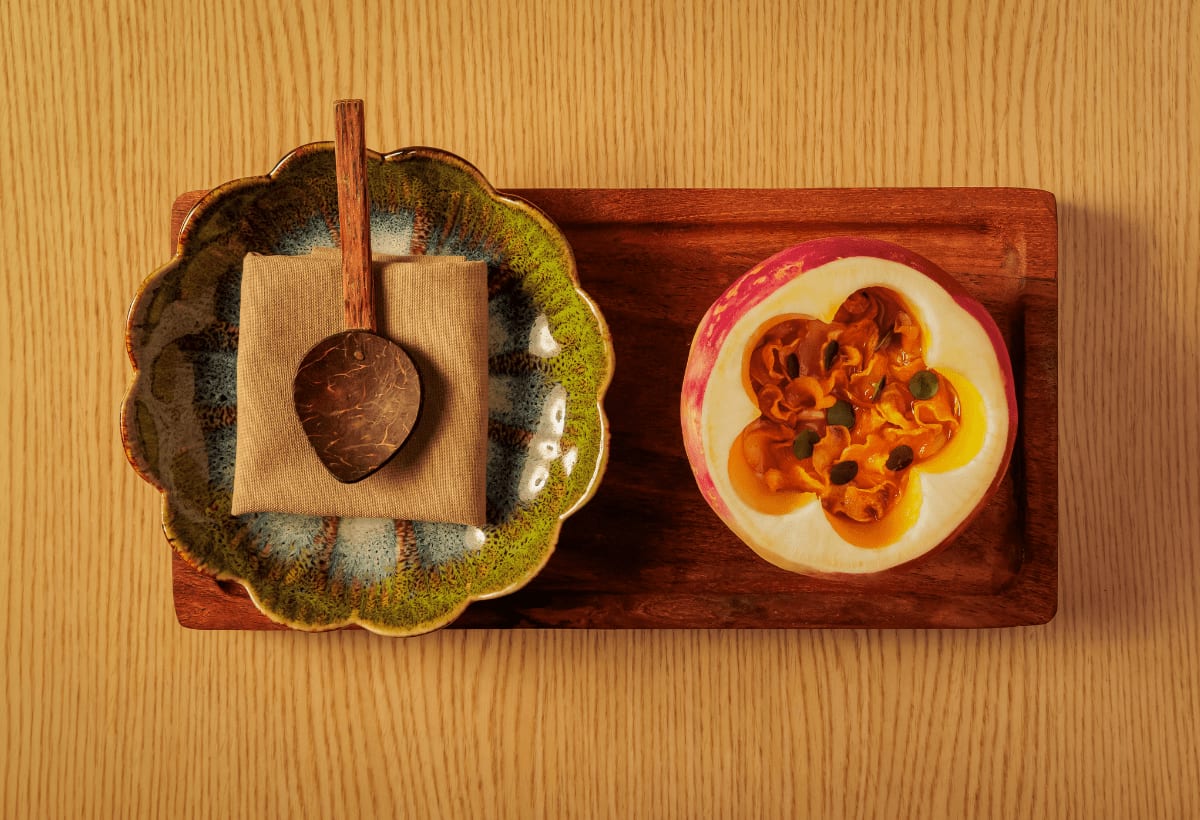
The surprises continued. A ‘Ladakhi Turnip’ arrived with its outer shell repurposed as a little casserole, encasing a sour turnip custard and finished with chilli oil. We ate it with tiny, thumb-sized spoons. Then came hand-tacos made with buckwheat, their creamy toppings, tangy salsa, and greens assembled directly onto our outstretched palms under the careful instruction of our server.
That instruction became an important part of the meal. Much of the experience depended on listening—to where to place something, how to pick it up, what to combine, and sometimes, simply how to eat it. There is a particular pleasure in being taught how to experience a cuisine unfamiliar to you, the kind of hospitality people often travel across borders to seek. And yet here we were experiencing it, beneath the leafy trees of Cambridge Layout in Bangalore, at Nila.
Each dish seldom came the way we imagined it would. Reshaped, retextured, reconfigured, so every bite was driven by curiosity rather than just hunger. I found myself paying closer attention to flavours I might ordinarily have reduced to the familiar categories of salty or spicy. There were pungent notes, smoky elements, earthy and herbaceous flavours, soft and chewy textures, and combinations that were difficult to place immediately.
The ‘Churpi Broth’ was one such moment. Since I cannot tolerate dairy, my partner served as my proxy taster while I was served a mushroom broth with herbs and seasoning. His version was salty, thick and heavy—so heavy, in fact, that he never quite made it to the bottom of the cup. Both came with house bread and an assortment of fresh condiments, including pickled radish, fermented Korean chilli and preserved lemon. The bread, unsurprisingly, disappeared quickly.
There was a larger idea running through these first three courses, too: altitude. The ingredients travelled down from different elevations, with the apricot, for instance, grown at around 12,000 feet and chhurpi sourced from around 10,000 feet. Rather than presenting altitude as a statistic, Nila seemed to build it into the experience through the ingredients themselves.
The main course is where I found myself at odds. I thoroughly enjoyed the ‘Juniper Smoked Trout’ served with an indulgent almond cream and tomatillo salsa. The ‘Smoked Pork Belly’, however, was less successful for us: chewy, briny, and somewhat under-seasoned, its flavour profile felt unfamiliar in a way that did not quite come together. After so many creamy and soupy textures earlier in the meal, both mains also leaned into softness and chewiness, making the transition feel slightly less assured.
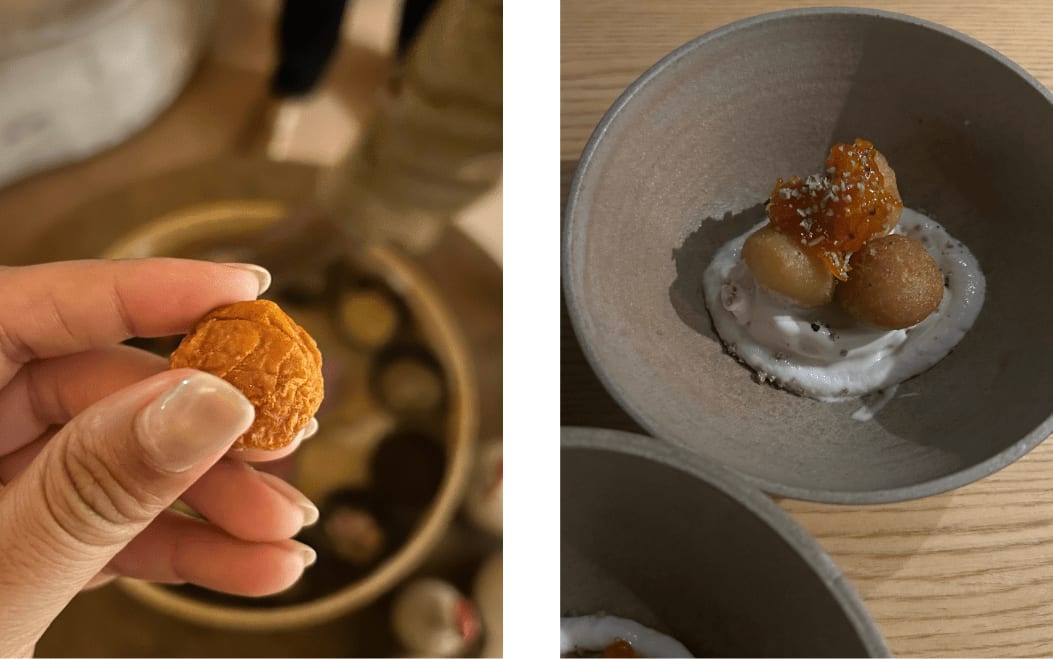
The dessert, however, was one of my favourites. The idea of three desserts is a ‘dream come true’ because it had the best of all worlds: salty, chocolatey, and fruit, with a touch of cream. Shaped like an apricot and served over house-churned pepper ice cream, the dense, moderately sweet cake was brilliant. Paired with the mildly spiced ice cream, it offered a sweet-and-savory combination that completely redefined my sweet-tooth boundaries.
Our night ended with a cup of chamomile tea designed to send us straight to bed. After a sensory experience with a lot of unusual components, this was a clever way to signal the end.
What we enjoyed most was the storytelling behind the menu. Each course followed a logic – whether it was presenting an unpopular dish like turnip as custard or a sharp cheese as broth, each hero ingredient was championed through flavour or texture. Being curious about what’s on your plate is the easiest way to eat responsibly and perhaps sustainably, but in a restaurant setting, it also builds greater appreciation and value for the food you are being served. Chef Rahul’s ethos behind Nila goes beyond simply offering a dining experience. He is also driven by a need to spotlight and showcase the provenance of ingredients in India.
Conceived by Rahul Sharma in Cambridge Layout, Nila stems from a vision to celebrate the vast regional and cultural diversity of Indian food. Following his role in shaping the farm-to-table program with restaurateur Aditi Dugar at Araku, Sharma’s culinary journey has traversed India and the globe. He has worked at prestigious kitchens including The Oberoi Udaivilas, Trident Mumbai and Gurgaon, as well as Noma and Masque under Chef Prateek Sadhu. Translating to 'moon' in Tamil, Nila reflects his dynamic, ingredient-first approach to evolution in the kitchen.
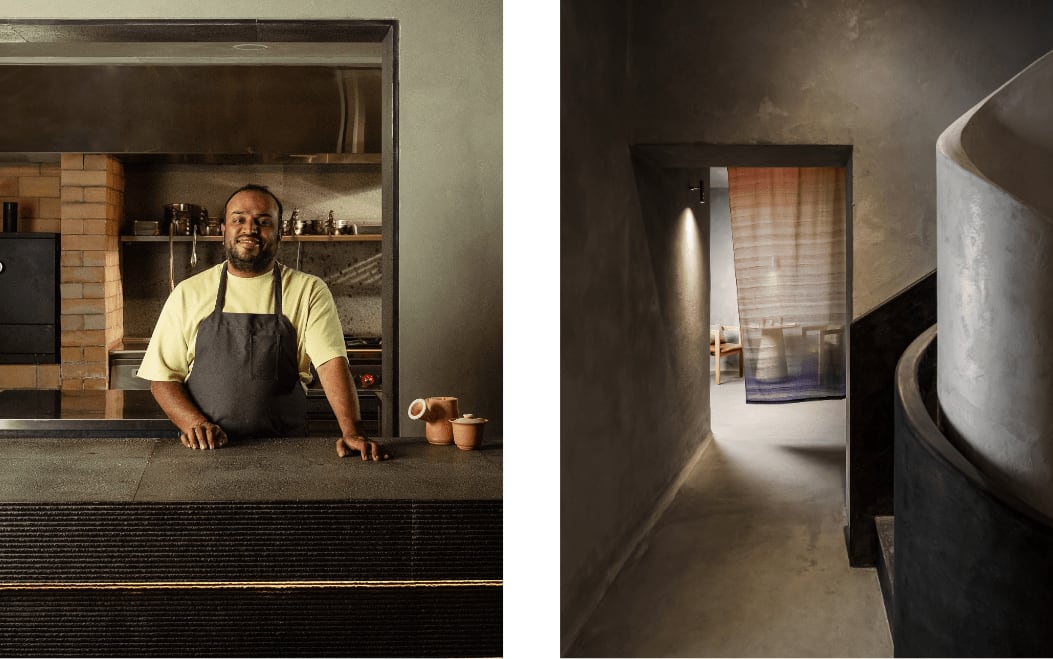
If you follow his trajectory, his craft lies in bringing attention to the composition of a dish without always deconstructing it in the Western sense. He is often able to work with sensory elements to bring the patron home and deliver his message: quality produce is all around you; you just have to go looking for it and imagine it in new ways. The menu at Nila does just that.
The same thinking extends to space. There are intentional interruptions and pauses throughout the experience, creating a sense of disconnect from the outside world, while still allowing glimpses of trees and glass that prevent the space from feeling entirely sealed off. It carries the intimacy of a boutique store, but reimagined through food and ritual.
The approach to sourcing the space was equally organic, by Prachi Joshi of Designworx. The soft furnishings, lights, and furniture were chosen to keep the restaurant warm, comfortable, and easy, a sentiment echoed in the portions of the food as well – nothing too forced, just pieces that felt right for the mood of the space.
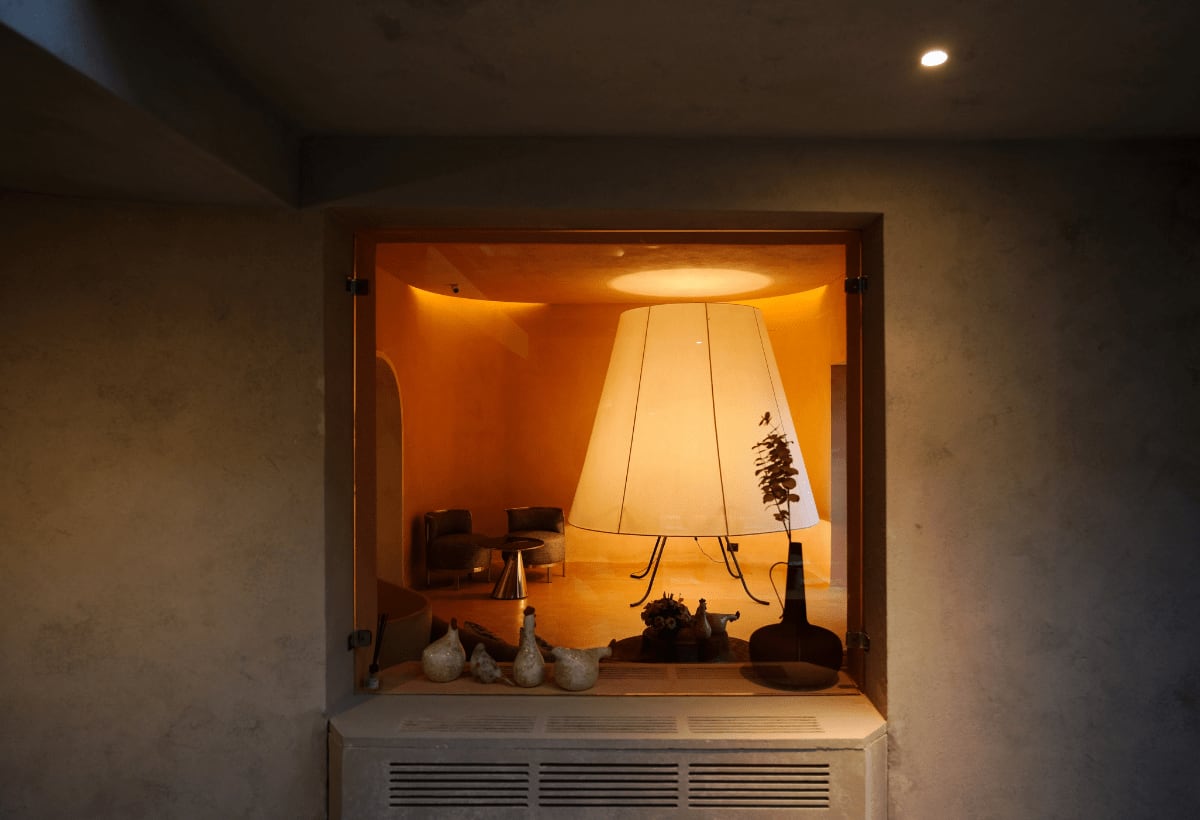
Almost all of the lighting is custom-made, from an oversized living-room lamp inspired by the moon to a sweeping 14-foot counter light. These pieces create a distinct otherworldliness—a silent request to leave preconceived ideas of fine dining outside Nila’s silver-painted doors. That seamless alignment between space and plate isn't accidental; as creative partners and spouses, Prachi and Chef Rahul share an innate harmony that usually takes years of collaboration to achieve.
Even the quirky chicken artefacts scattered through the restaurant come with a personal story. What began as living-room objects eventually found their way into the restaurant, adding humour and a deeply personal layer to the space. The reason we love friend recommendations over ‘Hidden Gem’ reels, beyond, of course, the obvious reasons already being hotly debated on social media, is that friends often know what we like and don’t. Besides standing the test of time, Bangaloreans often seek comfort – whether it’s in the bar menu, the location, the staff, or taste. If a place can make someone feel comfortable enough to return to without a hassle – because there is plenty of hassle between getting a cab and surviving traffic – you have a loyal customer.
That philosophy extends to the menu as well, which changes every three months and leaves room for constant reinvention. With a 12-course prix fixe dinner menu, the experience places the chefs at the centre, guiding diners through flavours and combinations that often move beyond familiarity or nostalgia. Inspired by ingredients, process, and Chef Rahul’s love for good ingredients, Nila explores the idea that India still has room for more immersive rituals around dining – and entirely new ways of eating.
In tasting menus, there is often the worry that the complexity and extreme nuances are lost to the casual diner. Michelin-star cuisine often prides itself on being otherworldly, refined, and incredibly complex; sometimes too complex for the average diner.
With Nila, the food is often a conversation starter between guests and the chef. With each dish, patrons’ interests are piqued. The meal asks you to pay attention: to the ingredient, to the story of where it came from, to the way something is eaten, and to what you think it should taste like before you actually taste it.
Would I ever find myself craving a hand-taco or chhurpi broth? I doubt it. But would I now want to book myself the nearest flight that will take me in the direction of Zanskar Valley to check if this is exactly how it tastes up there? Most definitely. Chef Rahul’s mastery lies in bridging the growing gap between produce, regional context, and fine dining.
Getting There:
Address: 1/2, Cambridge Rd, near RANKA COURT, opposite Nilgiris, Halasuru, Ulsoor, Jogupalya, Bengaluru, Karnataka 560008.
Cost for 2: INR 9920+ taxes for the experience, without alcohol. They work on reservations only that can be made on dineatnila.com.