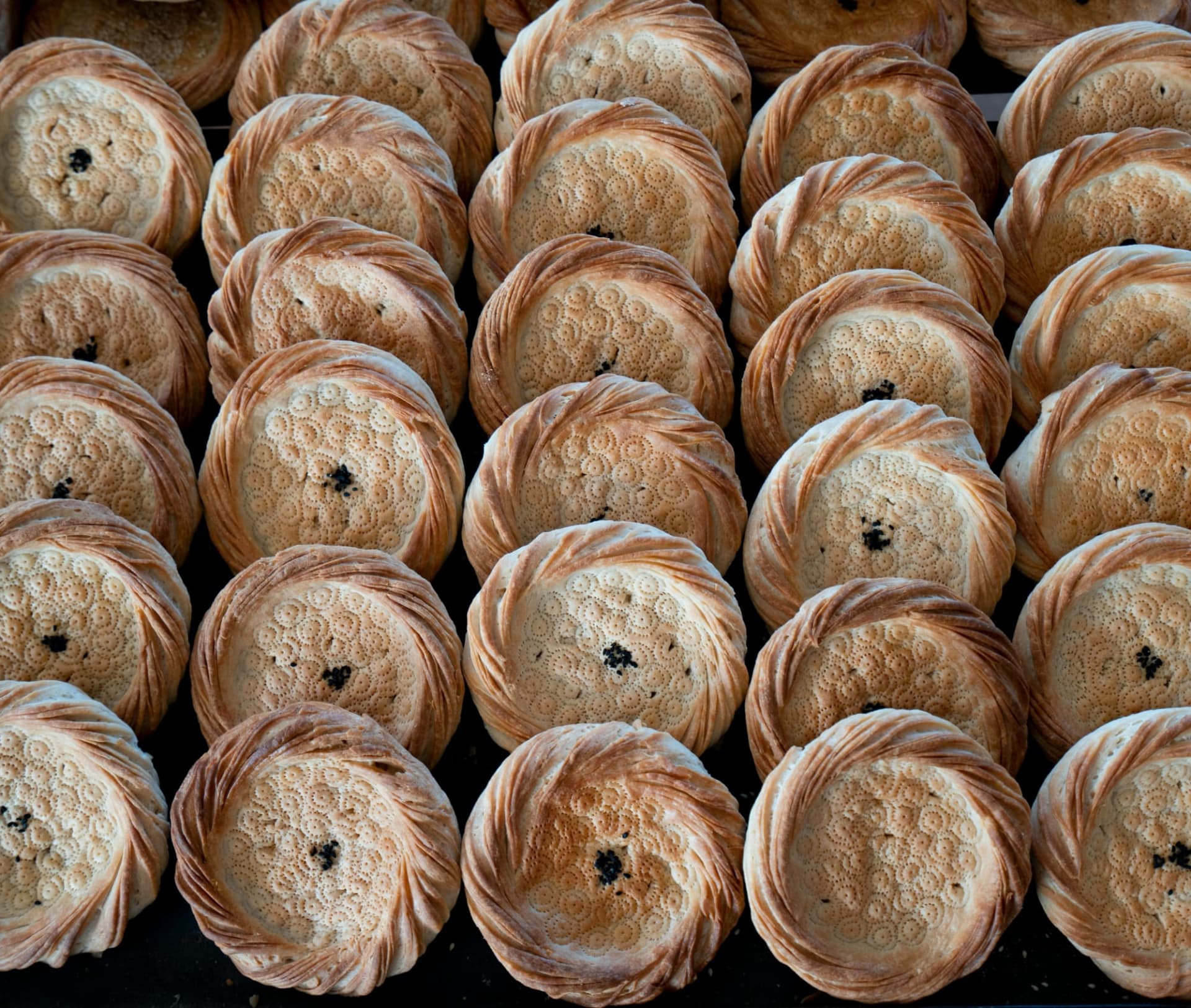
When in Uzbekistan, drinking endless cups of choy and gorging on flaky, meat-filled somsa becomes second nature. This became clear at Minor Somsa at 6 pm in Tashkent, where a very enthusiastic man explained, in broken English, how to collect my token at the counter and navigate the queue behind me. The crowds alone tell you you've arrived somewhere popular. Chicken, lamb or cheese, your order arrives fresh and hot, with a bottle of tomato salsa on the side. Order a pot of choy and sit in the large hall, decorated with classic ikat fabric in pink, orange, blue and yellow.
The juicy lamb filling melted in my mouth as I wondered whether my vegetarian friends would find this amusing. As an Indian, the restraint around spice in meat-based Uzbek cuisine took some adjusting to, as flavour here comes from the fat, the meat itself, and perhaps the onions. I'd known that before arriving, but as a committed foodie, I was ready to test the idea that food in Uzbekistan is not all meat. (I did, eventually, eat horse!)
Ingenuity Driven Cuisine
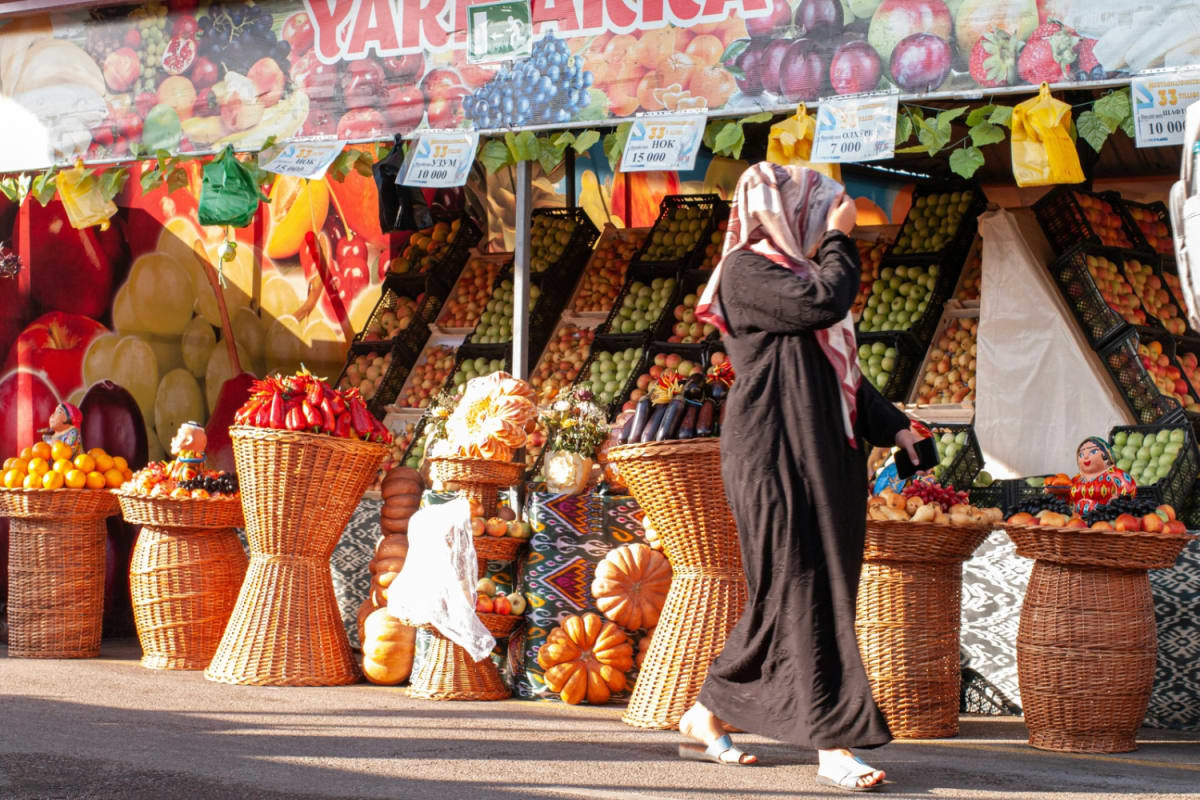
Much of Uzbek cuisine stands out for its ingenuity and its scarcity-driven habits, shaped by a largely desert country — waterless cooking, deliberate use of butter, and an abundance of fruit. Don't mistake this for a place of deprivation. Uzbekistan is one of the world's largest producers of cherries and table grapes, according to the USDA's Foreign Agricultural Service. In 2024, the country produced five million tonnes of fruit, against 2.9 million tonnes of meat and 12.4 million tonnes of milk.
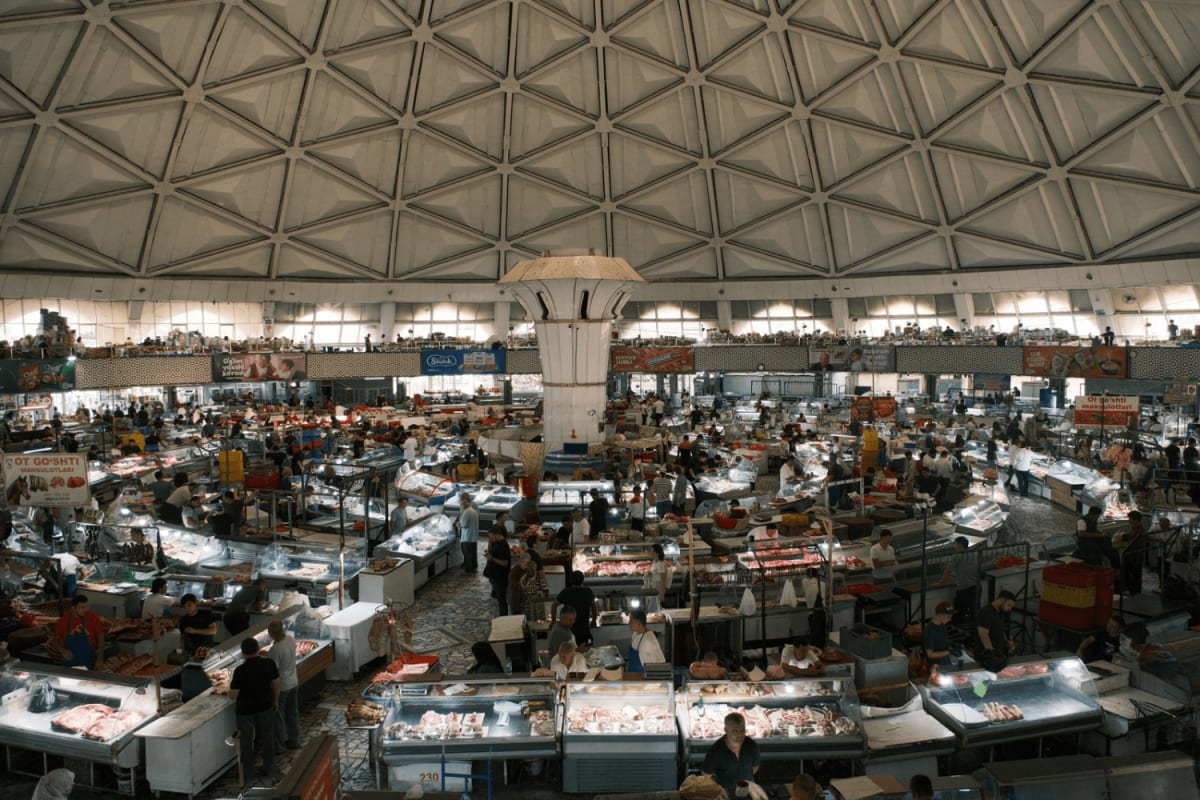
Andijon and the Fergana Valley, the most well-irrigated regions, produce an enormous volume of high-quality fruit, alongside other pockets across the country. Take the highway or the train to Samarkand, and you'll pass endless farms heavy with melons and rows of grapes; or, for a more touristy but worthwhile stop, visit Chorsu Bazaar in the capital. Dilorom Xolmurjayeva, Head of International Relations at Jizzakh Tourism, previously worked for a car manufacturer in Korea. "I came back knowing that my country produces the juiciest, tastiest fruit in the whole world," she told me, smiling.
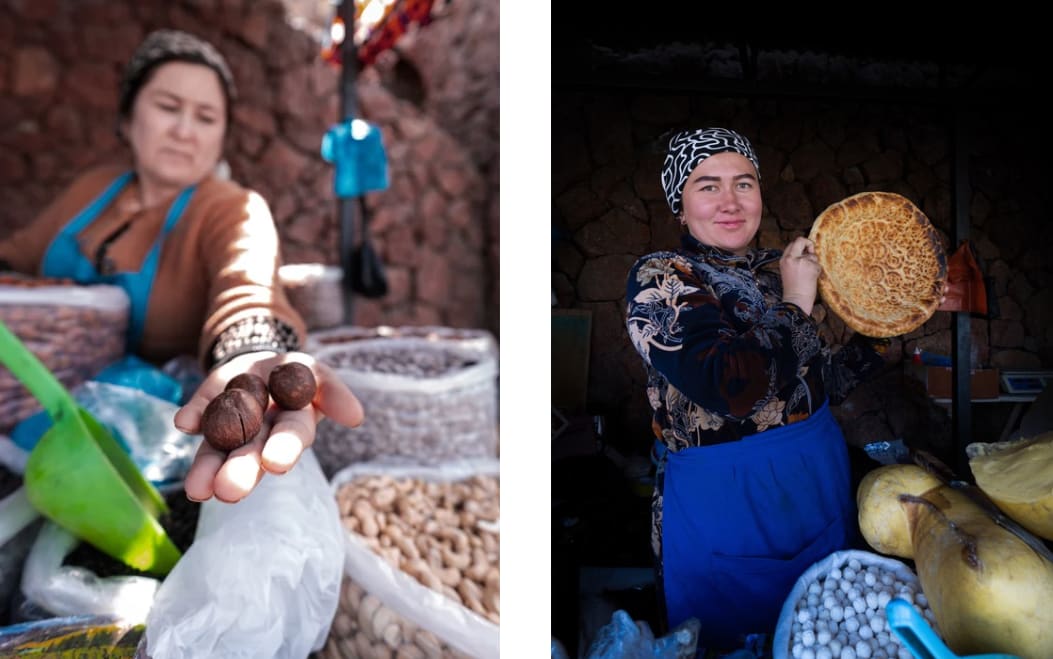
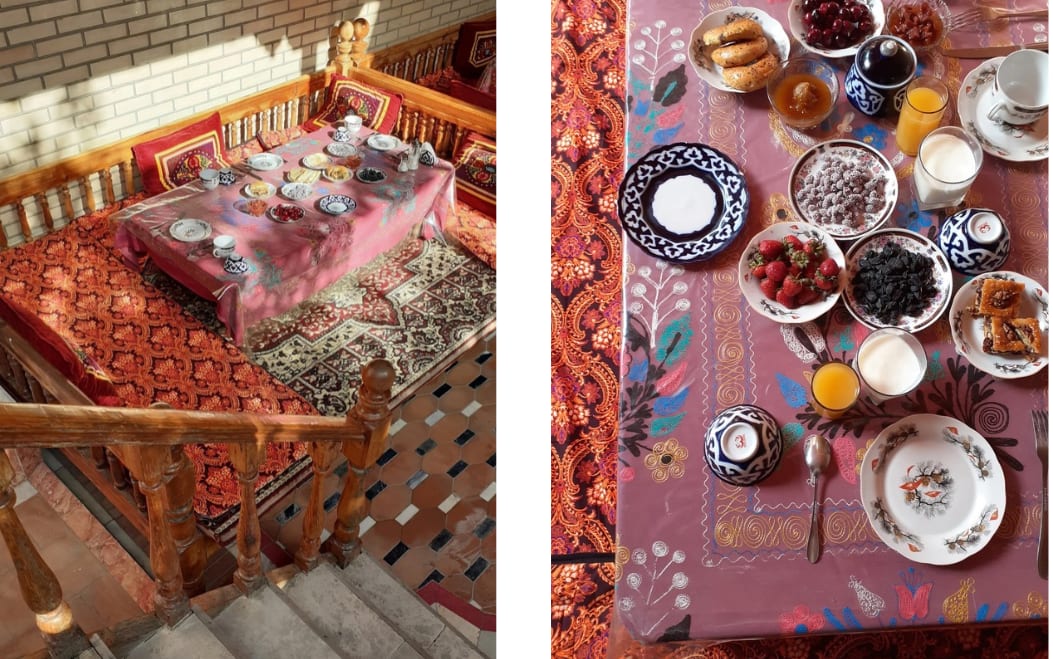
Apricots, groundnuts, walnuts, macadamias and hazelnuts, sometimes coated in sugar-dipped sesame, arrive wherever you're a guest. White and musk melons, grapes and pomegranates are essentially breakfast, while apple and cherry juice are the beverages of choice. Uzbeks take pride in their fruit being unmatched anywhere in taste, and are generous about sharing it.
A Communal Dining Style
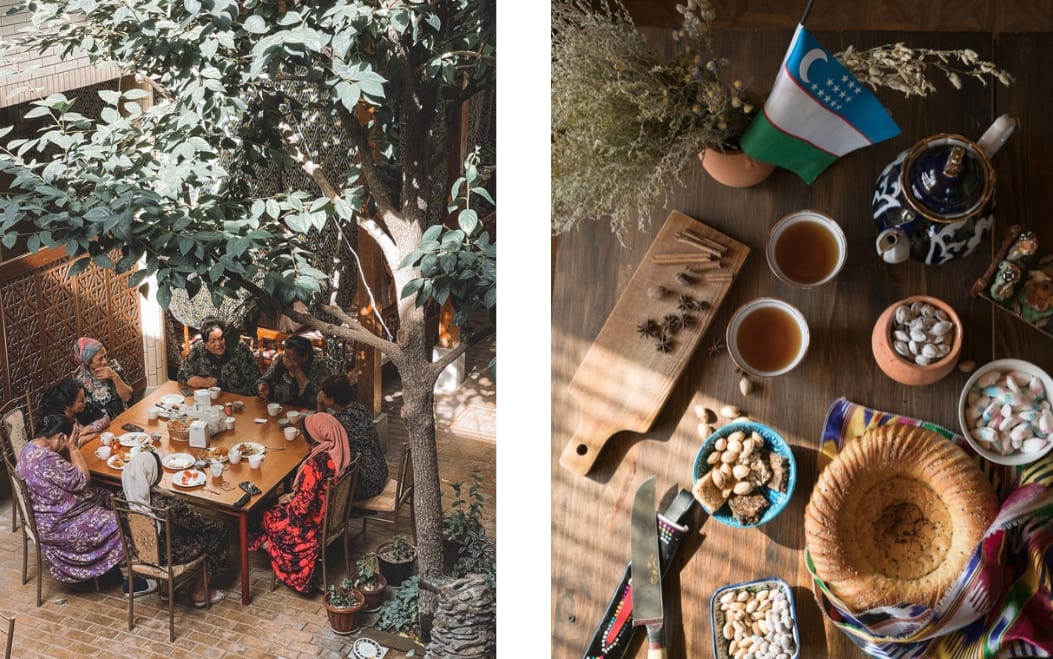
Eating together is central to family life here, and was so even under Soviet rule. Meals are a moment of convergence for families and friends, treated almost like a picnic every time.
This was clear at my homestay in Hayat village, in the Nuratau mountains of the Jizzakh region. Ruslan Musaev, a young tour guide, invited us to join his family on a tapchan (an outdoor platform for sitting together over tea or meals) for a supper of homemade ‘plov’. His elder brother had shown me how he cooked in their open kitchen, where melons rolled lazily about our feet. We picked at fresh apples and apricots from the orchard around us as plates of plov arrived, generously topped with ‘baklajon salat’ - tender fried aubergine with fresh cucumber and tomato. It was a step up from the ‘Achchiq-Chuchuk’, the simple tomato and onion salad most restaurants serve instead. Wash it all down with ‘airom’, a sour fermented milk drink (much like buttermilk).
I saw plov as social capital, a dish that binds urban rush, village continuity and national identity, understood by everyone through its scale, humour and technique. Komilova Madina, a licensed tour guide from Tashkent, described the many occasions that call for pilaf, citing her wedding, birthdays and the births of her sons.
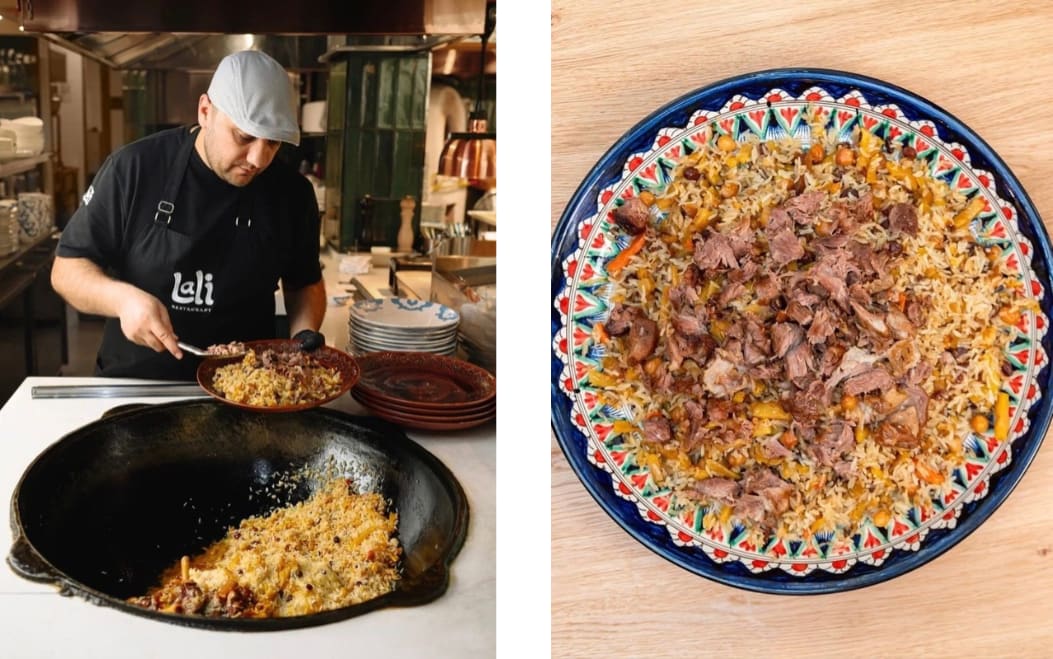
That quiet meal in Ruslan's garden forced me back to the scene at Besh Qozon in Tashkent, amid the clang of metal, a haze laced with saffron — men steer rice with oar-sized paddles.
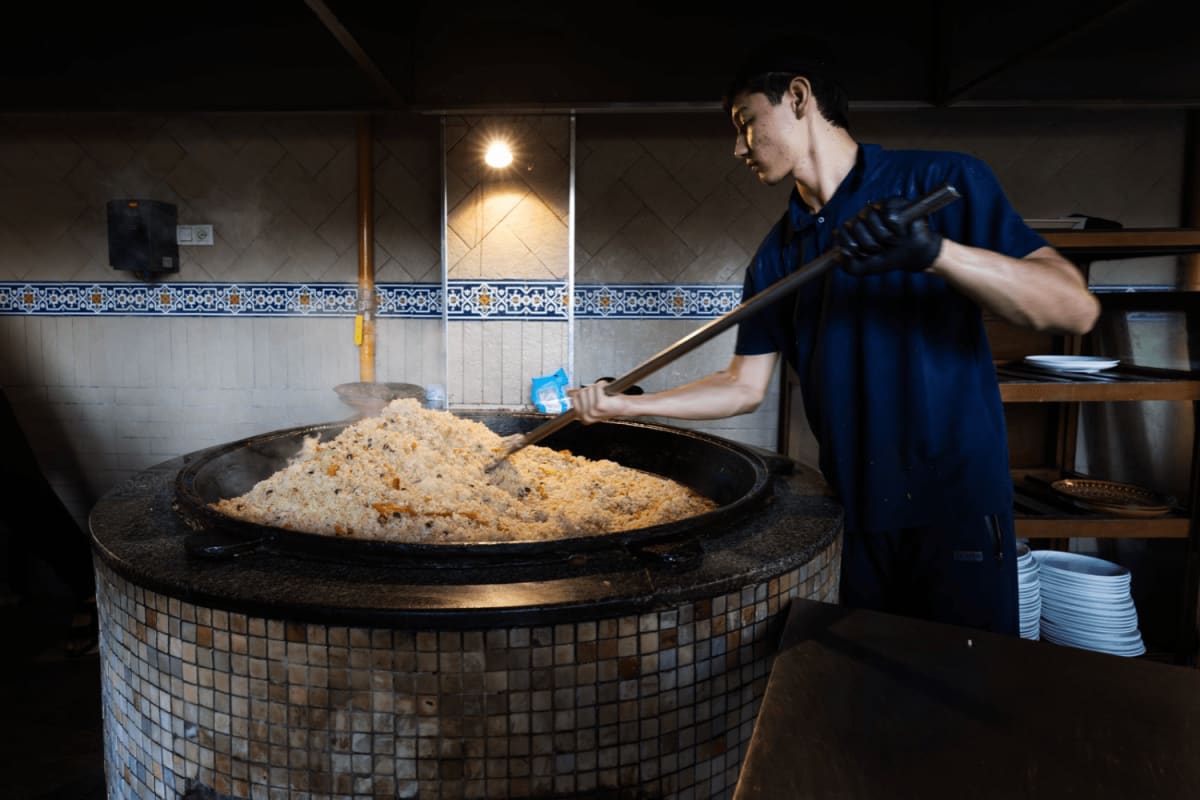
Twenty-one black cauldrons thunder together here, three-tonne giants producing tonnes of pilaf an hour. Osh, as plov is known in Uzbek, is something of a ritual at this hugely popular lunch spot; most visitors come for the photograph rather than the food. Even so, it's the most sensible place to start a traditional Uzbek food trail in Tashkent.
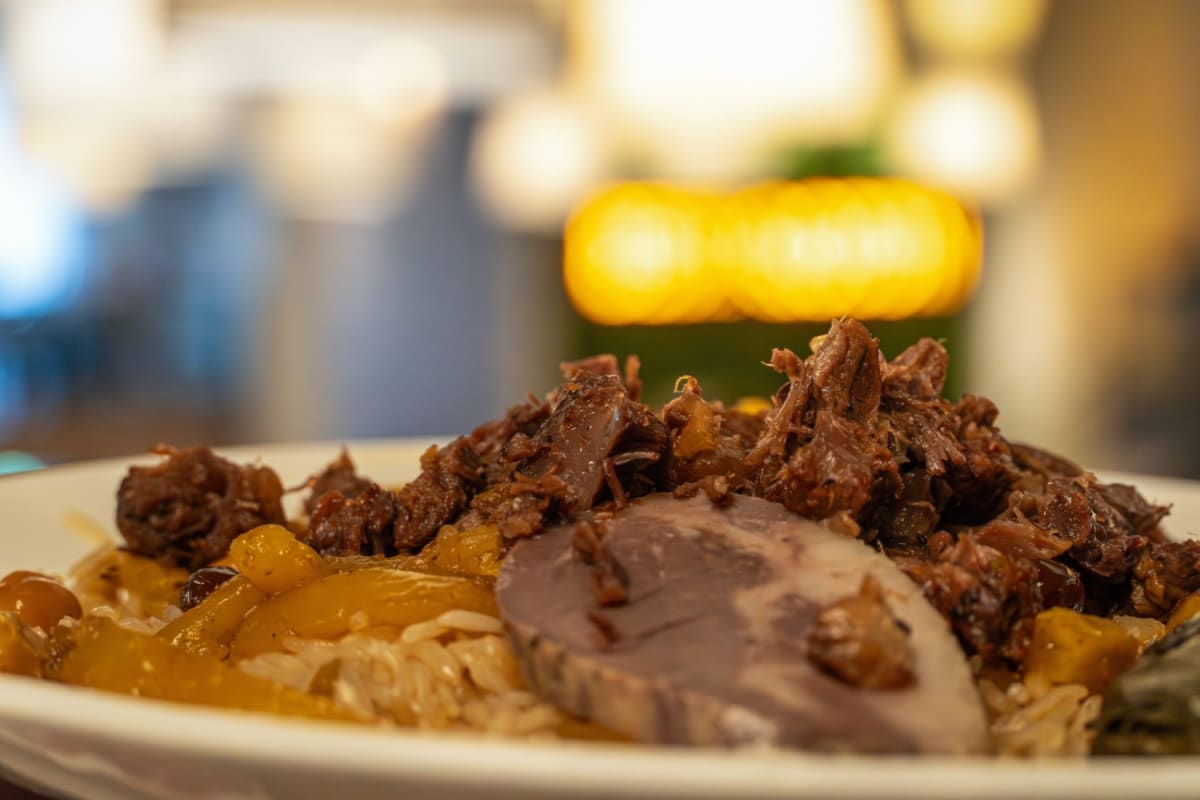
UNESCO-listed intangible cultural heritage and present everywhere, from weddings and birthdays to mourning feasts and the Thursday custom (locals joke that most children are conceived on Thursdays, thanks to plov), Uzbek life gathers around a plate of pilaf. To see its full range, I moved from industrial-scale kitchens to intimate hearths. Across settings, the dish shifts shape: horse meat's smokiness, beefy larb, the delicacy of quail eggs, classic carrots, even a brown-rice version for diabetics, yet the act of sharing stays constant.
Of Pit Fires and Breads
On another afternoon, I joined Al Bek and his family at Toxir Ota Tandir Kabobilari for a lesson in desert fire-pit cooking. Watching him chop lamb into delicate cuts, season them with spice-flecked salt, drizzle them with oil and crushed juniper leaves, then lower them into an earthen pit felt like a precise, almost primal ritual. Eighty minutes later, the pit was opened to reveal meat so juicy and aromatic it seemed impossible to resist. We ate it with bread.
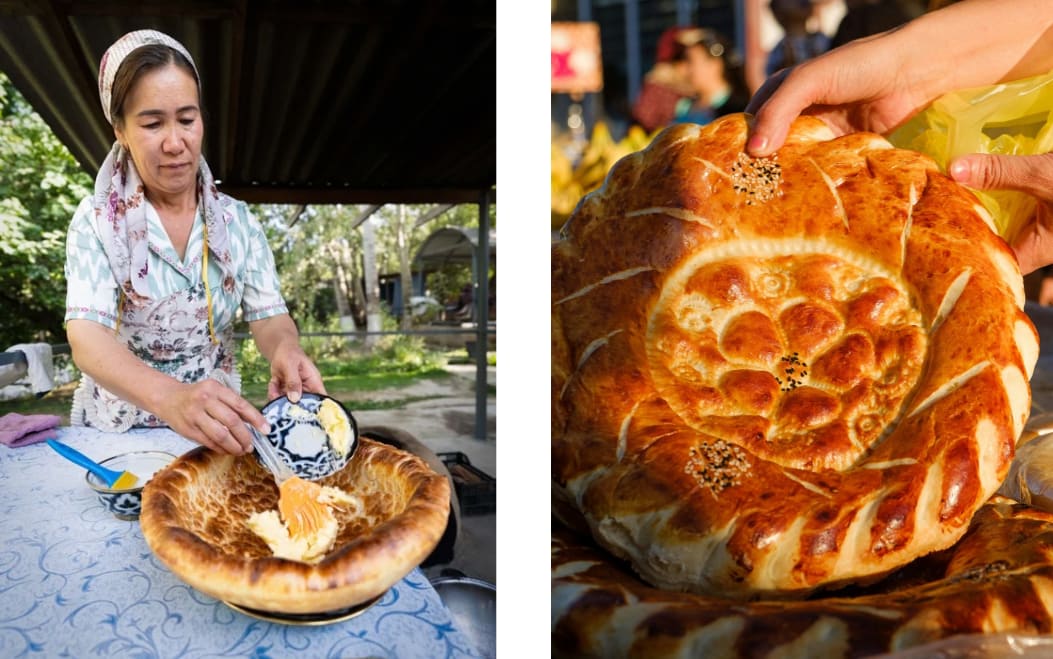
To taste a country's soul, follow its bread. Across Central and South Asia, bread carries a status bordering on obsession. In Uzbekistan, the round non is so revered that locals never slice it with a knife or leave it upside down; it must be torn by hand, and its design and ingredients shift by region. I joined Rukhsana at her home for a demonstration. In swift movements, she worked the dough into a round-bottomed pan and used a chekich to stamp floral patterns on top before returning the vessel to the fire. The smell of roasting bread was enough to stir the birds outside. It came out hot, a dollop of butter melting into its centre.
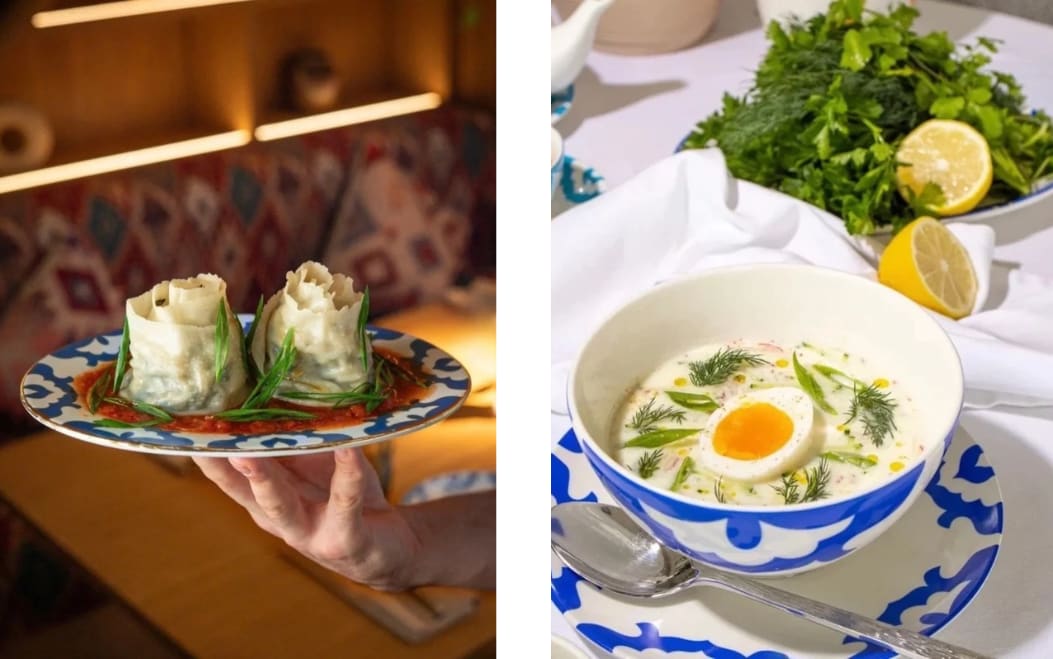
Fine dining is also coming into its own here, with international tourism. A meal at Tashkent's Ibroxim Bek is incomplete without an assorted kebab platter, ideally alongside a hearty ‘lagman’ stew. Afsona is worth a visit too, where the host offers health-conscious adjustments; try the ‘naryn’, noodles with shredded horse meat, or ‘manti’, lamb-filled dumplings. Elsewhere, Syrovarnya, a Russian restaurant with its own full-cycle cheese-making facility, serves cheese-forward dishes alongside wood-fired pizzas and classics like ‘borscht’. Ember, on the 17th floor of the InterContinental hotel, pairs modern Asian-inspired flavours and premium cuts with panoramic city views, while Lali elevates regional recipes like ‘vagouri’ and ‘Jizzakh buglama’ into more refined presentations. In Samarkand, Shokhrukh Nur, tucked in a lane opposite Registan Square, sends kebabs straight into the fire at its entrance, its buzzing bar living up to its Tripadvisor reputation.
I now understand why the Uzbeks measure hospitality in food, and offer you what they can best. Every table I sat at, whether a village tapchan or a hotel dining room, runs on the same idea of feed the guest first. That instinct tells me that a vegetarian will have absolutely no issues eating plentiful meals in this gorgeous country.