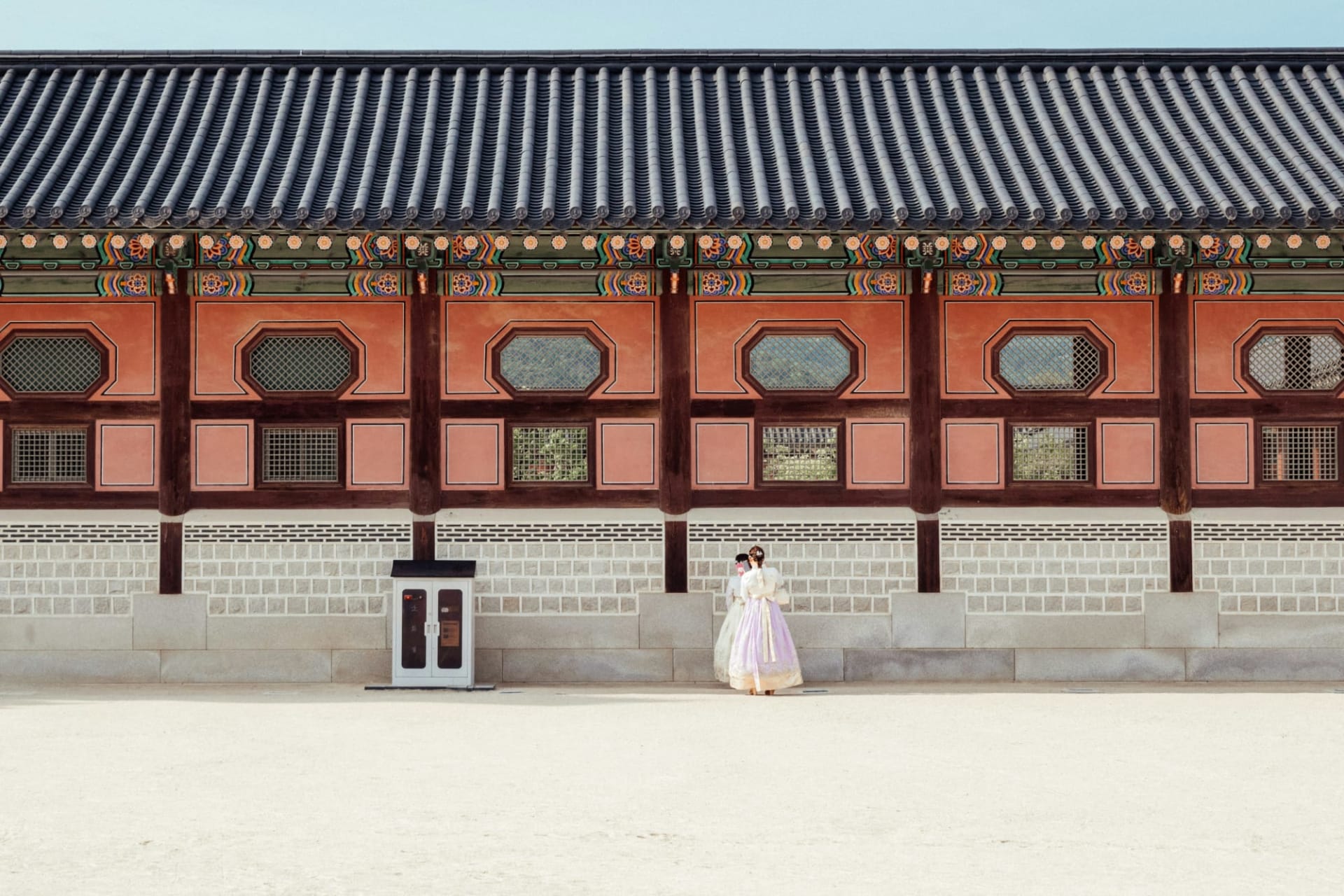
It was just past dawn when my flight dipped into Incheon, Seoul, emerging beneath a veil of low cloud and winter haze. From above, the city looked like a living circuit board, orderly and luminous, alive with motion. Yet I had come searching for its quieter pulse. Eight days lay ahead, mapped loosely across Seoul, Jeju Island, and Busan. The intention was simple: to move slowly, to listen more than I spoke, and to let South Korea reveal itself beyond the familiar shorthand of pop culture and speed.
South Korea is often framed as a country of velocity. Neon-lit streets, express trains, trend cycles that shift overnight, and cultural exports that circle the globe at dizzying speed shape much of how the world imagines it. But beneath this restless modern image lives another Korea, one that moves gently through courtyards and mountain temples, letter-writing cafés, island fields shaped by volcanic stone and sea wind.
Day 1: Arriving in Seoul, Finding My Bearings
The drive from Incheon into Seoul offered a gentle first impression of the capital. The highway slipped past wide river bends, industrial edges and endless apartment towers, the city revealing itself gradually through mist and muted light. It was an arrival that eased me in, a reminder that even one of Asia’s most dynamic cities has its quieter thresholds.
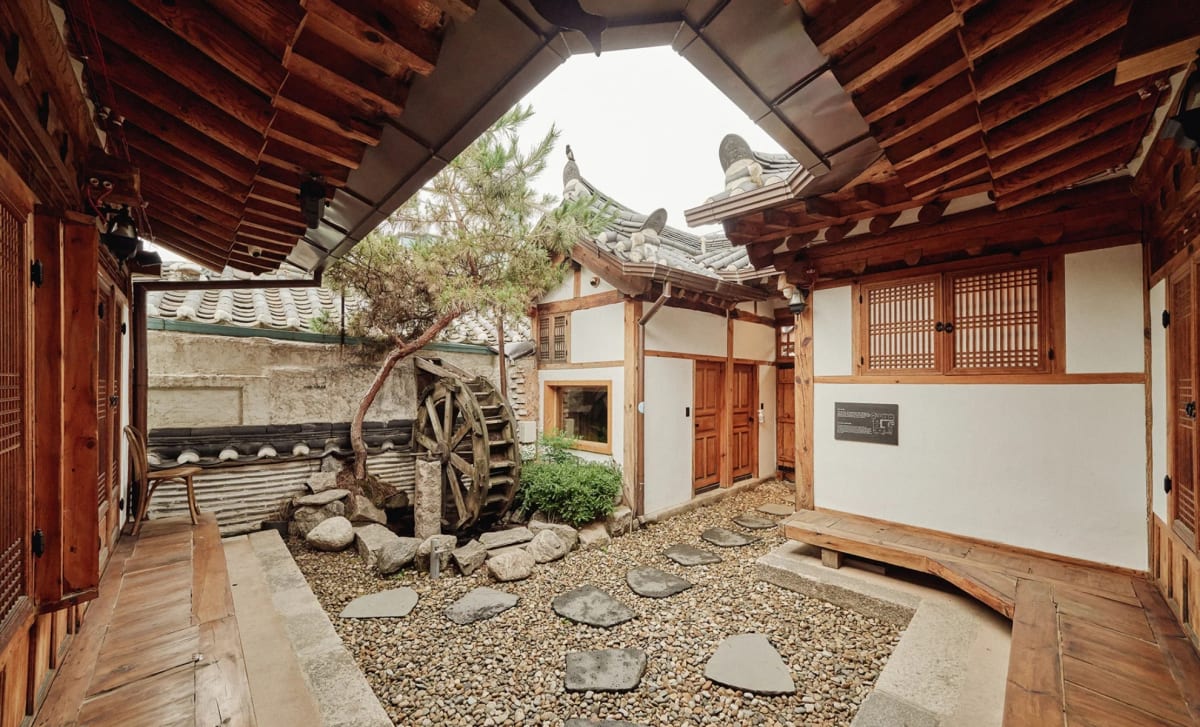
I headed to downtown Seoul, where I was staying at The Chae: Courtyard, a sensitively restored hanok hidden behind contemporary facades. A hanok is a traditional Korean home that offers ample natural light, wooden floors, and an inner courtyard that brings the outdoors in. Built around a small central courtyard, it offered a calm counterpoint to the streets outside. It was not grand or performative, just characterful and grounding, and an easy place to recalibrate after travel.
As evening fell, I stepped straight into Seoul’s kinetic energy in Myeongdong. Neon signs flickered on, street food stalls sent up clouds of steam, and shoppers filled every available inch of pavement. I bought a hotteok from a vendor and wandered with the crowd, letting the noise and movement wash over me.
Day 2: Palaces, Hanoks and Old Seoul
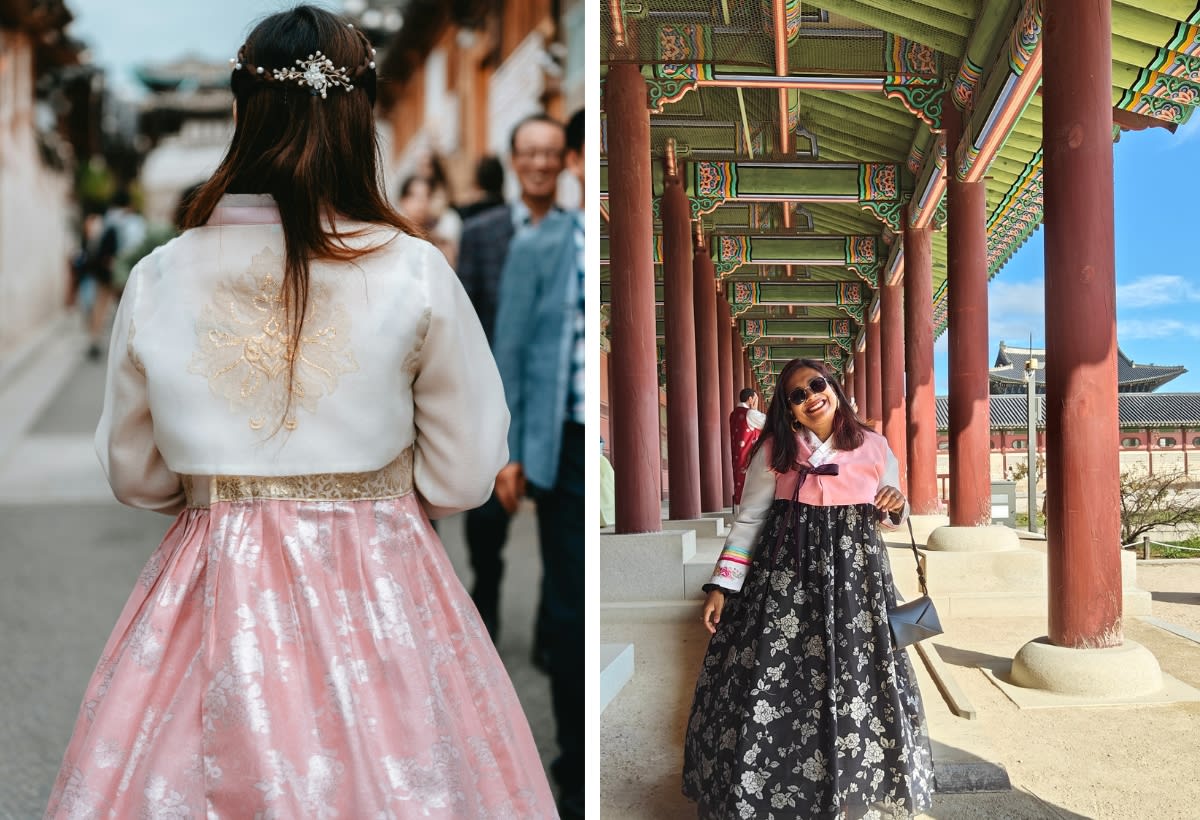
I began the day by slipping into a hanbok before heading to Gyeongbokgung Palace. For a modern traveller, wearing this traditional Korean attire is intriguing because it subtly changes how you move and feel about the space. The weight and cut of the fabric slowed my pace, encouraging me to move in a leisurely tread through the palace’s wide courtyards and timber halls. Even with visitors filtering through the gates, the scale and symmetry of the complex created a sense of space that felt gently removed from the city beyond.
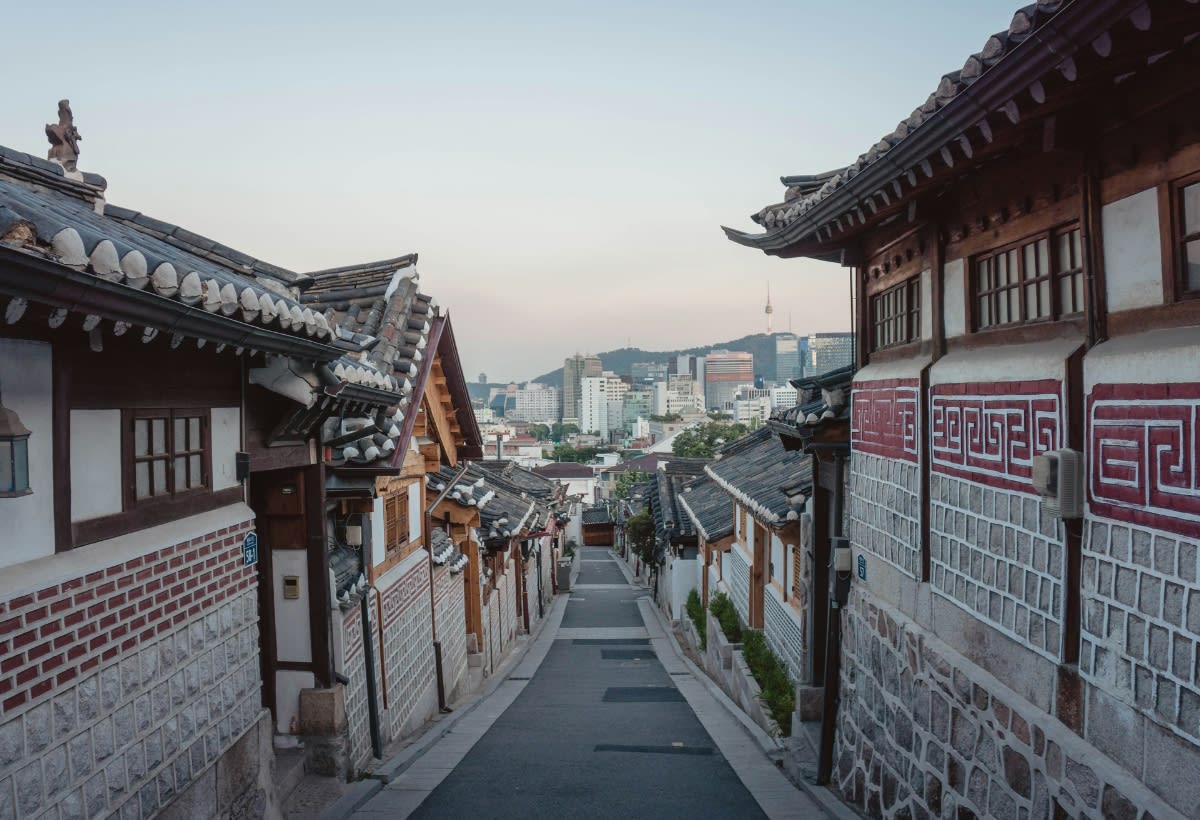
From there, I walked north into Bukchon Hanok Village. Narrow lanes wind between traditional hanok-style homes still lived in, giving the neighbourhood a lived-in quality that many heritage districts lack. I paused often, peering into open doorways when they appeared, watching everyday life unfold against a backdrop of tiled roofs and stone thresholds. Bukchon rewarded slow exploration rather than hurried sightseeing.
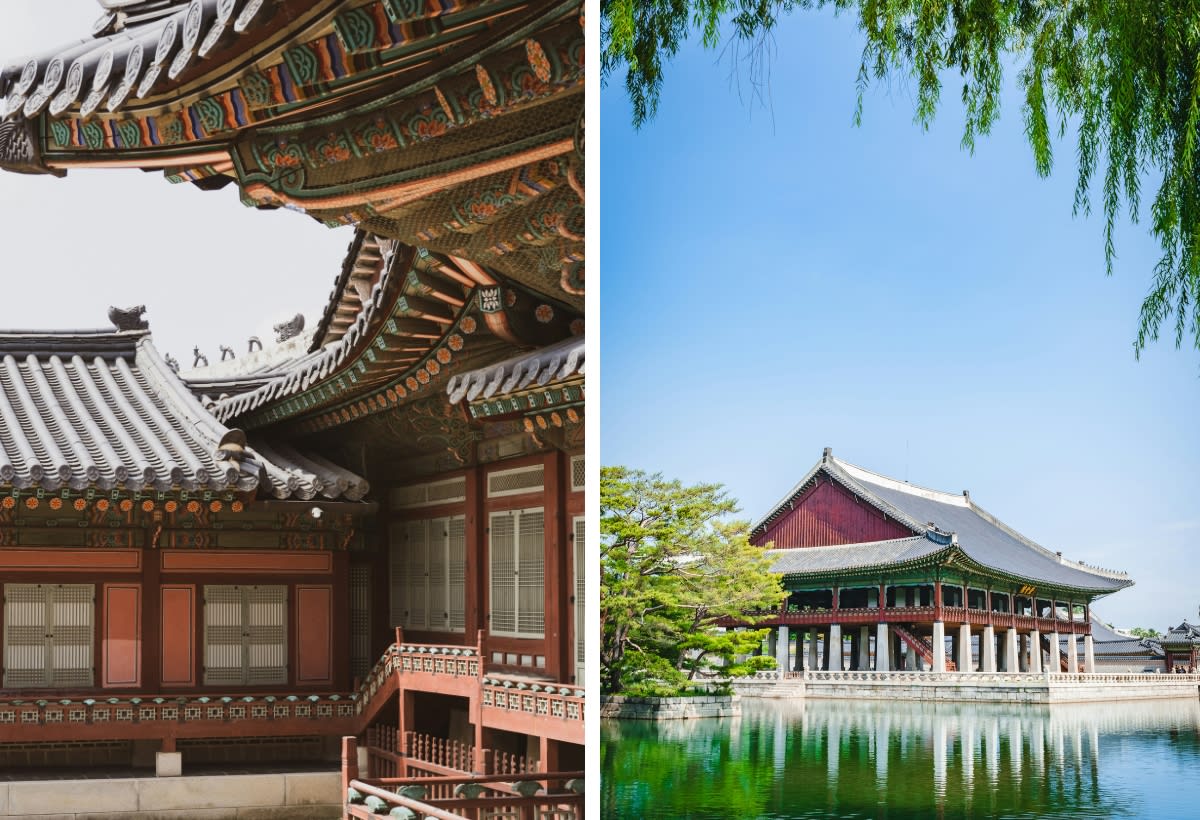
I ended the afternoon in Changdeokgung Palace’s Secret Garden. Designed as a place of retreat, it features winding paths, quiet ponds, and understated pavilions, offering one of central Seoul’s most restful environments. I lingered longer than planned, grateful for the way the garden softened the city’s pace.
Day 3: Cafés, Craft Streets and Quiet Reflection
It was my last day in Seoul, which started at Café Onion, a hanok-style café where Seoul’s coffee culture meets traditional architecture. The open courtyard and old wooden beams made it an easy place to linger over breakfast, watching the city ease into the day.
Later, I wandered through Insadong, drifting past calligraphy shops, antique stores and small galleries. Between browsing shelves of handmade paper and pausing in quiet teahouses, the street unfolded as a gentle bridge between past and present. It was easy to lose track of time here.
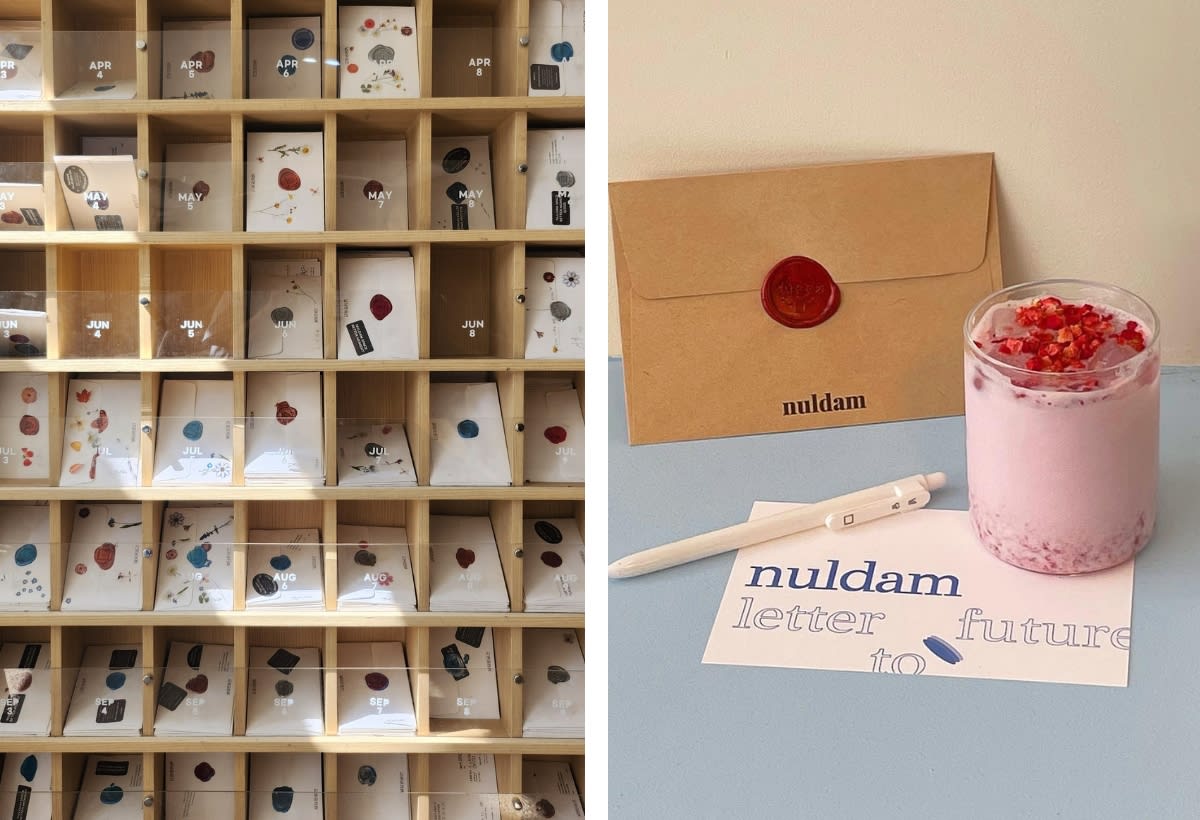
In the evening, I headed to Nuldam Café, a place I had bookmarked long before I planned my trip to South Korea. The moment I stepped in, the space wrapped around me with a quiet warmth, scented with freshly brewed coffee. One wall was lined with handwritten notes and letters left behind by other visitors, small fragments of strangers’ lives held together by paper and ink. This was where I wrote a letter to my future self. The ritual was simple but unexpectedly grounding. There was a drop box in the café, and they promised to send me the letter on the date I had mentioned.
Day 4: Arrival on Volcanic Ground
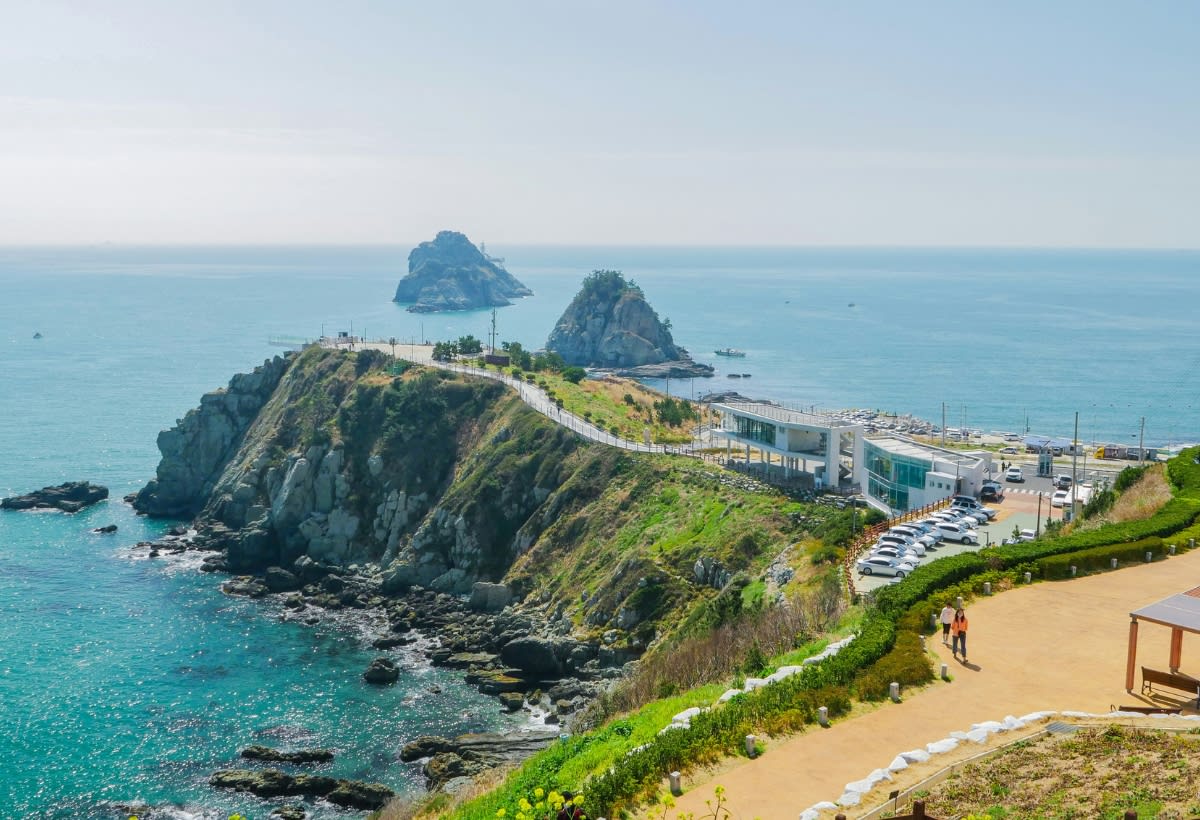
From Seoul, I took a short flight to Jeju, and the island greeted me with air that carried the faint scent of salt and citrus. Black volcanic stone walls traced quiet roads, dividing fields shaped by centuries of labour. Mount Hallasan, the highest peak of Jeju, rose in the distance, steady and watchful, lending the landscape a sense of time far older than any itinerary.
I spent the afternoon walking along the Yongmeori Coast path, where the trail unfurled into wide, open views of the sea on one side and jagged rock formations on the other. With each step, the landscape seemed to stretch further into the horizon, the wind carrying the scent of salt and the steady sound of waves rising and falling below. The openness of it all made the walk feel unhurried and expansive, a slow-moving conversation between land and water, where the rugged beauty of the coast revealed itself not in spectacle, but in the quiet persistence of weather and time.
It was a day spent without any agenda, and it felt like the perfect slow holiday I was seeking.
Day 5: Markets, Haenyeo, and Meals of Memory
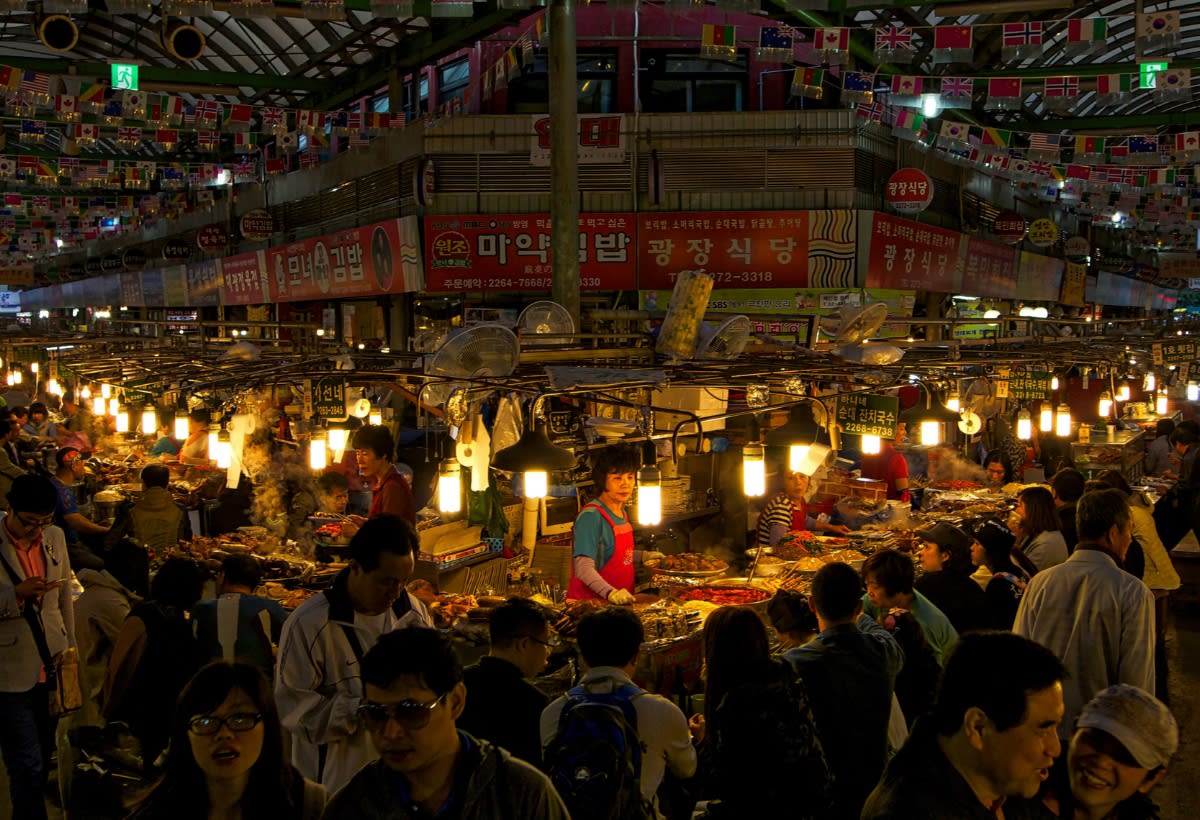
A new day began at Jeju. At Dongmun Market, stalls overflowed with seaweed, shellfish, and bright mandarins. Food here carries stories of tides and seasons, of work shaped by the sea. Near the shore, I watched haenyeo prepare their catch. These women are the free divers of Jeju Island, known for harvesting seafood such as molluscs and seaweed without breathing apparatuses. Their work is built on breath, endurance, and deep familiarity with the ocean, skills passed down through generations. There was no performance in their movements, only rhythm and quiet inheritance, practised with the tide and shaped by years of living with the sea.
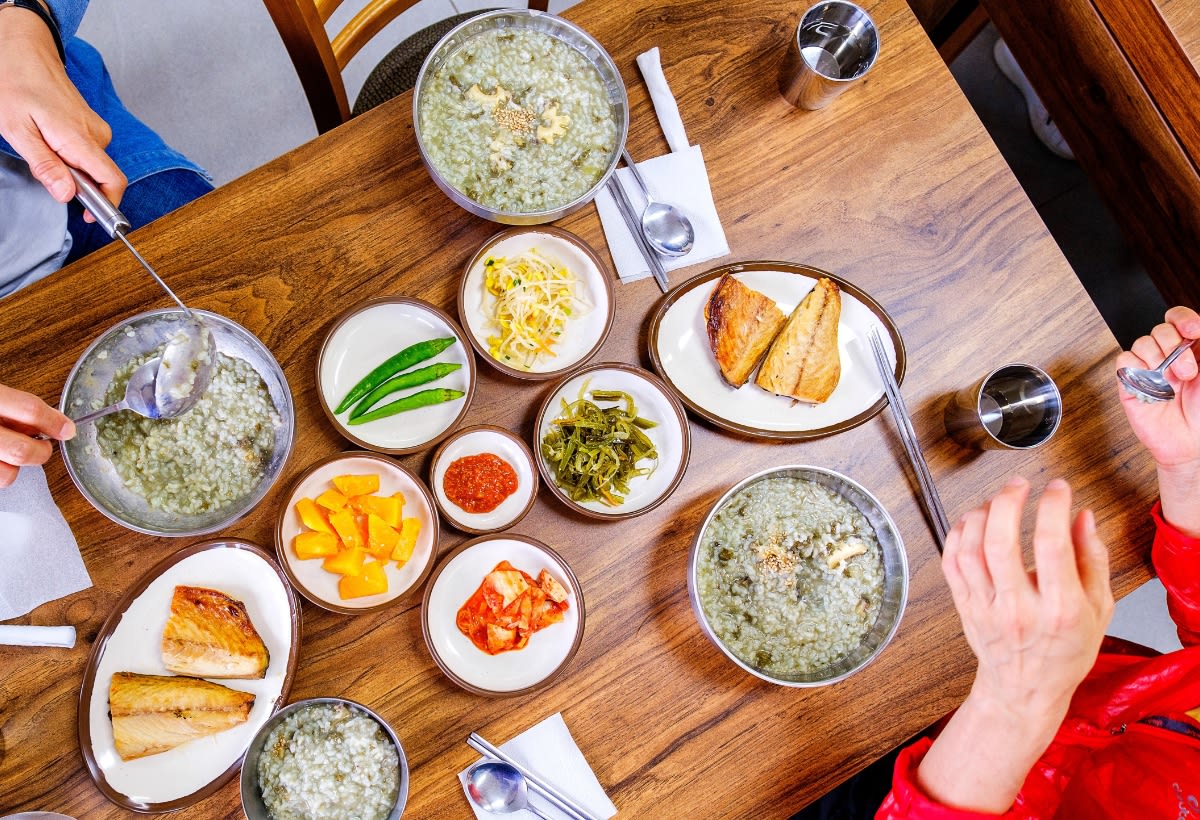
Lunch was abalone porridge, warm and gentle, followed later by Jeju black pork at a small grill house. The richness of the meat was balanced by simple banchan and crisp lettuce leaves. Each meal felt anchored to the island’s terrain rather than any passing trend.
In the afternoon, I walked a stretch of the Jeju Olle Trail. The path curved through fields and along cliffs, the air filled with wind, birdsong, and the steady pulse of waves. The silence felt full rather than empty.
Day 6: Stone Spirits and Quiet Horizons
Before leaving Jeju, I stopped to see the Dol Hareubang, the island’s stone grandfather statues standing at village edges. Weathered by years of salt and rain, they felt less like symbols and more like quiet companions to time.
I spent my final hours near a small beach, feet in cold water, watching the horizon soften and blur. Jeju did not demand attention. It offered itself gently, revealing its character only if you were willing to linger.
Day 7: Temples by the Water, Markets by the Shore
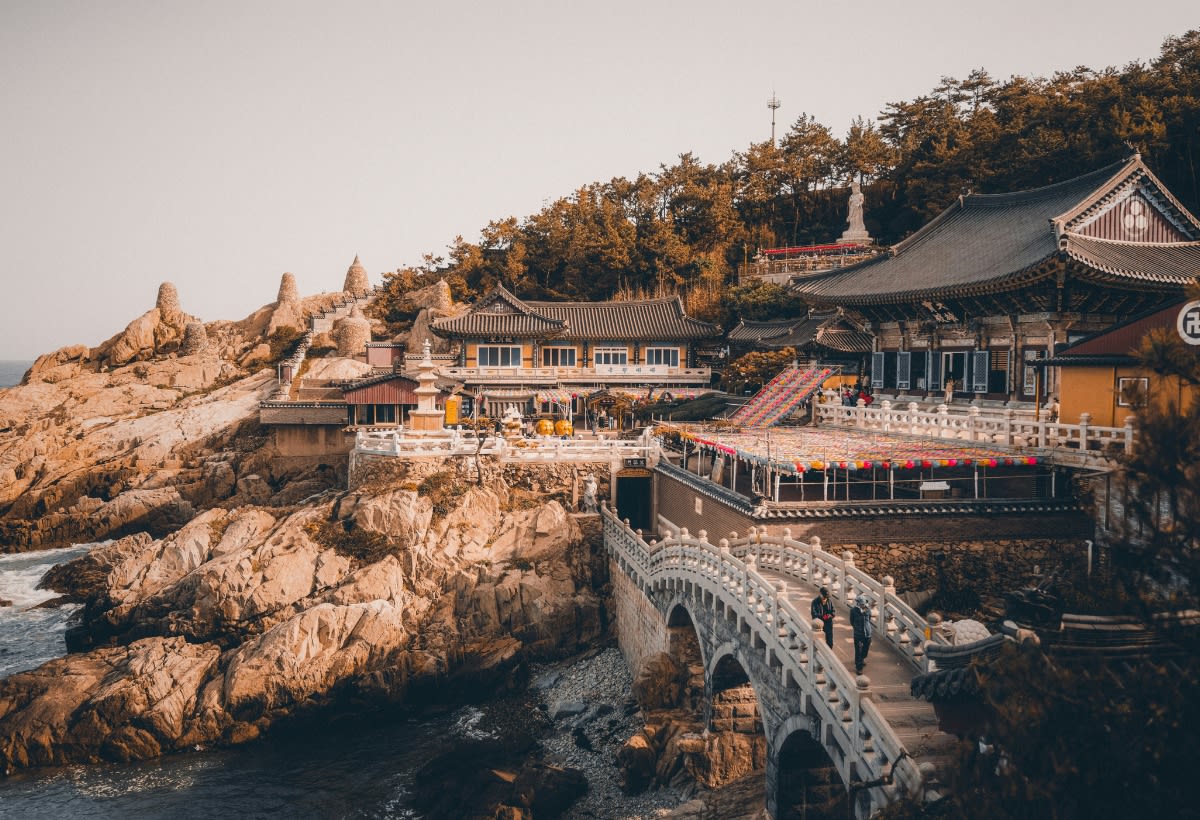
And finally, I arrived in Busan, my last stop, and I soon realised that Busan carries the easy urgency of a port city. Salt hung in the air, voices layered over the steady sound of waves. Dropping my luggage at the hotel, I headed to Haedong Yonggungsa Temple, set along the coastline. Waves struck the rocks below in a steady rhythm, a natural chant beneath low murmurs of prayer.
From there, I decided to explore the famous Jagalchi Fish Market. As a fish-obsessed Bengali, I was delighted to see the day’s catch glistening on ice, vendors calling out to one another, and the air carrying the scent of the sea. The market’s raw energy felt grounding, a reminder of daily labour and the quiet negotiation between people and water that sustains the city.
As the evening settled in, I took the cable car over Songdo Beach. Below, the shoreline curved into shadow while city lights gathered slowly across the water. From above, Busan felt expansive and unhurried, held between land and sea.
Day 8: Farewell in Slow Motion
On my final morning, I walked the Igidae Coastal Walk, where narrow paths trace the cliffs above the water. Fishing boats moved steadily below, unbothered by the early hour. The city was waking, but along the trail, the pace remained gentle.
Busan revealed itself most clearly in its in-between spaces, where mountains softened into the edge of the sea and quiet moments unfolded beside the city’s steady movement. Mornings felt unhurried along the coast, while the hum of daily life carried on just a short walk away. Arrival slowly began to feel like departure, not in a rushed way, but with a quiet sense of closure. It felt like the right place to pause before leaving.
A Journey Measured in Presence
South Korea is often introduced to the world through its most visible exports, through pop culture, speed, and spectacle. Yet what lingered most in my mind from these eight days were not the highlights but the hush in between. A watermill turning in a hanok courtyard. A letter written to my future self. Steam rising from market bowls, and the aroma of Korean BBQ. Waves breaking below the temple steps and the chants flowing in the air.
This journey moved beyond the familiar markers of K-drama sets, kimchi feasts, and chart-topping pop. It unfolded in quieter registers, in courtyards and gardens, coastal paths and quiet cafés. When approached slowly, South Korea reveals a different soul. One shaped by everyday rituals, landscapes unaltered by modern civilisation, quietly wooing nature lovers, and by moments of stillness that you can carry for a lifetime.