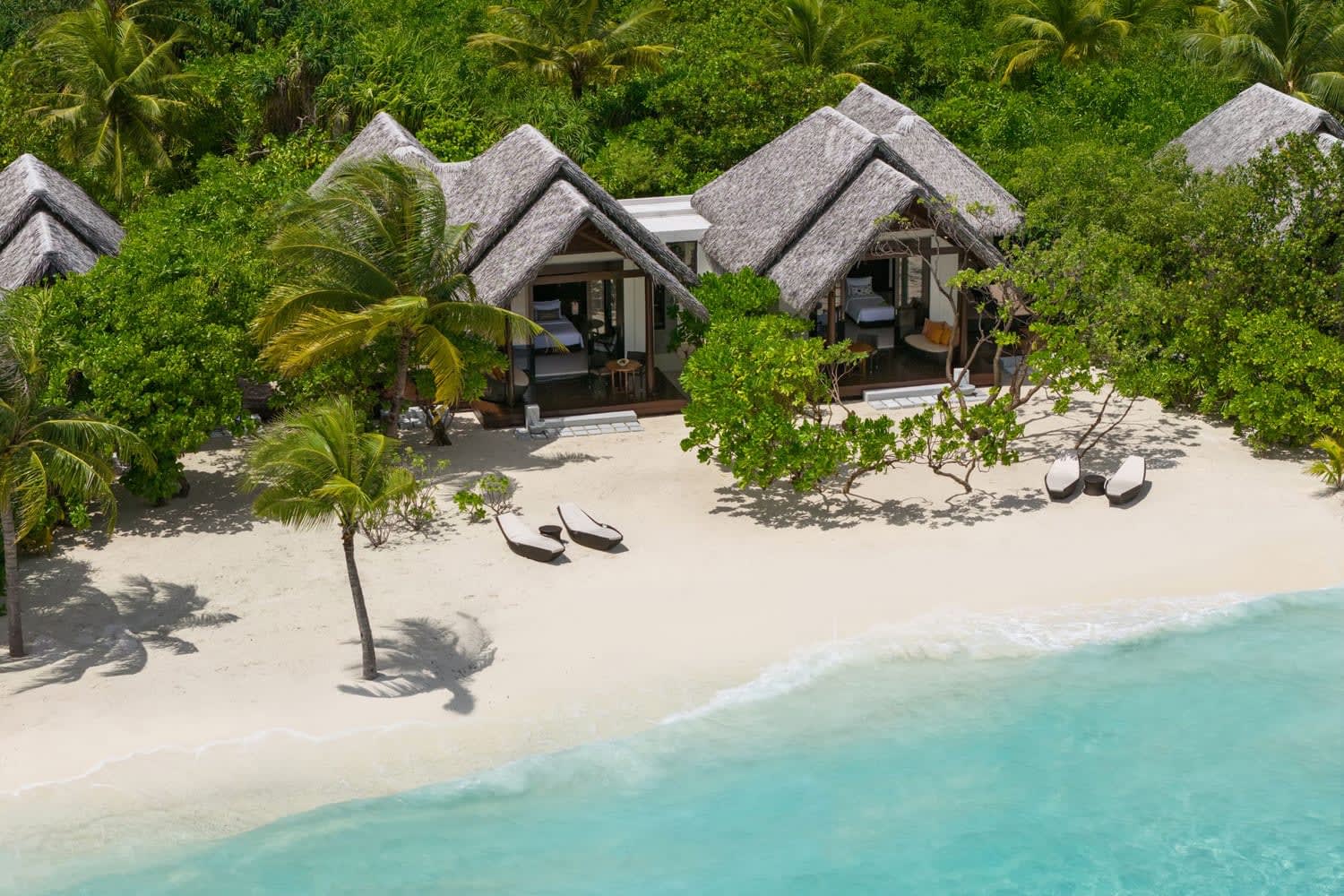
As a travelling duo, we often find ourselves debating whether a trip is for rejuvenation or for discovering something new. For the Maldives, though, the answer seemed obvious. This one was all about resting and unwinding.
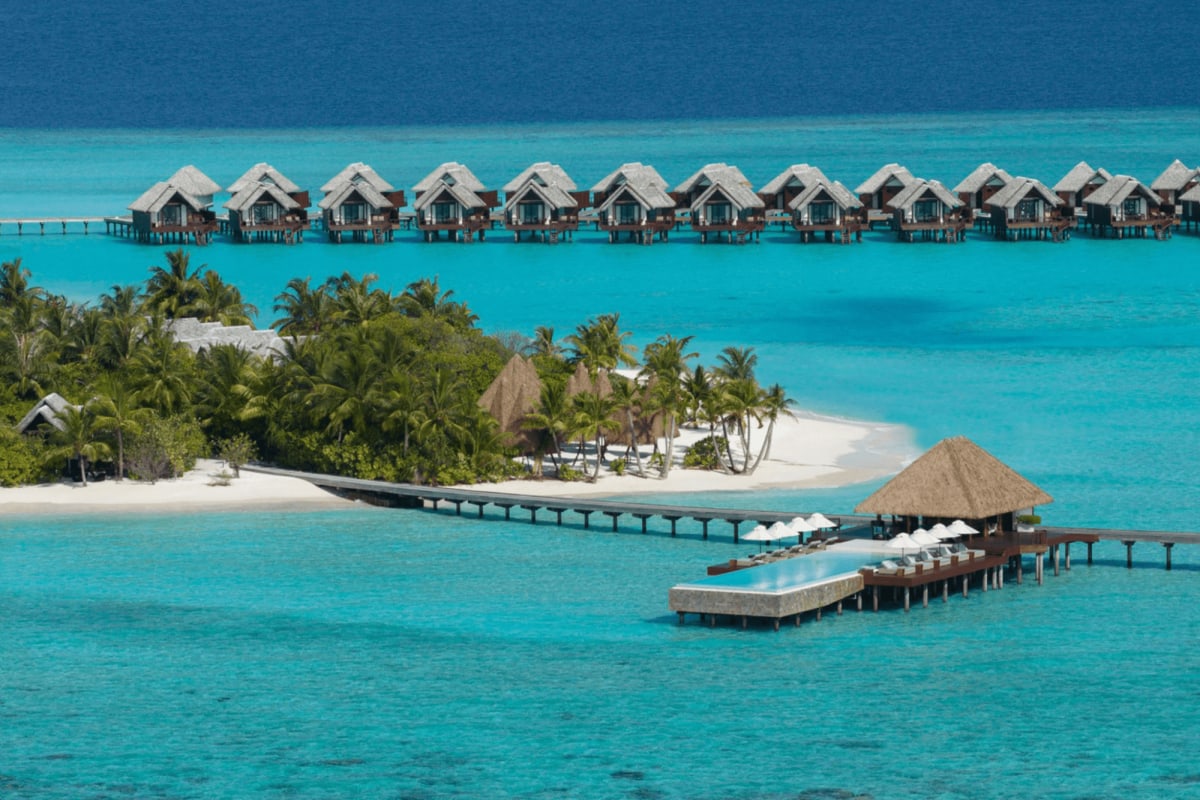
The brochure-perfect turquoise blues of the Maldives are very real. After landing in Malé, a 40-minute seaplane ride whisked us to Heritance Aarah, a premium island resort in the northern Raa Atoll. From arrival, everything was taken care of. Our butler emphasised that anything we needed was just a call away as he drove us to our overwater duplex villa. We were not Maldives newbies, yet the private plunge pool and open ocean waters right beside it had us jumping straight in, champagne in hand.
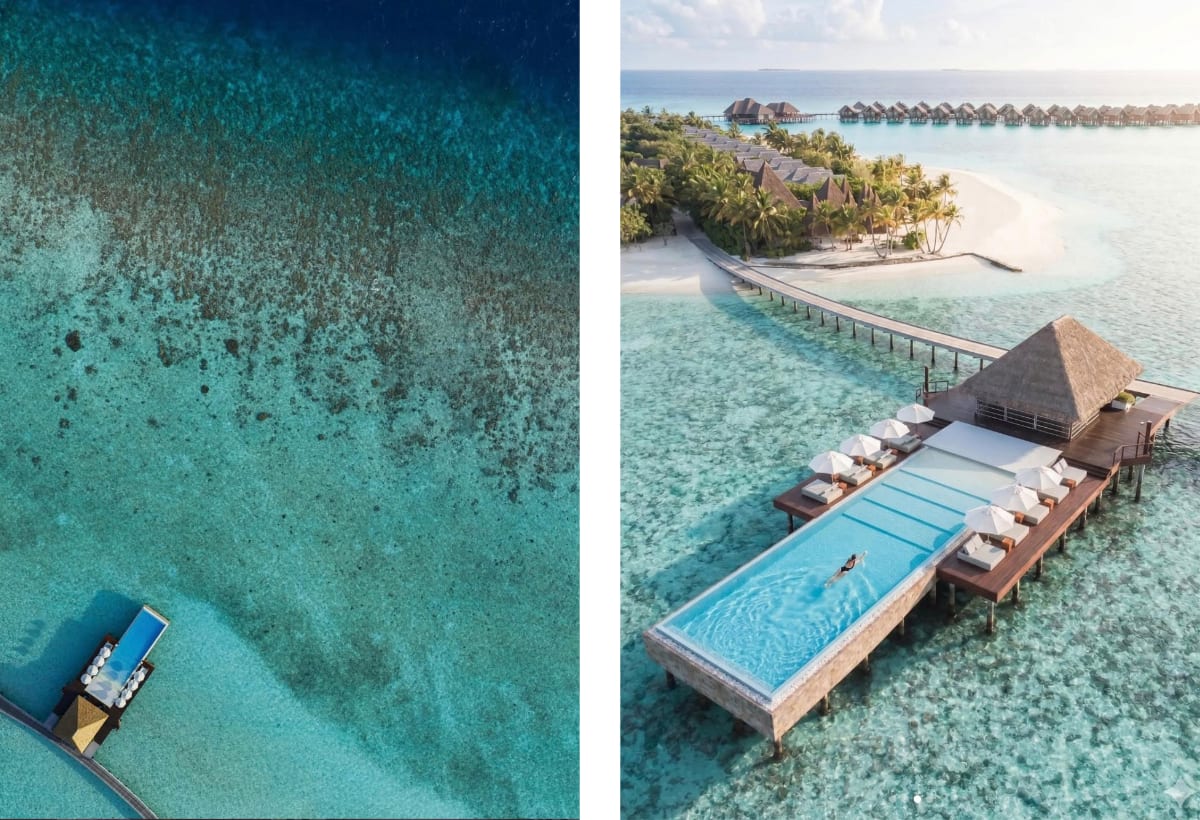
At this point, our plan was to surrender to unhurried meals, spontaneous swims and snorkels around this Maldivian island, long walks on the sand, and lazy stretches in the sun. Indulging in rejuvenation here had plenty of options: gastronomic delights spanning seven restaurants, eclectic cocktails across five bars, wellness therapies and, for the water baby among us, even a reef dive.
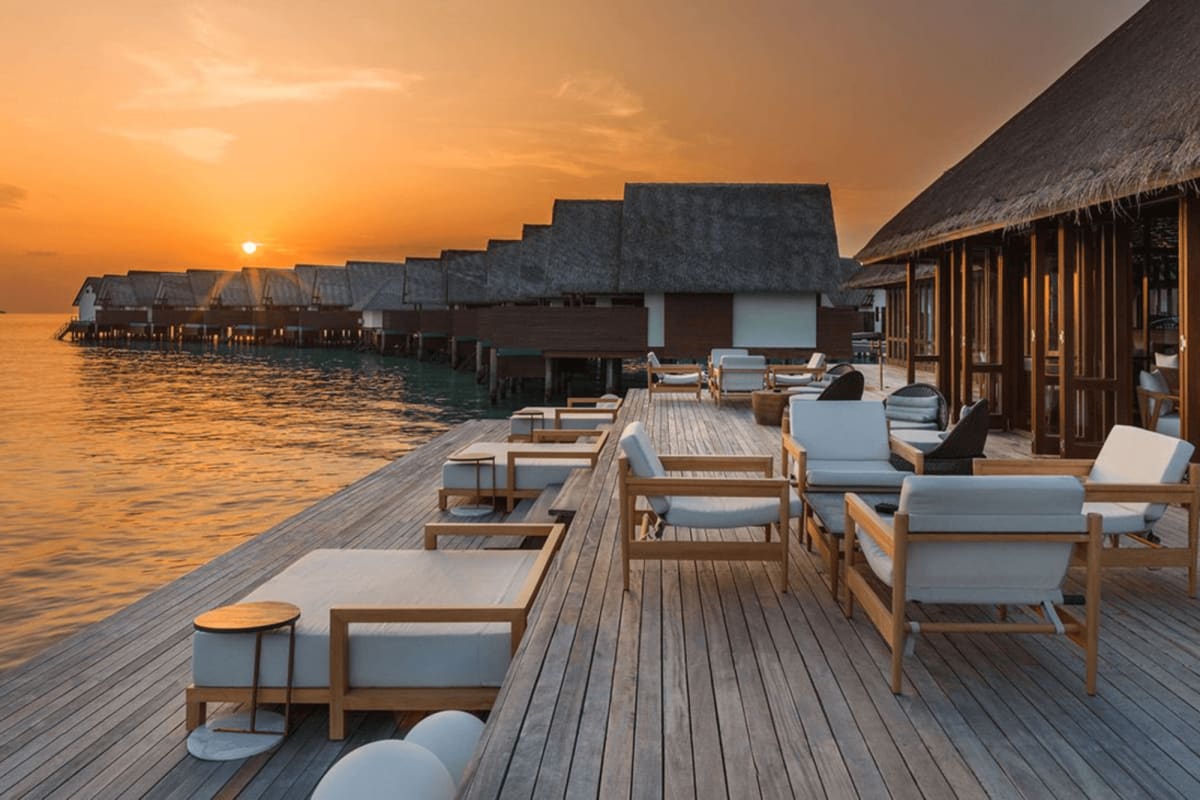
After our refreshing dip, we walked over for a late lunch at Baani, where the contemporary fusion dishes came with ingredients that felt surprisingly cosmopolitan for a standalone island. Perhaps this stirred the restless discoverer in us again. Our conversation moved from the logistics of sourcing such produce for guests to something far more philosophical: What lies beyond the version of the country that most visitors experience within resorts? What exists behind all of this blue in the Maldives?
The discussion drew in the General Manager, Upul Gedarakumbura. He explained that curious travellers could find some answers in the 200-odd locally inhabited islands, but with a word of caution. Visitors need to be strictly mindful of local customs, attire, and religious norms. “It’s a very different rhythm from resort life,” he said, smiling. “Let’s just say the endless bubbly stays behind.” Even getting between islands across a scattered archipelago is not quite convenient. “I have a workaround for you, though,” he added. “If you’re keen, you can learn a lot about Maldivian traditions right here at Aarah.”
A Village Within The Resort
And so, we set off on our post-lunch adventure, following a shaded path through what Heritance Aarah calls its Maldivian Village, to get a glimpse into the local culture and traditions of the Maldives. The path, named Dhandahelu Magu, is a tribute to a 16th-century Maldivian wartime hero from Raa Atoll.
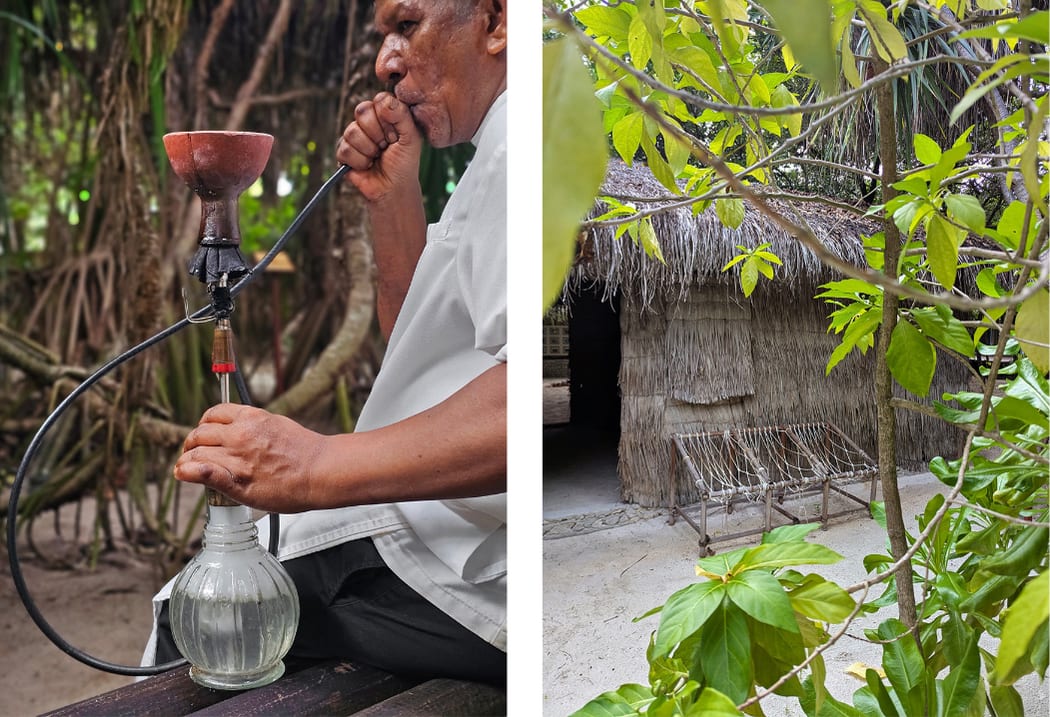
We were greeted by our guide du jour, Sheny, a staff member and a proud Maldivian herself. She asked us to remove our footwear – an act that perhaps shifted the gears in our minds into discovery mode. We stepped barefoot onto the earth and wrapped ourselves from the waist down in a cotton sarong called a feyli. A ruby-red welcome drink arrived in a tiny coconut-shell cup, flanked by hibiscus flowers. Another localite from the team beckoned us over with a grin to try the gudugudaa, a traditional hookah. Sheny explained that it was once associated with village matriarchs gathering to smoke and socialise in the privacy of their homes. Over time, it became a wider social ritual. A couple of drags and a few laughs later, the gears were truly set, with our hosts sharing fond titbits about growing up in the islands.
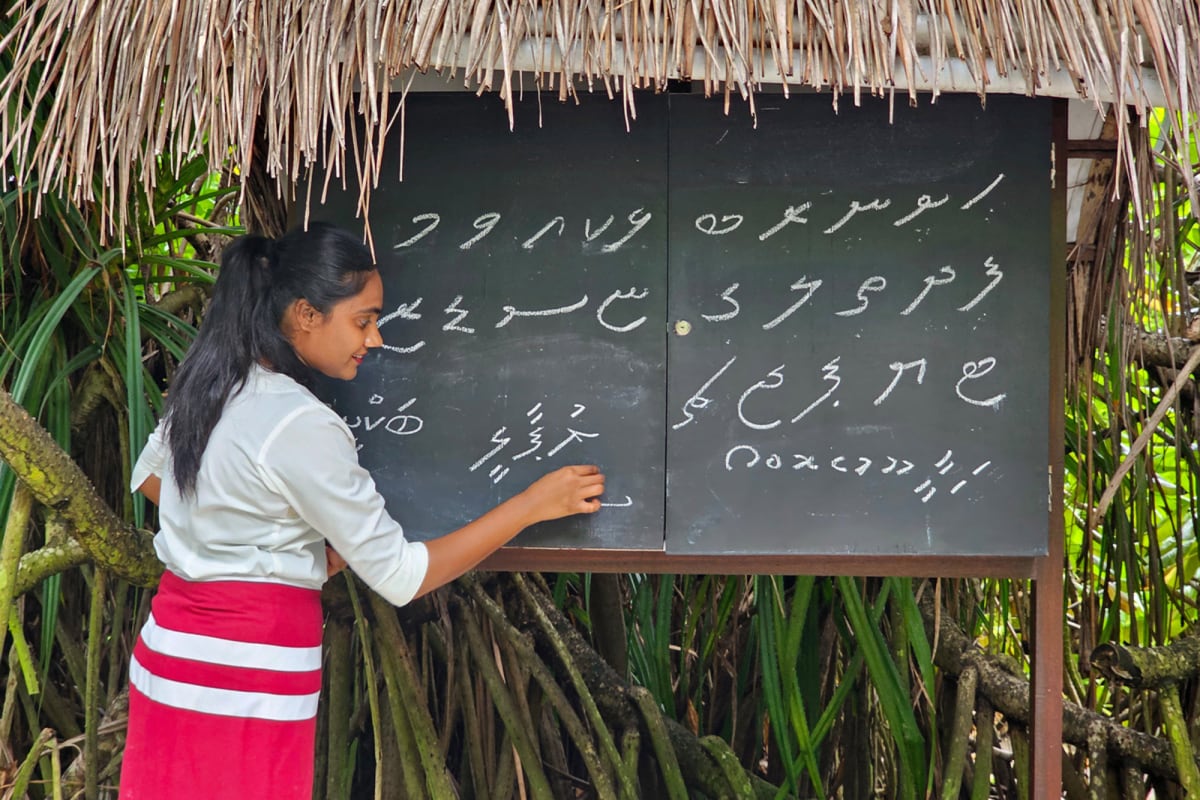
We sat on a joali, a woven chair that is part recliner, part hammock. Sheny then became our teacher, familiarising us with the curling characters of her mother tongue, Dhivehi, written in the Thaana script. As our names were etched on a chalkboard, we tried to identify the unfamiliar shapes. She showed us a voshu filaa, a wooden board filled with sand on which children would practise writing while learning the Quran. The letters could be traced, erased, and traced again.
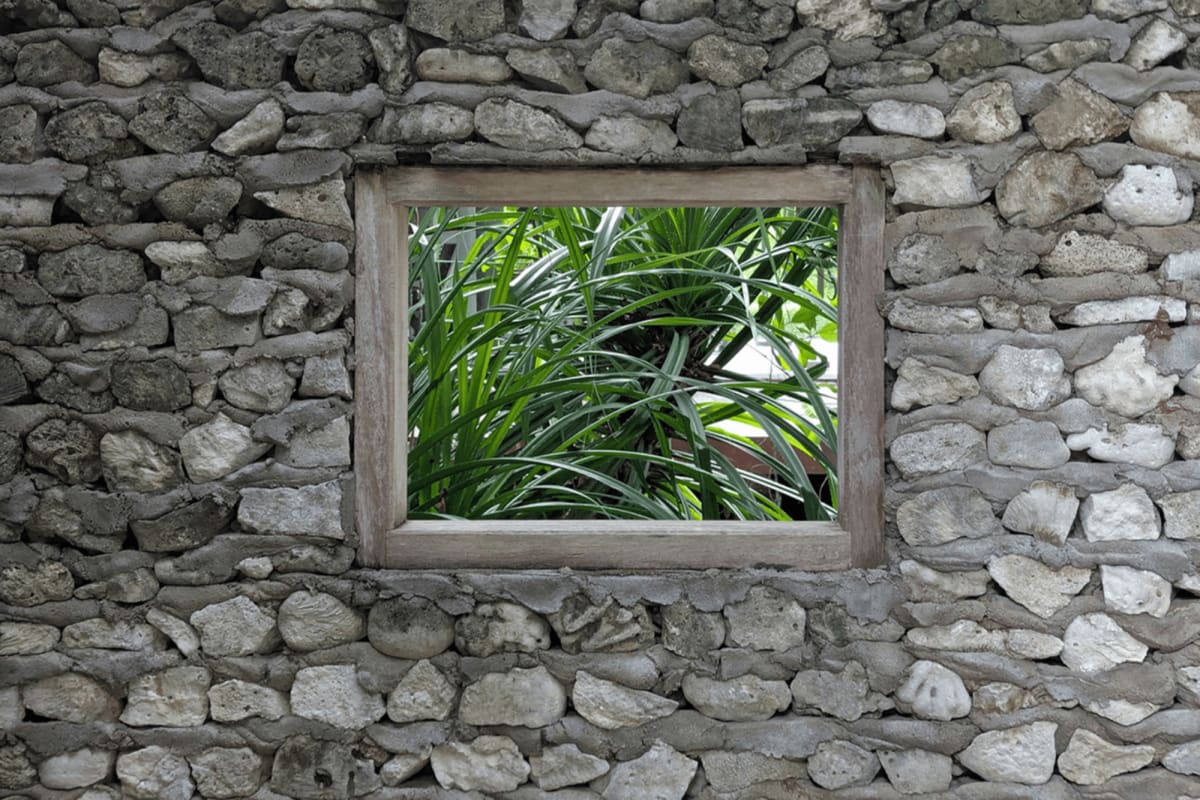
Next, Sheny guided us to an open-air wash area flanking a traditional house, to rinse our feet. Turns out that the type of plants surrounding such a bathroom once indicated the household’s affluence. Inside, beside a central water well, was a large piece of brain coral, its ridged surface functioning like a natural scrubber for cleaning one’s feet. For over a millennium, coral stone was also widely used in Maldivian construction, with blocks cut and interlocked to form walls. The practice is no longer permitted because of its environmental impact.
Lessons From An Island Home
The house itself was built in vernacular style, like that of a village katheeb (headman), using timber and coconut thatch. The structure, and many of the objects inside, relied on materials readily available in nature. Similarities with our own hinterlands were aplenty: an isthiri (iron) was heated using burnt coconut shells in the pre-electricity era, a fulhibahthi lamp made from a jar, cloth, and kerosene lit homes after dark, and a ban’diaa (pot) was used by women to carry drinking water from the mosque well. Sheny recalled seeing all of these in use during childhood visits to her family’s ancestral home.
Information panels explained the purpose of a few key furniture pieces. The bodu ashi (a multipurpose wooden bench), the roanu furi en’dhu (a coir-rope bed), and the bodufoshi (a locked chest for jewellery and valuables), all felt oddly familiar to us, echoing the Indian chowki, khatiya, and tijori.
Nearby were rounded raaban’dhi toddy pots, once used to collect sap from coconut palms. The potent liquid, known locally as raa, could be consumed on its own or used to prepare sweets.
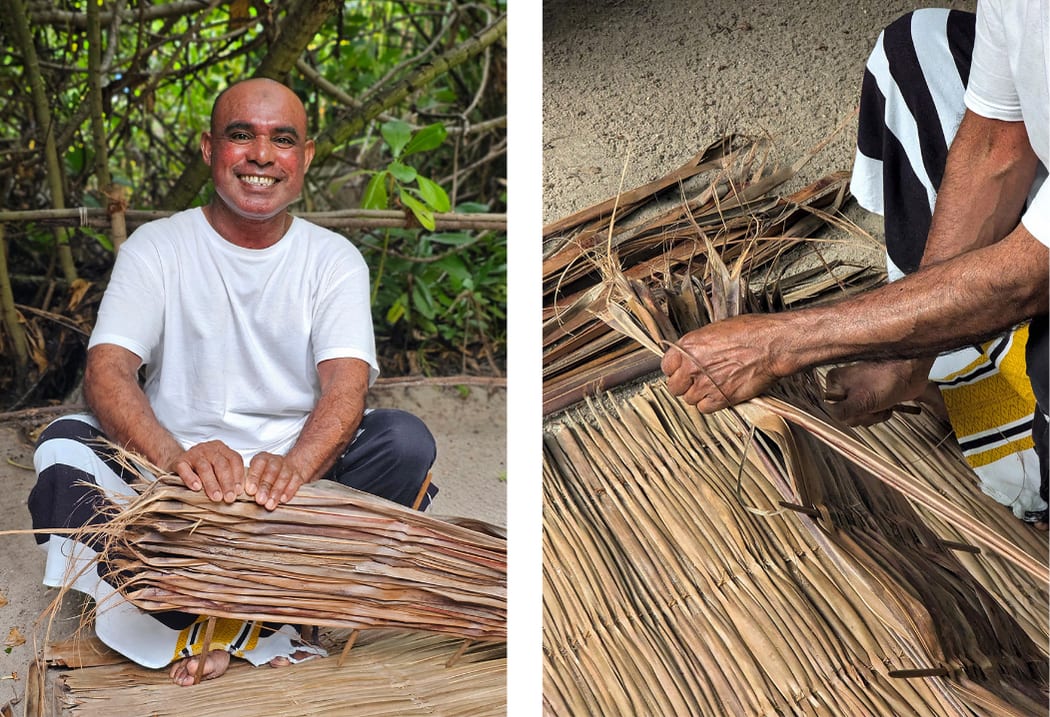
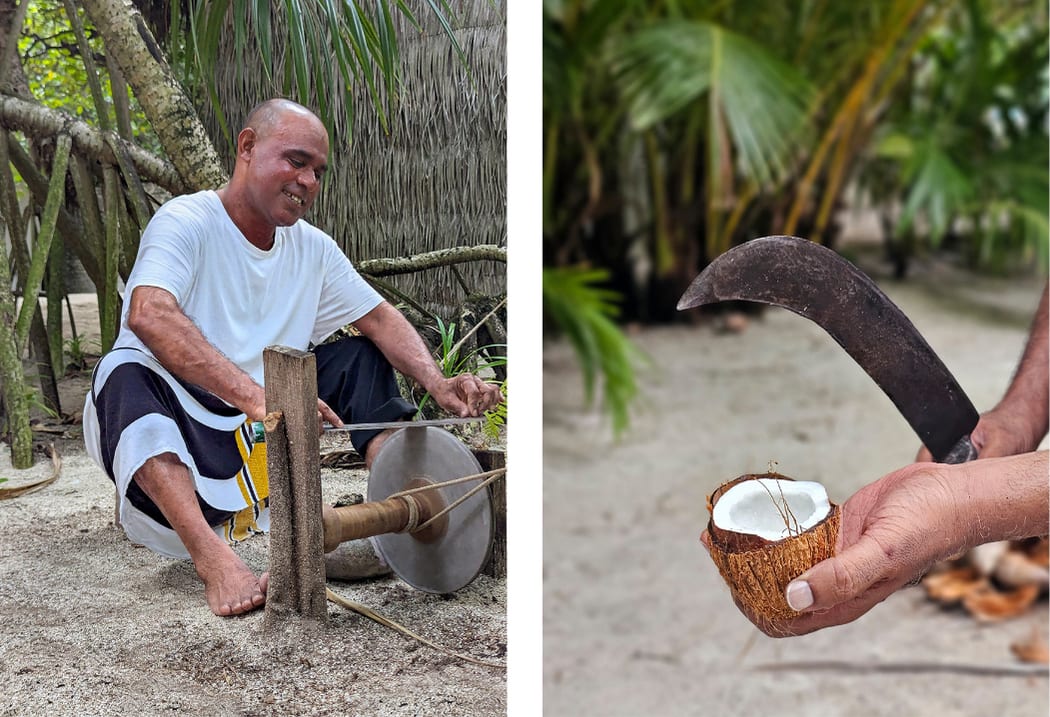
The versatile use of coconut all around was unmissable. We tried husking one ourselves with a sharp spike, treating it almost as a test of brute strength. Sheny, meanwhile, did the same with effortless elegance. Traditional crafts were demonstrated around us: coconut palm leaves woven into thatched roofs, fibres turned into ropes and mats, and the knives used for such work honed manually on a spinning wheel.
We walked by a gallery wall of archival photographs documenting island culture. Sheny pointed out liyelaa jehun, the intricate decorations on wood with lacquer, and boduberu, the communal drumming and dance performance that builds steadily in rhythm and energy.
Culture Served On A Platter
Finding us particularly affixed to the food photographs, she added the cultural context behind them. Bondibaiy, a rice-based sweet with hints of cardamom and cinnamon, for instance, is traditionally prepared for special occasions like a baby’s naming ceremony or community gatherings during Eid.
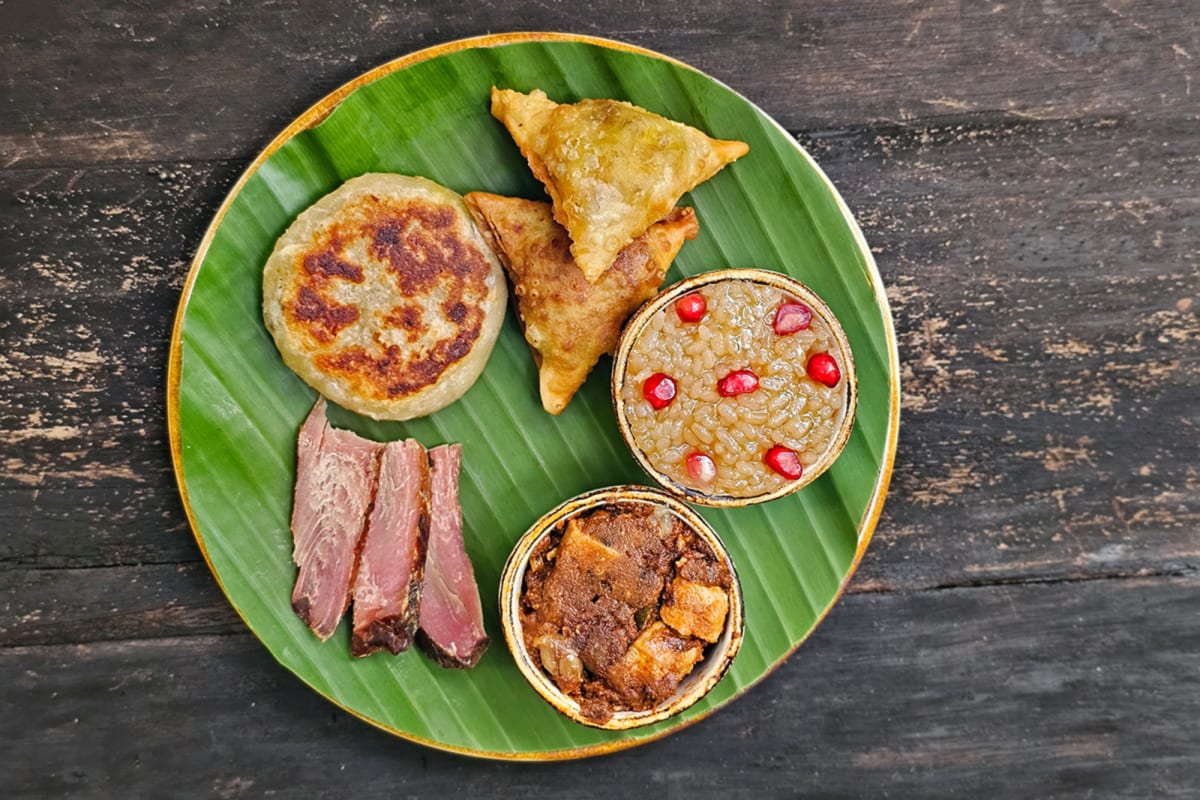
Thankfully, the culinary visuals were followed by appetising snacks served on banana leaves. There were masroshi, griddled parcels filled with tuna and coconut; crisp bajiyaa, the Maldivian cousin of a samosa; slices of smoked tuna; and a rich, fiery kulhimas fish preparation. Rounding off the platter was a tasting of the bondibaiy, a traditional Maldivian dessert made by cooking some type of grain or fruit with sugar and coconut milk.
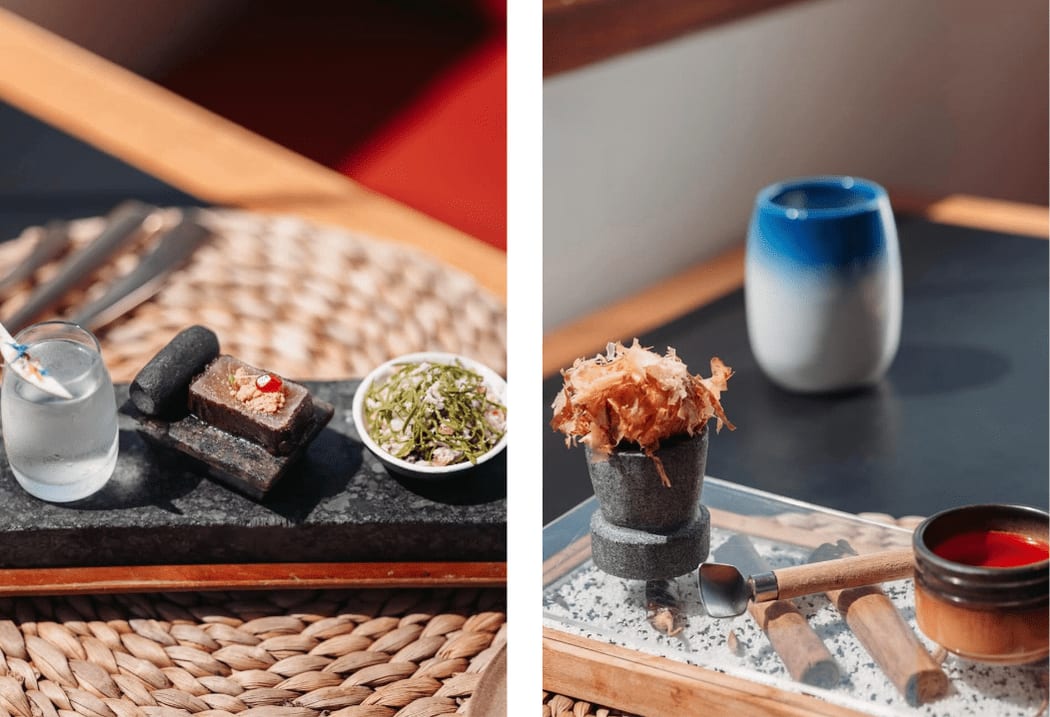
The burst of flavours from this rendezvous among coconut palms was strikingly unique. Perhaps the closest fine-dining parallel would be the polished reimagination of Maldivian cuisine at Heritance Aarah’s own Ambula restaurant. Yet the experience of eating with our fingers amid the smiles and stories of proud local staff stood out for feeding the discoverer in us. On our way here, we had assumed that luxury would mean switching off our constant curiosity. Instead, our most memorable souvenir was having it switched back on!