Most travellers come to Kenya with a single vision in mind: golden savannas shimmering in the heat, herds of elephants crossing dusty plains, and lions resting lazily beneath acacia trees. Their days fall into the familiar rhythm of safari life. Early alarms sound before sunrise, thermoses are filled with coffee, and vehicles roll out toward the horizon in search of wildlife.
And while that wild beauty deserves every bit of its reputation, I found myself drawn in another direction. Instead of flying back to Nairobi after my safari in Amboseli, I headed toward the coast and spent a few days near Mombasa, where the wilderness continues, only this time beneath the waves.
Where the Safari Ends, the Ocean Begins
By the time my safari circuit ended, I was looking forward to the promise of salt air and shifting tides. After days spent tracking wildlife across the dusty plains of Amboseli, the idea of trading binoculars for a dive mask felt like choosing a completely different version of Kenya.
The journey south toward the coast slowly changed the mood of the trip. The dry savannah softened into greener landscapes, the air grew heavier with humidity, and the scent of the ocean began to drift into the breeze. By the time I reached the small crossing point for Chale Island, the rhythm of safari life already felt far away.
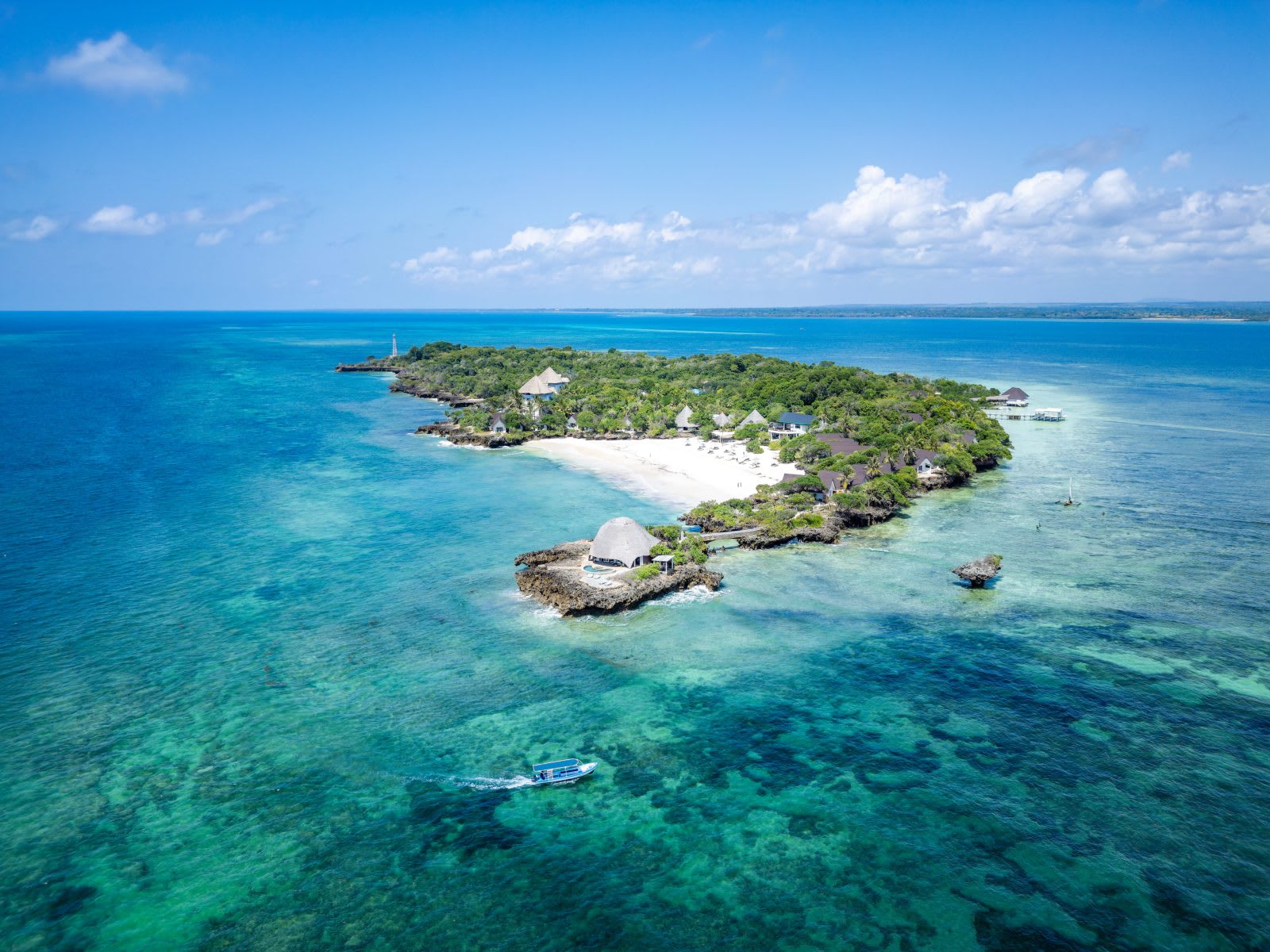
Chale lies just south of Mombasa and is Kenya’s only luxury private island resort. From the mainland, it appears like a mirage of palms and forest rising from shallow turquoise water. The short boat crossing is part of the charm, as the mainland fades behind you and the island slowly comes into view.
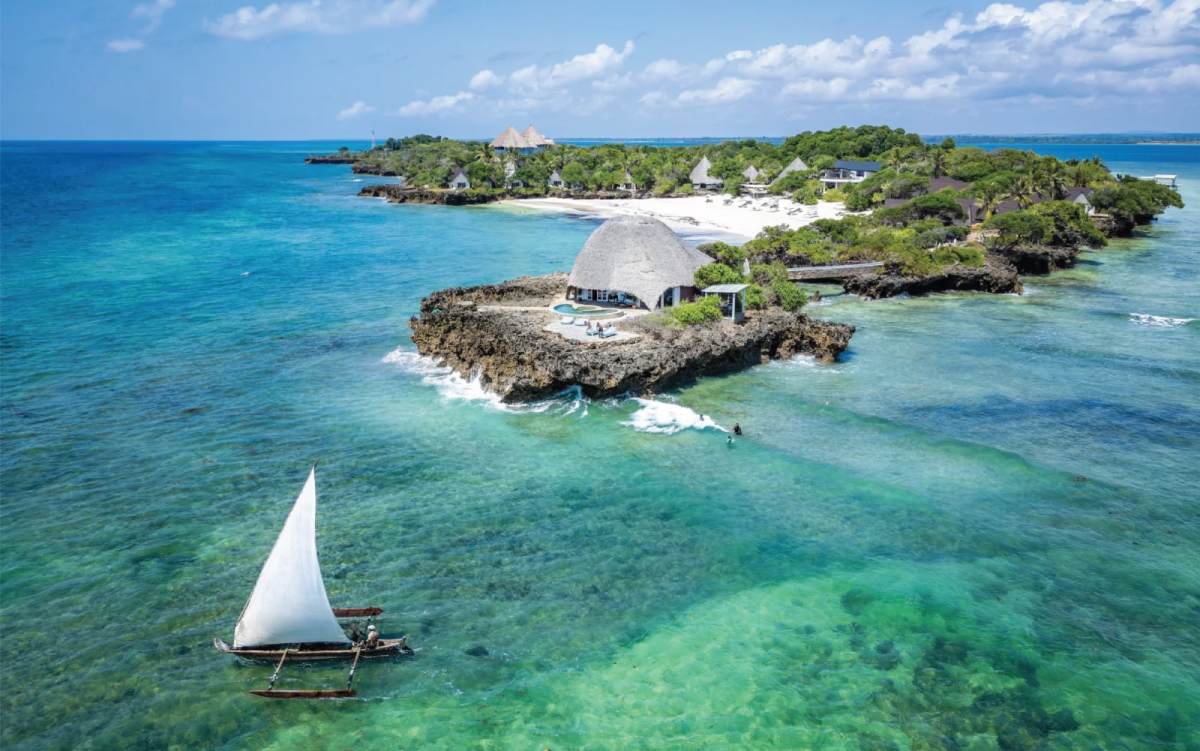
Arriving at Chale feels almost like entering a small, self-contained world. The island is lush and quietly untamed, wrapped in coastal forest and bordered by brilliant white sand. Coconut trees sway gently above narrow paths that wind through tropical greenery. Brightly coloured birds flash between the branches, while hermit crabs emerge cautiously along the shoreline as evening approaches.
Time moves differently here. The noise of traffic disappears, replaced by rustling leaves, distant bird calls, and the gentle rhythm of waves meeting the shore.
There is a deep sense of calm to it all, the kind that settles in quietly and makes you forget the urgency of travel. Yet what fascinated me most was not only the beauty of the island itself, but the knowledge that another world existed just beyond the shoreline. The ocean stretched outward in shades of turquoise and cobalt, calm on the surface and almost deceptively peaceful.
Beneath those gentle waves, another wilderness was waiting.
Experiencing Kenya’s Hidden Marine Safari
While Kenya has perfected the art of the game drive, far fewer travellers realise that another wilderness lies just offshore. Beyond the beaches of the south coast is a thriving marine ecosystem that feels every bit as alive and dramatic as the savannah.
The coral reefs along this coastline form part of the ecosystem connected to Mombasa Marine Park and Reserve, one of East Africa’s most important marine conservation areas. Here, the warm waters of the Indian Ocean nurture coral gardens, reef fish, sea turtles, rays, and countless other marine species.
From Chale Island, reaching these reefs is easy. The island lies near several productive dive sites, so the journey out to sea is short and scenic. Early in the morning, when the ocean is calm and the light still soft, boats leave the island and head toward reef systems just beyond the horizon.
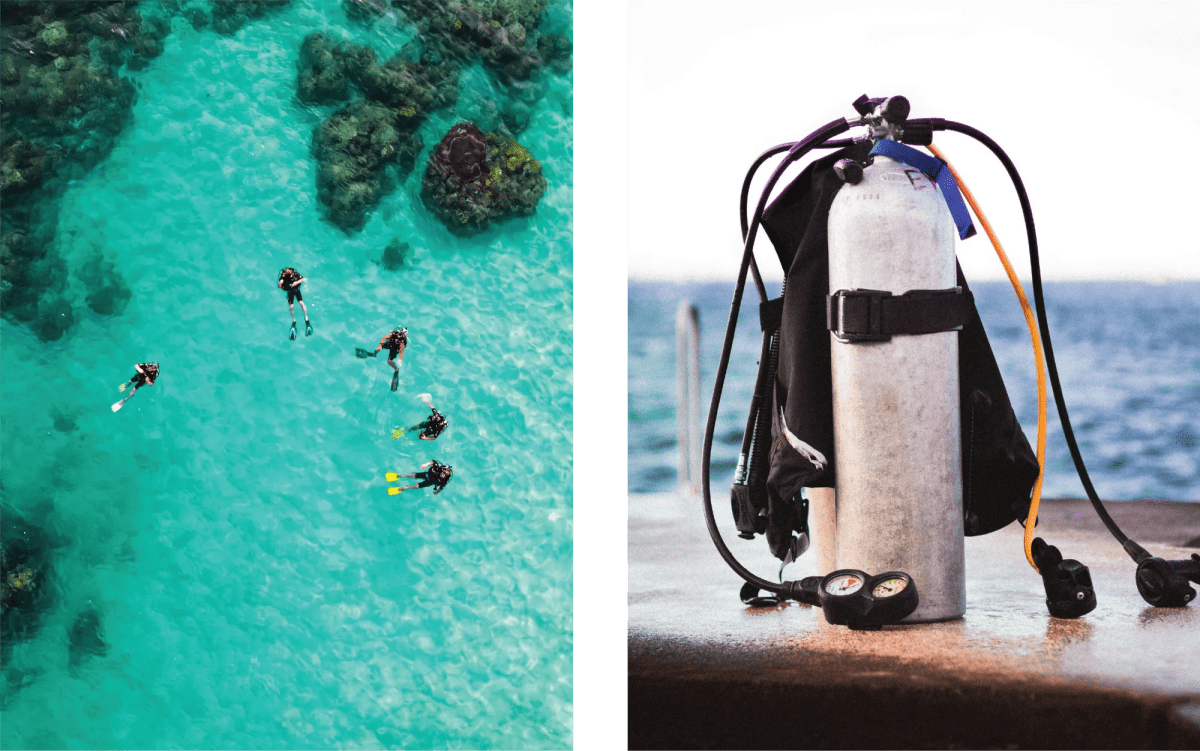
There is always a quiet excitement before a dive. That morning, as tanks were secured and gear checked, wetsuits slowly replaced the comfort of beach clothes. The boat rocked gently in the morning swell as we moved farther from shore.
I remember looking back at Chale Island, growing smaller in the distance, as the water shifted from pale turquoise to deep blue. Standing there with my mask in hand and fins at my feet, I felt that familiar mix of anticipation and curiosity that comes just before slipping beneath the surface.
Descent into the Blue
From the surface, the ocean looked calm and almost understated that morning. The water stretched outward in a wide sheet of turquoise, smooth and bright beneath the rising sun. Nothing about it suggested the world that lay below.
Then we slipped beneath the surface.
The first descent felt like entering a completely different realm. As the rippling mirror of the ocean faded above me, the water opened into an immense field of blue. Sunlight filtered down in soft shifting beams, illuminating the reef below like a natural cathedral.
The coral gardens appeared gradually as we descended. Branching corals spread outward in delicate shades of lavender, while rounded ochre domes rose from the seabed like miniature hills. Soft anemones moved gently with the current, their colours glowing in quiet shades of pink and orange.
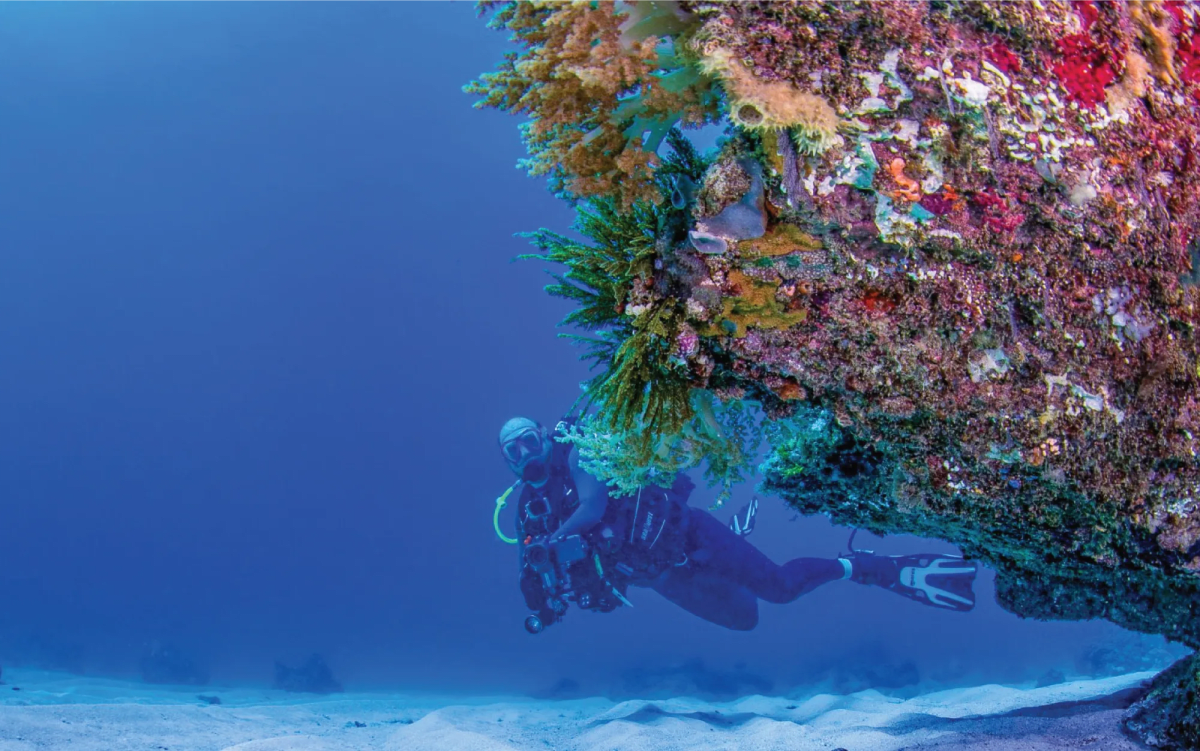
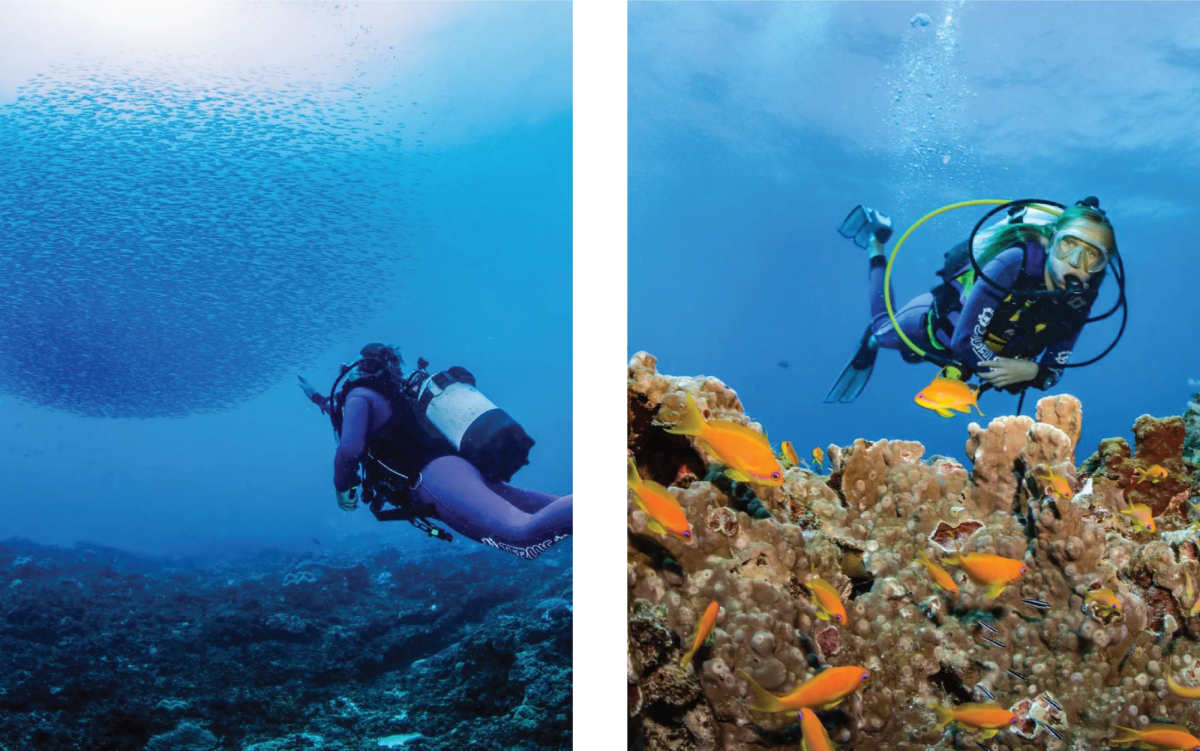
Life was everywhere. Schools of angelfish and snapper moved through the water in shimmering formations, turning together so precisely that they seemed to share a single instinct. A green sea turtle passed slowly beside us, gliding through the water with effortless grace, completely unbothered by our presence.
The water felt warm and incredibly clear. Visibility stretched far across the reef, allowing the entire landscape to unfold in layers of colour and movement. For a moment, everything seemed suspended in light, as if time had slowed and the ocean had quietly invited us into its world.
Along the Reef Wall
Our second dive followed a dramatic reef wall where the coral shelf suddenly gave way to deep indigo water. One moment, the reef stretched out beneath us in gentle formations, and the next it dropped away into a vast blue depth that seemed almost endless.
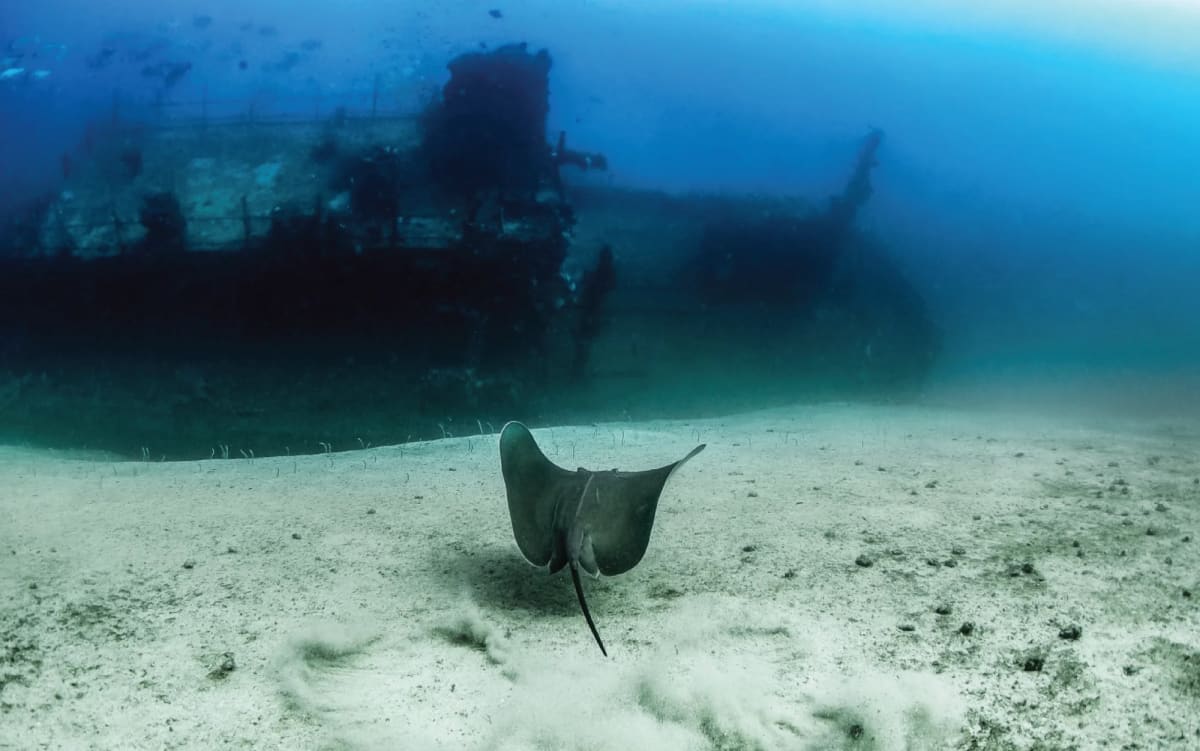
Rays rested half buried in the sand below, their outlines barely visible until they lifted gracefully and glided away as we drifted closer. Moray eels peered from rocky crevices, their curious faces framed by coral formations that had grown slowly over decades. The gentle surge of the water carried us along the reef at an unhurried pace, revealing new details with every few metres.
What struck me most was the stillness. Down there, the world felt quiet in a way that is hard to describe. There were no engines, no voices, no sudden noise. Only the steady rhythm of breath through the regulator and the faint crackling sounds of life across the reef.
That evening, back on Chale Island, I realised how much I was already looking forward to the next morning. I had planned to spend three days diving along this stretch of coast, and after the first dive, the anticipation of returning to the reef had already begun to build.
Life in an Underwater City
By the third day, slipping into the ocean felt familiar and deeply comforting. The reef no longer felt like a place I was briefly visiting. Instead, it began to feel like a world I was slowly getting to know.
Clouds of tiny reef fish moved through the coral formations like shimmering constellations. Large coral towers rose from the seabed, surrounded by constant movement and colour. At the edge of the reef, a reef shark cruised calmly along the boundary of visibility, elegant and distant, completely indifferent to our presence.
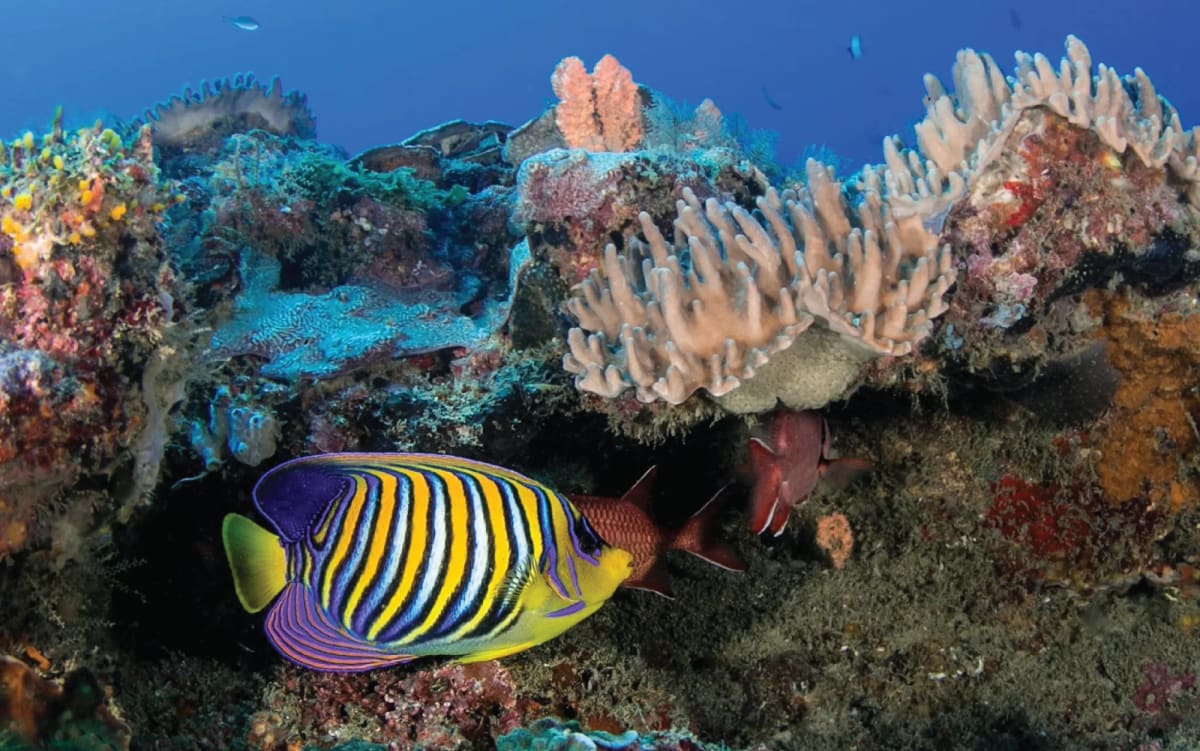
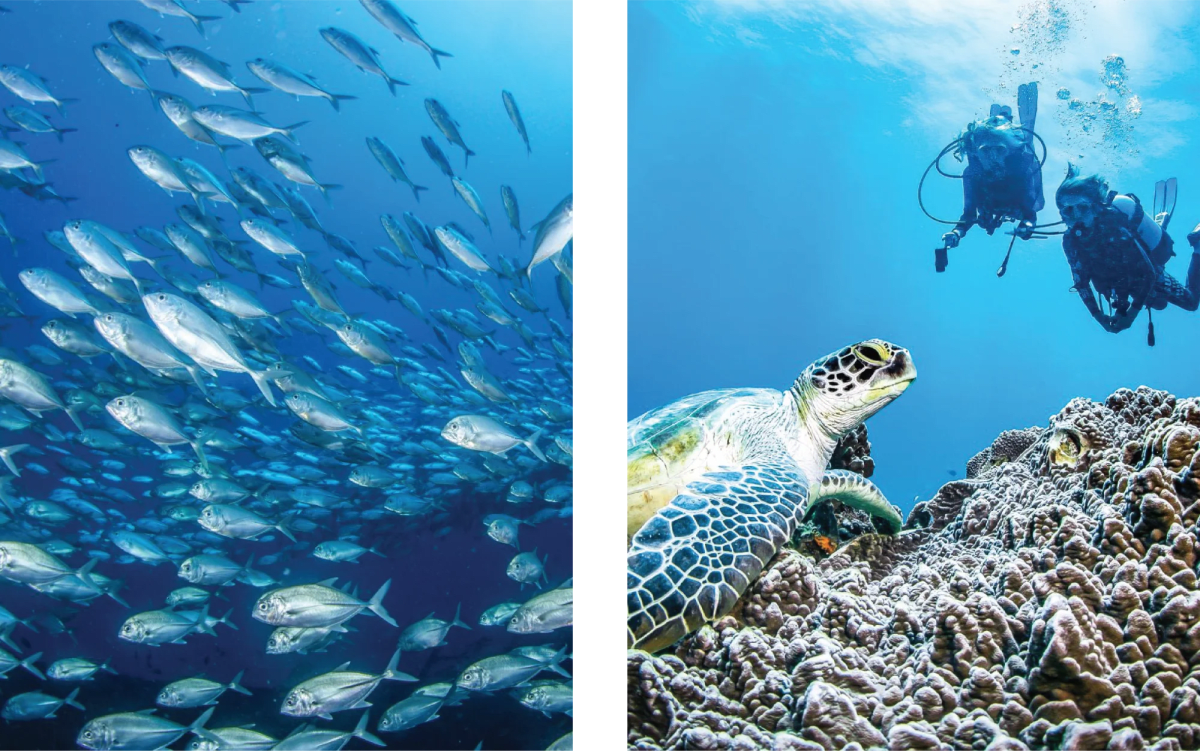
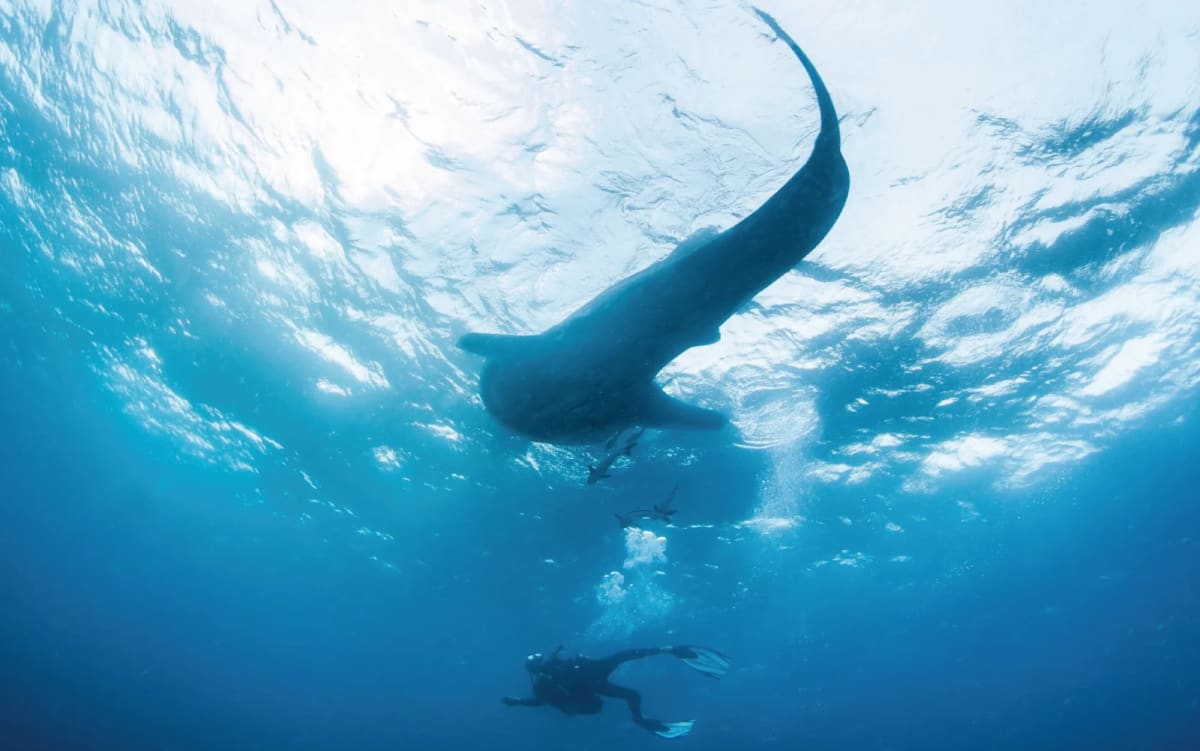
Time seemed to behave differently at depth. The filtered sunlight drifting through the water became the only measure of passing moments, and the slow rhythm of the ocean replaced the urgency of the surface world.
Over those three days, each dive revealed another layer of this remarkable ecosystem. The reefs off Kenya’s coast unfolded gradually, like chapters of a story, turning the experience into something that felt very much like a safari of its own. Only this time, the wilderness was entirely underwater.
When the Ocean Becomes the Safari
Each afternoon, we returned to Chale Island as the sun dipped toward the Indian Ocean, salt drying on my skin and the sky turning shades of gold and amber. Looking back at the open water, I realised how easily Kenya’s coastline is overlooked. Most travellers come for the savannah, drawn by lions, elephants, and sweeping plains. Yet just beyond the shoreline lies another wilderness that many never consider.
Over those three days of diving, it became clear to me that Kenya’s ocean offers its own kind of safari. Instead of tracking animals across open land, you descend into coral gardens alive with movement and colour.
Getting There
From Mombasa, the drive south along the coast takes about an hour, passing through small villages, palm groves, and glimpses of the Indian Ocean. Eventually, you arrive at the quiet mainland crossing point opposite the island. From there, a short boat ride carries you across a shallow turquoise channel to Chale Island.